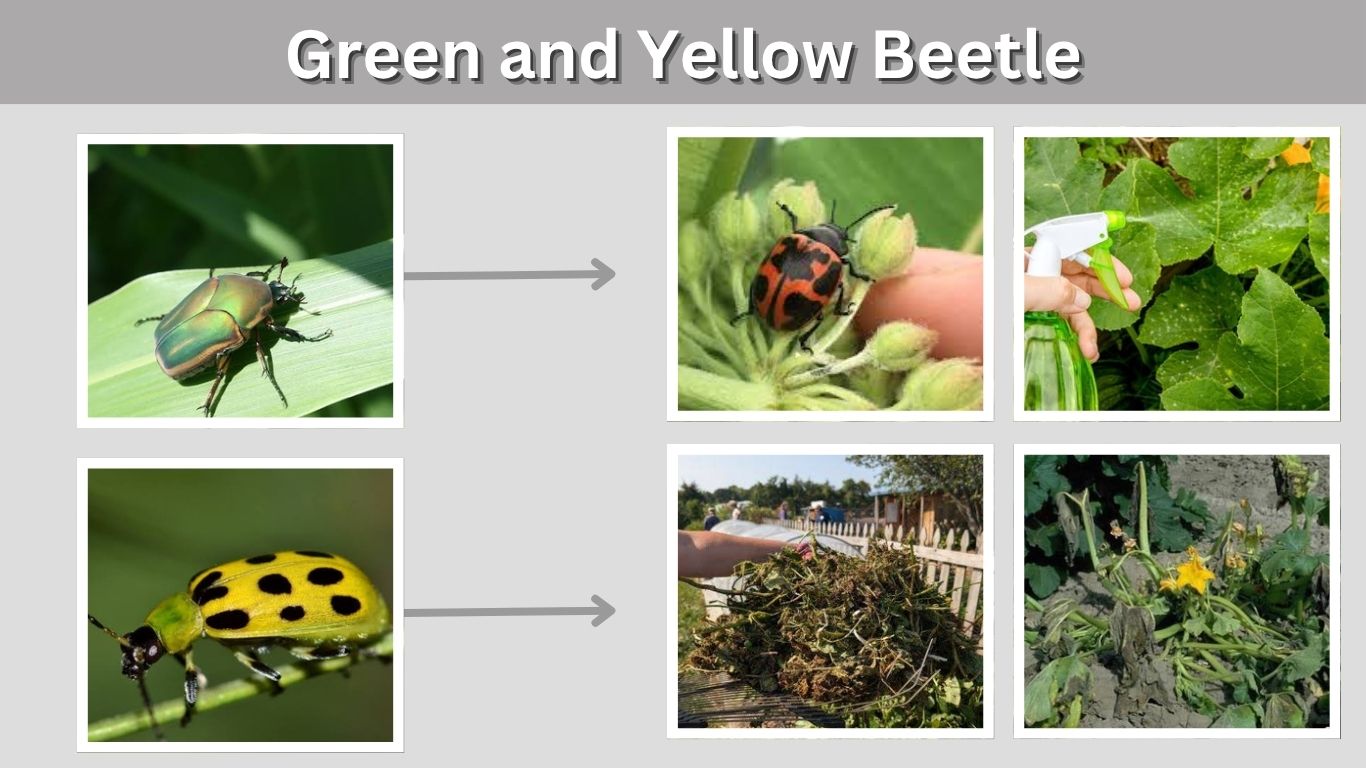
A green and yellow beetle can be several different species, so color alone is not enough for a perfect ID. Some are garden pests, some are harmless predators, and others are large scarab beetles that fly loudly in summer. The most common matches include cucumber beetles, green June beetles, Japanese beetles, and six-spotted tiger beetles. To identify one correctly, look at stripes, spots, shine, size, body shape, and where you found it.
What Is a Green and Yellow Beetle?
A “green and yellow beetle” is a color-based description, not one exact species. Many beetles have yellow-green bodies, metallic green shells, yellow edges, black spots, or yellow stripes.
The most likely ID depends on the pattern. A small yellow-green beetle with black stripes may be a striped cucumber beetle. A yellow-green beetle with black spots may be a spotted cucumber beetle. A large shiny green and yellow flying beetle may be a green June beetle.
| Beetle Type | Key Look | Common Place |
| Striped cucumber beetle | Yellow-green body with black stripes | Cucumbers, squash, melons |
| Spotted cucumber beetle | Yellow-green body with black spots | Gardens, flowers, crops |
| Green June beetle | Large metallic green with yellow-bronze edges | Lawns, fruit trees, compost |
| Japanese beetle | Metallic green with copper wing covers | Roses, grapes, landscape plants |
| Six-spotted tiger beetle | Metallic green with pale side spots | Trails, woods, sunny paths |
Why Color Can Be Confusing
Beetles often look different depending on light, age, region, and camera quality. A beetle may look green in sunlight but yellow, bronze, or brown in shade. Metallic species can shift color when they move.
That is why you should check the body pattern first. Stripes, spots, body size, and feeding location are usually more useful than color alone.
Quick ID Clues
Use these clues when identifying a green yellow beetle:
- Black stripes: likely striped cucumber beetle
- Black spots: likely spotted cucumber beetle
- Large, loud, shiny flying beetle: likely green June beetle
- Metallic green with copper wings: likely Japanese beetle
- Fast runner with long legs: likely tiger beetle
- On cucumber, squash, or melon: likely cucumber beetle
Green Beetle With Yellow Stripes
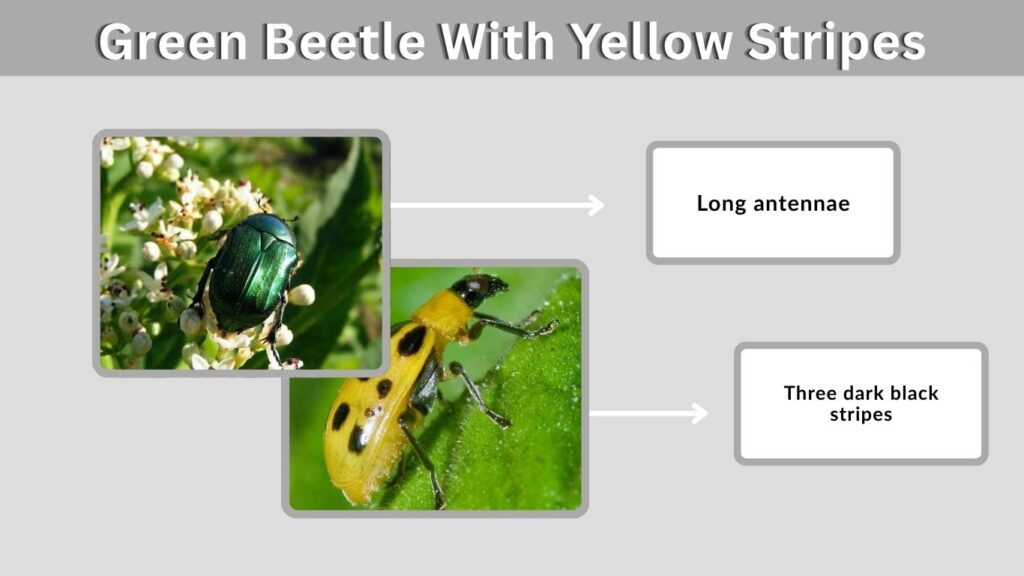
A green beetle with yellow stripes, or a yellow beetle with greenish tones and black stripes, is often a striped cucumber beetle.
The striped cucumber beetle is a small garden pest. Wisconsin Horticulture describes adults as 3/16 to 1/4 inch long, yellow-green in color, with three black stripes running the length of the body.
Striped Cucumber Beetle Identification
Striped cucumber beetles are small, narrow, and easy to overlook until they gather on flowers, leaves, or young plants. They usually have:
- Yellow-green wing covers
- Three dark black stripes
- Black head
- Long antennae
- Small oval body
- Fast movement when disturbed
They are most common on cucurbit crops, including cucumbers, squash, pumpkins, melons, and gourds.
Why It Matters in the Garden
Striped cucumber beetles are not just leaf chewers. They can also spread bacterial wilt, which can kill cucumber and melon plants. The University of Kentucky notes that cucumber beetles damage plants by feeding and by spreading bacterial wilt disease.
If you see several striped beetles on young cucumber plants, inspect the leaves, flowers, and stems. Early damage can weaken seedlings quickly.
Green Beetle With Yellow Spots
A green beetle with yellow spots may be described in two ways. Some people mean a yellow-green beetle with black spots, while others mean a metallic green beetle with pale yellow or white spots.
The most common garden match is the spotted cucumber beetle. Ohio State University says spotted cucumber beetles are yellow with 12 black spots on their backs.
Spotted Cucumber Beetle Identification
Spotted cucumber beetles are usually yellow-green to yellow with black spots. They may look more green when seen on leaves or in outdoor lighting.
Common signs include:
- Yellow-green body
- 12 black spots
- Black head
- Slender antennae
- Small size
- Feeding on leaves, flowers, and fruit
These beetles can feed on many plants and are often seen on cucurbits, corn, beans, flowers, and garden weeds.
Spotted vs Striped Cucumber Beetle
Both beetles can appear yellow-green, but the pattern is different. Striped cucumber beetles have long black stripes. Spotted cucumber beetles have round black spots.
| Feature | Striped Cucumber Beetle | Spotted Cucumber Beetle |
| Main pattern | 3 black stripes | 12 black spots |
| Body color | Yellow-green | Yellow-green/yellow |
| Common crops | Cucumbers, squash, melons | Cucurbits, corn, beans, flowers |
| Garden risk | Feeding + bacterial wilt | Feeding + plant damage |
| Size | Very small | Very small |
Big Green and Yellow Flying Beetle
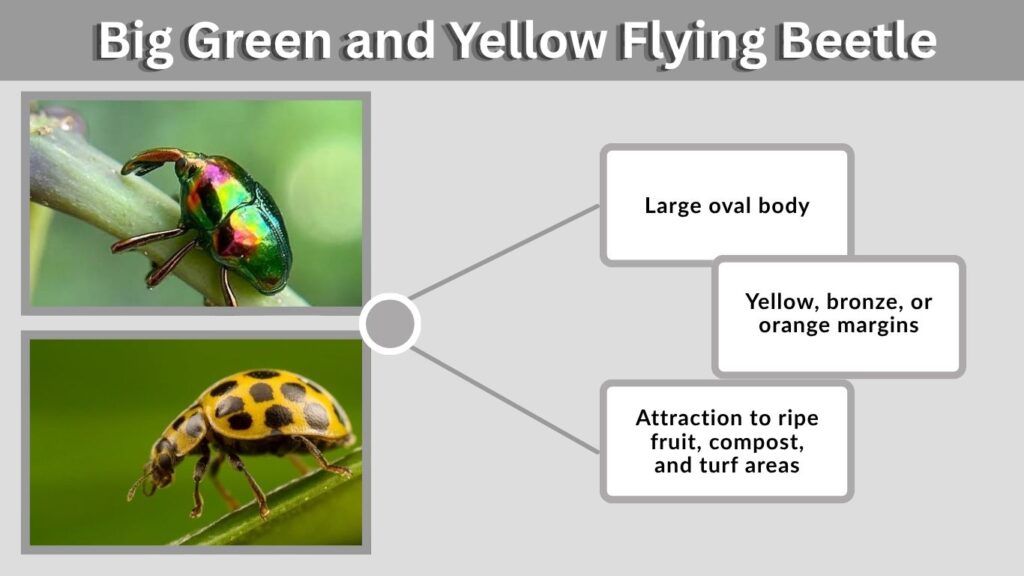
A big green and yellow flying beetle is often a green June beetle. This beetle is much larger than cucumber beetles and is usually seen flying during warm months.
Kansas State Extension says adult green June beetles are 3/4 to 1 inch long, velvety green, and tinged with yellow-brown coloration. It also describes green stripes with yellow-orange margins running lengthwise on the wing covers.
Green June Beetle Identification
Green June beetles are large scarab beetles. They may look shiny green, dull green, yellow-bronze, or gold depending on the light.
Look for:
- Large oval body
- Metallic or velvety green color
- Yellow, bronze, or orange margins
- Loud, clumsy flight
- Summer activity
- Attraction to ripe fruit, compost, and turf areas
North Carolina Extension describes adult green June beetles as metallic green and nearly 1 inch long, with body margins that are bronze to yellow.
Are Green June Beetles Harmful?
Adult green June beetles may feed on soft fruits, while the grubs live in soil and organic matter. They can be a nuisance when they fly into people, windows, or outdoor furniture.
In lawns, large numbers of grubs may disturb turf, especially where soil is rich in organic matter. However, a few adults flying around the yard does not always mean serious damage.
Shiny Green Yellow Beetle
A shiny green yellow beetle may be a scarab beetle, such as a Japanese beetle or green June beetle. Metallic beetles are especially confusing because they reflect green, gold, bronze, and yellow colors.
Japanese beetles are smaller than green June beetles. Wisconsin Horticulture says Japanese beetle adults are shiny metallic green, slightly less than 1/2 inch long, and have coppery-brown wing covers with small white hair patches along the sides.
Japanese Beetle Identification
Japanese beetles are common garden pests in many parts of the United States. They often gather in groups and skeletonize leaves.
Key features include:
- Metallic green head and body
- Copper-brown wing covers
- White hair tufts along the sides
- Small oval shape
- Feeding in groups
- Damage to roses, grapes, fruit trees, and ornamentals
Japanese beetles can damage many landscape plants, so early detection is helpful.
Japanese Beetle vs Green June Beetle
A Japanese beetle is smaller and usually has copper wing covers. A green June beetle is larger, heavier, and more yellow-bronze around the edges.
If the beetle is almost 1 inch long and flying loudly, think green June beetle. If it is under 1/2 inch and eating roses in groups, think Japanese beetle.
Metallic Green Beetle With Yellow or White Spots
A metallic green beetle with pale yellow, cream, or white spots may be a six-spotted tiger beetle. These beetles are fast hunters, not plant pests.
The University of Minnesota describes six-spotted tiger beetles as metallic green, sometimes blue, with long legs, large sickle-shaped mandibles, and large bulging eyes. They are usually about 12–14 mm long, and the number of pale spots can vary.
Six-Spotted Tiger Beetle Identification
Six-spotted tiger beetles are often seen on sunny trails, forest paths, sidewalks, and open ground. They run fast and fly short distances when approached.
Look for:
- Bright metallic green body
- Pale side spots
- Long legs
- Large eyes
- Strong jaws
- Fast running behavior
- Sunny ground habitat
These beetles are beneficial predators. They eat small insects and should not be treated like garden pests.
Is It Dangerous?
Six-spotted tiger beetles are not dangerous to people. They may bite if handled roughly, but they are not household pests and do not damage plants.
If you see one outdoors, it is usually best to leave it alone.
Green and Yellow Beetles Eating Plants
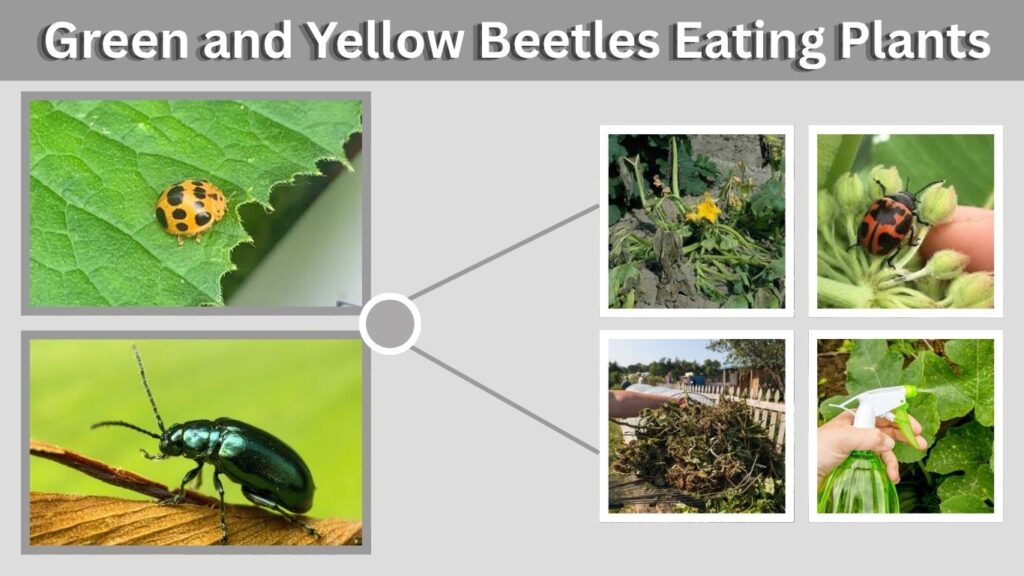
If green and yellow beetles are eating your plants, the most likely pests are cucumber beetles or Japanese beetles.
Cucumber beetles often attack vegetables, especially cucumbers, squash, pumpkins, and melons. Japanese beetles often attack ornamentals, fruit trees, grapevines, roses, and many other plants.
Common Damage Signs
Watch for these signs:
- Small holes in leaves
- Chewed flower petals
- Damaged seedlings
- Scarred fruit skin
- Wilted cucumber vines
- Skeletonized leaves
- Beetles grouped on flowers
- Grubs in turf or soil
Cucumber beetles are especially important because they can spread disease, while Japanese beetles can cause heavy leaf damage when they gather in large numbers.
Simple Control Tips
For a small garden, start with low-risk methods:
- Hand-pick beetles into soapy water
- Use floating row covers before flowering
- Remove old crop debris
- Rotate cucurbit crops
- Check flowers and leaf undersides
- Avoid broad spraying when pollinators are active
- Keep plants healthy and watered
For severe infestations, identify the beetle first before choosing any treatment. Different beetles need different management methods.
Green and Yellow Beetle Identification by Location
Location can help narrow the ID, but it does not confirm the species by itself. Many beetles have wide ranges, and some are introduced pests.
A green and yellow beetle in a vegetable garden is often a cucumber beetle. A large green beetle in the lawn or flying near fruit may be a green June beetle. A shiny beetle on roses may be a Japanese beetle. A fast metallic green beetle on a trail may be a tiger beetle.
United States
In the U.S., common matches include striped cucumber beetles, spotted cucumber beetles, green June beetles, Japanese beetles, and tiger beetles.
People in states like Missouri, Virginia, Idaho, Oregon, Arizona, Colorado, California, Florida, and Connecticut may all describe different beetles as “green and yellow,” so pattern and plant association are important.
UK and Australia
In the UK or Australia, the same search phrase may point to different local beetles. A “green yellow beetle Australia” or “green beetle yellow spots UK” should be identified using local insect guides, because species differ by region.
For accurate ID, take a clear photo from above and the side, note the plant it was on, and record the size.
FAQs
What is a green and yellow beetle?
A green and yellow beetle may be a cucumber beetle, green June beetle, Japanese beetle, tiger beetle, or another local beetle. The best ID depends on size, stripes, spots, shine, location, and the plant it was found on.
What is a green beetle with yellow stripes?
A green or yellow-green beetle with black stripes is often a striped cucumber beetle. It is a small garden pest commonly found on cucumbers, squash, pumpkins, and melons.
What is a green beetle with yellow spots?
Many people use this phrase for the spotted cucumber beetle, which is yellow-green with black spots. A metallic green beetle with pale side spots may be a six-spotted tiger beetle.
Are green and yellow beetles harmful?
Some are harmful to plants, while others are beneficial. Cucumber beetles and Japanese beetles can damage plants, but six-spotted tiger beetles are predators that help control small insects.
How do I get rid of green and yellow beetles on plants?
First identify the beetle. For cucumber beetles or Japanese beetles, hand-picking, row covers, crop rotation, removing debris, and targeted pest control can help. Avoid spraying flowers when bees and other pollinators are active.