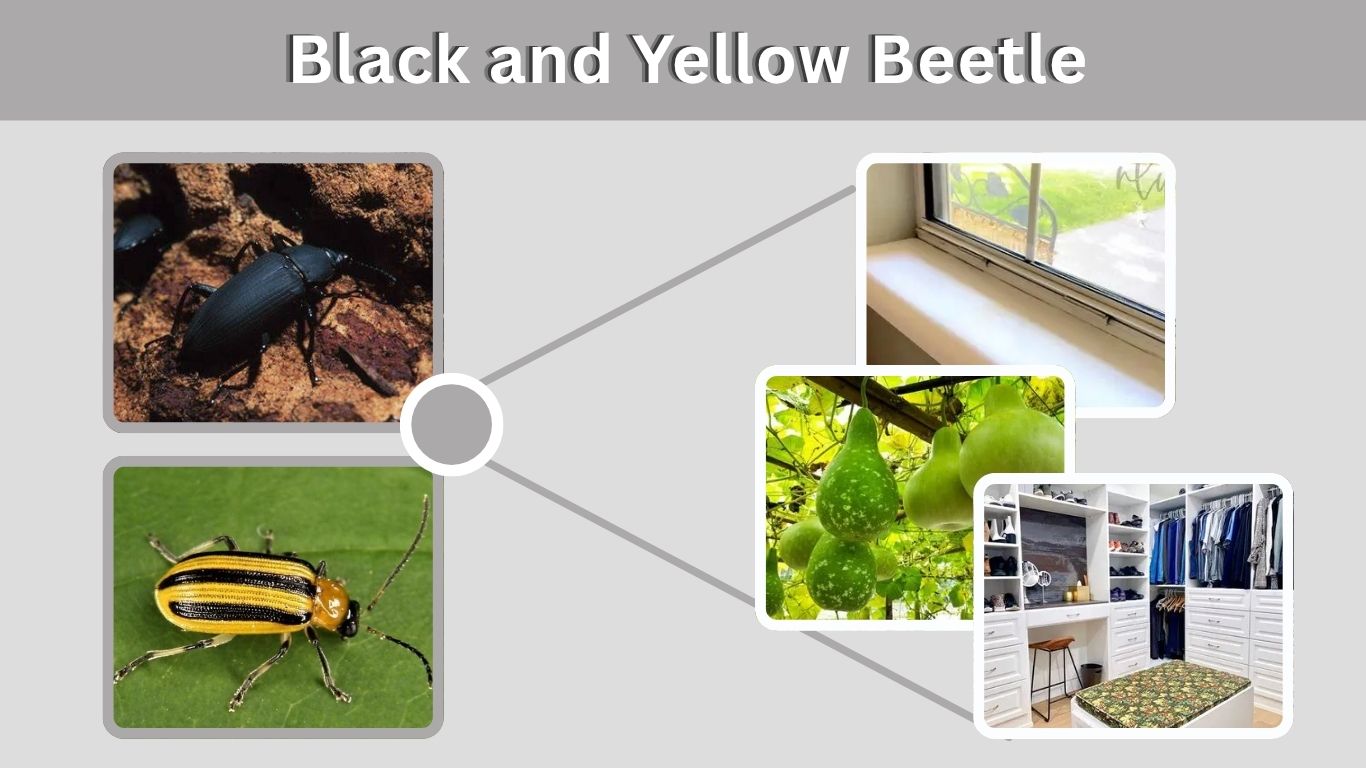
A black and yellow beetle can be many different species, from harmless longhorn beetles to garden pests like cucumber beetles. Some are tiny indoor beetles, while others are large flying beetles with long antennae. The color pattern alone is not enough for exact identification, but body shape, size, location, and behavior can help. This guide explains common black and yellow beetles, where they live, what they eat, and when you should control them.
What Is a Black and Yellow Beetle?
A black and yellow beetle is not one single insect. It is a general description people use for beetles with yellow bodies, black stripes, black spots, or dark bodies with yellow markings. Some live in gardens, some enter homes, and others are found on flowers, wood, squash plants, cucumbers, or even dead animals.
The most important step is to notice the beetle’s shape. A long beetle with very long antennae may be a longhorn beetle. A small yellow beetle with three black stripes on cucumbers is usually a striped cucumber beetle. A tiny oval beetle indoors may be a carpet beetle.
Quick Identification Table
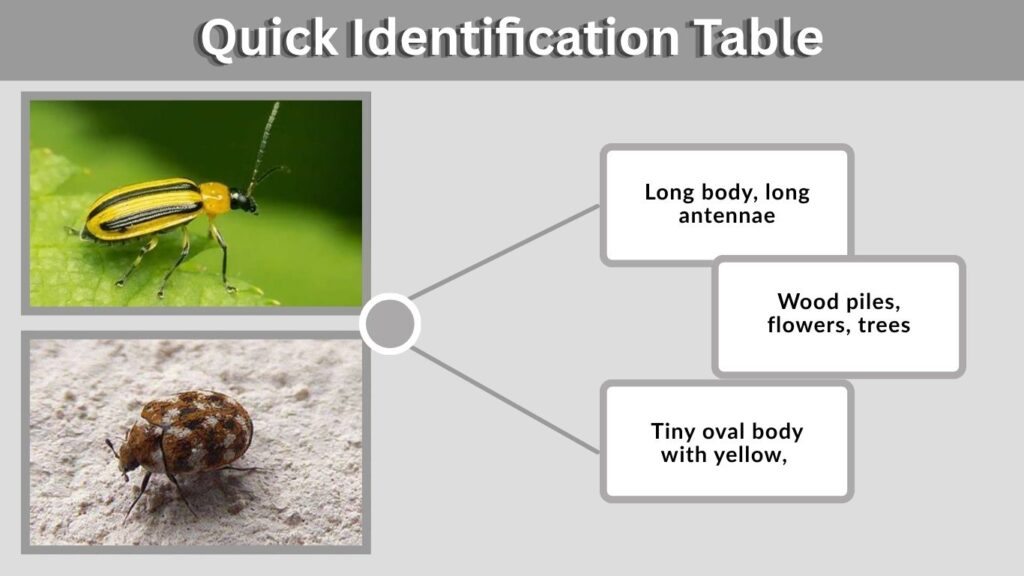
Use this table as a fast guide before looking at detailed descriptions.
| Beetle Type | Key Look | Common Place Found | Main Concern |
| Black and yellow longhorn beetle | Long body, long antennae, striped or banded pattern | Wood piles, flowers, trees | Usually harmless to people |
| Striped cucumber beetle | Yellow body with three black stripes | Cucumbers, squash, melons | Damages plants |
| Spotted cucumber beetle | Yellow-green body with black spots | Gardens, flowers, crops | Plant pest |
| Carpet beetle | Tiny oval body with yellow, white, brown, or black scales | Windows, carpets, closets | Larvae damage fabrics |
| Larder beetle | Dark body with yellowish band and dark spots | Kitchens, stored food, dead insects | Pantry/organic debris pest |
| Blister beetle | Soft body, sometimes black and yellow or striped | Flowers, crops, weeds | Can irritate skin |
Common Types of Black and Yellow Beetles
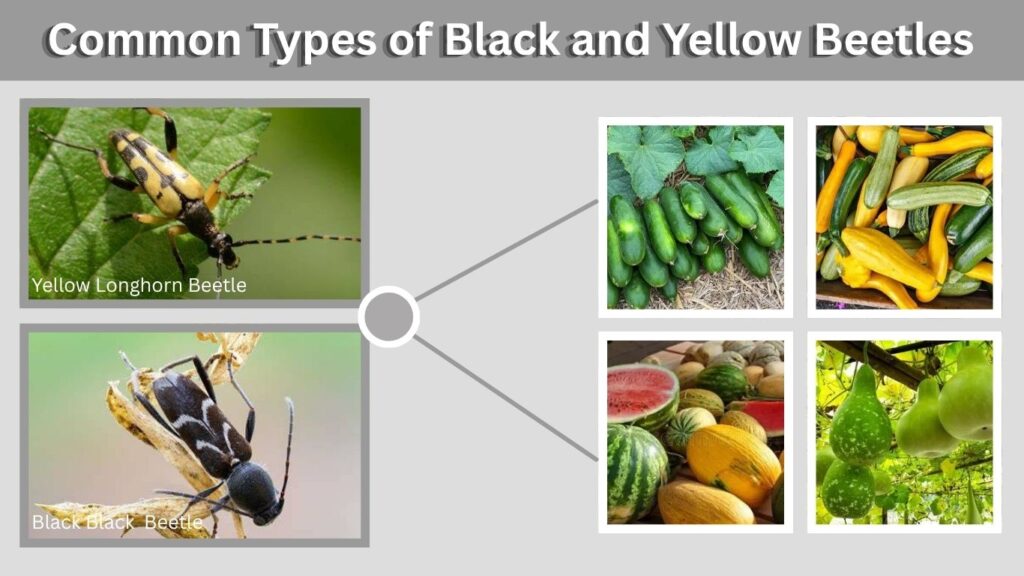
Many beetles share similar colors, but they belong to different families. Some are useful pollinators or decomposers, while others are serious garden pests.
Black and Yellow Longhorn Beetle
A black and yellow longhorn beetle usually has a slender body and antennae that are as long as, or longer than, its body. These beetles are often seen on flowers, logs, firewood, tree trunks, or wooden fences. Their striped or banded pattern can make them look like wasps, but they are beetles.
Common signs include:
- Long antennae
- Hard wing covers
- Narrow body shape
- Yellow bands or stripes on a dark body
- Slow crawling or short flights around wood and flowers
Most adult longhorn beetles do not bite people unless handled roughly. Their larvae may bore into dead, dying, or sometimes stressed wood, depending on the species.
Striped Cucumber Beetle
The striped cucumber beetle is one of the most common answers when someone finds a small black and yellow striped beetle in the garden. Adults are small, yellow, and have three black stripes running lengthwise on the wing covers. The head and antennae are black, and the area behind the head can look yellow-orange. University extension sources describe adult striped cucumber beetles as about 1/5 inch long with yellow wings and three black stripes.
This beetle is a problem for:
- Cucumbers
- Squash
- Pumpkins
- Melons
- Gourds
Adults chew leaves, flowers, and young fruit. Larvae feed near the roots. They can also spread bacterial wilt, which may cause cucumber and melon plants to suddenly wilt.
Spotted Cucumber Beetle
A yellow and black spotted beetle in the garden may be a spotted cucumber beetle. It usually has a yellow-green body with black spots. WVU Extension notes that spotted cucumber beetles are similar in size to striped cucumber beetles and have 12 black spots on the back.
Spotted cucumber beetles feed on many plants, not only cucumbers. They may appear on beans, corn, squash, flowers, and garden weeds. Their bright color makes them easy to notice, especially when several gather on flowers or tender leaves.
Carpet Beetle
A tiny black and yellow beetle in the house may be a carpet beetle. Adult carpet beetles are small, oval, and often found near windows because they are attracted to light. The varied carpet beetle may show mixed white, yellow, brown, and black markings. University of Maryland Extension describes varied carpet beetle adults as small, oval to round, and about 2–3 mm long with white and yellow splotches.
Adult carpet beetles do not damage clothes. The larvae are the problem. They feed on animal-based materials such as wool, feathers, fur, pet hair, dead insects, and lint. Signs include shed larval skins, small fabric holes, and hairy larvae in dark corners.
Larder Beetle
A black beetle with a yellow band and black spots may be a larder beetle. It is a type of dermestid beetle. Colorado State University Extension notes that the larder beetle has a wide yellow band with dark spots across the wing covers.
Larder beetles are often linked to organic material such as dried pet food, meat scraps, dead insects, stored animal products, or old food debris. Finding one or two adults may not mean a major infestation, but repeated sightings indoors suggest a hidden food source.
Blister Beetle
Some black and yellow beetles may be blister beetles. These beetles are usually soft-bodied and may be black, gray, yellowish, or striped. Virginia Tech notes that some blister beetles can have striped patterns on the wing covers.
Blister beetles contain cantharidin, a chemical that may irritate skin. Do not crush them with bare hands. In gardens, they may feed on flowers and foliage. In agricultural areas, they are especially concerning when trapped in hay.
Black and Yellow Beetle in the Garden
A black and yellow beetle in the garden is often searching for leaves, flowers, pollen, or plant sap. Some are harmless visitors, but others can damage crops. The plant where you find the beetle is a strong clue.
If the beetle is on cucumbers, squash, pumpkins, or melons, suspect cucumber beetles first. If it is on flowers with long antennae, it may be a longhorn beetle. If it is on dead material, compost, or old animal matter, it may be a dermestid beetle.
Watch for these plant damage signs:
- Small holes in leaves
- Chewed flowers
- Scarred fruit skin
- Wilting cucumber or melon vines
- Beetles clustering on blossoms
- Weak seedlings after beetle feeding
For garden pests, early control is important. Small numbers are easier to manage than a heavy infestation.
Black and Yellow Beetle in the House
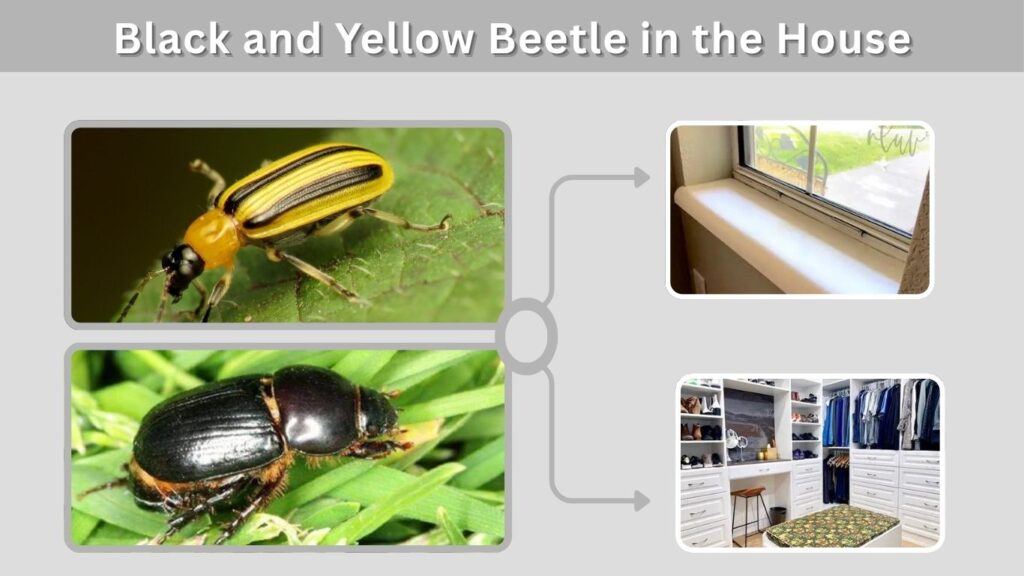
A black and yellow beetle in the house is usually not the same as a garden beetle. Indoor beetles are often carpet beetles, larder beetles, or beetles that accidentally flew in through doors, windows, or lights at night.
Common indoor hiding places include:
- Window sills
- Closets
- Baseboards
- Carpets and rugs
- Stored food areas
- Pet bedding
- Attics or wall voids
- Under furniture
If you find tiny beetles near windows, check closets and carpets for larvae. If you find larger dark beetles with yellow bands near the kitchen, pantry, or pet food, look for old food debris or dead insects.
Are Black and Yellow Beetles Poisonous?
Most black and yellow beetles are not poisonous to humans. A black and yellow longhorn beetle is usually not dangerous and does not sting. However, some beetles can bite if handled, and blister beetles can cause skin irritation if crushed.
The color pattern may look scary because black and yellow often reminds people of wasps or bees. Some beetles use this pattern as warning coloration or mimicry, but they are still beetles and do not have stingers.
Can Black and Yellow Longhorn Beetles Bite?
Longhorn beetles can pinch with their jaws if picked up, but they are not aggressive. A bite is usually minor and happens only when the beetle feels trapped. It is better to move the beetle with a container or paper instead of handling it.
Are Cucumber Beetles Harmful to People?
Cucumber beetles are not dangerous to people or pets. Their main damage is to plants. They chew leaves and flowers and can spread plant diseases. For gardeners, they are more of a crop problem than a household danger.
How to Get Rid of Yellow and Black Beetles
The best control method depends on the type of beetle. Do not treat every black and yellow beetle the same way. A longhorn beetle on a flower may need no control, while cucumber beetles on squash plants should be managed quickly.
| Situation | Best Action | Why It Works |
| Beetles on cucumber or squash plants | Handpick, use row covers, remove weeds | Reduces feeding and egg laying |
| Tiny beetles in house | Vacuum, clean lint, inspect wool items | Removes adults, larvae, and food sources |
| Beetles near pet food or pantry | Seal food, discard infested items | Removes breeding material |
| Beetles around lights | Seal gaps, use screens, reduce night lighting | Prevents accidental entry |
| Longhorn beetle indoors | Capture and release outside | Usually an accidental visitor |
For cucumber beetles, protect young plants early. Row covers can help before flowering, but remove them when plants need pollination. Check the undersides of leaves and flowers often. Remove plant debris at the end of the season to reduce overwintering sites.
For carpet beetles, vacuum slowly along baseboards, under furniture, and inside closets. Wash or dry-clean wool, silk, fur, feathers, and other animal-based fabrics. Store vulnerable items in sealed containers.
For larder beetles, find the food source. Look for spilled pet food, dead insects in light fixtures, old traps, forgotten pantry items, or animal remains in hidden spaces.
Black and Yellow Beetle Identification by Size
Size is one of the easiest ways to narrow down the beetle type. A tiny beetle indoors usually points to carpet beetles. A small striped beetle on vegetables often points to cucumber beetles. A large beetle with long antennae may be a longhorn beetle.
Tiny Black and Yellow Beetle
A tiny black and yellow beetle is often a carpet beetle if found inside. Adults are very small and rounded. They may appear near windows, curtains, or light sources. The larvae hide in darker places and cause real damage.
Small Black and Yellow Striped Beetle
A small black and yellow striped beetle on cucumber, squash, or melon plants is likely a striped cucumber beetle. Look for three long black stripes, a yellow body, and black head. These beetles are active, quick, and often found around blossoms.
Large Black and Yellow Beetle
A large black and yellow beetle may be a longhorn beetle, flower beetle, or another outdoor species. Long antennae, a hard body, and banded markings are useful clues. If the beetle is found around wood, trees, or flowers, it is often not a household pest.
Black and Yellow Beetles by Pattern
Patterns can help separate similar beetles, especially when the beetle is too quick to catch.
Black and Yellow Striped Beetle
Striped beetles may include striped cucumber beetles, longhorn beetles, or blister beetles. Check the body shape. Cucumber beetles are small and oval. Longhorn beetles are longer with long antennae. Blister beetles are softer-bodied and should not be crushed by hand.
Yellow and Black Spotted Beetle
A yellow and black spotted beetle may be a spotted cucumber beetle, lady beetle, or dermestid beetle. In gardens, spotted cucumber beetles often appear on cucurbits and flowers. Indoors, a spotted tiny beetle may be a carpet beetle.
Black Beetle With Yellow Band
A black beetle with a yellow band and dark spots is often a larder beetle. It is commonly linked to stored food, pet food, animal-based debris, or dead insects. Cleaning and removing the food source is usually the most important control step.
FAQs
What is the most common black and yellow beetle?
The most common answer depends on where you find it. In vegetable gardens, it is often a striped cucumber beetle. In homes, it may be a carpet beetle or larder beetle. On flowers or wood, it may be a black and yellow longhorn beetle.
Is a black and yellow longhorn beetle dangerous?
A black and yellow longhorn beetle is usually not dangerous to humans. It does not sting and is not poisonous. It may pinch if handled, but it normally avoids people. Some longhorn beetle larvae develop in wood, depending on the species.
Why are black and yellow beetles in my house?
They may enter through open doors, windows, vents, or gaps around lights. Tiny indoor beetles may be carpet beetles, while larger beetles may be accidental visitors. If you see them often, inspect carpets, closets, pantry items, pet food, and hidden organic debris.
What black and yellow beetle eats squash plants?
The striped cucumber beetle and spotted cucumber beetle commonly attack squash, cucumbers, pumpkins, and melons. They chew leaves, flowers, stems, and fruit skin. They can also spread plant diseases, so early control is important for healthy garden plants.
How do I get rid of black and yellow beetles naturally?
First identify the beetle. For garden pests, handpick beetles, use row covers before flowering, remove weeds, and clean plant debris. For indoor beetles, vacuum thoroughly, wash fabrics, seal food, and remove lint, pet hair, dead insects, or old organic material.