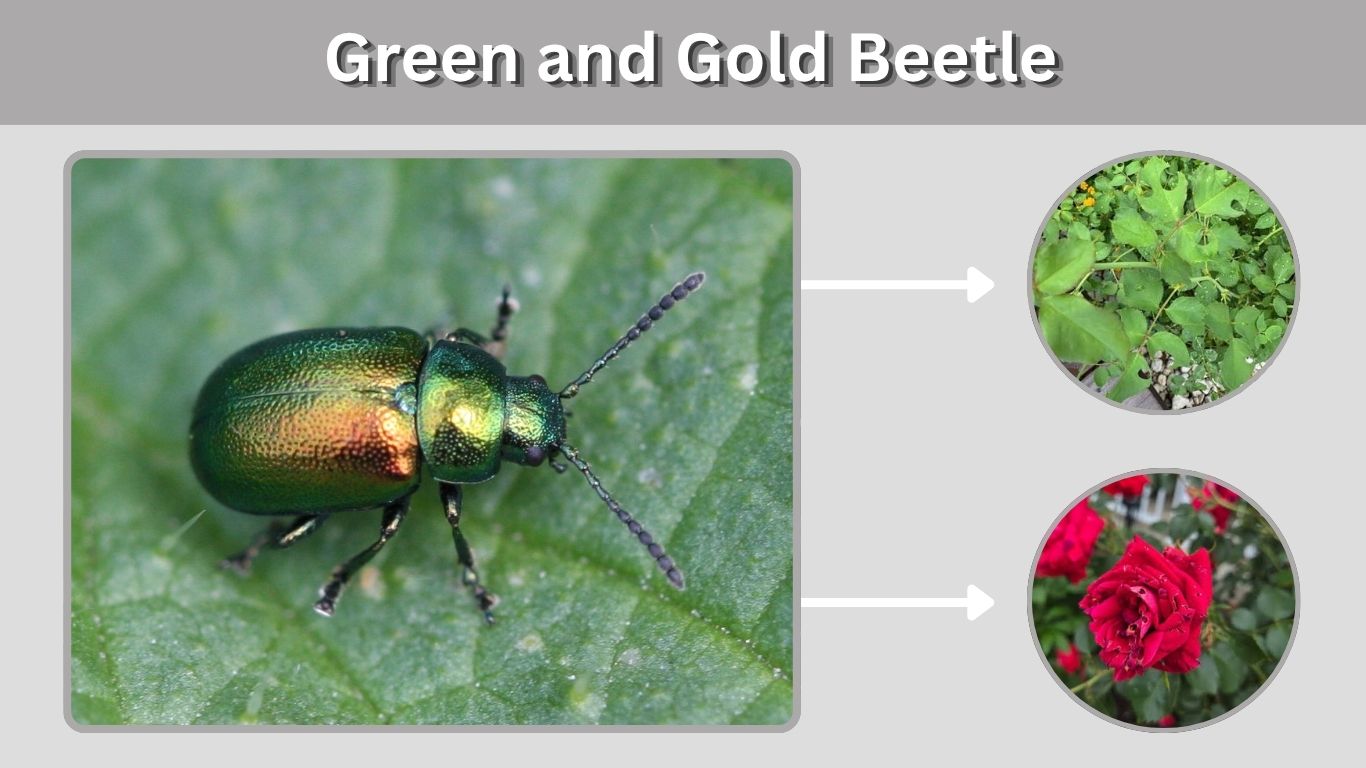
A green and gold beetle is usually a shiny, metallic beetle with green, bronze, copper, or golden markings. It is not one single species. The beetle could be a green June beetle, Japanese beetle, golden tortoise beetle, green dock beetle, rose chafer, or another metallic scarab or leaf beetle. To identify it correctly, look at size, body shape, wings, feeding plant, location, and whether it has a horn-like projection.
What Is a Green and Gold Beetle?
A green and gold beetle is a color-based description, not a scientific name. Many beetles have metallic bodies because their outer shell reflects light in green, gold, bronze, or copper tones. Some are harmless flower visitors, while others can damage leaves, fruit, lawns, or garden plants.
The most common possibilities include:
- Green June beetle
- Figeater beetle
- Japanese beetle
- Golden tortoise beetle
- Green dock beetle
- Rose chafer
- Metallic wood-boring beetles
- Green or gold scarab beetles
For identification, size is very important. A large green and gold flying beetle is often a scarab such as a green June beetle or figeater beetle. A tiny golden beetle on leaves may be a golden tortoise beetle. A small green-gold beetle in the UK may be a green dock beetle.
Green and Gold Beetle Identification Table
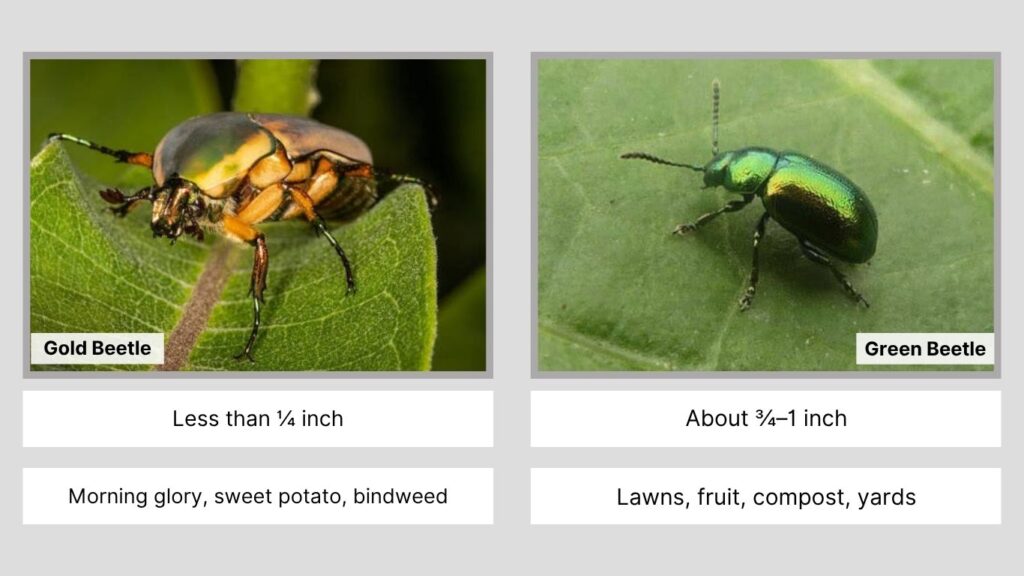
Use this table to compare the most likely green and gold beetles.
| Beetle Type | Size | Key Look | Common Place Found |
| Green June beetle | About ¾–1 inch | Metallic green with bronze or yellowish edges | Lawns, fruit, compost, yards |
| Figeater beetle | ¾–1⅓ inches | Large metallic green with tan margins | Western U.S., fruit trees, compost |
| Japanese beetle | ⅓–½ inch | Metallic green body, copper wing covers, white side tufts | Gardens, roses, lawns |
| Golden tortoise beetle | Less than ¼ inch | Shiny gold or orange, rounded and flattened | Morning glory, sweet potato, bindweed |
| Green dock beetle | 4–6 mm | Small green-gold beetle with shiny wing cases | Dock and sorrel plants, UK/Europe |
| Rose chafer | Around 20 mm | Metallic coppery-green with pale streaks | Flowers, roses, gardens |
Common Types of Green and Gold Beetles
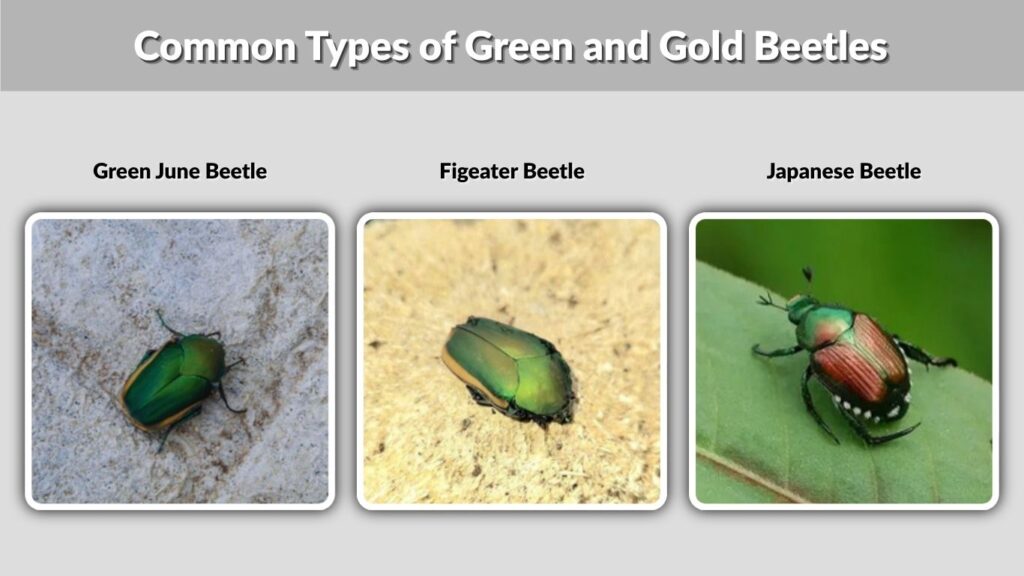
Many shiny green and gold beetles look similar from a distance. However, their body shape, feeding habits, and host plants can quickly narrow the answer.
Green June Beetle
The green June beetle is a large metallic green scarab beetle. Adults are usually about ¾ to 1 inch long, and their body edges can look bronze, yellow, or reddish-brown. They often fly during the day with a loud buzzing sound and may appear around lawns, compost, fruit trees, and yards. NC State Extension describes adult green June beetles as metallic green and nearly 1 inch long, with bronze to yellow body margins.
Green June beetle grubs live in soil rich in organic matter. They may push up small soil mounds in turf, but adults are usually more noticeable because they are large, shiny, and clumsy fliers.
Figeater Beetle
The figeater beetle, also called green fruit beetle, is another large green and gold flying beetle. It is common in parts of the western and southwestern United States. UC IPM describes the adult as ¾ to 1 1⁄3 inches long, mostly metallic green from above, with brown or tan along the outer wing-cover margins. It may also have a short hornlike projection on the face.
Figeater beetles are often seen around ripe fruit, compost piles, and decaying organic matter. They may feed on soft or damaged fruits, including figs, peaches, grapes, and other ripe fruit.
Japanese Beetle
The Japanese beetle is one of the most important garden pests that can look green and gold. Adults are shiny metallic green with copper-brown wing covers and small white hair patches along the sides of the abdomen. The University of Minnesota Extension describes adults as about ⅓ to ½ inch long with a metallic green head and thorax, copper-brown wing covers, and white hair patches along the abdomen.
Japanese beetles feed on many ornamental and food plants. They often skeletonize leaves, leaving the veins behind. Roses, grapes, beans, fruit trees, and many landscape plants can be affected.
Golden Tortoise Beetle
A tiny shiny gold beetle on leaves may be a golden tortoise beetle. This beetle is nearly circular, flattened, and often looks like a drop of polished gold. The Missouri Department of Conservation notes that the golden tortoise beetle is shiny metallic gold or orange when alive and is less than ¼ inch long. It feeds on plants in the morning glory family, including sweet potatoes and bindweed.
Golden tortoise beetles may change color when disturbed. They can look gold, orange, reddish, or spotted depending on condition and stress.
Green Dock Beetle
The green dock beetle is a small metallic green-gold beetle often found in the UK and Europe. NatureSpot describes it as 4–6 mm long, with green-golden wing cases that often have a sheen. It is usually found on dock plants.
If you search “green and gold beetle UK,” this is one of the strongest possibilities, especially if the beetle is small and found on dock, sorrel, or nearby vegetation.
Rose Chafer
The rose chafer is a beautiful metallic green beetle seen on flowers. The Wildlife Trusts describe it as metallic coppery-green with small creamy-white streaks on the wing cases. It is often seen on roses and other flowers in sunny weather.
Rose chafers may nibble flower petals, but they are also part of natural garden biodiversity. Their larvae help break down decaying plant matter.
Large Green and Gold Flying Beetle
A large green and gold flying beetle is usually a scarab beetle. These beetles are thick-bodied, oval, and often noisy in flight. They may bump into people, windows, or outdoor lights, but they are not trying to attack.
Common large green and gold flying beetles include:
- Green June beetle
- Figeater beetle
- Rose chafer
- Flower chafer beetles
- Some rhinoceros or scarab beetles
If the beetle has a horn or hornlike bump, it may be a type of scarab. The figeater beetle has a short hornlike projection on the face, according to UC IPM.
Shiny Green and Gold Beetle Eating Leaves
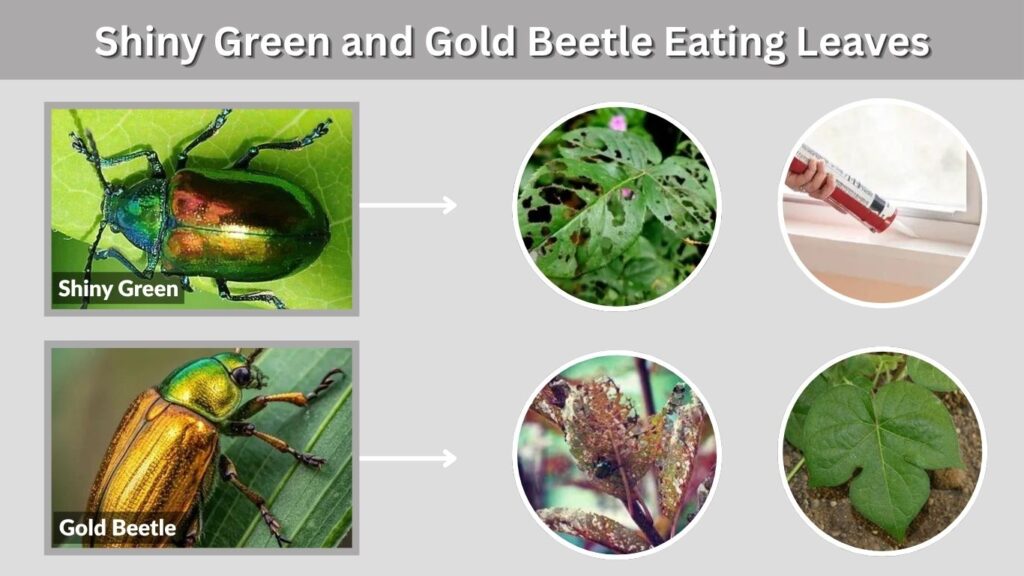
A green and gold beetle eating leaves may be harmless or harmful depending on the species. Leaf damage is especially important if several beetles are present.
Look for these signs:
- Skeletonized leaves
- Ragged holes in petals
- Beetles gathering on roses
- Chewed sweet potato or morning glory leaves
- Beetles swarming over garden plants
- Grubs or soil mounds in turf
Japanese beetles are more serious because they gather in groups and feed heavily on leaves and flowers. Golden tortoise beetles usually cause minor leaf holes on morning glory relatives. Green dock beetles feed on dock plants and related host plants.
Green and Gold Beetles Swarming My Yard
If green and gold beetles are swarming your yard, they may be emerging adults from soil or compost-rich areas. Green June beetles and figeater beetles often fly in daylight and may seem clumsy or aggressive because of their loud buzzing. They are attracted to ripe fruit, compost, decaying matter, and sometimes moist organic soil.
To reduce swarming:
- Remove overripe fallen fruit.
- Turn or manage compost piles properly.
- Avoid leaving rotting produce outside.
- Check lawns for grub activity.
- Keep outdoor lights off when beetles are active.
- Seal gaps around windows and doors.
If beetles are feeding heavily on ornamental plants, identify the species before using pesticides. Some metallic beetles are beneficial or only minor pests.
Are Green and Gold Beetles Dangerous?
Most green and gold beetles are not dangerous to people. They do not sting, and most do not bite unless handled roughly. Large scarab beetles may feel alarming when they fly into people, but they are usually harmless.
The main concerns are garden damage and turf damage. Japanese beetles can damage leaves and flowers. Green June beetle grubs may disturb turf soil. Figeater beetles may feed on soft ripe fruit. Golden tortoise beetles and green dock beetles usually cause smaller feeding marks.
How to Get Rid of Green and Gold Beetles
Control depends on the species. Do not treat every shiny beetle as a pest. Some are harmless, while others only need control when damage becomes noticeable.
| Problem | Likely Beetle | Best Control |
| Beetles eating roses and leaves | Japanese beetle | Handpick, protect plants, manage grubs |
| Large beetles around fruit | Figeater or green June beetle | Remove fallen fruit and compost attractants |
| Tiny gold beetles on morning glory | Golden tortoise beetle | Usually no control needed |
| Small green-gold beetles on dock | Green dock beetle | Remove unwanted dock plants if needed |
| Beetles entering house | Accidental outdoor beetles | Seal gaps, use screens, reduce night lighting |
For garden plants, handpicking is often useful when beetle numbers are low. Drop beetles into soapy water early in the morning when they are slower. For fruit areas, sanitation is important because ripe and decaying fruit can attract large scarab beetles.
Green and Gold Beetle Spiritual Meaning
Some people search for the spiritual meaning of a green and gold beetle because the colors look unusual and jewel-like. Spiritually, people may see green as growth, renewal, and nature, while gold may symbolize value, luck, or transformation. However, this is cultural symbolism, not a scientific identification method.
For real identification, always use physical clues: size, shape, wing covers, antennae, host plant, and location.
FAQs
What is a green and gold beetle?
A green and gold beetle is usually a metallic beetle with green, gold, bronze, or copper coloring. It may be a green June beetle, figeater beetle, Japanese beetle, golden tortoise beetle, green dock beetle, rose chafer, or another shiny scarab or leaf beetle.
What is a large green and gold flying beetle?
A large green and gold flying beetle is often a green June beetle or figeater beetle. These scarab beetles are thick-bodied, shiny, and noisy in flight. They may fly clumsily around yards, fruit trees, compost, or lawns but are usually not dangerous to people.
Is a shiny green and gold beetle harmful?
Most shiny green and gold beetles are not harmful to humans. Some can damage plants, especially Japanese beetles and certain leaf beetles. Others are harmless flower visitors or decomposers. The level of concern depends on the species and how much plant damage you see.
What green and gold beetle eats leaves?
Japanese beetles, golden tortoise beetles, and green dock beetles can eat leaves. Japanese beetles often cause the most noticeable garden damage because they feed in groups and skeletonize leaves. Golden tortoise beetles usually feed on morning glory relatives, while green dock beetles feed mostly on dock plants.
How do I identify a green and gold beetle?
Start with size and location. A large flying beetle may be a green June beetle or figeater beetle. A tiny gold beetle in morning glory may be a golden tortoise beetle. A small green-gold beetle on dock in the UK may be a green dock beetle.