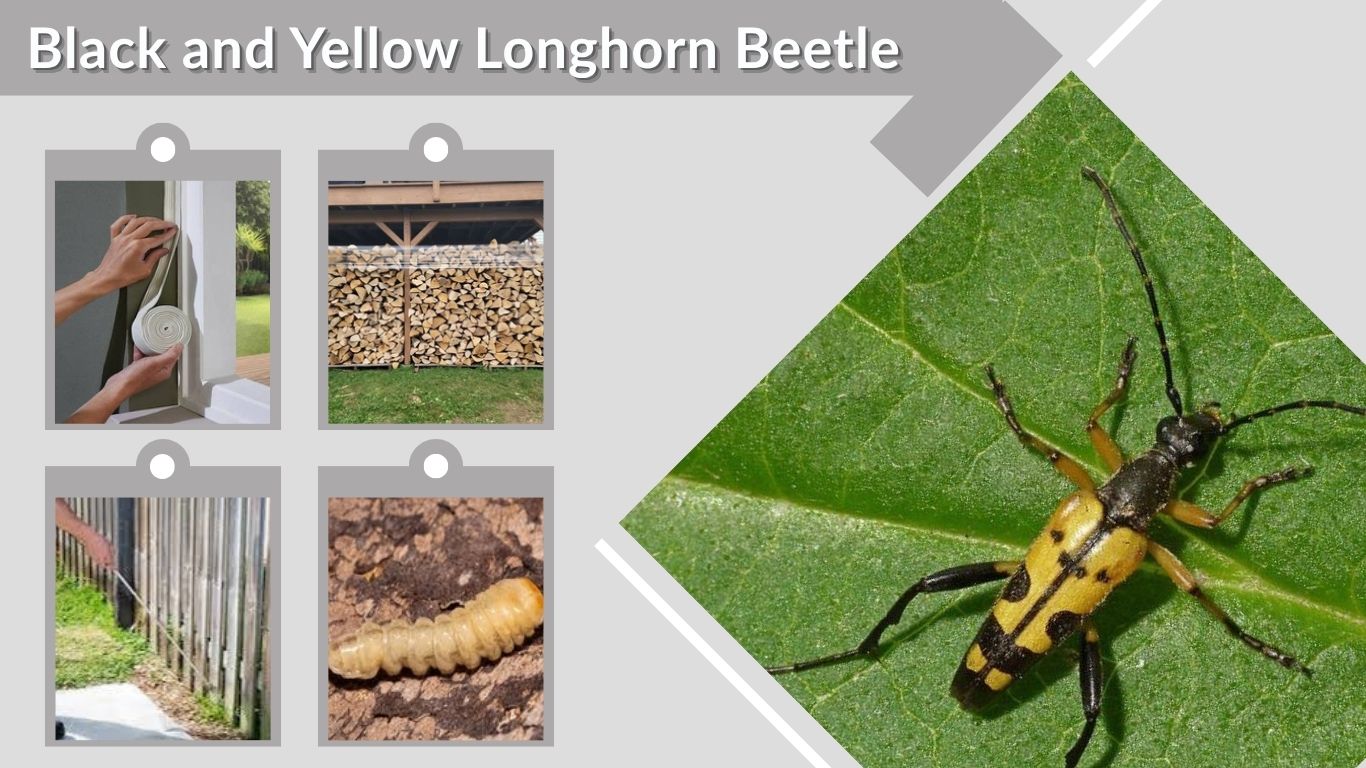
A black and yellow longhorn beetle is easy to notice because of its bold warning-like colors, long antennae, narrow body, and wasp-like appearance. In many UK searches, this name often refers to Rutpela maculata, also called the black-and-yellow longhorn beetle or spotted longhorn beetle. However, in North America and other regions, several longhorn beetles can look black and yellow, so identification depends on body shape, markings, location, and where the beetle was found.
What Is a Black and Yellow Longhorn Beetle?
The name “black and yellow longhorn beetle” is usually used for beetles in the longhorn beetle family, Cerambycidae. These beetles are named for their long antennae, which may be as long as or longer than the body. Many species have slender bodies and strong jaws, and their larvae often develop inside dead, decaying, stressed, or recently cut wood.
In the UK, the black-and-yellow longhorn beetle is commonly linked with Rutpela maculata. It has a black head and thorax, yellow wing cases with black markings, long legs, and banded antennae. The wing cases taper toward the rear, giving it a narrow, pointed look. The Wildlife Trusts describes it as a distinctive black and yellow beetle with long legs, very long antennae, and variable black markings on yellow wing cases.
Black and Yellow Longhorn Beetle Identification
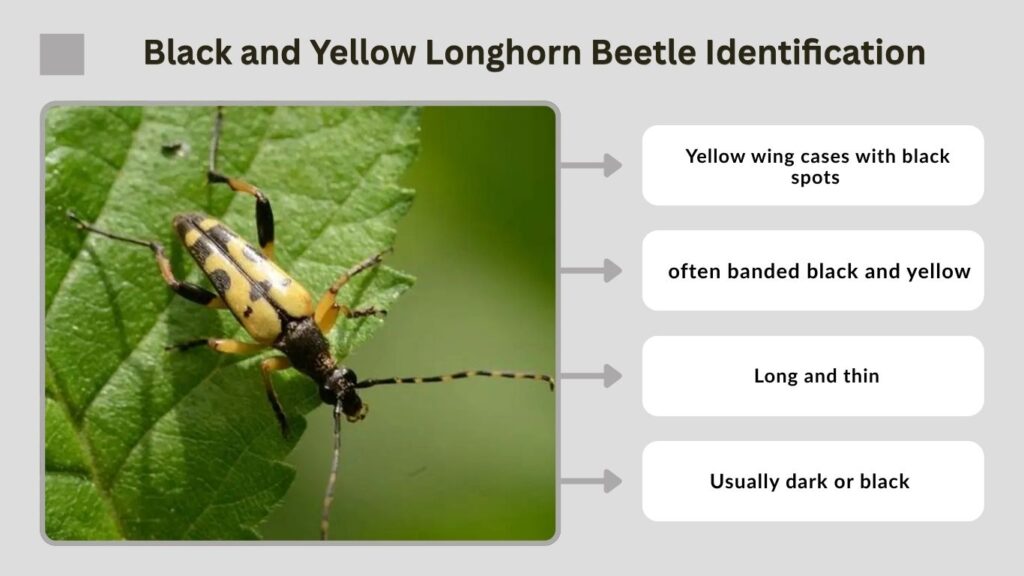
A black and yellow longhorn beetle can look like a wasp at first glance. This is one reason many people search for it after finding one on flowers, windows, firewood, or garden plants.
Key Identification Features
- Color: Yellow wing cases with black spots, bands, or broken stripes
- Antennae: Very long, often banded black and yellow
- Body shape: Slender, narrow, and slightly tapering toward the rear
- Legs: Long and thin, often partly yellow and partly dark
- Head and thorax: Usually dark or black
- Size: Many common black-and-yellow longhorn types are small to medium-sized; Rutpela maculata is often listed around 13–20 mm long.
- Behavior: Often seen on flowers, hedgerows, woodland edges, or near old wood
The exact pattern can vary. Some individuals have more spots, while others have broken bands or darker wing cases. NatureSpot notes that Rutpela maculata has a variable pattern of black and yellow markings, which is why two beetles of the same species may not look exactly alike.
Why Does It Look Like a Wasp?
Many black and yellow longhorn beetles look like wasps because their colors may help discourage predators. This is called mimicry. Birds and other predators often avoid insects with yellow-and-black patterns because they associate those colors with stinging insects.
However, a longhorn beetle is not a wasp. It does not have a stinger, and it does not behave aggressively like a defensive wasp or hornet. Its long antennae, hard wing cases, and beetle-shaped body separate it from true wasps.
| Feature | Black and Yellow Longhorn Beetle | Wasp |
| Antennae | Very long and often banded | Shorter and thinner |
| Body covering | Hard wing cases | No hard beetle wing cases |
| Sting | No sting | Many species can sting |
| Main activity | Flowers, wood, hedgerows | Hunting, nesting, feeding |
| Body shape | Slender beetle body | Narrow-waisted body |
Black and Yellow Longhorn Beetles Habitat and Distribution
Black and yellow longhorn beetles are usually found around woodland edges, hedgerows, meadows, gardens, and places with flowers. Adults often visit flowers for nectar and pollen, especially flat-topped flowers where they can walk and feed easily.
For Rutpela maculata, NatureSpot says adults are usually found along hedgerows and woodland margins, often on hawthorn or umbel flowers. It also notes that adults are seen from May until September, while the larvae live in rotten wood.
In the UK, this beetle is common and widespread in England and Wales, but less common farther north. In the United States, searches such as “black and yellow longhorn beetle Ohio,” “black and yellow longhorn beetle Texas,” and “yellow and black longhorn type beetle NYC” may refer to different species because North America has several black-and-yellow longhorn beetles.
Life Cycle of Black and Yellow Longhorn Beetles
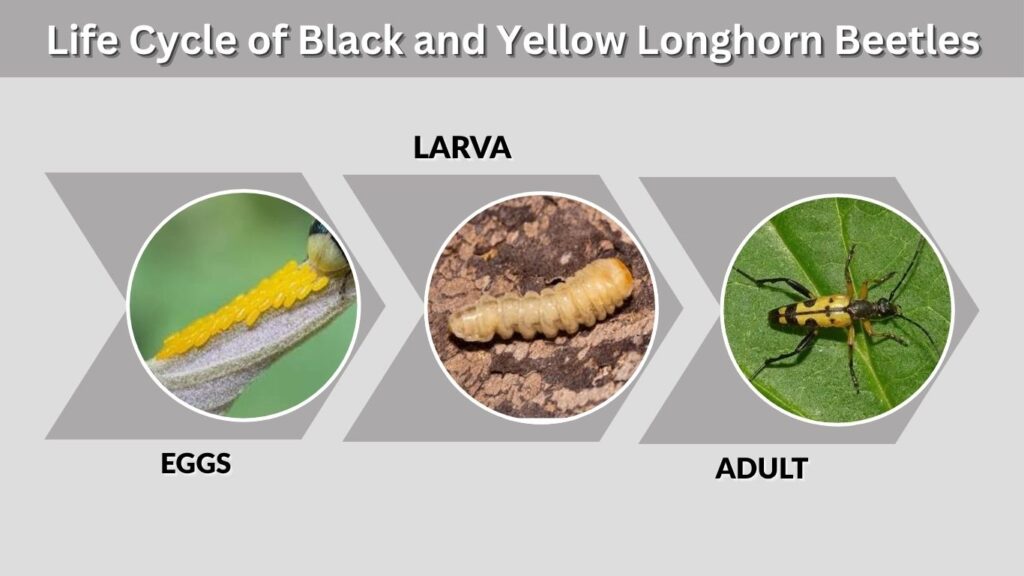
Like other beetles, longhorn beetles go through four main life stages: egg, larva, pupa, and adult. The adult is the stage most people see, but the larval stage often lasts much longer.
Females lay eggs on or near suitable wood. After hatching, the larvae tunnel into wood and feed inside it. Depending on the species, they may develop in decaying branches, old stumps, dead roots, firewood, or stressed trees. When fully grown, they pupate and later emerge as adult beetles.
Main Life Stages
- Egg: Laid near suitable wood or plant material
- Larva: Wood-boring stage that feeds inside wood
- Pupa: Resting transformation stage inside or near wood
- Adult: Winged stage that feeds, mates, and lays eggs
This is why longhorn beetles are sometimes called roundheaded borers in their larval stage. Oklahoma State University Extension explains that roundheaded borers are the larvae of longhorned beetles and feed inside stems, branches, or trunks of woody plants.
Do Black and Yellow Longhorn Beetles Bite?
Black and yellow longhorn beetles are not aggressive toward people. They do not chase humans, sting, or seek out skin. If handled roughly, a larger longhorn beetle may try to pinch with its jaws as a defense, but this is not the same as a venomous bite.
For beetles emerging from firewood or wandering indoors, Iowa State University Extension says longhorned beetles may crawl around as nuisance pests but cannot bite, sting, attack furniture, or damage the house structure. For larger species such as Asian longhorned beetles, Forest Research notes they are not harmful to people, though they should be handled carefully because they can nip.
The safest advice is simple: do not pick them up with bare hands. Use a cup and paper to move the beetle outside.
Are Black and Yellow Longhorn Beetles Poisonous?
Black and yellow longhorn beetles are not poisonous to humans or pets. Their bright colors may look like a warning sign, but most are harmless beetles using wasp-like colors for protection.
They do not inject venom, and they do not have a stinger. If a pet eats one, it may cause mild irritation or an upset stomach simply because insects can be hard to digest, but the beetle itself is not considered poisonous.
Black and Yellow Longhorn Beetle in the House
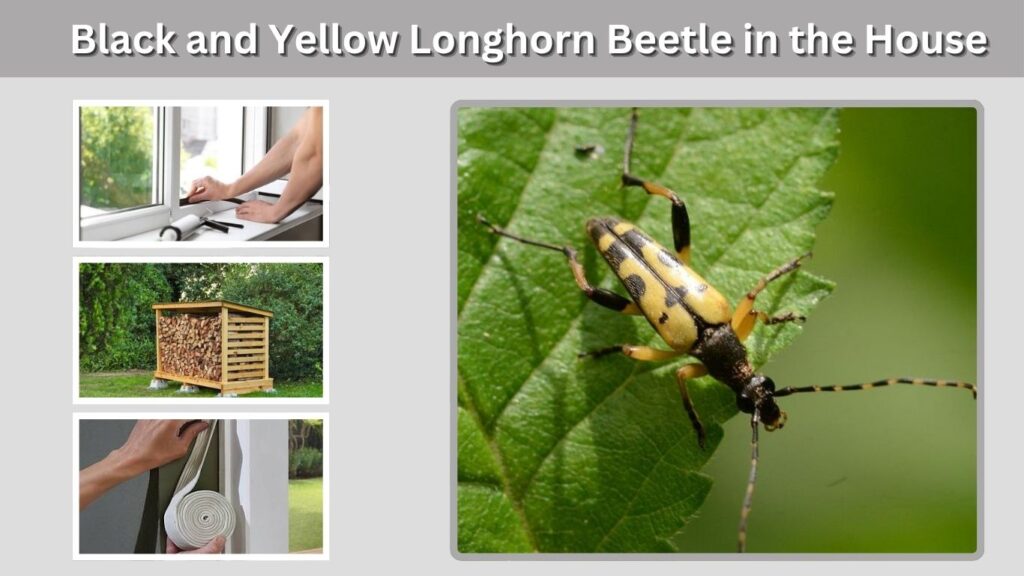
Finding a black and yellow longhorn beetle in your house can be surprising, but it does not always mean you have an infestation. These beetles may enter homes by accident through open doors, windows, firewood, or logs brought indoors.
Iowa State University Extension notes that roundheaded borers are commonly found in firewood and that longhorned beetles may emerge from wood brought indoors. They may also enter houses as accidental invaders.
What to Do If You Find One Indoors
- Capture it gently with a cup and paper.
- Release it outside near vegetation or wood piles.
- Check whether you recently brought firewood indoors.
- Store firewood outside and bring in only what you need soon.
- Seal gaps around windows, doors, and screens.
- Do not spray pesticides for one or two accidental beetles.
Most longhorn beetles found indoors are temporary nuisance insects. However, if you see repeated beetles, fresh exit holes in wood, or piles of sawdust-like frass, inspect wood furniture, firewood, or structural timber more carefully.
Can Black and Yellow Longhorn Beetles Damage Wood?
Adult beetles do not usually damage wood by crawling around your home. The larvae are the wood-boring stage. In nature, many species help break down dead or decaying wood, making them useful parts of woodland ecosystems.
The main concern is not the adult beetle itself but where it came from. If it emerged from firewood, the problem is usually limited to the log. If many beetles are emerging from structural wood, old beams, or furniture, that may require expert inspection.
| Situation | Risk Level | What It Usually Means |
| One beetle on a window | Low | Accidental indoor visitor |
| Beetle near fresh flowers | Low | Adult wandered in or flew in |
| Beetle from firewood | Usually low | Larva developed in the log |
| Many beetles plus exit holes | Medium to high | Possible wood-borer activity |
| Sawdust/frass under beams | Higher | Needs inspection |
How to Get Rid of Black and Yellow Longhorn Beetles
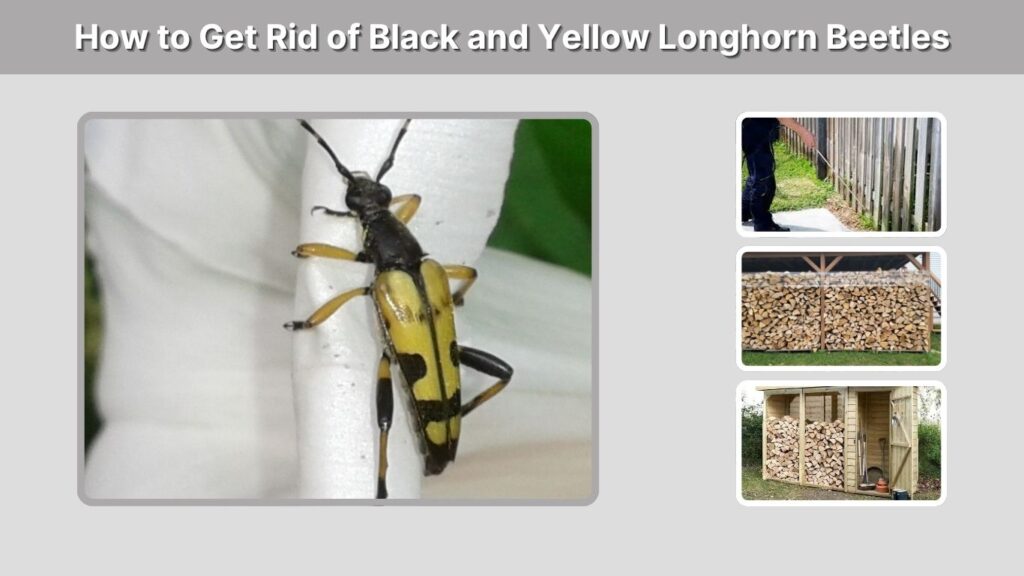
For a single beetle, physical removal is best. There is usually no need for pesticides. Longhorn beetles outdoors are often beneficial or harmless, especially if they are visiting flowers.
To reduce indoor sightings, focus on prevention. Store firewood away from the house, avoid keeping logs indoors for long periods, and inspect old wood before bringing it inside. Michigan State University Extension recommends storing firewood indoors for as short a time as possible before burning because insects may warm up and leave the wood once brought inside.
Natural Control Tips
- Keep firewood outdoors until needed.
- Store logs off the ground and away from exterior walls.
- Remove decaying wood close to the house if beetles are frequent.
- Repair torn screens and seal entry points.
- Avoid unnecessary insecticide use outdoors.
- Contact pest control only if you suspect structural wood damage.
Common Lookalikes
Several insects can be confused with a black and yellow longhorn beetle. Some are harmless beetles, while others are wasps or invasive wood-boring species.
Possible Lookalikes
- Wasps: Similar black-and-yellow colors but no hard wing cases.
- Locust borer: A North American black-and-yellow longhorn beetle often seen on goldenrod.
- Painted hickory borer: Another black-and-yellow longhorn beetle that may emerge from firewood.
- Asian longhorned beetle: Usually glossy black with white spots, not yellow, but often searched with longhorn beetle terms.
- Soldier beetles: Softer-bodied beetles sometimes found on flowers.
If you need an exact species ID, take a clear photo from above, note your location, and record where it was found: flower, wall, firewood, tree trunk, or inside the house.
Quick Facts About the Black and Yellow Longhorn Beetle
- Many black and yellow longhorn beetles are harmless to people.
- They do not sting and are not poisonous.
- The long antennae are one of the easiest identification clues.
- Adults are often seen on flowers in warm months.
- Larvae commonly live in dead, rotten, stressed, or cut wood.
- A beetle indoors often comes from firewood or enters by accident.
- In the UK, “black-and-yellow longhorn beetle” commonly refers to Rutpela maculata.
- Color patterns can vary, so markings alone may not confirm the species.
FAQs
What is the name of the black and yellow longhorn beetle?
In the UK, the name usually refers to Rutpela maculata, also called the black-and-yellow longhorn beetle or spotted longhorn beetle. In North America, similar black-and-yellow longhorn beetles may belong to other species, so location is important for exact identification.
Do black and yellow longhorn beetles bite humans?
They are not aggressive and do not seek out people to bite. Some larger longhorn beetles may pinch if handled roughly, but they do not sting or inject venom. It is best to move them with a cup instead of picking them up.
Are black and yellow longhorn beetles poisonous to dogs or cats?
They are not considered poisonous. However, pets may drool, gag, or get mild stomach upset after eating insects. If your pet shows serious symptoms or eats many beetles, contact a veterinarian for advice.
Why is there a black and yellow longhorn beetle in my house?
It may have flown in by accident or emerged from firewood brought indoors. A single beetle usually does not mean an infestation. Check firewood, windows, and nearby entry points, then release the beetle outside.
How do I get rid of black and yellow longhorn beetles naturally?
Remove individual beetles with a cup and paper, store firewood outside, seal gaps around doors and windows, and avoid keeping logs indoors for long periods. Pesticides are usually unnecessary unless there is evidence of active wood damage.