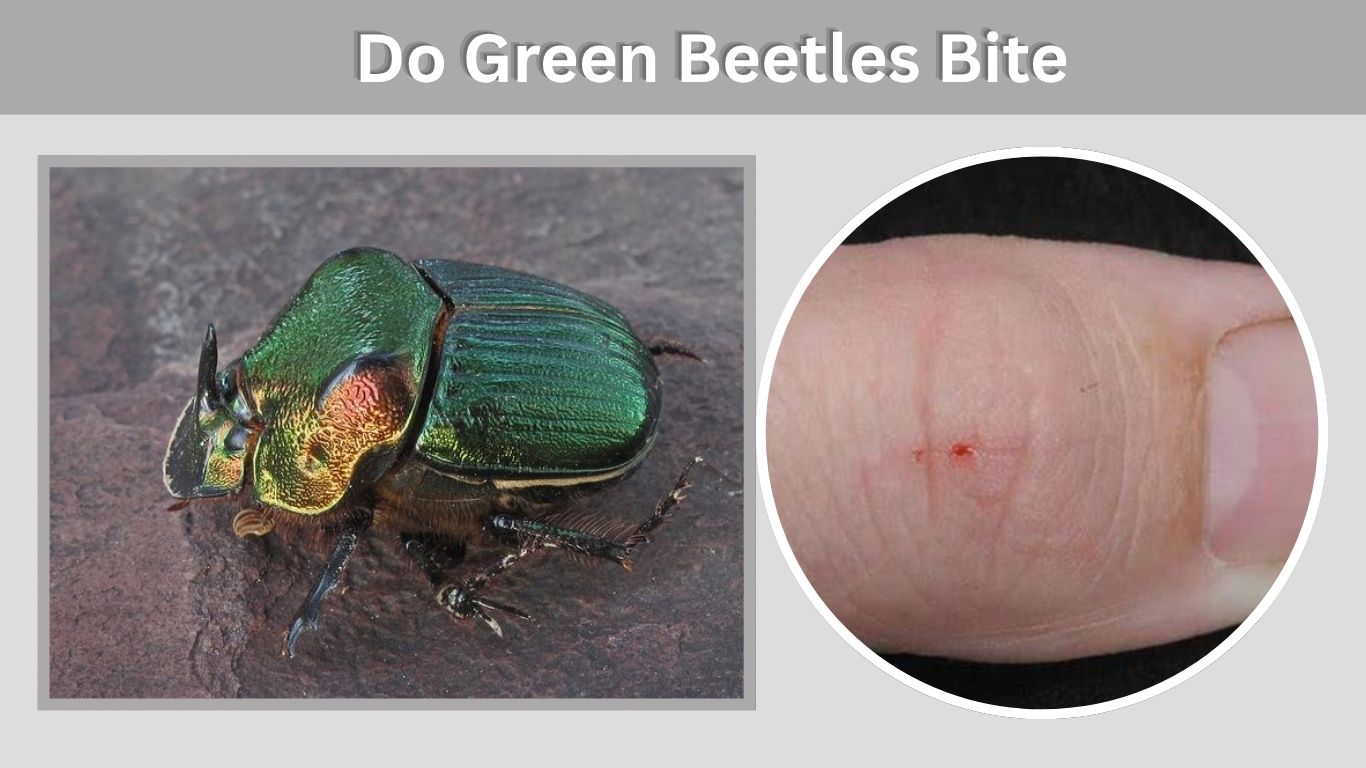
Green beetles may look alarming because many are shiny, large, fast-flying, or bright metallic green. The good news is that most green beetles do not bite people and are not dangerous. Common types like green June beetles, Japanese beetles, green dock beetles, and fig beetles are usually harmless to humans. However, some green beetles, such as tiger beetles, may pinch if mishandled, while blister beetles can irritate skin without truly biting.
Do Green Beetles Bite Humans?
Most green beetles do not bite humans. They may crawl on skin, fly into people, or feel prickly because of their legs, but that does not mean they are trying to bite. Beetles have chewing mouthparts, but many plant-feeding species are not interested in human skin.
Green June beetles are a good example. They are large, noisy, metallic green beetles that often bump into people while flying. North Carolina State Extension describes green June beetles as attractive and harmless to humans.
Some green beetles can pinch if you hold or squeeze them. This is usually a defensive reaction, not an attack. The bite is normally mild and does not require treatment unless there is an allergic reaction or skin irritation.
Common Green Beetles and Their Bite Risk
Different “green beetle” searches may refer to different insects. Some are scarab beetles, some are leaf beetles, and some are predatory beetles.
| Green beetle type | Does it bite? | Risk to humans |
| Green June beetle | No serious bite | Harmless nuisance |
| Green fruit/fig beetle | Rarely, if handled | Usually harmless |
| Japanese beetle | No | Harmless to people |
| Green dock beetle | No known human bite issue | Harmless to people |
| Green tiger beetle | Can pinch if mishandled | Mild painful bite possible |
| Green blister beetle | Not a true bite | Can cause skin blisters |
Green June Beetle Bite
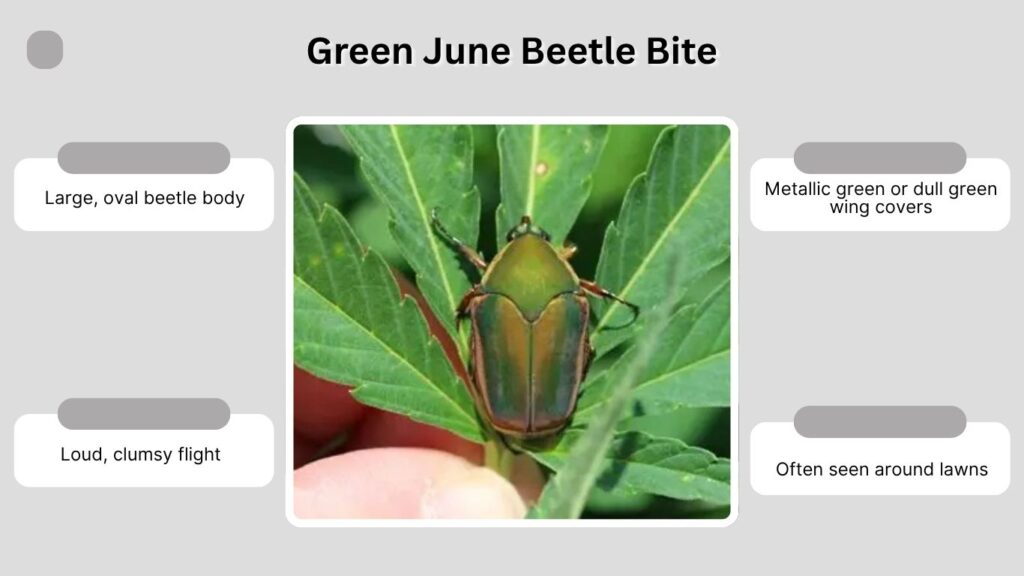
Green June beetles are among the most searched green beetles. They are large, shiny green scarab beetles that fly during warm months. People often ask, “Do green June beetles bite?” because these beetles may fly directly into people, windows, porches, or garden areas.
They do not sting, and they are not aggressive. Their legs may feel scratchy, and their body size can make them seem intimidating, but they are not dangerous to humans. Green June beetle grubs can damage lawns, and adults may feed on ripe or damaged fruit, but the beetles themselves are not a human-biting pest.
Identification Features
- Large, oval beetle body
- Metallic green or dull green wing covers
- Brownish or bronze edges on the body
- Loud, clumsy flight
- Often seen around lawns, fruit trees, compost, and gardens
Metallic Green Beetle Bite
A metallic green beetle bite search can refer to several species. Shiny green beetles include green June beetles, Japanese beetles, tiger beetles, green dock beetles, and some blister beetles. The bite risk depends on the species.
Japanese beetles are metallic green and copper-colored. They damage plants, flowers, and fruit, but they are not dangerous to humans. The Washington State Department of Health says Japanese beetles do not bite or spread disease to humans, although they are invasive plant pests.
If a shiny green beetle lands on you, do not crush it. Brush it off gently or let it fly away.
Green Tiger Beetle Bite
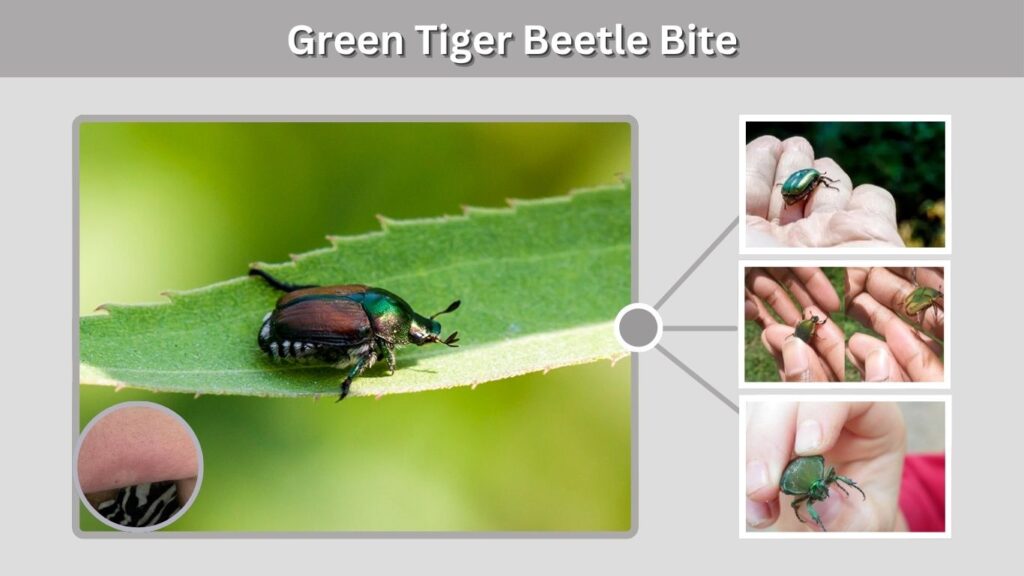
Green tiger beetles are different from harmless plant-feeding beetles. They are fast-running predators with strong jaws used to catch small insects. The six-spotted tiger beetle is a bright metallic green beetle found in parts of North America.
Tiger beetles are beneficial predators, but they can give a painful bite if mishandled. South Dakota State University Extension notes that tiger beetles are generalist predators and can produce a painful bite if mishandled, though it usually does not require treatment.
When a Green Tiger Beetle May Bite
- If you pick it up with bare fingers
- If you squeeze or trap it
- If it becomes defensive while handled
- If a child tries to catch it
The best choice is to leave tiger beetles alone. They help control other insects and do not need to be killed.
Green Blister Beetle Bite
A green blister beetle usually does not “bite” in the normal way. The concern is skin irritation. Blister beetles contain cantharidin, a chemical that can cause painful blisters if the beetle is crushed or rubbed against skin. North Dakota State University Extension explains that blister beetles get their name from cantharidin in their body fluids, which can cause blisters on people’s skin.
This is why you should never crush an unknown beetle on your skin. If you think you touched a blister beetle, wash the area with soap and water. Avoid scratching or breaking blisters.
Green Dock Beetle Bite UK
In the UK, “green beetle bite” may refer to the green dock beetle. This is a small, shiny green leaf beetle often found on dock plants. It is common and widespread in Britain, and its larvae feed on dock leaves.
Green dock beetles are not known as human-biting insects. They are plant feeders, not blood feeders. If one lands on your hand, it is usually harmless.
Green Shield Beetle Bite: Is It Really a Beetle?
Many people call green shield bugs “green beetles,” but they are not true beetles. They are shield-shaped insects with piercing mouthparts. In the UK, green shield bugs are common in gardens.
The Woodland Trust says shieldbugs do not bite people or pets. They may release an unpleasant smell when disturbed, but they are not dangerous.
What to Do If a Green Beetle Bit You
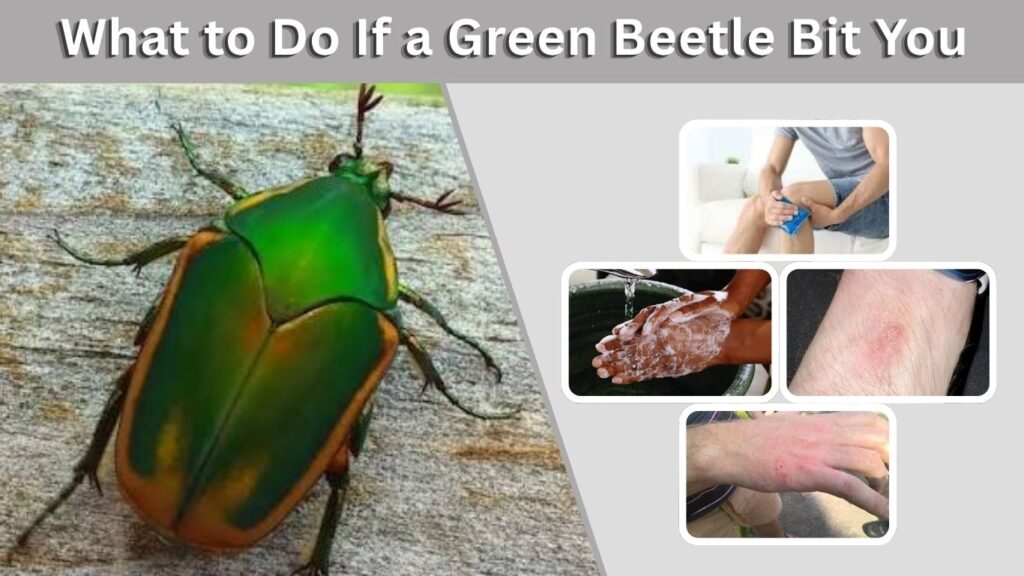
Most green beetle bites or pinches are mild. The main problem is usually irritation, not venom.
Simple First Aid
- Wash the area with soap and water.
- Apply a cold compress if it feels sore.
- Avoid scratching the skin.
- Do not crush unknown beetles with bare hands.
- Watch for swelling, rash, blistering, or breathing trouble.
Seek medical help if you develop severe swelling, spreading redness, dizziness, breathing difficulty, or signs of infection. Also be more careful if the beetle may have been a blister beetle.
How to Avoid Green Beetle Bites
Green beetles are easy to avoid with simple handling habits. Most problems happen when people pick them up, squeeze them, or crush them.
Prevention Tips
- Do not handle unknown beetles with bare hands.
- Use a cup and paper to move beetles outdoors.
- Wear gloves when gardening.
- Shake out clothing, towels, or gloves left outside.
- Avoid crushing bright green beetles on your skin.
- Teach children not to grab shiny beetles.
FAQs
Do green beetles bite people?
Most green beetles do not bite people. Green June beetles, Japanese beetles, and green dock beetles are usually harmless. Some predatory beetles, such as tiger beetles, may pinch if handled roughly, but they do not attack people.
Do green June beetles bite?
Green June beetles do not normally bite humans. They may fly into people and feel scratchy because of their legs, but they are not aggressive. They are more of a lawn or fruit nuisance than a biting insect.
Are metallic green beetles poisonous?
Most metallic green beetles are not poisonous to people. However, blister beetles can release cantharidin, which may cause skin blisters if crushed or rubbed on skin. It is best not to handle unknown shiny green beetles.
What green beetle can bite?
Green tiger beetles can bite or pinch if mishandled because they are predators with strong jaws. The bite may hurt briefly but is usually not serious. Blister beetles are more concerning for skin irritation than biting.
Should I kill green beetles in my garden?
Not always. Many green beetles are harmless or beneficial. Tiger beetles eat other insects, and green dock beetles feed on dock plants. If beetles are damaging fruit, flowers, or lawns, identify the species first before choosing control methods.