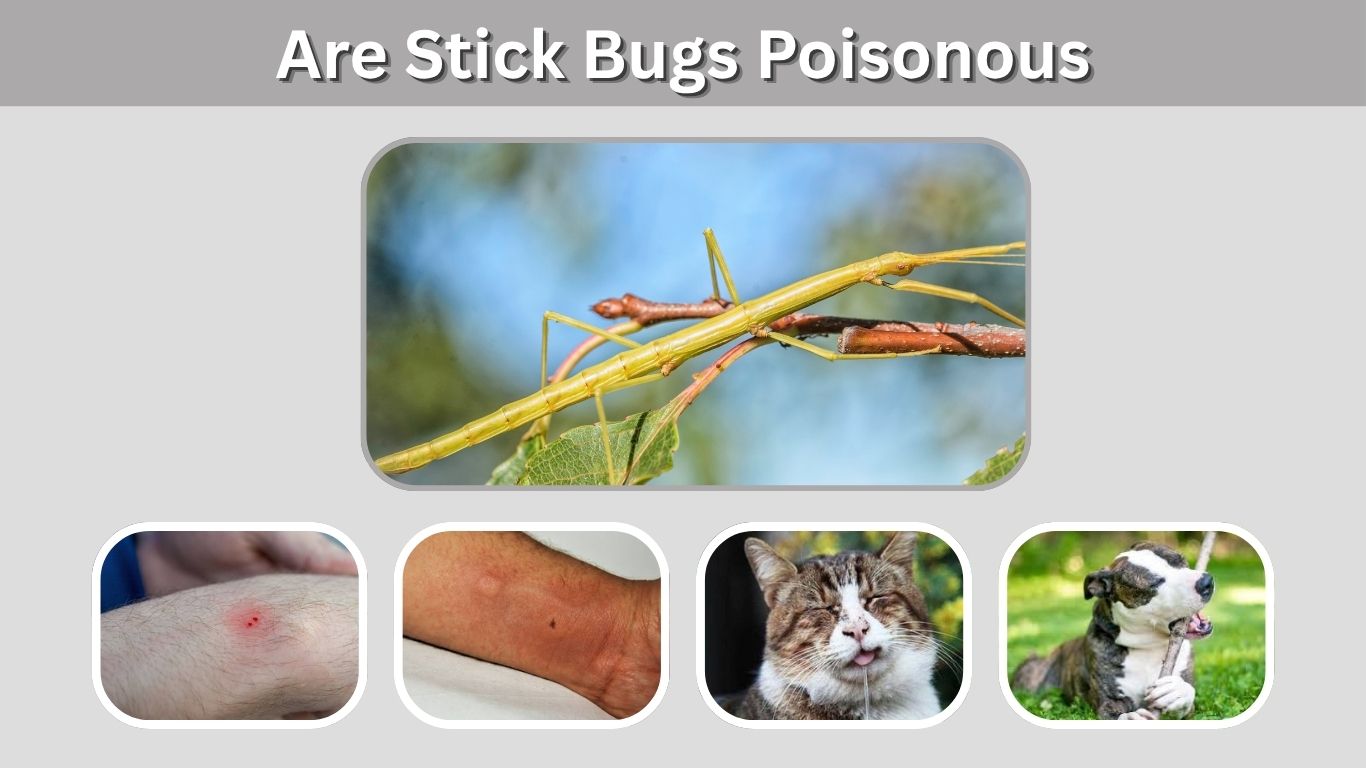
Stick bugs, also called walking sticks or stick insects, are famous for resembling twigs and branches. Despite their unusual appearance, most stick bugs are not poisonous and are not dangerous to humans or pets. They do not have venomous fangs or stingers. However, a few walking stick species can release defensive chemicals that may irritate the eyes, skin, or mouth. Understanding the difference between poisonous, venomous, and chemically defensive stick bugs helps explain whether these insects are actually something to worry about.
Are Stick Bugs Poisonous?
Most stick bugs are not poisonous. They are primarily plant-eating insects that rely on camouflage rather than toxins to protect themselves.
Their twig-like bodies allow them to blend into:
- Branches
- Leaves
- Shrubs
- Tree bark
- Grass
- Garden plants
Because camouflage is their main defense, most species simply remain motionless or try to escape when threatened.
Are Walking Stick Bugs Poisonous?
Walking stick bugs and stick bugs refer to insects in the order Phasmatodea.
Most members of this group are harmless. They do not normally contain dangerous poison capable of seriously harming a person who touches them.
Some species, however, possess chemical defenses. This is why people occasionally describe walking sticks as “poisonous,” even though that description is not technically accurate for most species.
Do Stick Bugs Have Poison?
Most stick insects do not possess poison in the way people commonly imagine poisonous animals.
However, certain species have glands capable of producing defensive secretions.
These chemicals are meant to discourage predators rather than capture prey.
Do Stick Bugs Spit Poison?
Some walking sticks can spray defensive chemicals toward a perceived threat.
The best-known example is the two-striped walkingstick (Anisomorpha buprestoides), which occurs in parts of the southeastern United States.
It can release an irritating defensive spray from glands near the front of its body.
The insect does not actually spit poison from its mouth. Instead, the chemical is released from specialized defensive glands.
Can a Stick Bug’s Spray Hurt You?
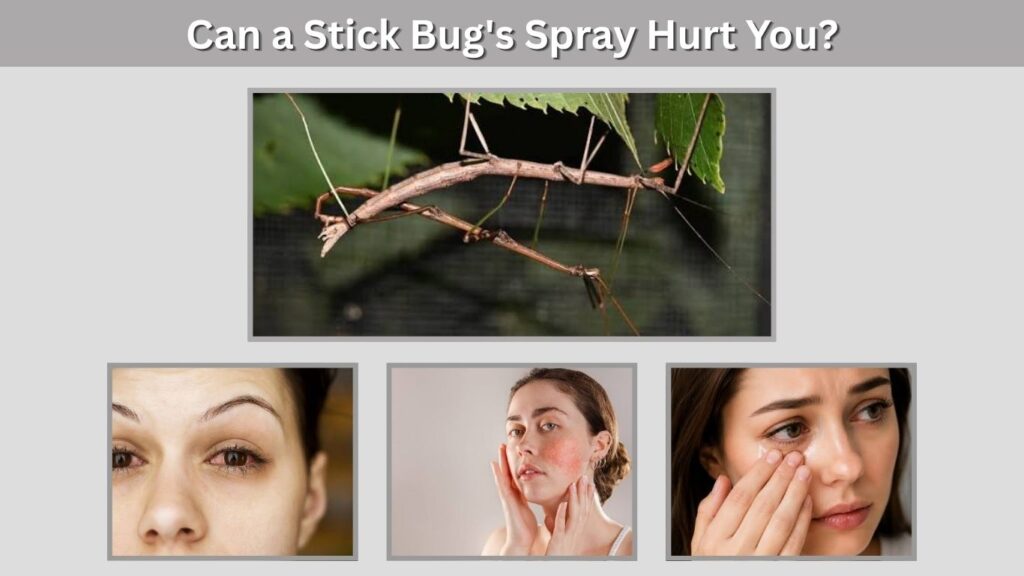
The defensive spray of certain walking stick species can cause significant irritation, especially if it reaches the eyes.
Possible effects include:
- Burning sensation
- Eye pain
- Redness
- Excessive tearing
- Temporary blurred vision
- Skin irritation
Eye exposure is generally more concerning than contact with intact skin.
What Should You Do If Spray Gets in Your Eyes?
If a walking stick sprays chemical secretion into your eyes, rinse them immediately with plenty of clean water.
Avoid rubbing your eyes because rubbing may worsen irritation.
Persistent pain, visual changes, or severe irritation should receive prompt medical attention.
Are Stick Bugs Poisonous to Humans?
For humans, most stick bugs pose very little danger.
Simply seeing or touching an ordinary stick insect is unlikely to cause poisoning.
The main concerns involve species capable of defensive spraying and accidental eye exposure.
Can Stick Bugs Bite Humans?
Most stick insects are not aggressive toward humans.
Their mouthparts are designed mainly for chewing leaves rather than biting animals.
A very large stick insect might pinch or nibble if handled roughly, but significant bites are unusual and generally not considered medically dangerous.
They do not inject venom when they bite.
Are Stick Bugs Poisonous If Eaten?
Stick insects are not generally considered dangerously poisonous simply because they are swallowed, but deliberately eating unidentified wild insects is not advisable.
Some species may contain or release defensive chemicals, and insects collected outdoors may also carry pesticides, parasites, or environmental contaminants.
Therefore, the fact that most stick bugs are harmless to touch does not mean every wild specimen should be considered safe to eat.
Are Stick Bugs Poisonous to Dogs?
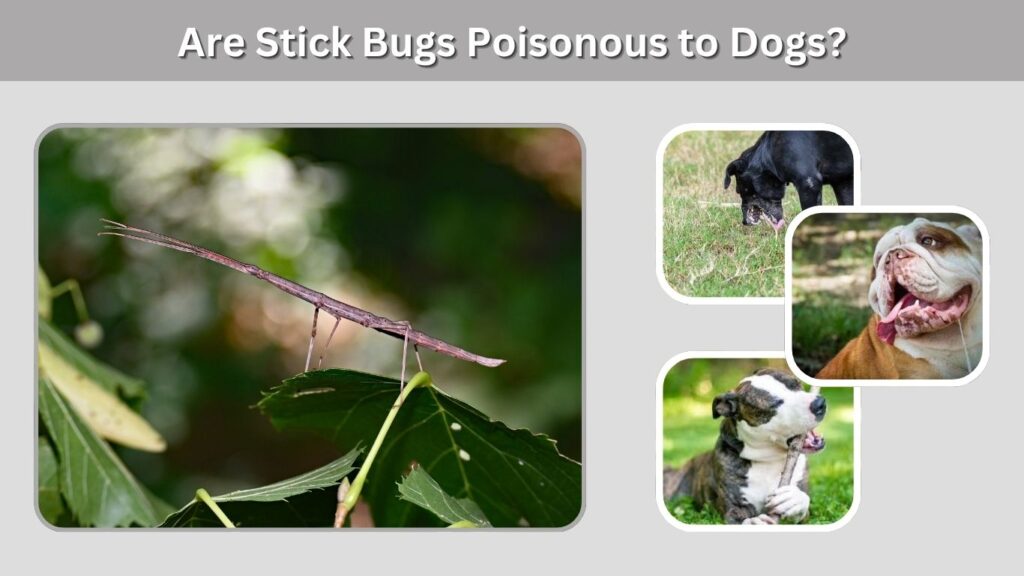
Most stick bugs are not highly poisonous to dogs, but dogs should still be discouraged from eating them.
A dog that mouths or eats a stick insect may experience irritation or digestive upset.
Possible symptoms can include:
- Drooling
- Pawing at the mouth
- Vomiting
- Mild stomach discomfort
- Eye irritation if sprayed
Walking Stick Bugs and Dogs
Extra caution is appropriate around defensive species such as the two-striped walkingstick.
If a dog’s face or eyes are sprayed, the animal may suddenly squint, rub its face, or produce excessive tears.
Rinsing the affected area with clean water can help remove the secretion. Persistent eye symptoms should be evaluated by a veterinarian.
Are Stick Bugs Poisonous to Cats?
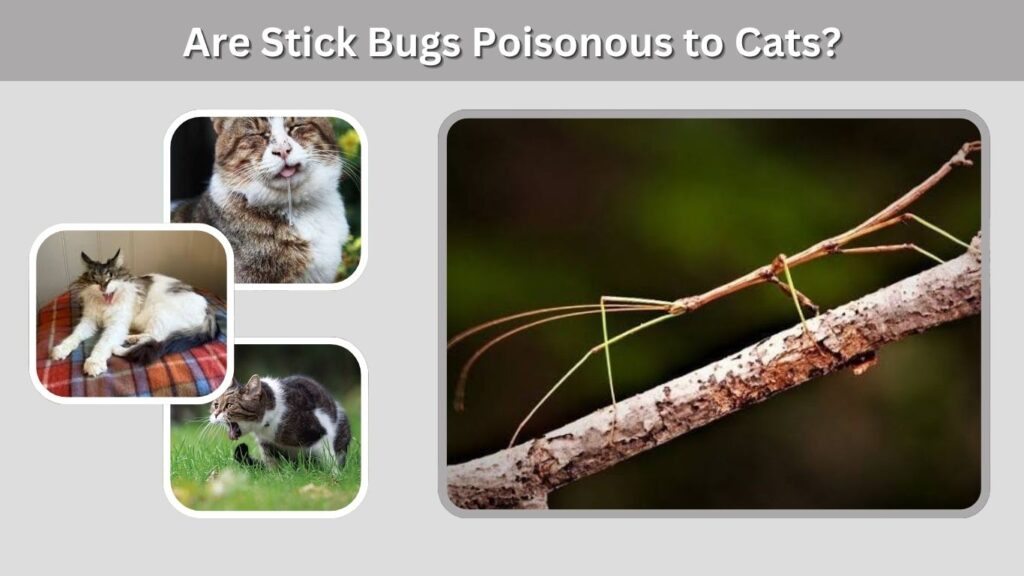
Most stick insects are not considered severely poisonous to cats.
However, cats frequently chase insects and may bite or swallow them.
A defensive secretion could irritate the mouth or eyes, while eating an insect could occasionally cause gastrointestinal discomfort.
Possible signs include:
- Drooling
- Vomiting
- Squinting
- Pawing at the mouth
- Eye redness
- Unusual discomfort
Cats showing persistent symptoms after encountering an unknown insect should be evaluated by a veterinarian.
Are Florida Stick Bugs Poisonous?
Florida is home to the two-striped walkingstick, one of the walking stick species most often associated with defensive chemical spraying.
This insect is usually dark brown or black with lighter stripes running along its body.
Two-Striped Walkingstick Defense
When threatened, the insect can direct a chemical spray toward predators.
The secretion is particularly irritating to the eyes, which helps discourage animals from attacking it.
Because of this defense, people sometimes describe the Florida walking stick as poisonous.
A more accurate explanation is that it possesses an irritating chemical defense rather than being a venomous insect.
Are Brown Stick Bugs Poisonous?
Color does not determine whether a stick insect has dangerous defensive chemicals.
Many stick insects are naturally brown because the coloration helps them resemble twigs and bark.
Most brown walking sticks are harmless.
Identification by species is much more useful than judging toxicity based solely on body color.
Are Green Stick Bugs Poisonous?
Green stick insects are also generally harmless.
Their green coloration provides camouflage among leaves and vegetation.
Like brown species, some green walking sticks may have additional defensive behaviors, but being green does not mean the insect is poisonous.
Common Stick Bug Defenses
Stick insects use several strategies to avoid predators:
- Camouflage
- Remaining motionless
- Swaying like vegetation
- Dropping from branches
- Playing dead
- Releasing unpleasant odors
- Chemical spraying in certain species
- Flashing brightly colored wings
- Using spiny legs for defense
These adaptations allow stick insects to survive without needing powerful venom.
Do Stick Bugs Shoot Poison?
Certain species can project defensive chemicals, but calling the substance “poison” can be misleading.
The spray primarily works as an irritant.
The two-striped walkingstick is especially well known for being able to direct its chemical secretion toward an attacker.
The insect may aim toward the predator’s face, where sensitive eyes and mucous membranes make the secretion much more effective.
Are Stick Bugs Dangerous?
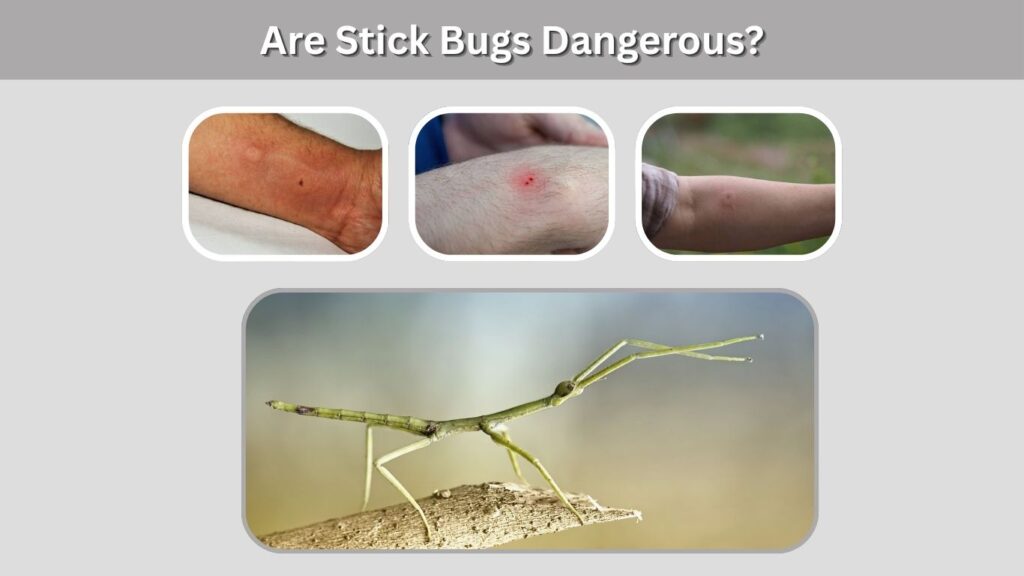
For most people, stick insects should be considered low-risk insects.
They do not:
- Sting humans
- Hunt people
- Inject venom
- Feed on blood
- Commonly deliver painful bites
The primary exception involves defensive chemical sprays produced by a limited number of species.
Even these insects generally use their chemicals only when they feel threatened.
Can You Touch a Stick Bug?
Many common stick insect species can be handled carefully, particularly captive species kept as pets.
However, unnecessary handling of unidentified wild walking sticks is best avoided.
If you encounter a wild specimen, observing it without touching it is usually the safest approach.
Handle Pet Stick Insects Carefully
Stick insects often have delicate bodies and legs.
Handling can be more dangerous to the insect than to the person.
When necessary, allow the insect to walk onto your hand rather than grabbing its body or legs.
Why Do Some Stick Bugs Produce Defensive Chemicals?
Stick bugs are slow-moving insects that cannot easily outrun birds, reptiles, mammals, and other insect-eating predators.
Chemical defenses provide additional protection when camouflage fails.
A predator encountering an irritating spray may learn to avoid that species in future encounters.
This gives chemically defended walking sticks a useful survival advantage without requiring venom or aggressive behavior.
FAQs
Are stick bugs poisonous to humans?
Most stick bugs are not poisonous to humans and pose very little danger. Some species, particularly the two-striped walkingstick, can release an irritating defensive chemical. The secretion can cause burning, redness, and significant eye irritation if it reaches the face.
Do walking stick bugs spit poison?
Certain walking stick species can spray defensive chemicals, but they do not literally spit poison from their mouths. The secretion comes from specialized glands and is used to discourage predators. Eye exposure can be particularly irritating and should be rinsed immediately.
Are stick bugs poisonous to dogs?
Most stick bugs are not severely poisonous to dogs. However, eating one may cause mouth or stomach irritation, and defensive species can spray irritating chemicals into a dog’s eyes. Persistent vomiting, eye pain, or unusual behavior should be evaluated by a veterinarian.
Are stick bugs poisonous to cats?
Most stick bugs are not dangerously poisonous to cats. A cat that bites or eats one may occasionally experience drooling, vomiting, or irritation. Species that produce defensive sprays can also cause eye discomfort if the secretion reaches the cat’s face.
Are Florida walking stick bugs poisonous?
Florida’s two-striped walkingstick is not venomous, but it can release a strong defensive chemical capable of irritating the skin and especially the eyes. It should therefore be observed without unnecessary handling, particularly if its exact species has not been identified.