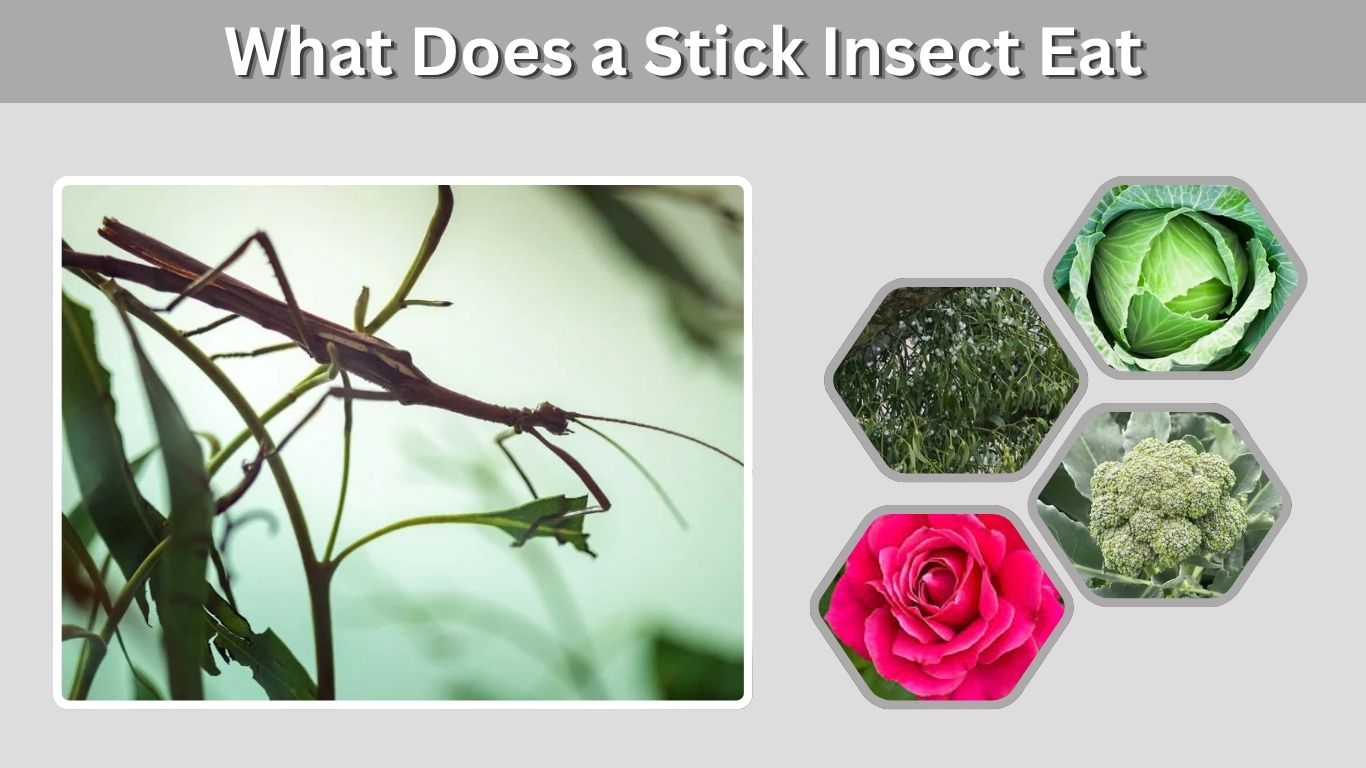
Stick insects are herbivores that mainly eat fresh leaves from trees, shrubs, and other plants. Their exact diet depends on the species, but common foods include bramble, blackberry, rose, oak, eucalyptus, privet, and ivy leaves. Pet stick insects need fresh, pesticide-free foliage available regularly because many species feed throughout the night. Although vegetables such as lettuce or cucumber may occasionally be accepted, leaves from suitable host plants should form the main diet. Understanding what stick insects eat helps keep them healthy both in captivity and in their natural habitat.
What Do Stick Insects Eat?
Stick insects primarily eat leaves. Unlike predatory insects such as praying mantises, stick insects have chewing mouthparts designed for feeding on plant material.
Most species prefer a limited range of host plants. Some are flexible feeders that accept several different plants, while others are much more selective.
Common foods for stick insects include:
- Bramble or blackberry leaves
- Rose leaves
- Privet
- Oak leaves
- Eucalyptus
- Ivy
- Hawthorn
- Hazel
- Raspberry leaves
- Strawberry leaves
- Guava leaves
- Certain other broadleaf plants
Bramble is one of the most commonly used foods for many captive species because it remains available through much of the year in suitable climates.
However, never assume that every stick insect can eat every plant. The safest food depends on the particular species you are keeping.
What Leaves Can Stick Insects Eat?
Fresh leaves should make up almost the entire diet of most stick insects. The best choice is usually a plant known to be eaten by that particular species.
Blackberry and bramble are especially useful for Indian stick insects and many other commonly kept species. Rose is another widely accepted option.
Australian species may prefer eucalyptus, acacia, or other plants associated with their natural habitat.
Always provide leaves that are:
- Fresh
- Free from pesticides
- Free from herbicides
- Free from roadside pollution
- Properly identified
- Appropriate for the species
Wash collected foliage carefully and check it for spiders, ants, and other small animals before placing it inside the enclosure.
What Plants Do Stick Insects Eat?
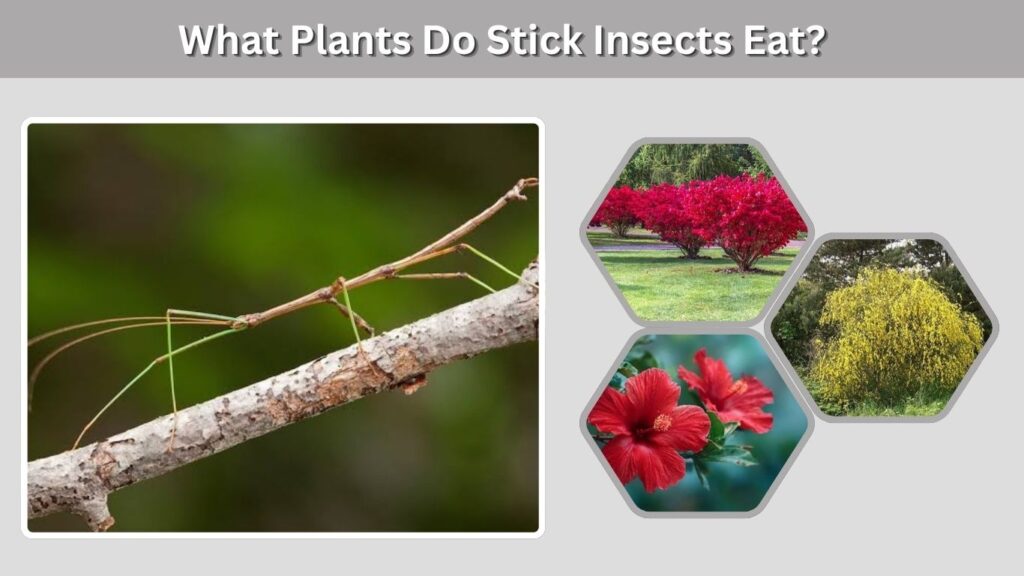
Stick insects feed on many different trees, shrubs, and climbing plants. Their preferred plants vary according to where the insects naturally occur.
Wild walking sticks typically stay close to plants that provide suitable foliage. They can spend much of their lives feeding, resting, and hiding among the same vegetation.
Some commonly used food plants include bramble, oak, privet, rose, eucalyptus, ivy, hawthorn, and hazel.
Can Stick Insects Eat Any Leaves?
No. Stick insects cannot safely live on just any leaves.
Some plants may be unsuitable, toxic, or simply unpalatable. Even if an insect briefly chews an unfamiliar leaf, that does not necessarily mean the plant provides an appropriate long-term diet.
When keeping stick insects as pets, identify the species and learn its recommended host plants rather than experimenting with random foliage.
Can Stick Insects Eat Lettuce?
Some stick insects may nibble lettuce, but it is generally not considered an ideal staple food.
Lettuce contains a lot of water and may not provide the same nutritional value as the leaves the insects normally eat. It is better to supply suitable host plants such as bramble, privet, rose, eucalyptus, or oak when appropriate for the species.
Indian stick insects, for example, are commonly fed bramble, privet, rose, hawthorn, and similar leaves.
Can Stick Insects Eat Cucumber?
Stick insects may sometimes nibble cucumber, but cucumber should not replace their normal leafy diet.
A small piece may provide moisture, but stick insects are naturally adapted to feeding on foliage. Fresh leaves from an appropriate host plant offer a much more natural source of nutrients and water.
For healthy captive insects, consider cucumber an occasional extra rather than their primary food.
Can Stick Insects Eat Fruit?
Most stick insects are leaf eaters rather than fruit eaters. Some individuals may investigate or nibble soft fruits, but fruit is generally unnecessary.
Fruit can also spoil quickly in a warm enclosure, encouraging mold and attracting small flies.
Fresh foliage is safer and closer to their natural diet.
Do Stick Insects Eat Blackberries?
Stick insects usually eat the leaves of blackberry plants, not necessarily the blackberry fruit itself.
Blackberry or bramble leaves are among the most commonly offered foods to captive stick insects. The thorny stems can be placed in water to keep the leaves fresh, provided the water container is covered so the insects cannot fall into it.
Can Stick Insects Eat Vegetables?
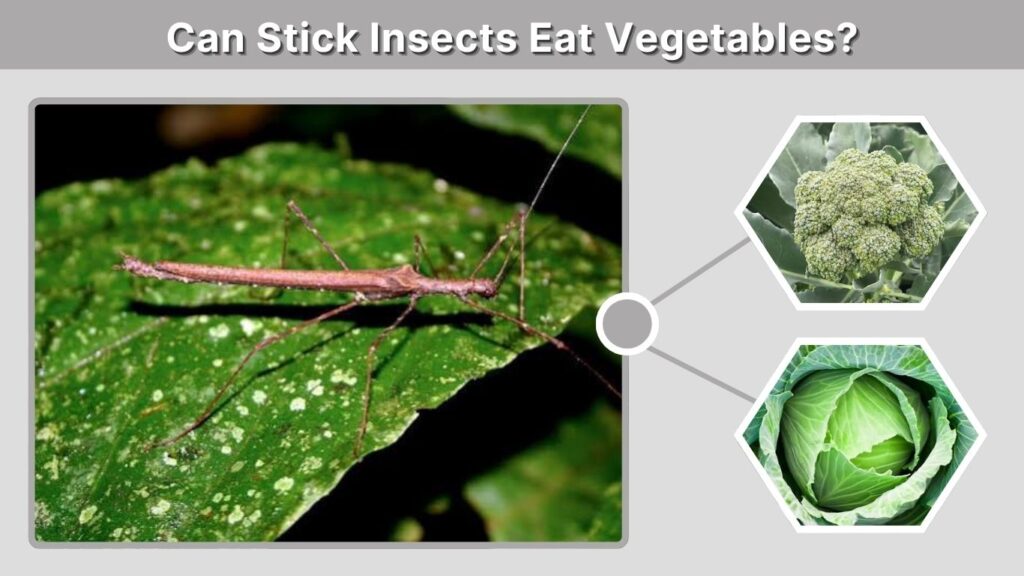
Vegetables such as broccoli, cabbage, spinach, kale, cucumber, lettuce, and carrots may attract occasional interest, but they are generally not the best everyday diet.
Stick insects evolved to eat foliage from particular host plants rather than supermarket vegetables.
Species-appropriate leaves should therefore remain their primary food.
Do Stick Insects Eat Grass?
Most commonly kept stick insects do not rely on ordinary lawn grass. They generally prefer leaves from shrubs and trees.
However, the stick insect group contains thousands of species, so feeding behavior varies considerably.
If you keep a particular species, follow its known host-plant requirements rather than assuming grass will work.
Do Stick Insects Eat Bamboo?
Some stick insect species may feed on bamboo or related plants, but bamboo is not a universal food for stick insects.
Only offer bamboo when it is known to be suitable for the species you are keeping.
For common pet species, bramble, privet, rose, eucalyptus, or oak may be more appropriate depending on the insect.
What Do Indian Stick Insects Eat?
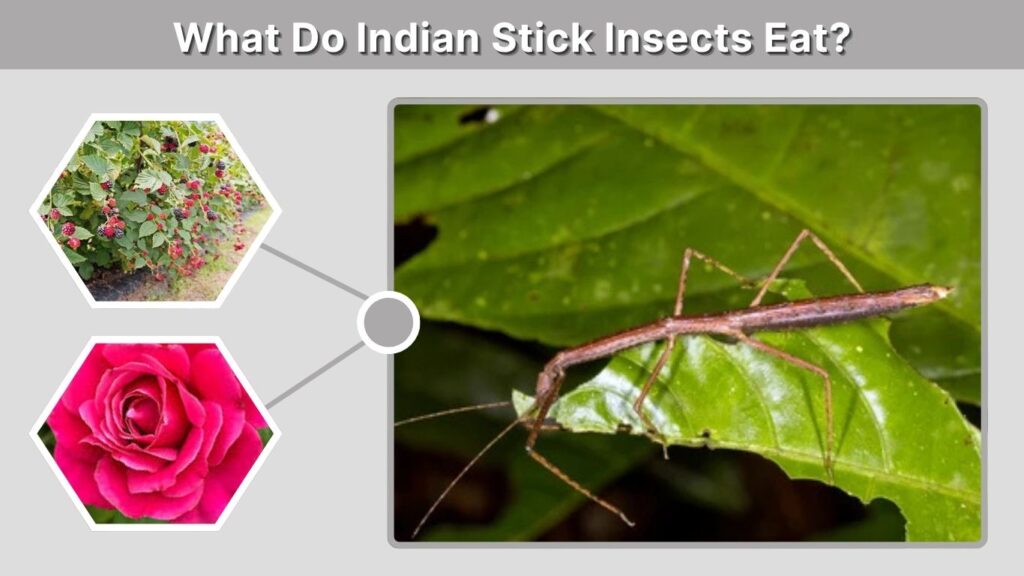
Indian stick insects are relatively adaptable feeders and are among the easiest stick insects to maintain in captivity.
They commonly eat:
- Bramble
- Blackberry leaves
- Privet
- Rose
- Hawthorn
- Hazel
- Ivy
Bramble is particularly convenient because it can remain available during cooler periods in many locations.
Fresh foliage should be replaced whenever it starts drying out.
What Do Giant Prickly Stick Insects Eat?
Giant prickly stick insects, often associated with Australian species such as the giant spiny stick insect, feed on foliage.
Depending on availability, captive individuals may accept eucalyptus, bramble, rose, raspberry, oak, or other approved host plants.
Because preferences can differ between populations and captive cultures, it is helpful to continue feeding the same plant type the insects were already accustomed to eating.
What Do Black Beauty Stick Insects Eat?
Black Beauty stick insects are more specialized than some common pet species. Their natural diet is associated with vegetation from their native habitat in Peru.
In captivity, keepers may use particular approved host plants depending on how the colony has been raised. Feeding requirements should therefore be checked carefully before acquiring this species.
They should not simply be given random household vegetables or garden plants.
What Does the Lord Howe Island Stick Insect Eat?
The Lord Howe Island stick insect is a large, flightless species native to Lord Howe Island.
It is herbivorous and feeds on plant material. In conservation breeding programs, appropriate leaves and vegetation are carefully provided according to the insects’ dietary requirements.
Like other stick insects, it relies on plant foliage rather than hunting other animals.
How Do Stick Insects Eat?
Stick insects have chewing mouthparts. They usually begin at the edge of a leaf and gradually remove sections of plant tissue.
After feeding, you may notice irregular edges, holes, or missing sections on the leaves.
Many species are most active after dark, which is why owners may rarely see them eating during the daytime.
Why Do Walking Stick Insects Eat at Night?
Many walking stick insects are nocturnal.
Feeding at night can help them remain less noticeable to visually hunting predators such as birds. During daylight hours, their stick-like appearance allows them to stay almost motionless among branches and foliage.
Once darkness arrives, they become more active and begin feeding.
How Often Do Stick Insects Eat?
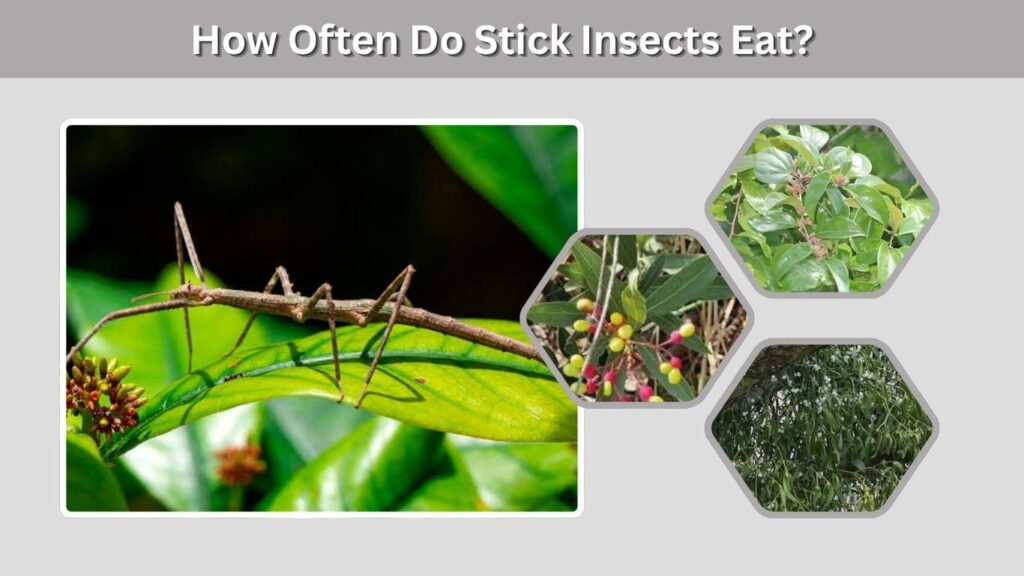
Stick insects should normally have access to fresh food continuously.
Rather than feeding them one scheduled meal each day, place fresh host-plant branches inside the enclosure and replace them as they dry out or are eaten.
Many stick insects feed every night.
Young nymphs also need dependable access to fresh leaves because they are growing rapidly and molt repeatedly.
What Do Stick Insects Eat and Drink?
Stick insects obtain much of their water from fresh foliage, but many keepers also provide additional moisture by lightly misting the leaves.
The insects may drink tiny droplets from the leaf surfaces.
Avoid leaving an open bowl of water in the enclosure. Small insects can fall into standing water and drown.
Light misting and fresh vegetation generally provide a safer source of moisture.
Do Stick Insects Eat Each Other?
Stick insects are generally herbivores and do not normally hunt or eat other stick insects.
Cannibalism is unusual, although overcrowding, lack of food, or unsuitable enclosure conditions can cause injuries between individuals.
Providing plenty of fresh foliage, adequate enclosure space, and suitable humidity helps reduce problems.
Do Stick Insects Eat Their Shed Skin?
Some stick insects may eat part or all of their shed exoskeleton after molting.
This behavior is not unusual among insects. Consuming the old skin may allow them to recover some nutrients while also removing evidence of their presence.
A freshly molted stick insect is soft and vulnerable, so it should be left undisturbed while its new exoskeleton hardens.
Do Walking Sticks Eat Other Insects?
No. True walking sticks or stick insects are primarily herbivores.
They should not be confused with predatory insects such as praying mantises, assassin bugs, or water stick insects.
The water stick insect is especially important to distinguish from true stick insects. Water stick insects belong to a different insect group and are aquatic predators that feed on small animals.
What Animals Eat Stick Insects?
Although stick insects are well camouflaged, they still have many natural predators.
Animals that may eat stick insects include:
- Birds
- Lizards
- Frogs
- Spiders
- Praying mantises
- Ants
- Small mammals
- Some reptiles
Their stick-like appearance, nighttime activity, defensive movements, spines, and other adaptations help reduce the risk of predation.
Best Feeding Tips for Pet Stick Insects
Successful feeding is mostly about providing the correct fresh foliage.
Keep suitable branches available at all times and replace them before they become badly wilted. Place the stems in a container of water to slow drying, but tightly cover the opening around the stems to prevent insects from falling inside.
Never use plants treated with insecticides. Pesticide residue that appears harmless to humans can be extremely dangerous to insects.
It is also useful to maintain more than one suitable food plant whenever your species accepts several varieties. This gives you alternatives when one plant becomes difficult to find.
FAQs
What is a stick insect’s favorite food?
Most stick insects prefer fresh leaves from their natural host plants. Bramble, blackberry, rose, privet, oak, eucalyptus, and ivy are commonly eaten by different species. There is no single favorite food for every stick insect because dietary preferences vary considerably among species.
Can stick insects eat rose leaves?
Yes, many stick insect species accept rose leaves. Make sure the plant has not been treated with pesticides, fungicides, or other garden chemicals. Wash the leaves before use and verify that rose is an accepted host plant for your particular species.
Do stick insects need water?
Stick insects obtain considerable moisture from fresh leaves, but many captive species also benefit from light misting. They can drink droplets from foliage and enclosure surfaces. Avoid deep or uncovered water containers because nymphs and adults may accidentally fall in and drown.
How long can stick insects go without food?
Stick insects should not intentionally be left without food. Their enclosure should contain suitable fresh foliage continuously. Exactly how long one can survive without feeding depends on species, size, age, temperature, and hydration, but prolonged food shortages can quickly weaken the insect.
Why should you never feed a stick insect?
Avoid pesticide-treated plants, unidentified leaves, toxic plants, spoiled vegetables, moldy foliage, and unsuitable foods. Stick insects should primarily receive fresh leaves from known host plants recommended for their species rather than being fed random fruits, vegetables, or household foods.