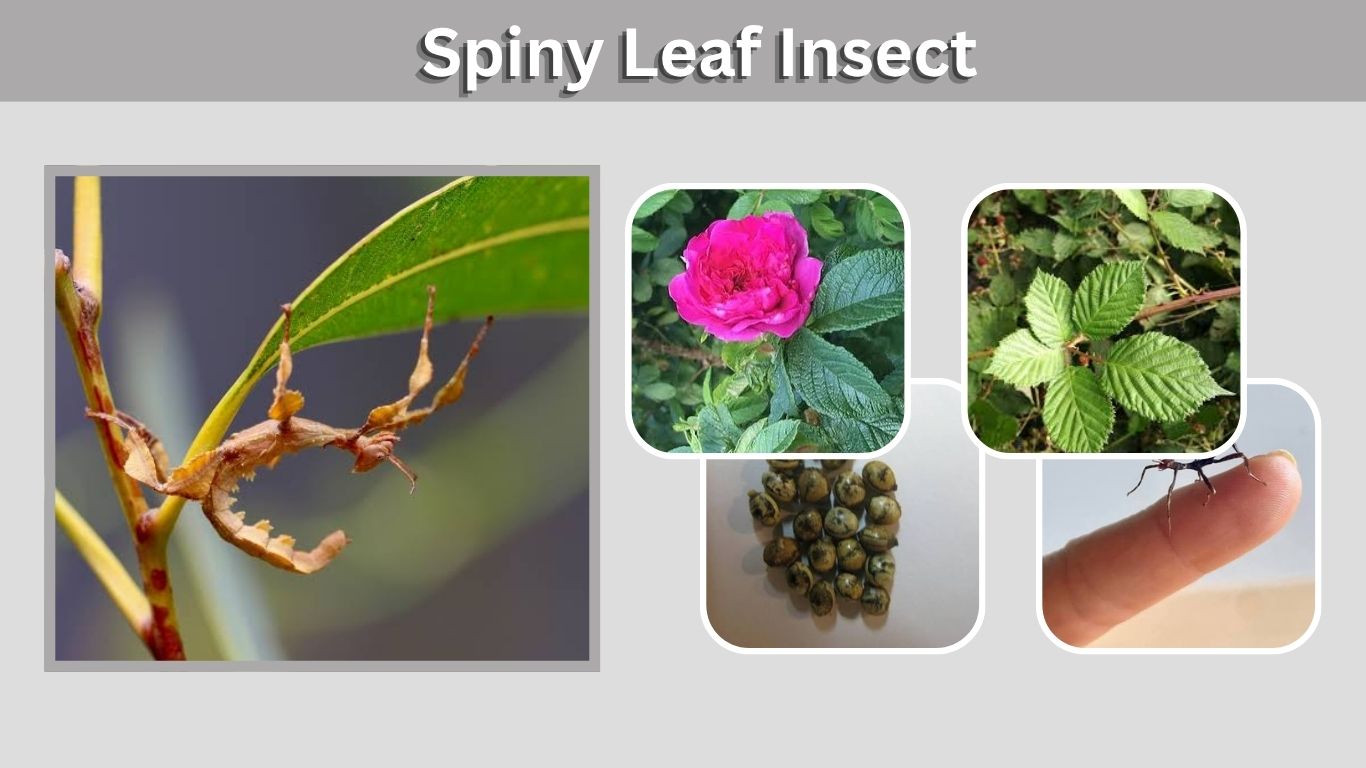
The spiny leaf insect is one of Australia’s most fascinating stick insects, famous for its leaf-like body, unusual spines, and impressive camouflage. Also known as Macleay’s spectre, this gentle insect is commonly kept as a pet because it is relatively easy to care for and interesting to observe. Spiny leaf insects spend much of their time feeding on leaves, resting among branches, and blending into vegetation. Understanding their diet, habitat, lifespan, size, breeding habits, and enclosure needs can help both keepers and nature lovers appreciate this remarkable insect.
What Is a Spiny Leaf Insect?
The spiny leaf insect, scientifically known as Extatosoma tiaratum, is a large Australian stick insect belonging to the family Phasmatidae. Unlike thin, twig-like stick insects, females have broad, curled bodies covered with spines and lobes that resemble dried leaves. Their appearance provides excellent protection from birds, reptiles, and other predators.
Identification and Appearance
Spiny leaf insects can be identified by several distinctive characteristics:
- Females have broad, heavy bodies with curled abdomens.
- Their bodies may be brown, tan, green, orange, or reddish.
- Small spines and leaf-like projections cover much of the body.
- Males are slimmer and usually have fully developed wings.
- Females have smaller wings and generally cannot fly effectively.
- Nymphs look somewhat like ants shortly after hatching.
Their color can vary depending on genetics, environment, age, and available vegetation.
Where Do Spiny Leaf Insects Live?
Spiny leaf insects are native to Australia and naturally occur in tropical and subtropical woodland environments. They are particularly associated with areas of Queensland and New South Wales.
They spend most of their lives in shrubs and trees where leaves provide both food and camouflage. Their ability to remain motionless among vegetation makes them surprisingly difficult to detect despite their relatively large size.
Spiny Leaf Insect Adaptations
Camouflage is their most important survival adaptation. Their irregular body shape resembles dead or damaged foliage rather than a typical insect.
When disturbed, they may sway gently from side to side, imitating a leaf moving in the wind. Females can also curl their abdomen upward, while their spines may make them less attractive to potential predators.
Spiny Leaf Insect Size and Male vs Female
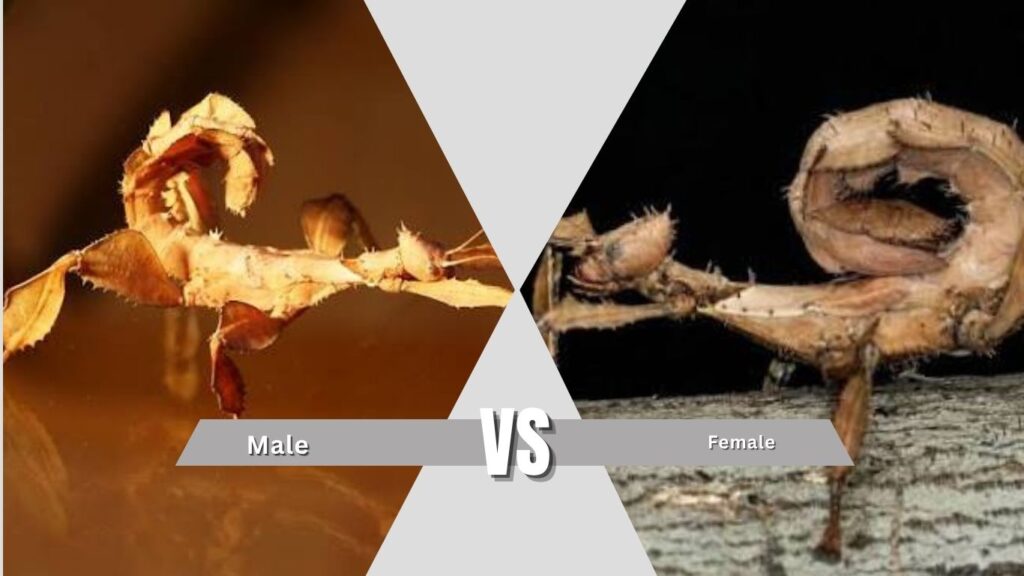
Spiny leaf insects show noticeable differences between males and females. Females are considerably heavier and broader, while males have narrow bodies designed for flight. Understanding these differences becomes especially useful for keepers who want to identify the sex of growing nymphs or establish a breeding colony.
How Big Do Spiny Leaf Insects Grow?
Adult females can reach approximately 12–15 cm in body length, making them considerably larger than males. Their curled abdomen and wide body can make them appear even bigger.
Males generally grow to around 9–11 cm. Although smaller, their long legs and wings give them a more elongated appearance.
Male Spiny Leaf Insect
Adult males have:
- Long, narrow bodies
- Large functional wings
- Long antennae
- Less prominent abdominal lobes
- A lightweight overall appearance
- Better ability to move and fly
Male spiny leaf insects may fly around their enclosure, especially when searching for females.
Female Spiny Leaf Insect
Adult females typically have:
- Larger and heavier bodies
- Shorter antennae
- Pronounced spines and leaf-like lobes
- A strongly curled abdomen
- Reduced wings
- Little or no practical flying ability
Females are generally much easier to recognize once they approach adulthood.
What Do Spiny Leaf Insects Eat?
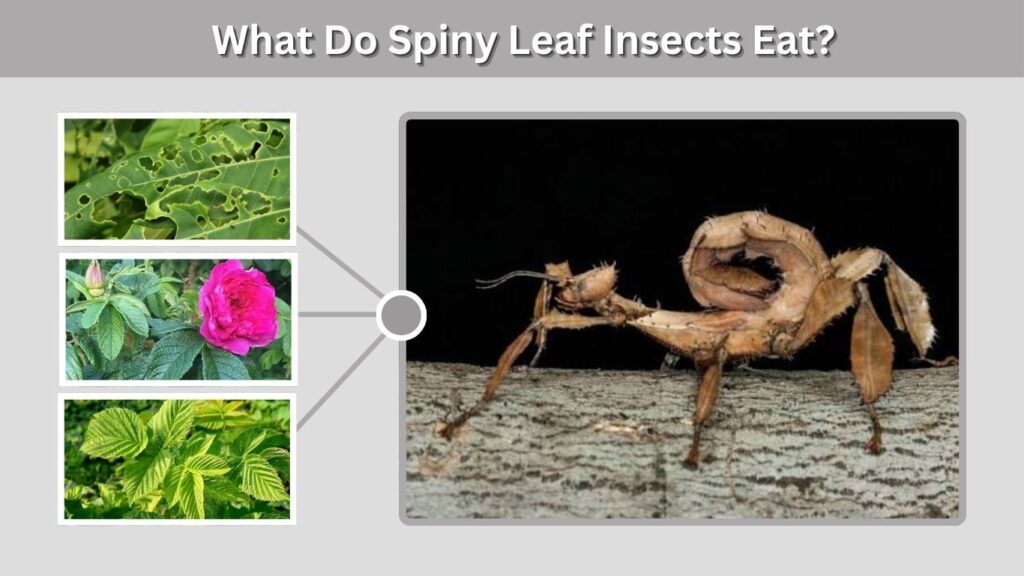
Spiny leaf insects are herbivores that feed almost entirely on fresh foliage. In captivity, providing suitable pesticide-free leaves is one of the most important parts of their care. Fresh branches should remain available because these insects usually feed during the evening and nighttime hours.
Spiny Leaf Insect Diet
Common food plants include:
- Eucalyptus leaves
- Blackberry or bramble leaves
- Rose leaves
- Raspberry leaves
- Guava leaves in some regions
- Oak leaves when accepted
Different individuals may prefer different plants, so keepers should continue offering foliage that the insects are already accustomed to eating.
Do Spiny Leaf Insects Drink Water?
They normally obtain much of their moisture from fresh leaves and droplets of water. Lightly misting the leaves and enclosure can provide additional drinking opportunities.
Heavy spraying should be avoided because continuously wet conditions may encourage mold and increase health problems.
Do Spiny Leaf Insects Eat Their Skin?
After molting, a spiny leaf insect may consume some or all of its shed exoskeleton. This is normal behavior.
The discarded skin contains nutrients that can be reused by the insect. Eating it also removes evidence of the insect’s presence, which may provide an additional survival advantage in nature.
Spiny Leaf Insect Care and Enclosure
Spiny leaf insects are popular among insect keepers because their basic requirements are relatively straightforward. However, adequate height, ventilation, fresh foliage, and suitable humidity are essential. Molting is particularly important because the insect must hang freely while emerging from its old skin.
Choosing a Spiny Leaf Insect Cage
A suitable enclosure should provide:
- Good vertical height
- Plenty of climbing branches
- Secure mesh ventilation
- Space for hanging during molts
- Easy access for replacing food
- Protection from extreme temperatures
- A floor that can be cleaned regularly
The cage should ideally be several times taller than the insect’s body length.
Temperature and Humidity
Normal indoor temperatures around 20–26°C are generally suitable. Extremely hot or cold conditions should be avoided.
Light misting helps maintain moderate humidity, especially for young nymphs. However, adequate ventilation remains essential because stagnant, excessively damp air can encourage mold and bacterial growth.
Handling Spiny Leaf Insects
Spiny leaf insects are not aggressive and usually tolerate gentle handling. Allow the insect to walk onto your hand rather than pulling it from a branch.
Their legs are delicate, particularly during or shortly after molting. Young nymphs should therefore be handled as little as possible.
Spiny Leaf Insect Life Cycle and Eggs
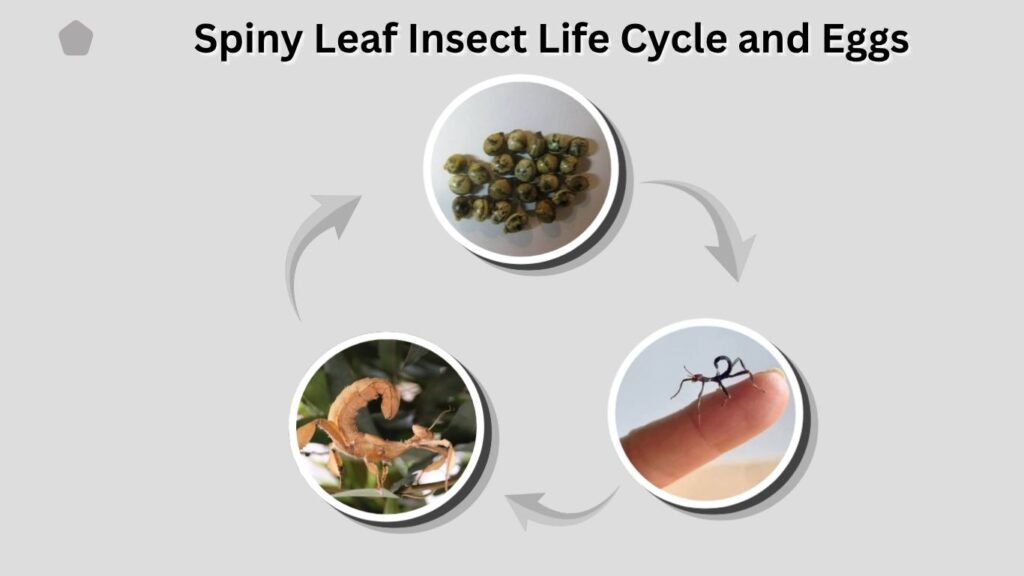
The spiny leaf insect has an unusual reproductive cycle that makes it especially interesting to keep. Females scatter eggs onto the ground rather than attaching them directly to plants. The eggs can remain dormant for many months before hatching, depending on temperature, moisture, and other environmental conditions.
Spiny Leaf Insect Eggs
The eggs resemble small seeds and have a hard outer shell. Female insects simply drop them onto the enclosure floor.
Important egg facts include:
- Females can produce hundreds of eggs.
- Eggs may take many months to hatch.
- Hatching time can sometimes exceed one year.
- Eggs require moderate humidity and ventilation.
- Excessive moisture can encourage mold.
Eggs should not be kept permanently wet.
How Spiny Leaf Insects Reproduce
Male and female insects can reproduce sexually, but females are also capable of parthenogenesis. This means a female may produce viable eggs even without mating with a male.
Eggs produced without mating generally develop into females, while sexually produced eggs can develop into both males and females.
Spiny Leaf Insect Nymphs
Newly hatched nymphs are energetic and look very different from adult females. Their dark bodies and reddish-orange markings can resemble ants.
This resemblance may protect young insects from predators. As they grow and repeatedly molt, their bodies gradually develop the characteristic leaf-like appearance of adults.
Spiny Leaf Insect Lifespan and Molting
The lifespan of a spiny leaf insect depends on sex, temperature, nutrition, and environmental conditions. Females typically live longer than males. Throughout their juvenile development, both sexes must complete several molts before becoming mature adults.
How Long Do Spiny Leaf Insects Live?
Females commonly live approximately 12–18 months, although individual lifespans vary. Males usually have shorter lives and may survive roughly 6–10 months.
Good nutrition and appropriate environmental conditions can help individuals reach their normal lifespan.
Shedding Skin
Spiny leaf insects grow by shedding their exoskeleton. Before molting, an insect may stop eating and remain unusually still.
During the molt, it hangs downward and slowly pulls itself free from the old skin. The insect should never be disturbed during this process because its new body and legs are extremely soft.
Signs of Molting
Common signs include:
- Reduced appetite
- Less movement
- Hanging from branches
- Slight changes in body appearance
- Increased time spent in one position
Adequate enclosure height is particularly important during this stage.
Are Spiny Leaf Insects Dangerous?
Despite their dramatic appearance and spiny bodies, these insects are harmless to people. They are defensive rather than aggressive and depend mainly on camouflage for protection. Their unusual appearance sometimes causes people to assume they may sting or bite, but they lack the defensive structures associated with dangerous insects.
Do Spiny Leaf Insects Bite?
Spiny leaf insects do not normally bite humans. Their mouthparts are designed for chewing leaves rather than defending themselves against people.
If handled roughly, an insect may struggle or use its legs defensively, but serious injury is extremely unlikely.
Can Spiny Leaf Insects Fly?
Adult males are capable of flying and have well-developed wings. They may fly short distances when disturbed or when searching for females.
Adult females have wings but are usually too heavy for sustained flight. They rely primarily on climbing and camouflage.
Interesting Spiny Leaf Insect Facts
The appearance and behavior of these insects include several unusual features that help explain their popularity among insect enthusiasts.
- Their scientific name is Extatosoma tiaratum.
- They are also called Macleay’s spectre.
- Females can reproduce without males.
- Newly hatched nymphs resemble ants.
- Females can grow considerably larger than males.
- Males can fly while females generally cannot.
- They often sway to imitate leaves moving in the wind.
- Their eggs may take many months to hatch.
- They may eat their shed skin after molting.
- They are harmless to humans.
FAQs
Are spiny leaf insects good pets?
Yes. Spiny leaf insects can make interesting pets for people who enjoy observing insects. They need fresh leaves, good ventilation, moderate humidity, and sufficient climbing space. They are quiet, require relatively little space, and generally do not behave aggressively toward their keepers.
How often should I feed a spiny leaf insect?
Fresh food should be available continuously. Replace branches whenever the leaves begin to wilt, dry, or become heavily eaten. Keeping stems in a container of water can help leaves remain fresh, but the water opening should be covered so insects cannot accidentally fall inside.
How long do spiny leaf insect eggs take to hatch?
Eggs often take approximately six months or longer to hatch, and some can remain dormant for more than a year. Incubation time varies according to temperature, humidity, genetics, and whether the eggs were produced sexually or through parthenogenesis.
Why is my spiny leaf insect not eating?
Temporary appetite loss may happen before molting. An insect may also refuse food if the leaves are unsuitable, old, chemically treated, or unfamiliar. Persistent refusal to eat combined with weakness or difficulty climbing can indicate unsuitable environmental conditions or declining health.
Do spiny leaf insects need a heat lamp?
A heat lamp is usually unnecessary when the enclosure is kept within a comfortable indoor temperature range. Excessive direct heat can quickly dry out the enclosure and foliage. Maintaining stable temperatures, appropriate humidity, ventilation, and fresh food is generally more important than providing intense additional heat.