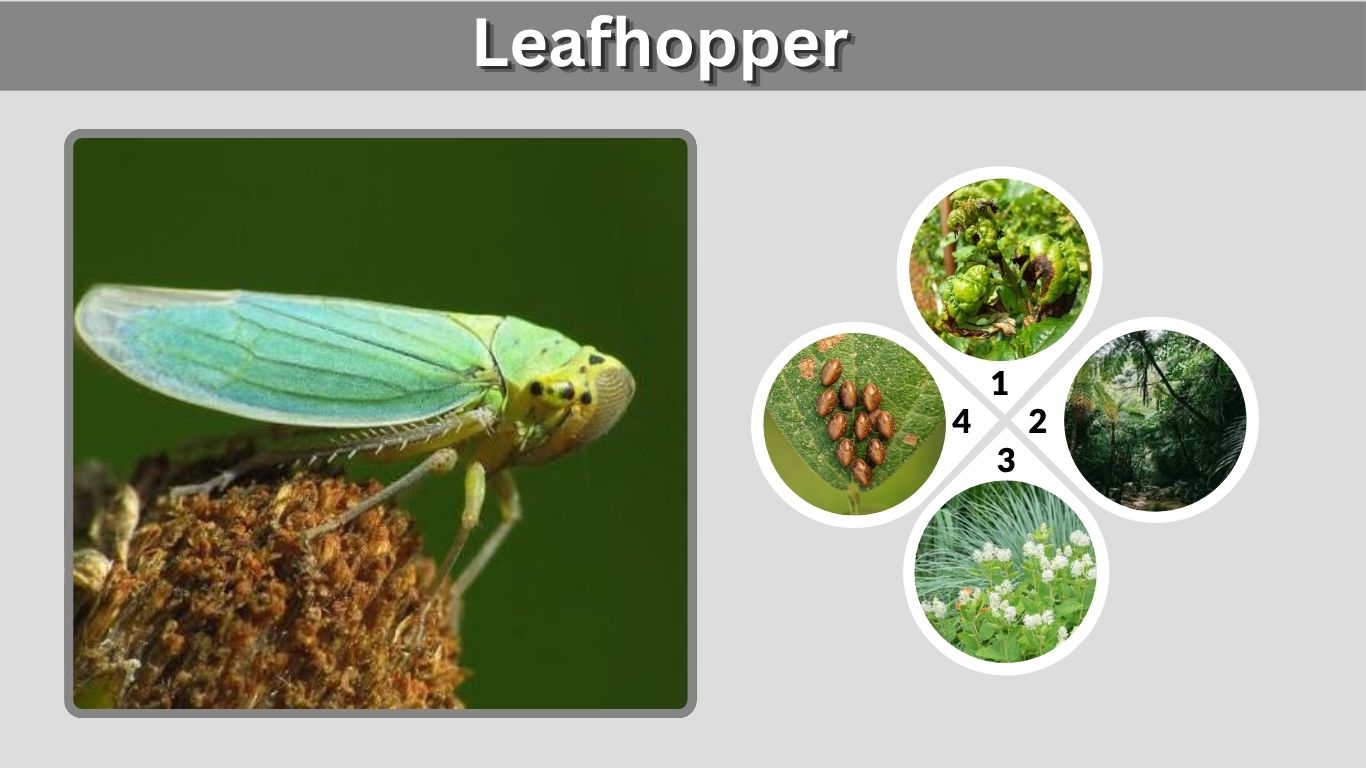
Leafhoppers are tiny, active insects commonly found on garden plants, crops, grasses, shrubs, and trees. Although their small size makes them easy to overlook, large populations can cause noticeable plant damage by feeding on sap from leaves and stems. Some species can also transmit plant diseases while moving between hosts. Leafhoppers occur in many colors, including green, brown, red, and brightly patterned combinations. Knowing how to identify leafhoppers, recognize their damage, understand their life cycle, and control infestations can help protect healthy plants.
What Is a Leafhopper?
Leafhoppers are small sap-feeding insects belonging to the family Cicadellidae. Thousands of species occur worldwide, occupying gardens, grasslands, farms, forests, and other areas where suitable plants grow. They are named for their ability to quickly jump away when disturbed. Adults may also fly, allowing them to spread efficiently between plants.
Leafhopper Identification
Common leafhopper characteristics include:
- Small, narrow or wedge-shaped body
- Usually around 3–15 mm long
- Powerful hind legs adapted for jumping
- Wings held roof-like over the body
- Short bristle-like antennae
- Green, brown, yellow, red, or patterned coloration
- Piercing-sucking mouthparts
- Fast sideways or forward movement
Their exact appearance varies considerably because Cicadellidae contains many different species.
What Do Leafhoppers Look Like?
Most leafhoppers have elongated bodies with relatively broad heads and tapered rear ends. Green leafhoppers can disappear easily against foliage, while species such as the candy-striped leafhopper display bright red, blue, yellow, or green markings.
When approached, an adult may suddenly jump or fly away instead of remaining on the leaf.
How Big Are Leafhoppers?
Leafhoppers are generally tiny insects. Many commonly encountered species measure only a few millimeters long, although some are noticeably larger.
Their small size means infestations may initially go unnoticed. Gardeners often discover feeding damage before spotting the insects themselves.
Leafhopper Nymphs and Eggs
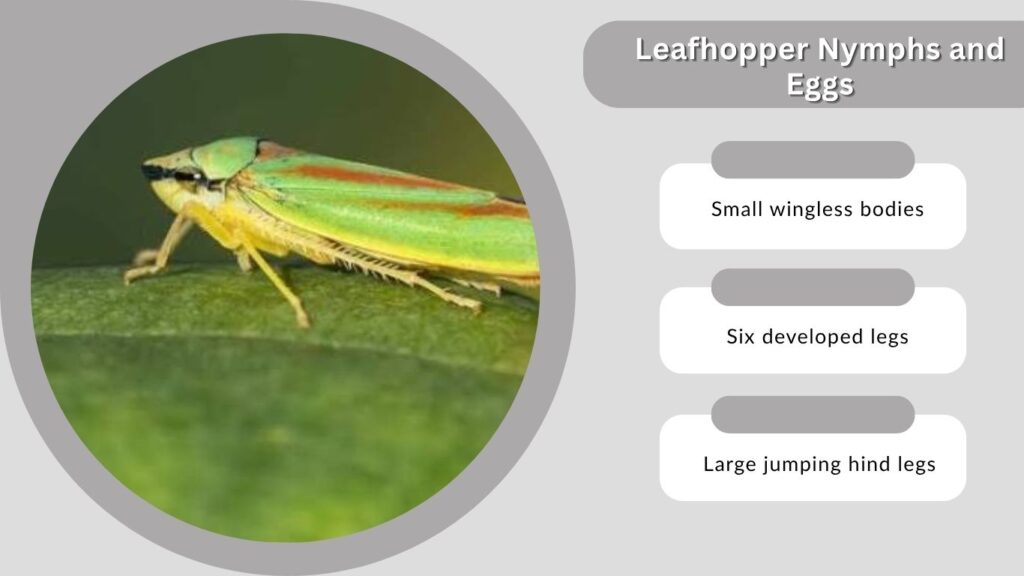
Leafhoppers undergo incomplete metamorphosis, meaning their development includes egg, nymph, and adult stages rather than a caterpillar-like larval stage. Nymphs resemble miniature adults but lack fully developed wings. They actively feed on plants as they grow and molt several times before becoming mature leafhoppers.
What Does a Leafhopper Nymph Look Like?
Leafhopper nymphs typically have:
- Small wingless bodies
- Six developed legs
- Large jumping hind legs
- Green, yellow, tan, or brown coloration
- Adult-like body shape
- Quick sideways movement
- Increasingly visible wing pads as they mature
Nymphs are often found on the undersides of leaves where they can feed while remaining relatively protected.
Leafhopper Eggs
Female leafhoppers generally insert their eggs into plant tissue instead of leaving them exposed on leaf surfaces. Depending on the species, eggs may be placed inside leaves, stems, veins, or other soft tissues.
This concealed position protects developing eggs from weather conditions and some predators.
Leafhopper Larvae vs Nymphs
The term “leafhopper larvae” is sometimes used casually, but leafhoppers do not have a true larval stage.
Young leafhoppers are correctly called nymphs. Unlike beetle or butterfly larvae, leafhopper nymphs already resemble adults and gradually develop wings as they mature.
Leafhopper Life Cycle
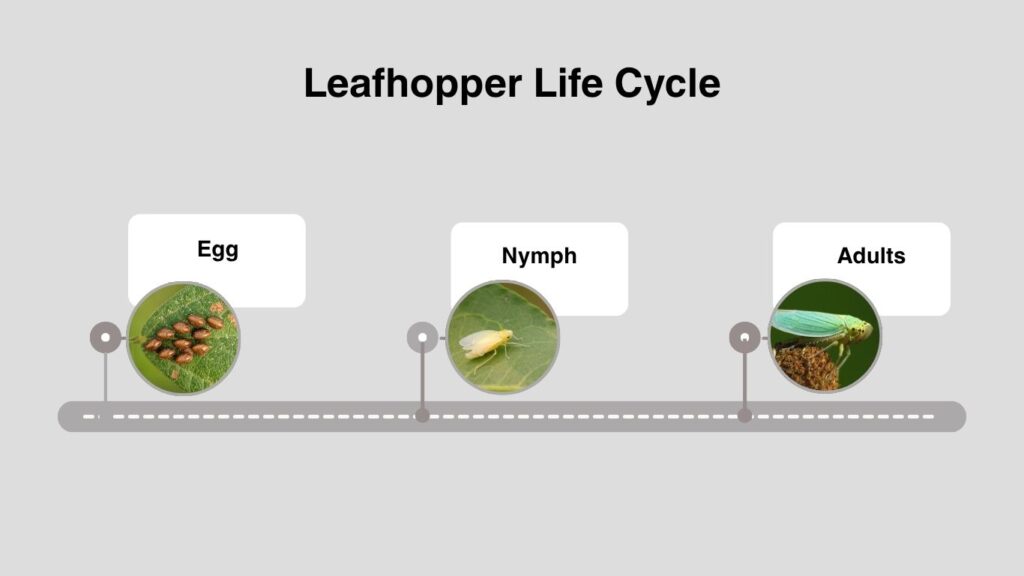
Leafhopper development begins when females deposit eggs into suitable plant material. After hatching, young nymphs immediately begin feeding. They pass through several developmental stages, called instars, and shed their exoskeleton as they grow. Eventually, fully winged adults emerge and continue feeding, mating, and producing another generation.
Egg to Adult Development
The basic life cycle includes:
- Egg: Deposited inside plant tissue.
- Early nymph: Small and wingless but able to jump.
- Later nymph: Larger with developing wing pads.
- Adult: Fully developed wings allow dispersal between plants.
- Reproduction: Adults mate and females produce new eggs.
Development speed depends on the species, host plant, weather, and temperature.
How Long Do Leafhoppers Live?
There is no single lifespan for every leafhopper because thousands of species exist. Environmental conditions and seasonal patterns also affect longevity.
Some species can complete multiple generations during warm weather. In colder regions, certain species survive winter as eggs or adults before becoming active again when temperatures rise.
What Do Leafhoppers Eat?
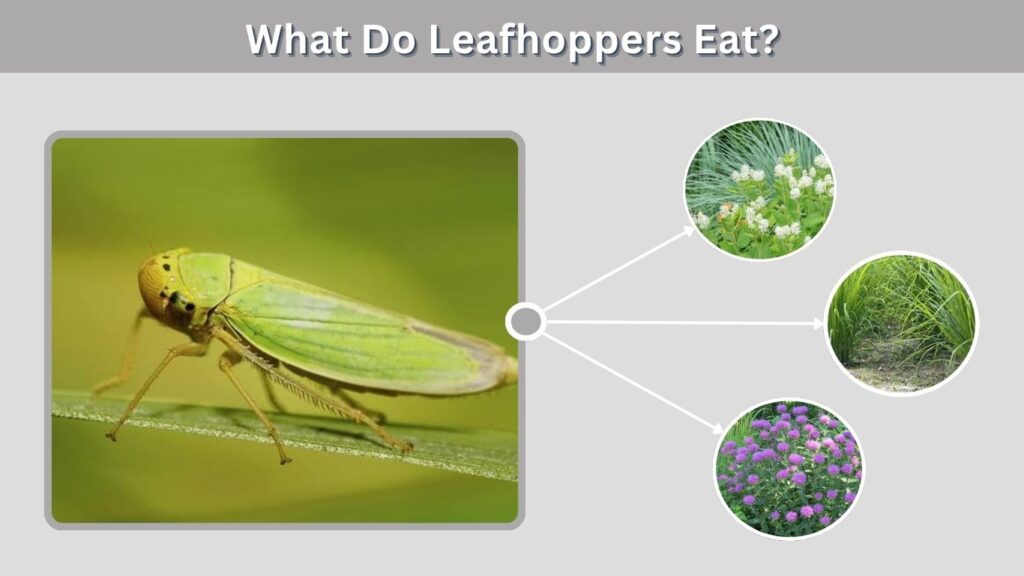
Leafhoppers are herbivores equipped with piercing-sucking mouthparts. Instead of chewing large holes through leaves, they insert their mouthparts into plant tissues and withdraw fluids. Different species specialize on different host plants, and some have relatively narrow preferences while others can feed on several plant families.
Common Leafhopper Food Sources
Leafhoppers may feed on:
- Grasses
- Garden vegetables
- Fruit trees
- Grapevines
- Roses
- Potatoes
- Corn
- Alfalfa
- Beets
- Ornamental shrubs
- Trees and weeds
Species such as potato, grape, corn, beet, and rose leafhoppers are often named after plants they commonly inhabit.
How Do Leafhoppers Feed?
A leafhopper punctures plant tissue using specialized mouthparts and draws out sap or other plant fluids.
Repeated feeding damages individual plant cells. When many insects feed on the same plant, their combined activity can interfere with healthy growth and produce visible discoloration.
Where Do Leafhoppers Feed?
Many leafhoppers spend significant time on the underside of leaves, although they can also occur on stems and other tender plant tissues.
Shaking a heavily infested plant may cause numerous adults to jump or fly away suddenly.
Leafhopper Damage to Plants
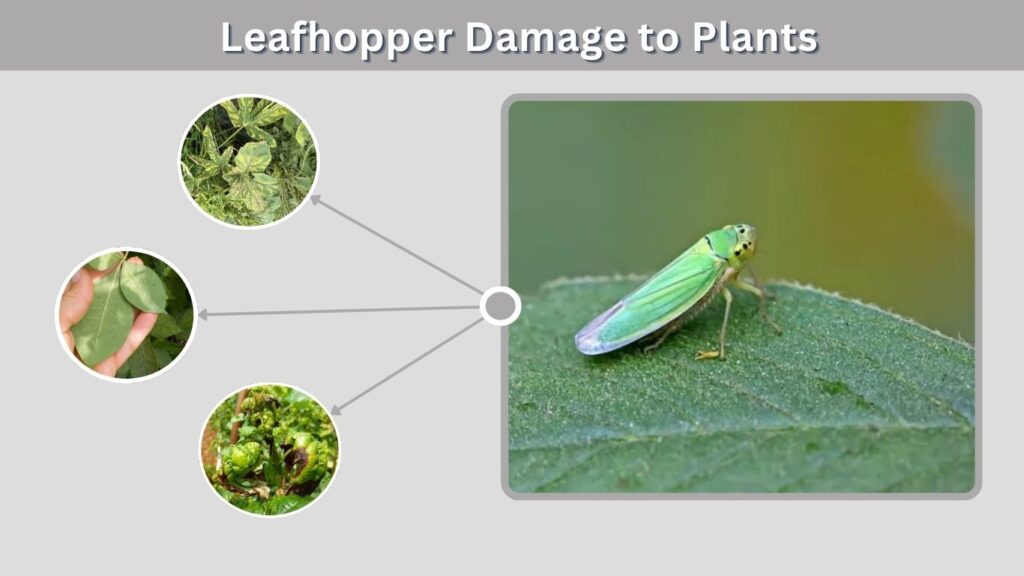
A few leafhoppers may cause little noticeable harm, but heavy infestations can weaken plants. Damage depends on the species, plant type, and number of insects present. Some leafhoppers are particularly important agricultural pests because they can transmit microorganisms responsible for serious plant diseases.
Signs of Leafhopper Damage
Possible symptoms include:
- White or pale speckling on leaves
- Yellowing foliage
- Browning around leaf edges
- Curling or distorted leaves
- Reduced plant vigor
- Stunted growth
- Premature leaf drop
- Scorched-looking leaf margins
Large populations can cause increasingly obvious symptoms as feeding continues.
Leafhopper Damage on Roses
Rose leafhoppers commonly feed from the undersides of rose leaves. Feeding can produce numerous pale or whitish spots across the upper leaf surface.
Severe infestations can cause foliage to appear faded or mottled, reducing both plant health and appearance.
Potato Leafhopper Damage
Potato leafhoppers can affect potatoes and several other crops. Heavy feeding may cause characteristic yellowing followed by browning or scorching along leaf margins.
Young plants can be particularly vulnerable when large populations develop rapidly.
Common Types of Leafhoppers
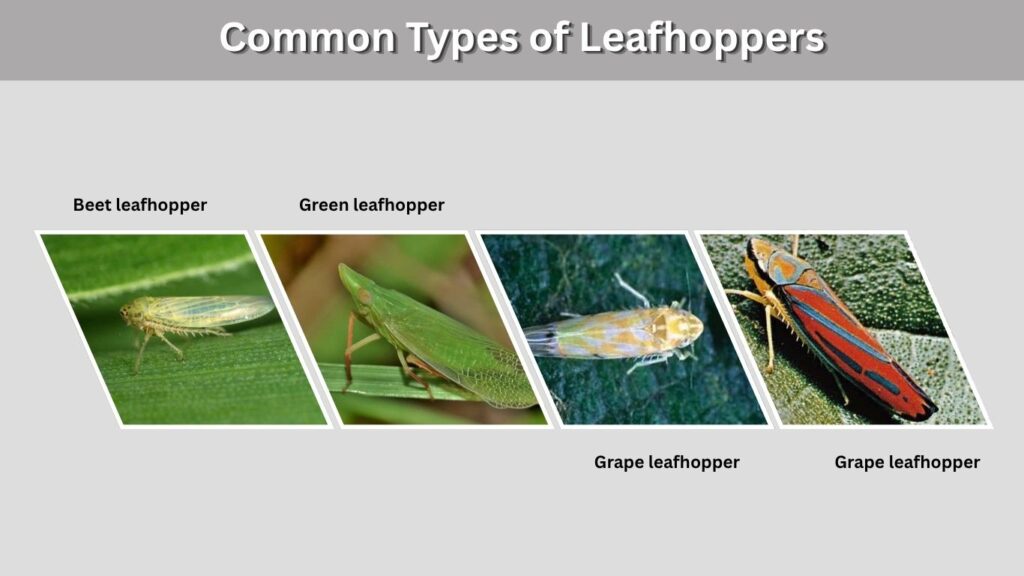
Cicadellidae contains a huge variety of leafhoppers. Some species attract attention because of their bright coloration, while others are best known as pests of agricultural or ornamental plants. Identification often requires considering color, markings, body structure, geographic location, and the host plant on which the insect was found.
Well-Known Leafhoppers
Commonly discussed types include:
- Candy-striped leafhopper
- Potato leafhopper
- Aster leafhopper
- Corn leafhopper
- Beet leafhopper
- Green leafhopper
- Grape leafhopper
- Rose leafhopper
- Two-spotted cotton leafhopper
- Rhododendron leafhopper
- Sharpshooter leafhoppers
- Red-banded leafhopper
Some names refer to individual species, while others describe larger groups.
Candy-Striped Leafhopper
The candy-striped leafhopper is recognizable for its attractive colorful markings. Its pattern can include combinations of red, blue-green, yellow, and cream.
Despite its striking appearance, it shares the characteristic leafhopper habit of feeding on plant fluids and rapidly jumping away when disturbed.
How to Get Rid of Leafhoppers
Control is most important when leafhopper populations are large enough to damage plants. Small numbers may be tolerated, particularly in diverse gardens where predators naturally reduce pest populations. Regular inspection helps gardeners detect increasing numbers before severe damage develops.
Natural Leafhopper Control
Helpful methods include:
- Remove badly infested plant material.
- Control excessive weeds around vulnerable crops.
- Spray plants with water to dislodge some insects.
- Encourage beneficial predatory insects.
- Inspect the undersides of leaves regularly.
- Keep plants healthy through appropriate watering and nutrition.
- Use physical barriers on young plants when practical.
Early intervention is generally easier than controlling a large established population.
Insecticidal Soap for Leafhoppers
Insecticidal soap may help control exposed nymphs and adults when applied directly according to the product label.
Thorough coverage is important, particularly on leaf undersides. Because soaps usually have limited residual activity, repeat treatment may sometimes be necessary according to label directions.
Neem Oil for Leafhoppers
Neem-based garden products are another option used against various soft-bodied and sap-feeding pests.
Results can vary according to the leafhopper species and infestation level. Follow the specific product instructions carefully and avoid spraying when environmental conditions could increase the risk of plant injury.
Are Leafhoppers Harmful to Humans?
Leafhoppers are mainly plant feeders and are not considered significant pests of people. Their biological adaptations are designed for feeding on vegetation rather than obtaining blood from humans or animals.
Do Leafhoppers Bite?
Leafhoppers do not normally bite people. Occasionally, a small plant-feeding insect may probe skin, but leafhoppers do not seek humans as a food source.
Their primary importance comes from their effects on plants rather than direct risks to people.
Leafhopper vs Grasshopper
Leafhoppers are much smaller than typical grasshoppers and belong to a completely different insect group.
Grasshoppers have chewing mouthparts and often physically remove sections of foliage. Leafhoppers use piercing-sucking mouthparts and usually produce spotting, yellowing, or similar feeding symptoms instead of large chewed holes.
FAQs
Are leafhoppers bad for plants?
Leafhoppers can harm plants when populations become large. Their feeding damages plant cells and may produce pale spots, yellow leaves, reduced vigor, or leaf scorching. Certain species are especially troublesome because they can also transmit plant pathogens while moving from one host plant to another.
What attracts leafhoppers?
Leafhoppers are primarily attracted to suitable host plants that provide food and places for reproduction. Gardens containing grasses, vegetables, ornamental plants, weeds, shrubs, or fruit crops may support different species. Warm conditions can also encourage rapid activity and population growth during favorable seasons.
How do you know if you have leafhoppers?
Check plants for small wedge-shaped insects that jump quickly when disturbed. You may also notice tiny nymphs moving across leaf undersides. Pale stippling, yellowing, scorched leaf margins, declining plant vigor, and multiple insects jumping when vegetation is disturbed can indicate an infestation.
Are green leafhoppers dangerous?
Green leafhoppers are generally not dangerous to humans or pets. Their main concern is plant damage. Some green-colored species can become agricultural pests, especially when large populations feed on crops or when a particular species is capable of carrying plant pathogens.
What is the best way to control leafhoppers?
Regular plant inspection, weed management, removal of heavily infested material, and encouraging natural predators can help keep populations manageable. For larger infestations, appropriately labeled insecticidal soap, neem-based products, or other approved plant treatments may be considered according to label directions.