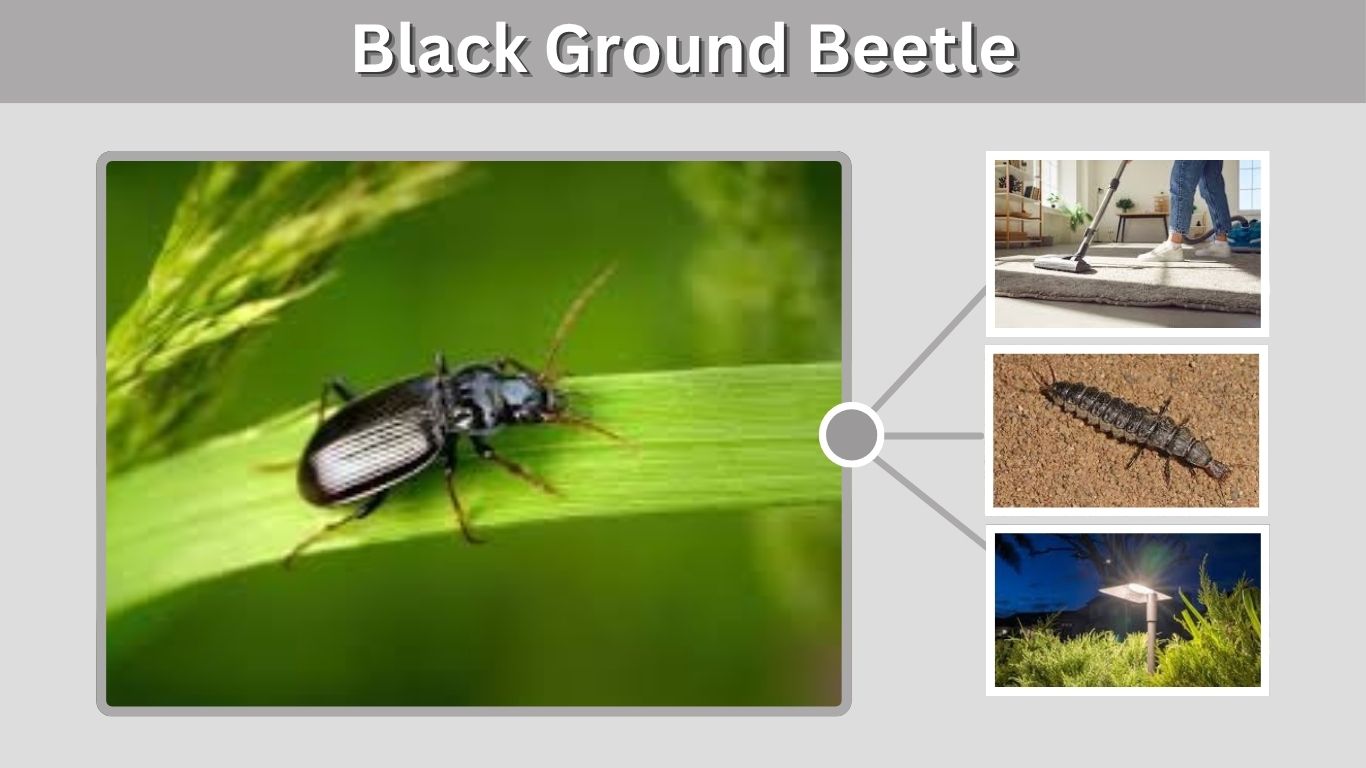
A black ground beetle is a common outdoor beetle that often surprises people when it appears in a house, basement, garage, or garden. Its shiny dark body, quick movement, and visible jaws can make it look worrying at first. However, most black ground beetles are harmless to people and are actually useful predators outdoors. They feed on small insects, larvae, slugs, and other pests, making them helpful in gardens and soil ecosystems.
What Is a Black Ground Beetle?
A black ground beetle is usually a beetle from the family Carabidae. This is a large group of beetles commonly known as ground beetles. Many species are black or dark brown, although some can have metallic green, blue, purple, or reddish colors.
Most black ground beetles live close to the soil. They hide under stones, leaves, mulch, logs, boards, and garden debris during the day. At night, they come out to hunt. This is why people often notice them running across patios, driveways, garage floors, or basement walls after dark.
Ground beetles are not the same as cockroaches, carpet beetles, or pantry pests. They do not usually infest stored food, damage clothing, chew wood, or breed heavily indoors. When they enter a home, it is usually by accident.
How to Identify a Black Ground Beetle
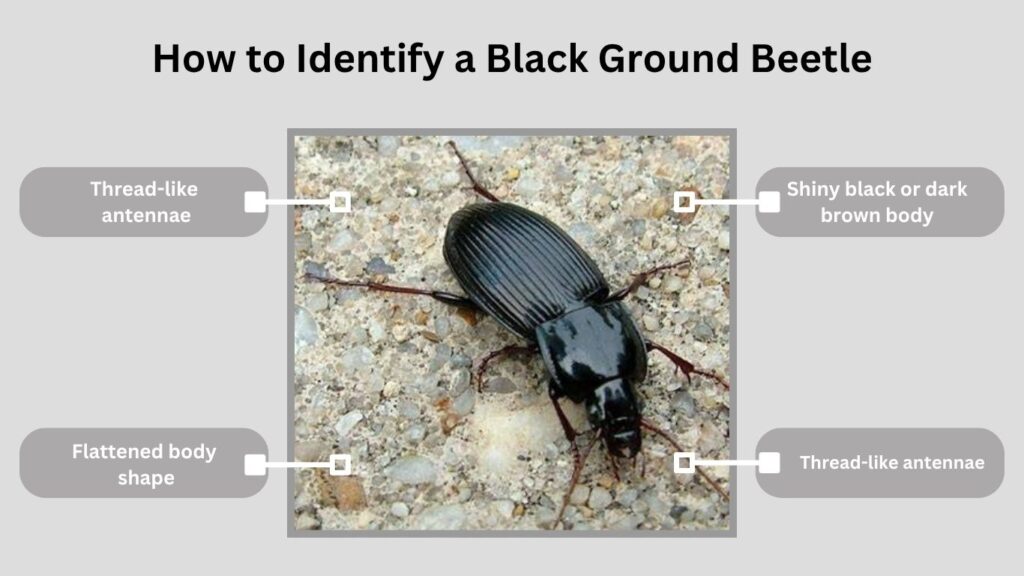
Black ground beetles can vary in size and shape, but they share several common features. They usually have a flattened, oval-to-long body and move quickly when disturbed. Their wing covers may look smooth, ridged, or lined.
Common Signs
Look for these features when identifying one:
- Shiny black or dark brown body
- Long legs built for fast running
- Thread-like antennae
- Visible jaws or pincers near the head
- Hard wing covers on the back
- Flattened body shape
- Usually found on the ground, not flying around rooms
Some species are small, while others can grow close to an inch long. A large black ground beetle may look intimidating, but size alone does not mean it is dangerous.
| Feature | Black Ground Beetle | Common Look-Alike |
|---|---|---|
| Body shape | Flattened and fast-moving | Cockroaches are often broader and more flexible-looking |
| Damage indoors | Usually no damage | Carpet beetles can damage fabrics |
| Movement | Runs quickly on floors or soil | Pantry beetles are often slower near stored food |
| Main habitat | Soil, mulch, logs, rocks, gardens | Cockroaches prefer warm indoor hiding spots |
| Risk level | Mostly harmless nuisance indoors | Some pests can contaminate food or damage items |
Are Black Ground Beetles Dangerous?
Black ground beetles are generally not dangerous. They are not poisonous to people, pets, or homes. They do not spread disease in the way some household pests can, and they do not attack humans.
Do Black Ground Beetles Bite?
Most black ground beetles do not bite unless handled roughly. Some have strong jaws because they are predators, but they are not looking to bite people. If one is picked up or squeezed, it may pinch defensively. This is usually minor and not medically serious for most people.
Are They Poisonous?
Black ground beetles are not considered poisonous. Some species may release a bad-smelling defensive fluid when threatened. This odor can be unpleasant, but it is mainly a defense mechanism against predators.
Are They Harmful to Pets?
A curious cat or dog may paw at or eat a beetle. In most cases, one beetle is unlikely to cause serious harm. The taste or defensive smell may make a pet drool or spit it out. If a pet eats many insects or shows unusual symptoms, contacting a veterinarian is the safest choice.
Why Are Black Ground Beetles in the House?
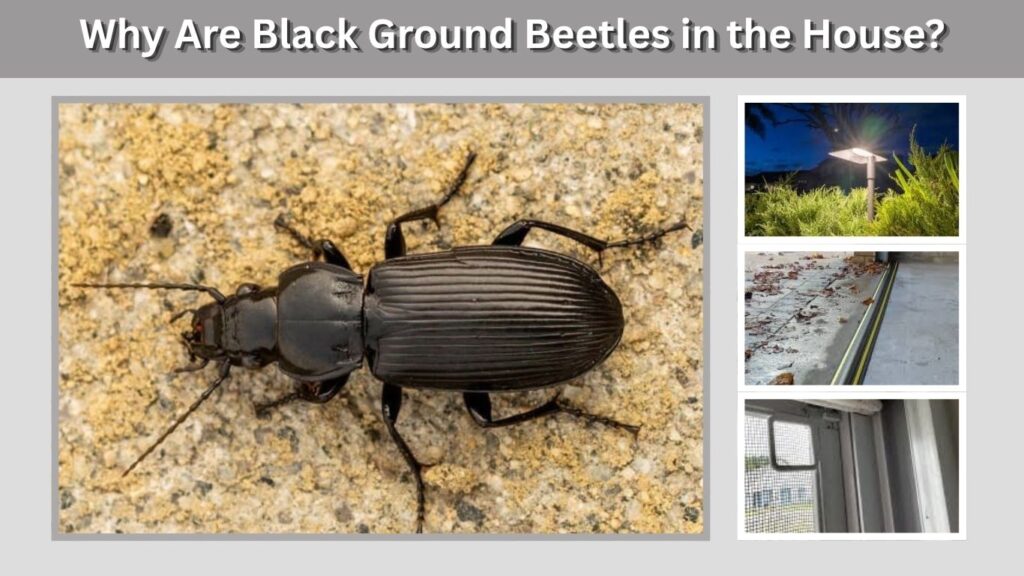
Finding a black ground beetle in the house does not always mean there is an infestation. Most enter through gaps, cracks, open doors, basement windows, or spaces under thresholds.
They may come indoors because of:
- Outdoor lights attracting insects near doors
- Cracks around foundations
- Gaps under garage doors
- Moist mulch or leaf piles close to the house
- Open windows without tight screens
- Seasonal weather changes
- Accidental entry while searching for shelter
Basements, garages, sheds, laundry rooms, and ground-level rooms are common places to find them. They prefer dark, damp, hidden areas, so a basement sighting is not unusual.
What Do Black Ground Beetles Eat?
Black ground beetles are mostly predators. Outdoors, they feed on many small organisms living on or near the soil. This is one reason gardeners often consider them beneficial.
Their diet may include:
- Small insects
- Caterpillars
- Fly larvae
- Beetle larvae
- Slugs
- Snails
- Worms
- Soft-bodied pests
- Some seeds or organic matter, depending on species
Because they eat pests, black ground beetles can help reduce unwanted insects in gardens, lawns, farms, and landscaped areas. Their larvae are also predators and often live in soil or under debris.
Black Ground Beetle Habitat and Life Cycle
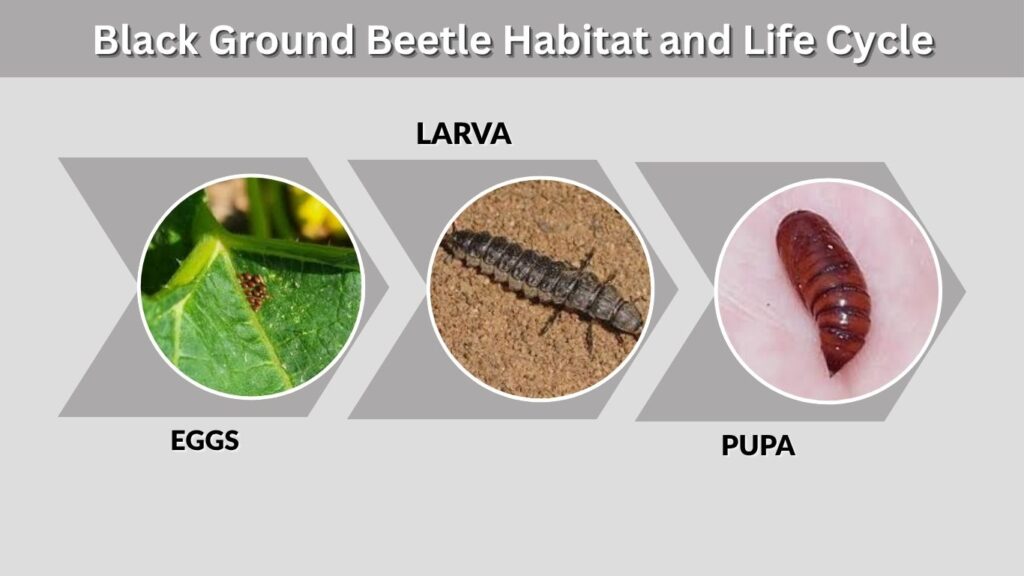
Black ground beetles usually live outdoors in moist, protected places. They are often found under stones, bark, logs, garden mulch, grass clippings, and leaf litter. Many species are active at night and hide during the day to avoid heat, dryness, and predators.
Life Cycle
Like other beetles, ground beetles go through complete metamorphosis:
- Egg
- Larva
- Pupa
- Adult beetle
The larvae often look long, segmented, and somewhat armored. They live in soil or protected ground areas and hunt small prey. Adult beetles may live for months or longer, depending on the species and environment.
Black Ground Beetle Infestation: Should You Worry?
A few black ground beetles in a house are usually not a serious problem. They do not normally reproduce indoors in large numbers. If you keep seeing many of them, the issue is likely connected to outdoor conditions or entry points rather than a true indoor infestation.
You may notice more beetles when outdoor populations are high, lights are left on at night, or mulch and debris sit close to the foundation. Heavy rain, drought, or temperature changes can also push beetles toward shelter.
How to Get Rid of Black Ground Beetles
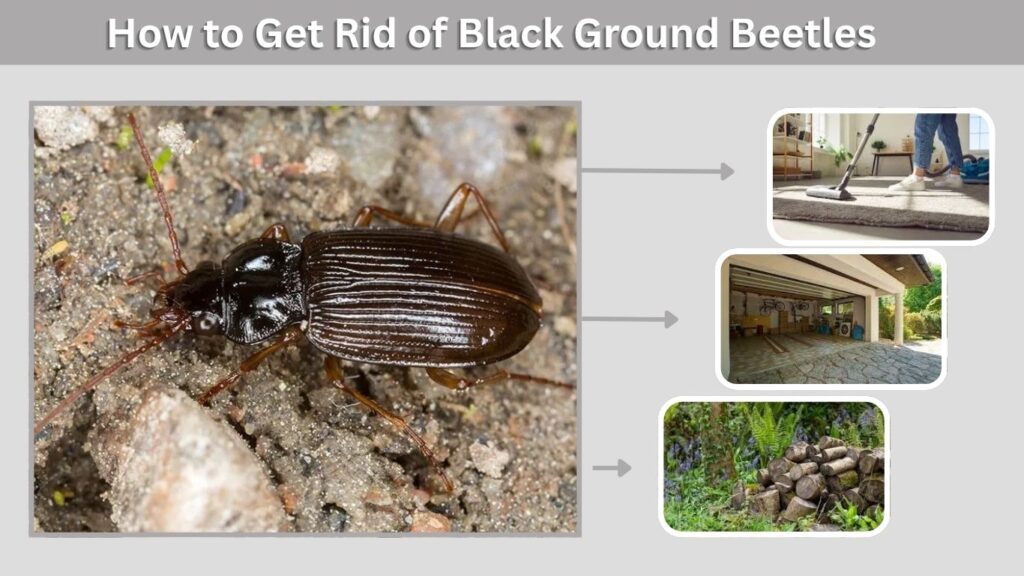
The best way to manage black ground beetles is to remove indoor beetles gently and prevent more from entering. Since they are beneficial outdoors, killing them is not always necessary.
Indoor Removal
Use these simple steps:
- Sweep or vacuum beetles when found
- Release live beetles outside away from doors
- Check basements, garages, and corners regularly
- Reduce clutter where beetles can hide
- Keep floors dry in damp rooms
Avoid crushing them if possible, because some may release an unpleasant smell.
Outdoor Prevention
Focus on making the area near your home less attractive:
- Seal cracks around the foundation
- Install door sweeps
- Repair window and door screens
- Move mulch, logs, and leaf piles away from exterior walls
- Reduce bright outdoor lighting at night
- Use yellow “bug” bulbs where outdoor lights are needed
- Keep grass trimmed near the foundation
- Clear debris from basement window wells
These steps are usually more effective than spraying randomly. If beetles keep appearing in large numbers, a pest professional can inspect entry points and confirm the insect species.
Black Ground Beetles in the Garden
In gardens, black ground beetles are usually helpful. They hunt pests near the soil and can support a healthier garden ecosystem. If you find them under mulch or stones, it is often a sign that your garden has active insect life and shelter for beneficial predators.
How to Encourage Beneficial Ground Beetles
To support them outdoors:
- Keep some natural mulch or leaf litter in garden beds
- Avoid overusing broad-spectrum insecticides
- Provide stones, logs, or low ground cover in garden edges
- Keep soil healthy and not overly disturbed
- Grow diverse plants to support insect balance
The goal is not to invite beetles into the home. Instead, you want them to stay outdoors where they can help control pests naturally.
Black Ground Beetle vs Black Ox Beetle in Grounded
Some searches for black beetles refer to the Black Ox Beetle in the video game Grounded, not the real black ground beetle found in homes and gardens. These are two different topics.
A real black ground beetle is an outdoor insect from the ground beetle family. It may enter houses by accident and is usually harmless. The Black Ox Beetle in Grounded is a game creature players search for because of locations, armor, horns, weaknesses, and crafting materials.
If you are trying to identify a real beetle in your house, focus on body shape, size, location, and behavior. If you are searching for game locations, maps, or armor, you need a Grounded game guide instead.
When to Call Pest Control
Most black ground beetle sightings do not require professional treatment. However, pest control may help if beetles are appearing daily, you cannot find where they are entering, or you are unsure whether the insect is actually a ground beetle.
Call a professional if:
- You see large numbers indoors
- Beetles keep returning after sealing gaps
- You suspect another pest, such as cockroaches or carpet beetles
- There is moisture damage or hidden entry points
- You need safe treatment around children or pets
Correct identification matters. Treating the wrong insect can waste time and may not solve the real issue.
FAQs
Are black ground beetles harmful?
Black ground beetles are usually not harmful. They do not damage wood, clothing, or stored food, and they are not known as dangerous household pests. Indoors, they are mostly a nuisance. Outdoors, they are often beneficial because they feed on insects, larvae, slugs, and other small pests.
Why do I keep finding black ground beetles in my house?
You may keep finding them because they are entering through cracks, gaps under doors, basement windows, or foundation openings. Outdoor lights, mulch near walls, damp conditions, and nearby leaf litter can also attract them close to the house. Sealing entry points usually reduces sightings.
Do black ground beetles bite people?
Black ground beetles do not normally bite people. They may pinch if handled, trapped, or squeezed because they have jaws used for catching prey. The reaction is usually minor. It is better to move them with a cup, paper, broom, or vacuum instead of picking them up by hand.
What do black ground beetles eat?
Black ground beetles mostly eat small insects and other soft-bodied prey. Their diet may include caterpillars, larvae, slugs, snails, worms, and other ground-dwelling pests. Some species may also eat seeds or decaying organic matter, but many are valued as natural predators in gardens and farms.
How do I get rid of black ground beetles naturally?
Start by vacuuming or sweeping indoor beetles and releasing them outside. Then seal cracks, repair screens, install door sweeps, reduce outdoor lighting, and move mulch or leaf piles away from the foundation. These natural prevention steps work better than relying only on sprays inside the home.