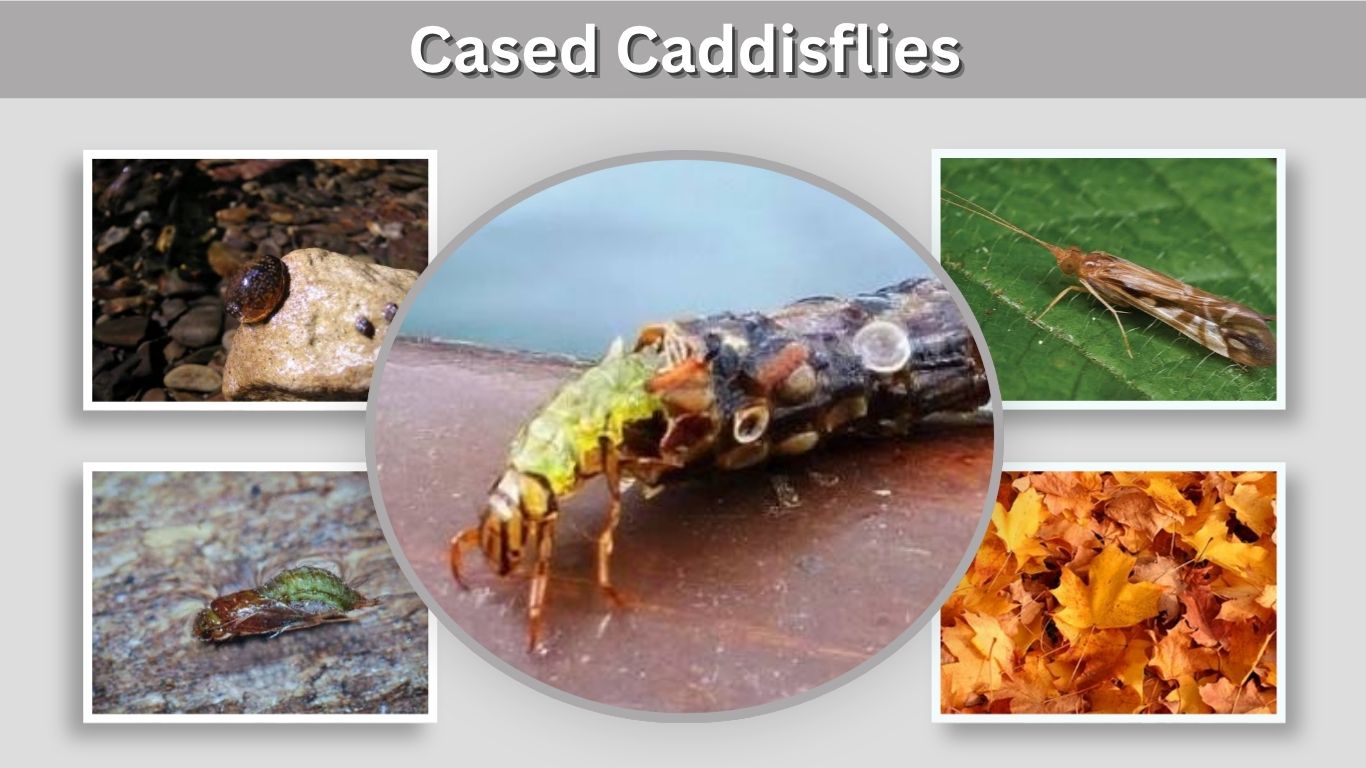
Cased caddisflies are fascinating aquatic insects best known for the portable shelters their larvae construct from materials found underwater. Using silk as a natural adhesive, they combine sand, tiny stones, leaves, twigs, and other debris into protective cases. These structures help with camouflage, protection, and movement in freshwater habitats. Cased caddisfly larvae occur in streams, rivers, lakes, and ponds worldwide. Understanding their appearance, case-building behavior, diet, habitat, and life cycle reveals why these small insects are so important to freshwater ecosystems.
What Are Cased Caddisflies?
Cased caddisflies are members of the insect order Trichoptera whose larvae construct portable protective cases. Although adult caddisflies are winged and somewhat moth-like, their larvae spend most of their development underwater. Different species create cases with distinctive shapes and materials, making the structures useful clues for identification. Many belong to well-known case-building families such as Limnephilidae.
Cased Caddisfly Identification
Several characteristics can help identify a case-building caddisfly larva:
- Soft, elongated, segmented body
- Hardened head and upper thorax
- Three pairs of jointed legs near the head
- Hook-like appendages at the rear
- Portable case covering much of the abdomen
- Case made from stones, sand, plant material, or other debris
- Larva able to extend its head and legs from the case while crawling
The insect remains attached to its shelter and normally carries it wherever it moves.
Cased Caddisfly Scientific Classification
Cased caddisflies belong to the kingdom Animalia, phylum Arthropoda, class Insecta, and order Trichoptera. The term “cased caddisfly” does not describe a single species. Numerous families contain larvae that make portable cases, and their construction styles can differ considerably.
How Do Caddisflies Make Their Cases?
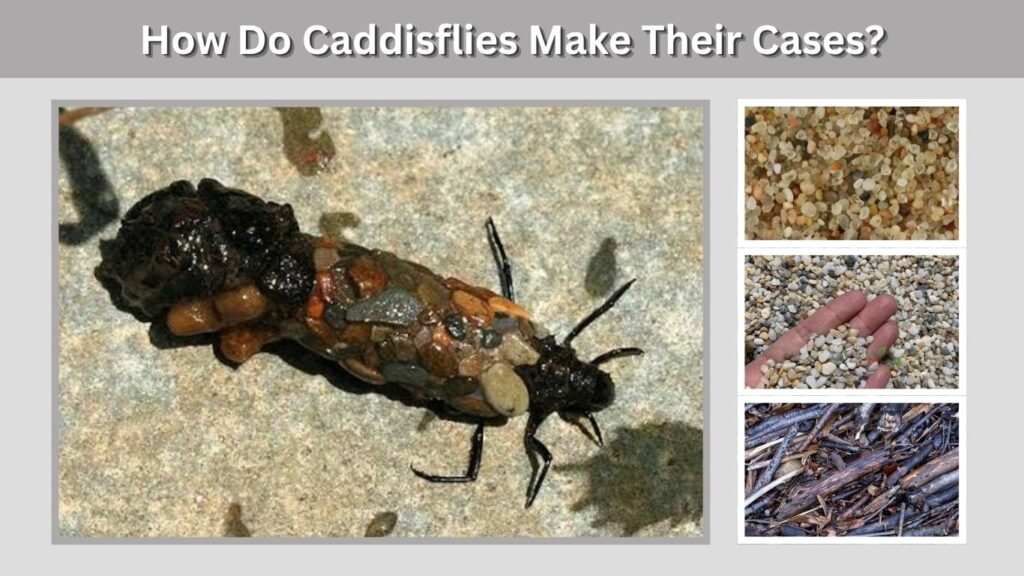
A caddisfly case is not a shell produced by the insect’s body. Instead, the larva manufactures silk and uses it to fasten environmental materials into a shelter. Construction may begin shortly after hatching. As the larva grows, it enlarges the opening and extends the case so that the structure continues to fit its developing body.
Materials Used for Caddisfly Cases
Depending on species and habitat, caddisflies can make cases from:
- Sand grains
- Small pebbles and gravel
- Leaf fragments
- Bark and woody debris
- Small sticks and twigs
- Pine or hemlock needles
- Aquatic plant pieces
- Tiny shells and other hard fragments
Available materials strongly influence the appearance of individual cases.
How Case Building Works
The larva produces silk from specialized glands near its mouth. It first forms a silk lining and then attaches selected objects to the outside. Some species carefully choose particles of similar size, creating remarkably organized structures.
As the larva becomes larger, new material is added around the front of the shelter while portions at the rear may be removed. The result is a portable structure that grows along with its owner.
Types of Caddisfly Cases
Caddisfly cases vary greatly in shape, texture, weight, and construction material. Some look like rough tubes covered in stones, while others resemble neatly arranged bundles of sticks. The architecture often reflects the larva’s habitat and evolutionary adaptations. Scientists can sometimes narrow identification to a family or group by examining case shape alongside the physical features of the larva.
Common Case Shapes
Several recognizable case forms include:
- Stone cases: Heavy tubes made from sand and small pebbles.
- Wooden cases: Constructed from short sticks or plant fragments.
- Leaf cases: Made using pieces of leaves arranged around the body.
- Square cases: Some species arrange plant materials into angular structures.
- Trumpet-shaped cases: Cases gradually widen toward one end.
- Saddle cases: Small dome-like shelters attached closely to rocks.
- Snail-shaped cases: Curved or coiled structures resembling miniature snail shells.
Snail-Case Caddisflies
Snail-case caddisflies are particularly distinctive because their cases may appear curved or coiled. At first glance, they can easily be mistaken for tiny aquatic snails. Close observation generally reveals the larva’s head and legs emerging from the opening as it crawls along submerged surfaces.
Habitat of Cased Caddisflies
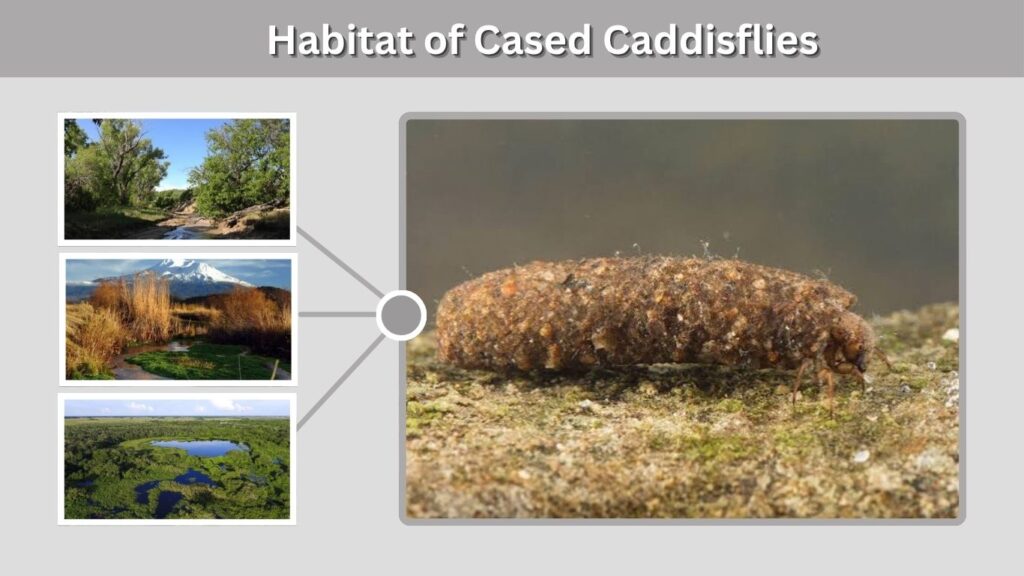
Case-building caddisfly larvae inhabit many freshwater environments. Streams and rivers are particularly important because moving water supplies oxygen and carries organic food particles. Other species prefer lakes, ponds, springs, wetlands, or quiet margins with abundant vegetation. Their distribution depends on water temperature, current speed, oxygen levels, food, and suitable case-building materials.
Where Cased Caddisflies Live
Typical habitats include:
- Clean streams and creeks
- Rivers and spring-fed channels
- Freshwater lakes
- Ponds
- Wetlands and marshes
- Rocky stream bottoms
- Submerged vegetation
- Leaf litter beneath the water
- Gravel and woody debris
Larvae frequently remain beneath stones or among vegetation, where their cases provide additional camouflage against predators.
Cased Caddisflies and Water Quality
Many caddisfly species are associated with healthy aquatic environments, particularly cool streams with good oxygen levels. Because tolerance to pollution varies among species, scientists often include caddisflies when studying aquatic macroinvertebrate communities.
Their presence alone does not guarantee perfectly clean water. However, a diverse population of caddisflies together with other sensitive aquatic insects can indicate favorable freshwater conditions.
What Do Cased Caddisflies Eat?
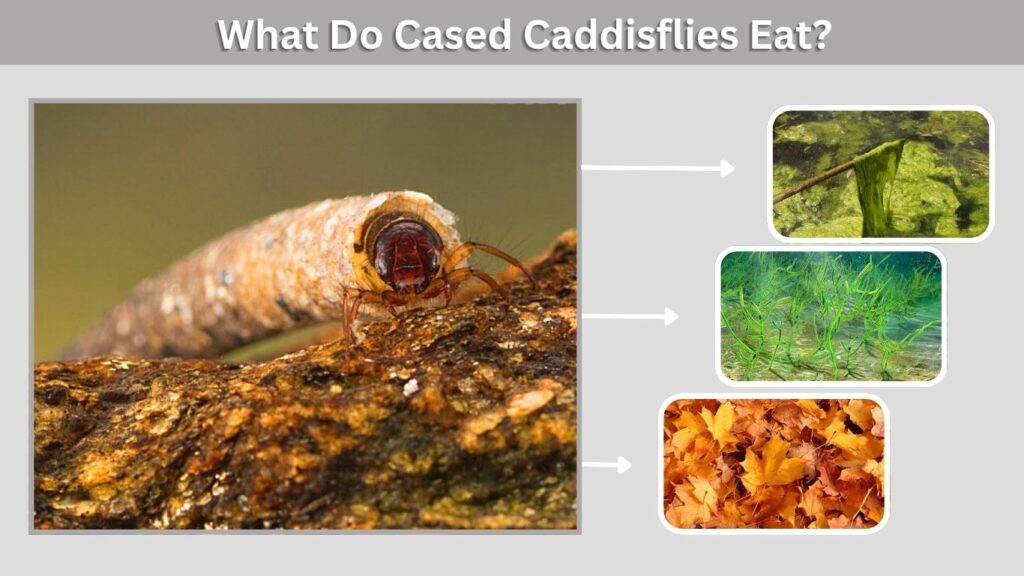
The diet of case-building caddisflies varies between species. Many consume algae, decomposing vegetation, or organic debris, while others scrape biofilm from underwater rocks. Some shred fallen leaves into smaller pieces, helping recycle nutrients within streams. A smaller number may consume tiny aquatic organisms. Their feeding behavior gives caddisflies an important role in freshwater food webs.
Common Foods
Cased caddisfly larvae may eat:
- Algae
- Biofilm
- Decaying leaves
- Aquatic plant fragments
- Fine organic matter
- Detritus
- Fungi growing on leaves
- Microscopic organisms
- Small aquatic animals in some species
Case-making grazers commonly scrape algae and microorganisms from rocks and plants.
What Eats Cased Caddisflies?
Caddisfly larvae are an important food source for fish, amphibians, and aquatic invertebrates. Trout and other freshwater fish frequently consume them, which is why case-building caddisfly patterns are popular among fly anglers.
Their cases can reduce predation by providing armor and camouflage, but determined fish and other predators can still extract larvae from their shelters.
Cased Caddisfly Adaptations
The portable case is one of the most remarkable adaptations of caddisfly larvae. It allows the insect to move around while carrying protection rather than remaining permanently attached to a shelter. Cases may also improve camouflage because they are constructed from exactly the same materials that cover the surrounding stream or lake bottom.
Benefits of the Case
The caddisfly case can provide several advantages:
- Protection from predators
- Camouflage against the streambed
- Physical protection from flowing water
- Support for the soft abdomen
- Access to oxygenated water
- Improved stability while crawling
- Protection during certain stages of development
Hooks at the rear of the larva help secure its body inside the case.
Can Caddisfly Larvae Live Without a Case?
A case-building larva may temporarily survive if separated from its shelter, but it normally attempts to repair the existing case or construct another one when suitable materials are available.
Because the case is an important part of its survival strategy, repeatedly removing a larva from its shelter can expose it to stress and predators.
Cased Caddisfly Life Cycle
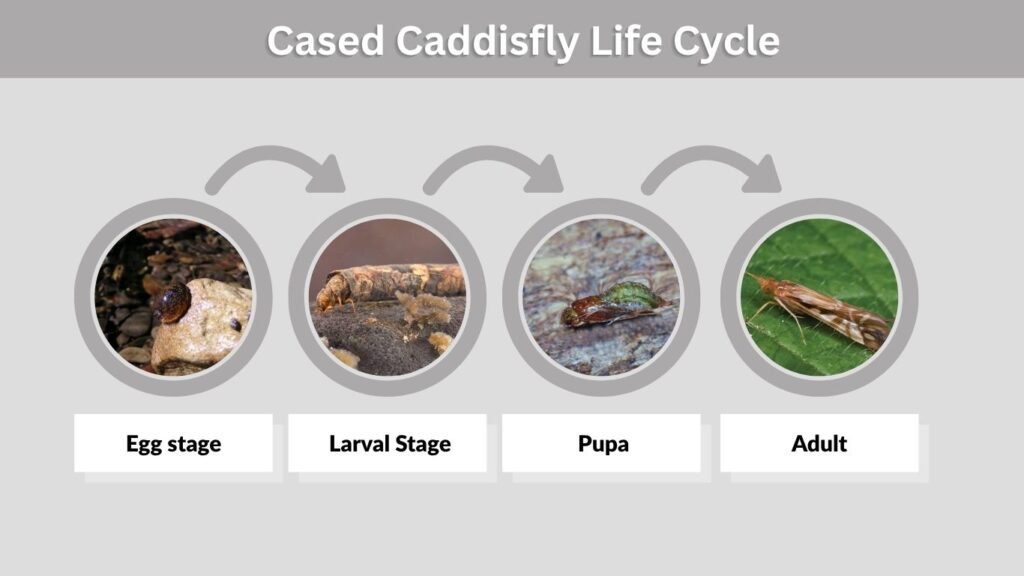
Cased caddisflies undergo complete metamorphosis, passing through egg, larval, pupal, and adult stages. Most of their lives are spent underwater as larvae. The larval period is when their famous cases are constructed and enlarged. Eventually, the mature larva prepares for pupation before emerging from the aquatic environment as a winged adult.
Four Life Cycle Stages
- Egg: Adult females deposit eggs in or near freshwater.
- Larva: The young insect feeds underwater and constructs its protective case.
- Pupa: The mature larva seals or modifies its shelter before pupating.
- Adult: The developed insect emerges, becomes winged, mates, and begins another generation.
Adults generally live much shorter lives than larvae and focus primarily on reproduction.
Caddisfly Case Art and Jewelry
Caddisfly case building has attracted attention beyond science because larvae can incorporate unusual materials into their shelters. Their natural behavior inspired artistic experiments in which larvae were supplied with valuable or decorative materials rather than ordinary stones and sticks. The resulting cases demonstrate both the flexibility of caddisfly construction and the extraordinary architecture these insects can produce.
Caddisfly Case Jewelry
French artist Hubert Duprat famously worked with caddisfly larvae by giving them materials such as gold, pearls, turquoise, and precious stones. The larvae incorporated these materials into their protective structures using their natural silk.
The finished cases resemble miniature pieces of jewelry, although the insects are simply following instinctive construction behavior. This unusual collaboration between natural behavior and human art helped make caddisfly architecture famous outside entomology.
FAQs
Cased caddisflies generate many questions because their shelters can resemble sticks, stones, tiny shells, or pieces of debris moving across the bottom of streams. Understanding why they build cases and how those structures function makes these insects easier to recognize. Here are answers to five frequently asked questions about their cases, safety, habitat, and biology.
1. Why do caddisflies build cases?
Caddisfly larvae primarily build cases for protection, camouflage, and physical support. The case helps shield their soft abdomen while allowing them to move around underwater.
2. What do caddisflies make their cases from?
They use materials such as sand, stones, sticks, bark, leaves, plant fragments, and other underwater debris. Silk produced by the larva binds the materials together.
3. Are cased caddisflies dangerous?
No. Cased caddisflies are generally harmless to humans. They do not sting and are not considered dangerous household or aquatic pests.
4. Do caddisflies stay in their cases forever?
No. Larvae carry or use cases during their aquatic development. After pupation and emergence, the adult becomes a winged insect and no longer lives inside the larval case.
5. Where can I find cased caddisfly larvae?
Look beneath rocks, among aquatic vegetation, around leaf litter, or on gravel in freshwater streams, rivers, lakes, and ponds. Different species favor different water conditions.