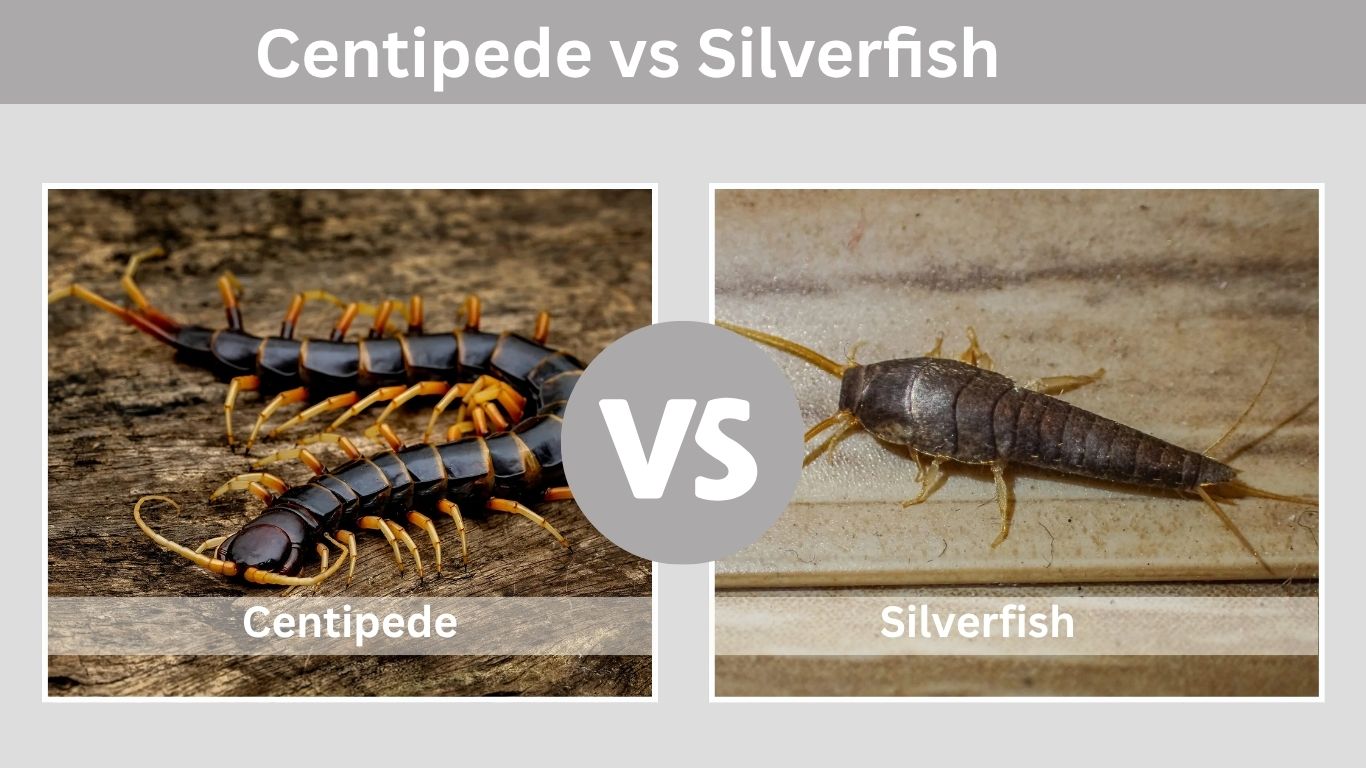
Centipedes and silverfish are common household pests that many people confuse because both move quickly and hide in dark areas. However, they are very different in appearance, behavior, and diet. Silverfish are small wingless insects that damage paper and fabrics, while centipedes are fast-moving predators that hunt other insects.
Understanding the difference between these pests can help homeowners identify infestations and choose the best control methods. This guide explains their appearance, habitats, feeding habits, and the differences between silverfish, centipedes, and millipedes.
What Are Silverfish and Centipedes?
Silverfish and centipedes belong to completely different groups of arthropods. Silverfish are insects with six legs, while centipedes are multi-legged hunters. Although they sometimes appear in the same damp areas indoors, their lifestyles and behaviors are very different.
What Is a Silverfish?
Silverfish are small wingless insects covered with silvery scales. They move with a wiggling fish-like motion and prefer humid environments such as bathrooms, kitchens, and basements.
What Is a Centipede?
Centipedes are long-bodied arthropods with many legs and fast movement. Unlike silverfish, they are predators that hunt spiders, cockroaches, and other small insects.
House Centipede Overview
- Long legs and antennae
- Fast-running movement
- Usually yellow or brown
- Common in damp indoor areas
Why People Confuse Them
Both pests are quick-moving and active mostly at night. They also prefer dark, humid hiding spots, which makes accidental sightings common inside homes.
Centipede vs Silverfish Appearance
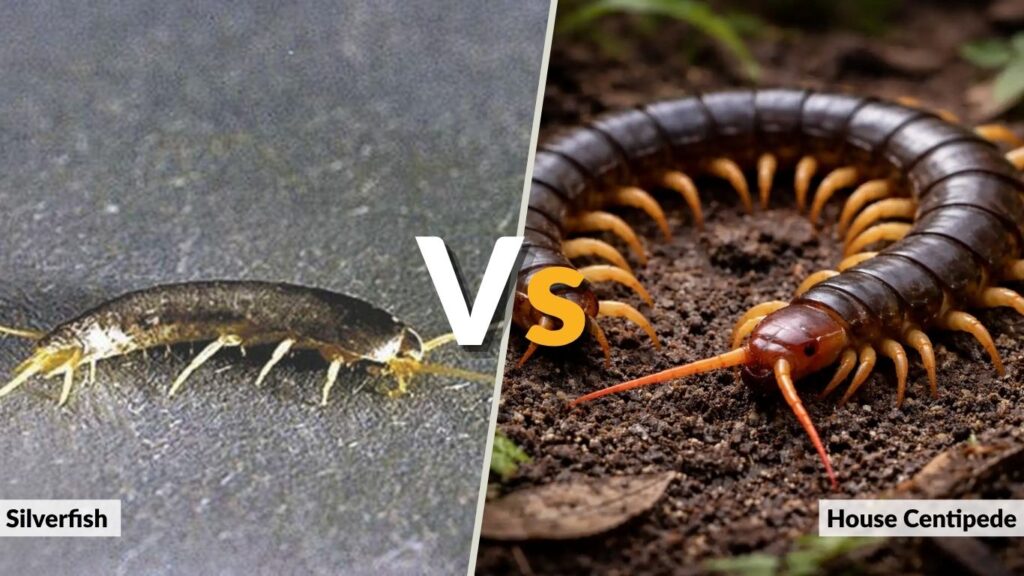
Physical appearance is the easiest way to identify whether you are seeing a silverfish or a centipede. Their body structure, number of legs, and movement patterns are very different.
Body Shape Comparison
Silverfish have teardrop-shaped bodies that narrow toward the tail. Centipedes have long segmented bodies with legs extending from both sides.
Leg Differences
- Silverfish only have six legs
- Centipedes have many pairs of legs
- House centipedes have especially long legs
- Centipede legs spread outward from the body
Color and Texture
Silverfish are usually silver or gray with shiny scales covering the body. Centipedes are commonly brown, yellow, or reddish with smoother outer surfaces.
Antennae and Tail Features
Silverfish have long antennae and three tail-like bristles at the rear. Centipedes only have one pair of antennae and no tail bristles.
Silverfish vs House Centipede
House centipedes and silverfish are often found in the same indoor spaces because both prefer moisture and darkness. However, their behavior and purpose in the home are very different.
Size Differences
House centipedes are usually much larger than silverfish because of their extremely long legs. Silverfish are shorter and flatter in body shape.
Movement and Speed
- Silverfish wiggle while running
- House centipedes sprint rapidly
- Both move quickly when disturbed
- Centipedes climb walls more easily
Indoor Habitat Preferences
Both pests like humid areas such as basements, bathrooms, and laundry rooms. Cracks, storage boxes, and dark corners provide shelter during the day.
Activity Times
Silverfish and centipedes are mainly nocturnal. Most people notice them at night when lights are turned on suddenly.
Centipede vs Millipede vs Silverfish
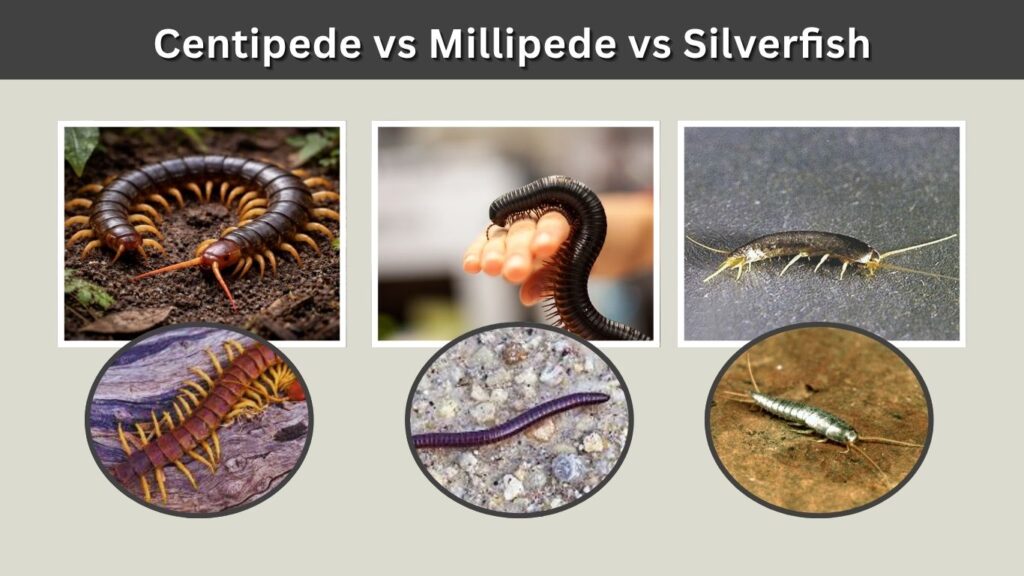
Many people confuse centipedes, millipedes, and silverfish because all have elongated bodies and multiple visible legs. Learning their differences makes identification much easier.
Centipede Characteristics
- One pair of legs per body segment
- Fast movement
- Predatory behavior
- Flattened body shape
Millipede Characteristics
Millipedes move slowly and have rounded bodies. Unlike centipedes, they mainly feed on decaying plant material instead of hunting insects.
Silverfish Characteristics
- Wingless insect
- Six total legs
- Silvery scales
- Fish-like movement
Quick Identification Guide
Millipedes curl into tight spirals when threatened, while centipedes run quickly for escape. Silverfish are much smaller and have distinct tail bristles.
Centipede vs Silverfish Habitat and Hiding Places
Silverfish and centipedes both prefer moist environments because humidity helps prevent dehydration. Homes with water leaks or poor ventilation are especially attractive to these pests.
Where Silverfish Live
- Bathrooms
- Kitchens
- Storage rooms
- Cardboard boxes
Where Centipedes Hide
Centipedes often hide under sinks, inside basements, behind appliances, and in damp wall cracks during daylight hours.
Moisture and Humidity Needs
Both pests are strongly attracted to humid conditions. Poor ventilation and water leaks create ideal hiding environments.
Outdoor vs Indoor Habitats
Silverfish and centipedes may also live outdoors under rocks, leaves, mulch, and rotting wood before entering homes through cracks and gaps.
Centipede vs Silverfish Diet and Feeding Behavior
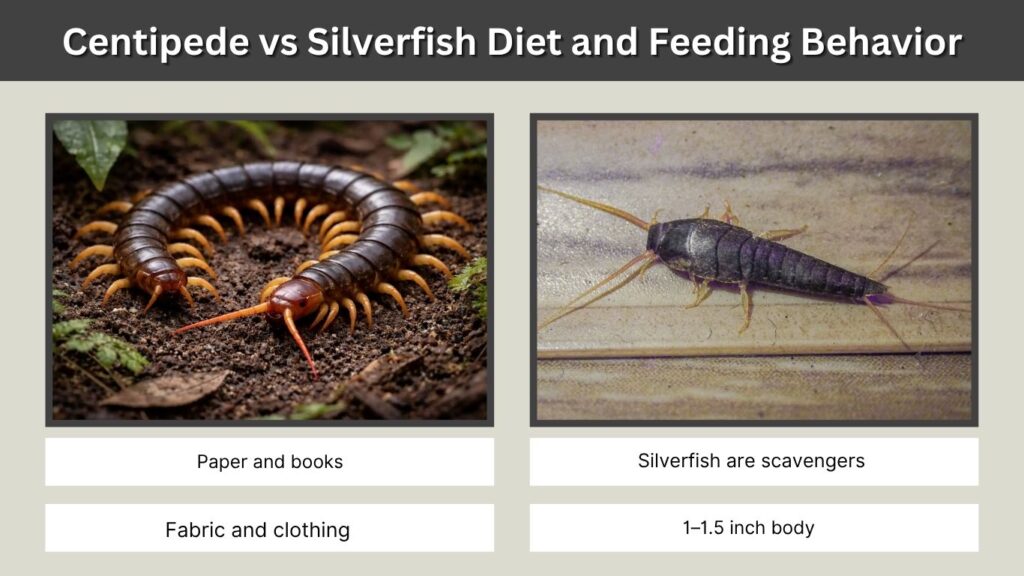
Silverfish and centipedes eat completely different foods. Silverfish damage household materials by feeding on starches, while centipedes hunt living insects and other small pests. Their feeding habits strongly affect whether they become harmful inside homes.
What Silverfish Eat
- Paper and books
- Glue and wallpaper paste
- Fabric and clothing
- Dry food products
- Cardboard materials
What Centipedes Eat
Centipedes are predators that hunt insects and spiders. They help reduce populations of cockroaches, ants, silverfish, and other small household pests.
Hunting vs Scavenging
Silverfish are scavengers that search for starchy materials and organic debris. Centipedes actively chase or ambush prey using speed and venom.
Do Centipedes Eat Silverfish?
Yes, house centipedes may eat silverfish if they find them indoors. Because of this, centipedes sometimes help naturally reduce silverfish infestations.
Are Silverfish or Centipedes Dangerous?
Many homeowners become worried after seeing these pests indoors. While both may be unpleasant to see, they usually cause different types of problems rather than serious danger.
Are Silverfish Harmful?
Silverfish do not bite humans, but they can damage books, paper, wallpaper, clothing, and stored food products over time.
Can Centipedes Bite?
- Some centipedes can bite
- Bites are usually mild
- Pain may resemble a bee sting
- Serious reactions are uncommon
Which Pest Is More Dangerous?
Silverfish mainly cause property damage, while centipedes may bite if handled or trapped. However, neither pest is usually considered highly dangerous to healthy adults.
Allergies and Reactions
Some people may experience fear, stress, or mild allergic reactions related to insect debris, shed skins, or bites from centipedes.
Centipede vs Silverfish Signs of an Infestation
Early signs of pest activity can help homeowners control infestations before they become severe. Both silverfish and centipedes often remain hidden during daytime hours.
Signs of Silverfish Infestation
- Small holes in paper
- Yellow stains on books or fabrics
- Shed scales or skins
- Damage to cardboard boxes
Signs of Centipede Activity
Centipedes are often spotted running quickly across floors, walls, or sinks at night, especially in damp rooms.
Why They Appear Indoors
- Excess moisture
- Water leaks
- Dark hiding places
- Presence of other insects
Common Household Areas
Bathrooms, basements, kitchens, laundry rooms, and storage spaces are among the most common places where these pests appear.
How to Get Rid of Silverfish and Centipedes
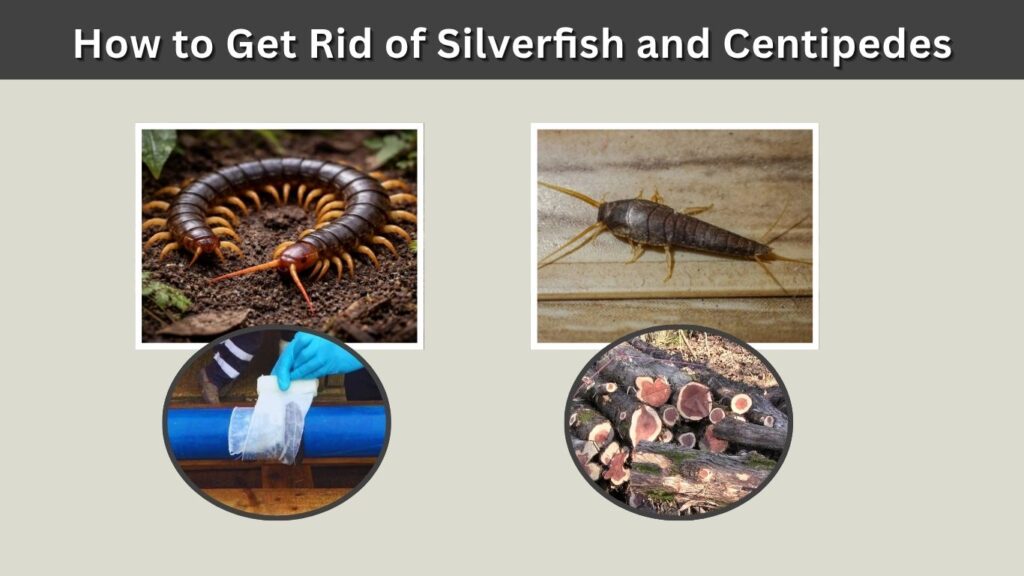
Reducing moisture is one of the most effective ways to control both silverfish and centipedes. Removing their hiding spots and food sources also helps prevent future infestations.
Reducing Moisture
- Repair leaking pipes
- Improve ventilation
- Use dehumidifiers
- Dry wet areas quickly
Cleaning and Decluttering
Removing clutter and old cardboard reduces hiding places for silverfish and centipedes. Regular vacuuming also helps remove eggs and debris.
Natural Control Methods
- Cedar wood
- Sticky traps
- Diatomaceous earth
- Essential oil repellents
Chemical Pest Control Options
In severe infestations, insect sprays or professional pest control services may be needed to reduce populations effectively.
Prevention Tips for Homes
Preventing pest infestations is easier than eliminating large populations later. Simple maintenance and cleaning routines can greatly reduce the chance of silverfish and centipedes entering the home.
Seal Cracks and Gaps
Small openings around windows, doors, and pipes allow pests to enter homes. Sealing these gaps helps block entry points.
Store Paper and Fabrics Properly
- Use sealed plastic containers
- Avoid damp storage areas
- Reduce cardboard clutter
- Keep books dry
Keep Bathrooms Dry
Dry bathrooms after showers and improve airflow to reduce humidity that attracts pests.
Reduce Outdoor Entry Points
Trim vegetation near walls and remove piles of leaves or wood that may shelter pests close to the house.
FAQs
Do silverfish and centipedes live together?
Yes, they can live in the same damp areas such as basements and bathrooms. In some cases, centipedes may even hunt and eat silverfish.
Are silverfish faster than centipedes?
House centipedes are generally faster because of their long legs and hunting behavior. Silverfish move quickly too, but their movement is more wiggling and less controlled.
Why are centipedes appearing in my house?
Centipedes often enter homes searching for moisture and food sources such as insects, spiders, and silverfish. Damp environments attract them most.
Can silverfish damage clothes and books?
Yes, silverfish can damage paper products, books, wallpaper, fabrics, and clothing because they feed on starches and glue-based materials.
Should I kill house centipedes?
Some homeowners remove house centipedes because they are frightening, while others leave them because they help reduce populations of other pests indoors.