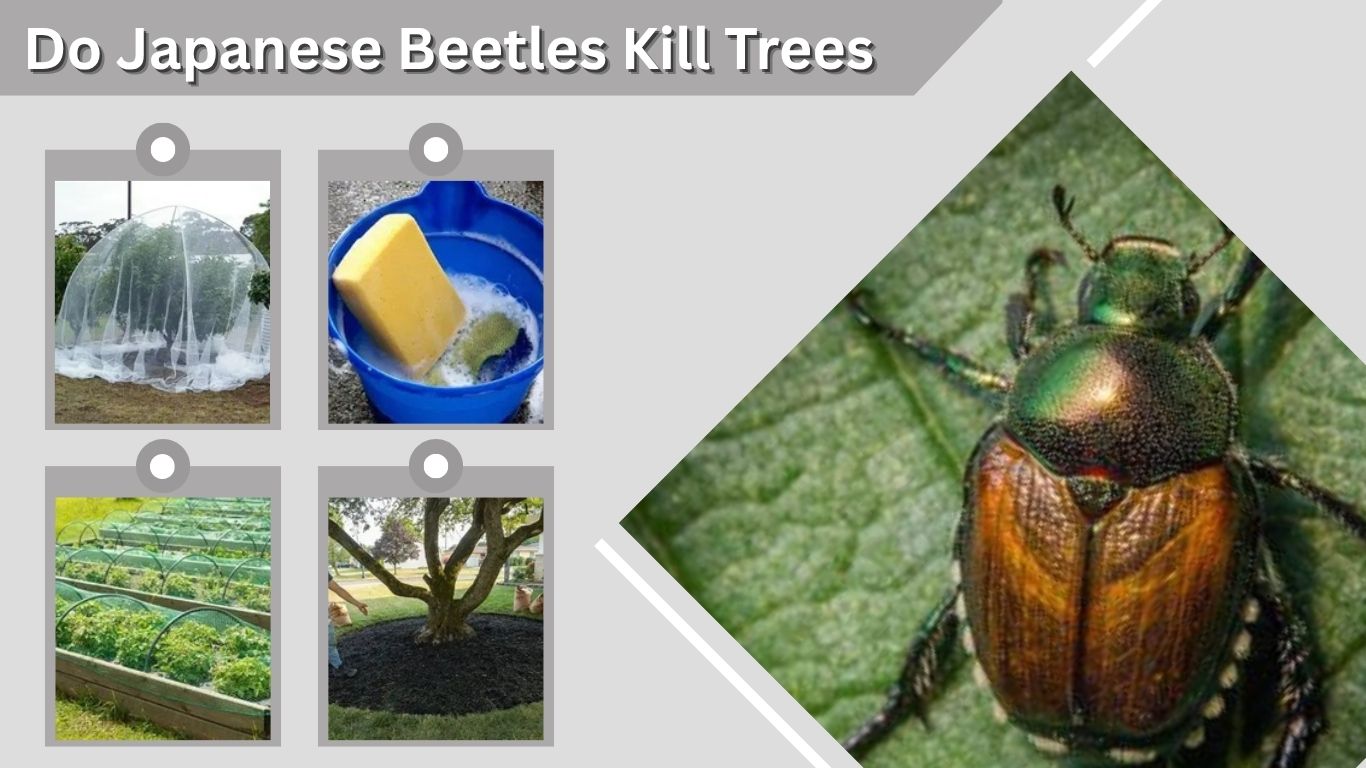
Japanese beetles can make trees look badly damaged in a short time. Their feeding often leaves leaves brown, thin, and lace-like, which can make a healthy tree appear as if it is dying. However, Japanese beetles rarely kill mature, healthy trees by themselves. The bigger risk is to young trees, newly planted trees, fruit trees, and trees already weakened by drought, disease, poor soil, or repeated defoliation.
Can Japanese Beetles Kill a Tree?
Japanese beetles can kill a tree in some situations, but it is not the most common outcome. A large, established tree can usually survive one season of leaf feeding, even if the damage looks severe. Trees store energy in their roots, trunk, and branches, so they can often recover after beetles finish feeding.
The problem becomes more serious when a tree is small, newly planted, or already stressed. Young trees do not have the same energy reserves as mature trees. If Japanese beetles remove too much leaf tissue, the tree may struggle to make enough food through photosynthesis. Repeated attacks over several years can weaken the tree and make it more vulnerable to other problems.
Japanese beetles are most dangerous when they are part of a larger stress pattern. For example, a drought-stressed cherry tree with poor soil, root damage, and heavy beetle feeding has a much higher risk of decline than a healthy mature maple with only one summer of leaf damage.
What Japanese Beetle Tree Damage Looks Like
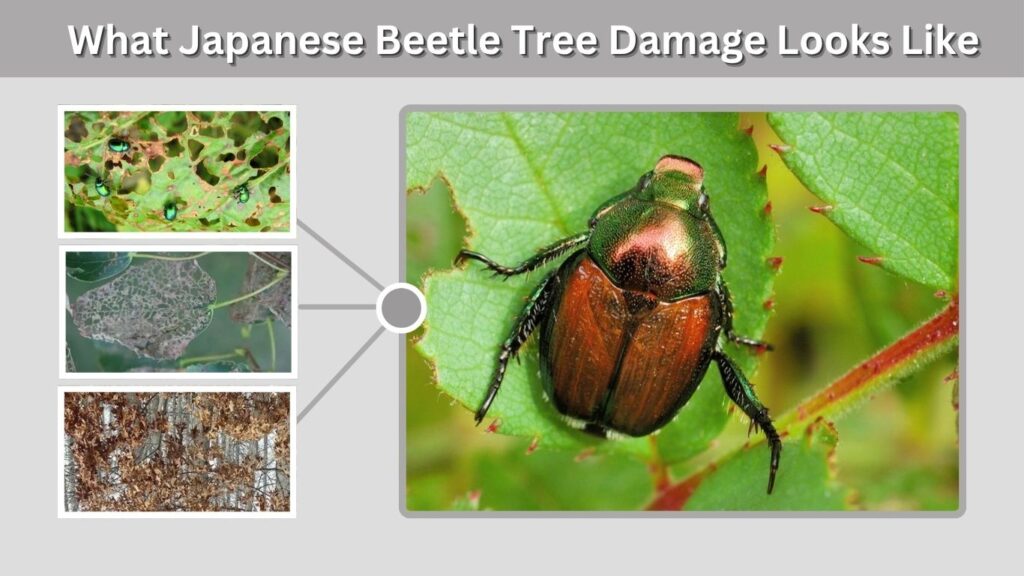
Japanese beetle damage is usually easy to recognize. Adult beetles feed on the soft tissue between leaf veins. This creates a skeletonized pattern, where the leaf looks like thin lace. Damaged leaves may turn brown, dry out, and fall early.
Common signs of Japanese beetles in trees include:
- Metallic green and copper beetles feeding in groups
- Lace-like or skeletonized leaves
- Brown leaves at the top of the tree
- Damage starting in sunny areas
- Beetles feeding on leaves, flowers, or fruit
- Sudden heavy feeding during summer
Japanese beetles often gather together on the same plant. Once feeding begins, damaged leaves can attract more beetles. That is why one tree may be covered in beetles while another nearby tree has little damage.
Why Japanese Beetles Like Certain Trees
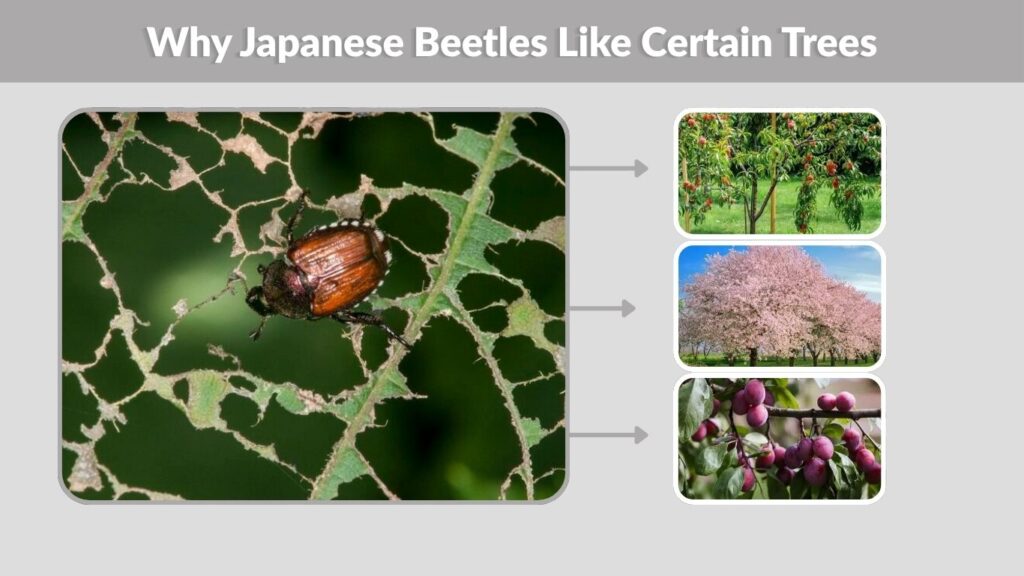
Japanese beetles do not feed equally on every tree. They prefer certain species and often return to the same kinds of plants each year. They are especially attracted to trees with tender foliage, fruit, flowers, or leaves in full sun.
Trees commonly attacked by Japanese beetles include:
- Apple trees
- Cherry trees
- Peach trees
- Plum trees
- Birch trees
- Linden trees
- Elm trees
- Crabapple trees
- Japanese maple trees
- Norway maple trees
- Some oak trees
Fruit trees can be especially attractive because beetles may feed on both leaves and fruit. Ornamental trees such as linden, birch, and crabapple are also frequent targets in many landscapes.
Japanese Beetles on Fruit Trees
Japanese beetles on fruit trees can be a serious problem because they may damage leaves and fruit at the same time. Apple, cherry, peach, plum, and other fruit trees are commonly affected. The beetles chew leaf tissue and may also feed on ripening fruit, leaving wounds that can invite rot or other insects.
A mature fruit tree may survive beetle feeding, but the harvest can suffer. Damaged leaves reduce the tree’s ability to produce energy, while damaged fruit may become unattractive or unusable. Young fruit trees are more vulnerable because they are still building their root systems and branch structure.
If Japanese beetles appear on fruit trees, early action is important. Removing beetles when numbers are still low can reduce feeding and help prevent large groups from forming.
Japanese Beetles on Apple, Cherry, Birch, and Linden Trees
Japanese beetles on apple trees often feed on upper leaves and may also chew fruit. Apple trees can usually survive moderate leaf damage, but young apple trees need more protection. If beetles return every year, the tree may lose vigor and produce fewer or lower-quality fruits.
Cherry trees are also highly attractive to Japanese beetles. Heavy feeding can make cherry leaves look scorched or brown. A mature cherry tree may recover, but a young or newly planted cherry tree can decline if it loses too much foliage.
Birch trees are another common target. Japanese beetle damage on birch trees usually appears as skeletonized leaves, especially in sunny upper branches. Since birch trees can also suffer from drought stress and borers, repeated beetle damage should not be ignored.
Linden trees are among the trees Japanese beetles often favor. In some areas, lindens can be heavily defoliated during beetle season. While mature lindens often survive, repeated severe damage can weaken them over time.
Do Japanese Beetles Eat Evergreen Trees?
Japanese beetles generally prefer broadleaf trees, flowers, fruits, and shrubs. They are less likely to cause serious damage to evergreen trees such as pine, spruce, fir, arborvitae, and hemlock. This does not mean evergreens are completely immune, but they are usually less attractive than fruit trees, lindens, birches, roses, grapes, and maples.
If an evergreen tree looks damaged, Japanese beetles may not be the main cause. Browning needles, branch dieback, or bark damage may point to drought, disease, mites, scale insects, borers, or root problems instead.
How to Get Rid of Japanese Beetles on Trees
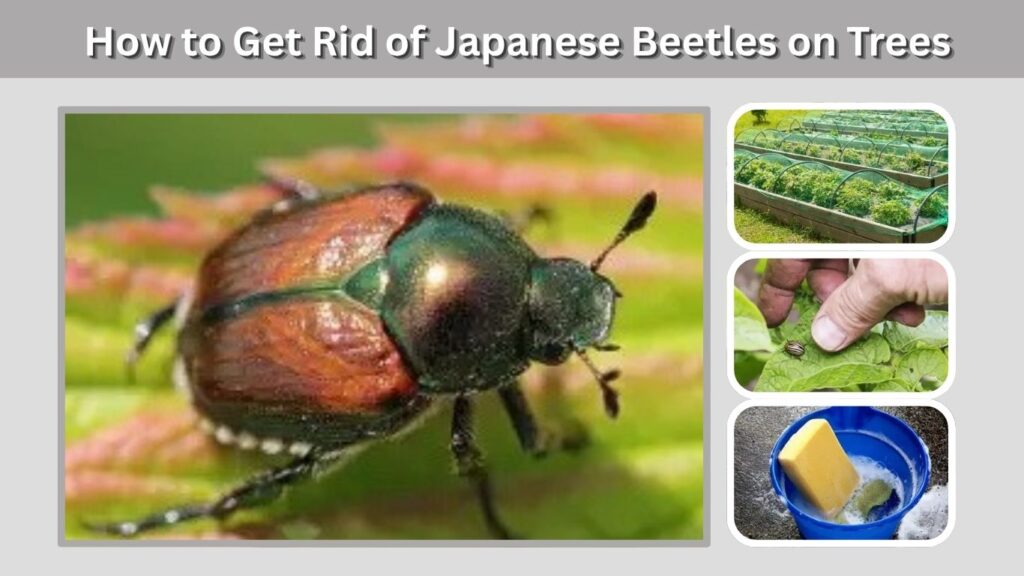
The best way to get rid of Japanese beetles on trees is to combine several control methods. One treatment rarely solves the problem completely, especially if beetles are common in the surrounding neighborhood.
Handpick Beetles Early
For small trees, young trees, and fruit trees, handpicking can be very effective. Go out in the morning when beetles are slower. Knock them into a bucket of soapy water. Removing beetles early helps reduce feeding and may prevent more beetles from gathering on the same tree.
This works best when beetle numbers are still low. It may not be practical for tall trees or severe infestations, but it is one of the safest methods for edible fruit trees and small landscape trees.
Use Netting on Young or Fruit Trees
Fine insect netting can protect small fruit trees, young trees, and valuable plants during peak beetle season. Netting is especially useful when you want to avoid sprays. Make sure the netting is secured so beetles cannot crawl underneath.
Do not leave netting on if it blocks pollinators during bloom. For fruit trees, netting is usually most useful after pollination when fruit is developing.
Avoid Japanese Beetle Traps Near Trees
Japanese beetle traps can catch many beetles, but they may also attract more beetles into the area. If a trap is placed near a tree, it can increase feeding damage instead of reducing it. If traps are used, they should be placed far away from valuable trees and gardens, not directly beside the plants you want to protect.
Use Sprays Carefully
Japanese beetle spray for trees may help when infestations are heavy, but sprays should be used carefully. Some products can harm bees, butterflies, and other beneficial insects. Fruit trees also require special attention because not every spray is safe to use close to harvest.
Before using any spray, read the label fully. Make sure it is approved for the tree species, the pest, and the timing. For fruit trees, check the pre-harvest interval so fruit is not picked too soon after treatment.
Organic options such as neem-based products may help with light to moderate pressure, especially when applied early. Stronger insecticides may provide faster control, but they can also carry more risk to pollinators and beneficial insects.
How to Treat Japanese Beetles on Tall Trees
Treating tall trees is more difficult. Handpicking is not practical, and spraying large trees can create drift and safety concerns. In many cases, the best option is to protect young or high-value trees while accepting some damage on large established trees.
For severe infestations on valuable trees, a certified arborist can inspect the tree and recommend treatment. Professional care may be helpful for large lindens, birches, maples, or ornamental trees that are repeatedly defoliated.
Homeowners should avoid trying to spray tall trees with equipment that cannot reach safely or evenly. Poor coverage may not control the beetles, and drifting spray can harm nearby plants, pollinators, pets, or people.
How to Protect Trees from Japanese Beetles
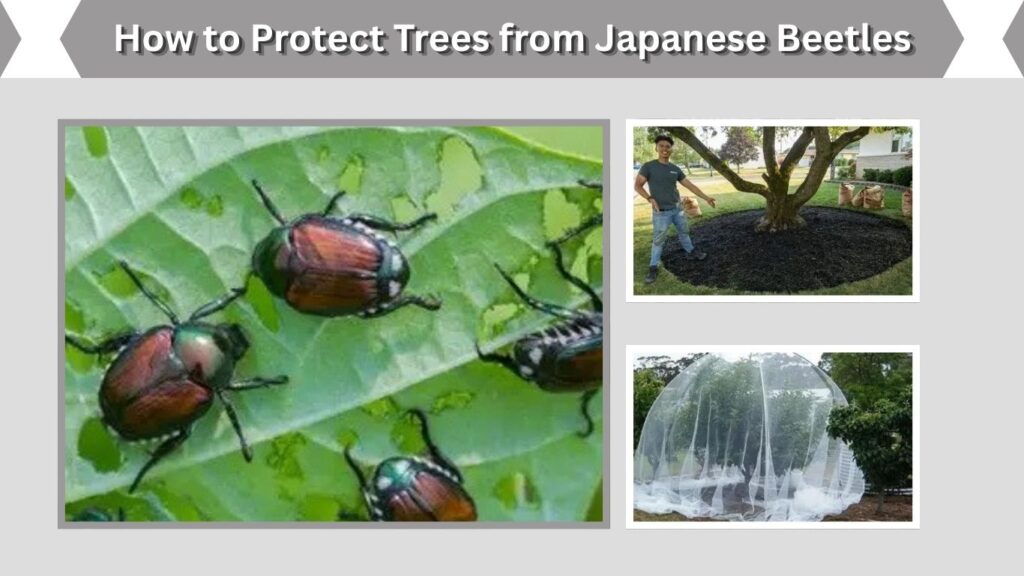
Prevention is easier when you understand the beetle’s life cycle. Adult beetles feed on trees and plants in summer. Females lay eggs in soil, often in lawns. The larvae, called grubs, feed on grass roots before becoming adult beetles the next season.
To protect trees from Japanese beetles:
- Keep trees healthy with proper watering
- Mulch around trees without piling mulch against the trunk
- Handpick beetles early in the season
- Use netting on small fruit trees
- Avoid placing beetle traps near valuable plants
- Reduce plant stress from drought or poor soil
- Choose less attractive trees in areas with heavy beetle pressure
- Manage lawn grubs when turf damage is also present
Healthy trees tolerate feeding much better than stressed trees. Watering during dry periods is especially important for young trees and newly planted trees.
Japanese Beetle Resistant Trees
If Japanese beetles are a yearly problem, choosing resistant or less attractive trees can reduce future damage. No tree is guaranteed to be beetle-proof, but some trees are usually less preferred.
Trees often considered less attractive to Japanese beetles include:
- Red maple
- Dogwood
- Magnolia
- Red oak
- Pine
- Spruce
- Fir
- Arborvitae
- Hemlock
- Tulip tree
Local conditions matter. Beetle feeding can vary by region, weather, nearby plants, and tree health. A tree that is rarely damaged in one yard may be attacked in another if beetle pressure is high.
When Should You Worry?
You should worry about Japanese beetles on trees when damage is heavy, repeated, or affecting a vulnerable tree. A mature tree with some skeletonized leaves may not need aggressive treatment. A newly planted fruit tree covered in beetles needs faster action.
Take the problem seriously if:
- The tree is young or newly planted
- Most leaves are skeletonized
- Damage happens year after year
- The tree is also drought-stressed
- Leaves are dropping early
- Fruit is being damaged
- Branches show dieback after repeated infestations
If the tree continues to decline after beetle season, there may be other problems involved, such as root damage, disease, borers, drought stress, or poor planting conditions.
FAQs
Will Japanese beetles kill trees?
Japanese beetles rarely kill healthy mature trees by themselves. However, they can weaken trees by removing leaf tissue. Young, newly planted, drought-stressed, or diseased trees are more likely to suffer serious decline from heavy or repeated Japanese beetle feeding.
Can Japanese beetles kill a cherry tree?
Japanese beetles can seriously weaken a young or stressed cherry tree, especially if they remove much of the foliage. Mature cherry trees usually survive moderate feeding, but repeated heavy infestations may reduce vigor, fruit quality, and overall tree health.
How do I get rid of Japanese beetles on apple trees?
Remove beetles early by knocking them into soapy water, use netting after pollination, keep the tree healthy, and consider labeled sprays only when necessary. Always check that any spray is safe for apple trees and follow the pre-harvest interval before picking fruit.
What trees do Japanese beetles like most?
Japanese beetles commonly feed on apple, cherry, peach, plum, birch, linden, elm, crabapple, Japanese maple, and Norway maple. They also attack many shrubs, flowers, vines, and fruits. Damage is usually worse on sunny, exposed foliage.
Are Japanese beetle traps good for trees?
Japanese beetle traps can catch many beetles, but they may attract more beetles into your yard. If placed near trees, they can increase feeding damage. Traps should not be placed beside trees you are trying to protect.