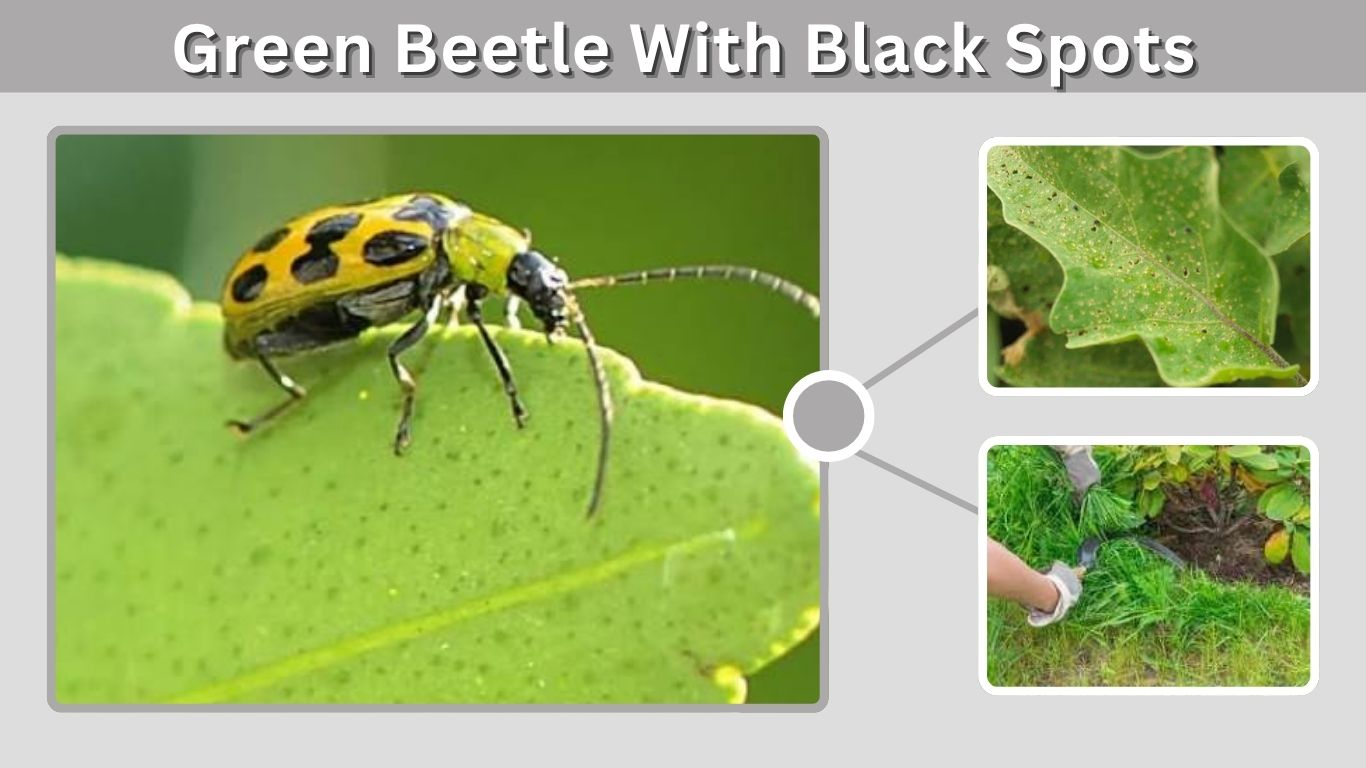
A green beetle with black spots is most often a spotted cucumber beetle, especially if it is small, yellow-green, and found on garden plants. However, not every green and black spotted beetle is the same species. Some are plant pests, while others are harmless or even beneficial predators. To identify the beetle correctly, look at its size, body color, spot pattern, shine, location, and the plant where you found it.
What Is a Green Beetle With Black Spots?
A green beetle with black spots is usually a small leaf-feeding beetle, but the exact species depends on body shape and markings.
The most common match in North America is the spotted cucumber beetle, also called the southern corn rootworm. University of Kentucky describes the spotted cucumber beetle as about 1/4 inch long, yellow-green, with 12 black spots on its back.
| Beetle Type | Main Look | Harmful or Helpful? |
| Spotted cucumber beetle | Yellow-green with 12 black spots | Garden pest |
| Western spotted cucumber beetle | Yellowish green with black spots | Crop pest |
| Six-spotted tiger beetle | Metallic green with pale edge spots | Helpful predator |
| Bean leaf beetle | Yellow-green to red with dark spots | Bean pest |
| Lady beetle lookalikes | Rounder body, variable color | Often helpful |
Quick Identification Clues
If the beetle is small, oval, yellow-green, and has black spots, it is probably a spotted cucumber beetle. If it is bright metallic green, fast-running, and found on trails or bare ground, it may be a tiger beetle instead.
A cucumber beetle usually sits on leaves, flowers, stems, or fruit. A tiger beetle usually runs quickly across soil, paths, or sunny woodland trails.
Spotted Cucumber Beetle
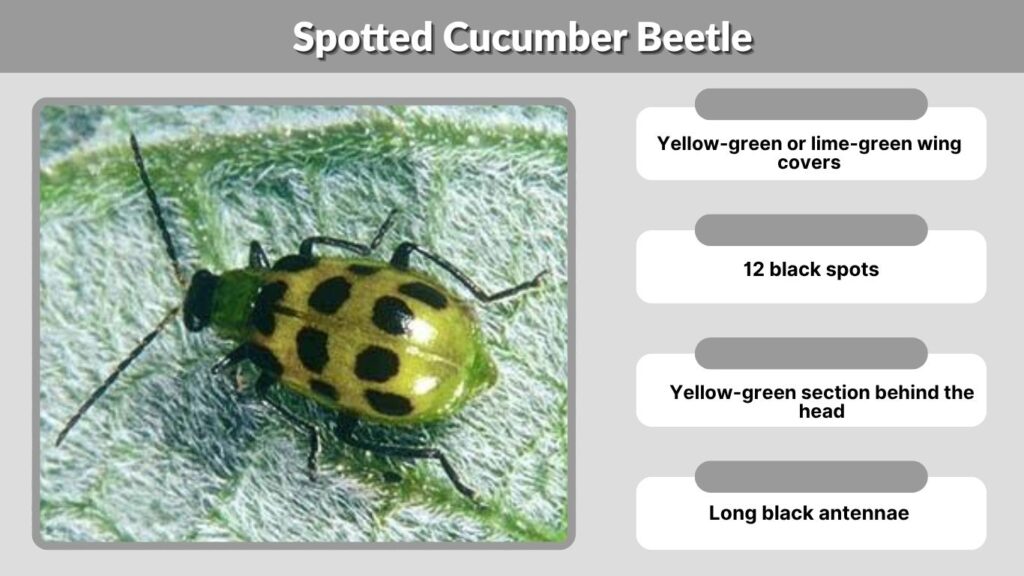
The spotted cucumber beetle is the most likely answer for “green beetle with black spots.” It is a common pest in gardens and farms.
Utah State University says adult spotted cucumber beetles are about 8–9 mm long, with a black head, yellow prothorax, and 12 black spots on yellowish-green wings.
What It Looks Like
A spotted cucumber beetle usually has:
- Yellow-green or lime-green wing covers
- 12 black spots
- Black head
- Yellow-green section behind the head
- Long black antennae
- Small oval body
- Thin black legs
It may look more yellow than green in bright sunlight, but many people describe it as a light green beetle with black spots.
Where You Find It
Spotted cucumber beetles are often found on cucumbers, squash, pumpkins, melons, beans, corn, flowers, weeds, and ornamental plants. Oregon State University describes the western spotted cucumber beetle as yellowish green, about 1/4 inch long, with distinct black spots on the wing covers.
If the beetle is feeding on cucumber-family plants, this ID becomes much more likely.
Is a Green Beetle With Black Spots Harmful?
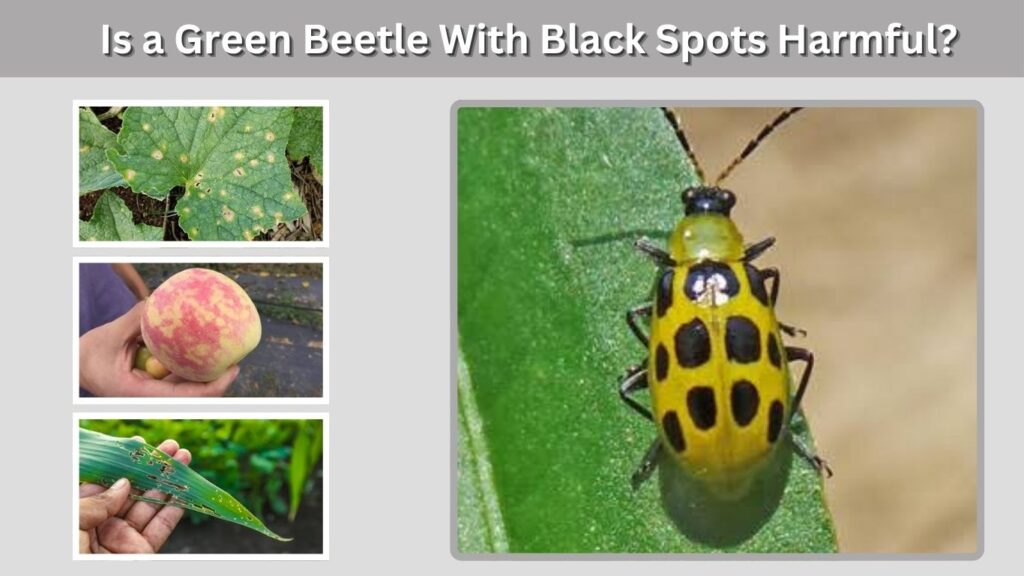
Some green beetles with black spots are harmful to plants, especially cucumber beetles. Others are harmless predators.
Spotted cucumber beetles can chew leaves, flowers, stems, and fruit. They can also damage roots during the larval stage. Michigan State University notes that spotted cucumber beetles are yellow or yellowish-green with 12 black spots, a black head, and a yellow abdomen.
Plant Damage Signs
You may notice:
- Small holes in leaves
- Chewed flower petals
- Damaged seedlings
- Scars on fruit skin
- Beetles inside flowers
- Weak young plants
- Root damage from larvae
- Wilted cucurbit plants
Cucumber beetles are most serious when plants are young. Seedlings can be damaged quickly if many beetles are feeding at the same time.
Disease Risk
Cucumber beetles are important because they can spread bacterial wilt in cucurbits. Wisconsin Horticulture explains that cucumber beetles can be pests of vine crops, and striped cucumber beetles are known for spreading bacterial wilt.
Spotted cucumber beetles can also contribute to plant problems, especially when beetle numbers are high.
Large Green Beetle With Black Spots
A large green beetle with black spots may not be a cucumber beetle. True spotted cucumber beetles are small, not giant.
If the beetle is large, shiny, and metallic, check whether the “black spots” are actually dark reflections, dents, or pale spots that look dark in photos.
Metallic Green Beetle With Spots
A metallic green beetle with spots may be a tiger beetle. The six-spotted tiger beetle is bright metallic green and may have small pale spots along the edges of the wing covers. University of Minnesota says six-spotted tiger beetles are metallic green or sometimes blue, with long legs, large mandibles, bulging eyes, and variable pale spots on the wing covers.
These beetles are fast predators. They do not eat your garden plants.
Big Green Beetle With Black Spots
A big green beetle with black spots could also be a scarab beetle with dark markings, but common large green beetles like green June beetles usually do not have neat black spots. They are more often metallic green, bronze, yellowish, or brownish-green.
If it is almost 1 inch long, loud in flight, and clumsy, it may be a green June beetle rather than a spotted cucumber beetle.
Small Green Beetle With Black Spots
A tiny or small green beetle with black spots is much more likely to be a cucumber beetle or bean leaf beetle.
Spotted cucumber beetles are usually around 1/4 inch long. They are small enough to hide inside flowers and under leaves. Their black spots are usually rounded and easy to see.
Spotted Cucumber Beetle vs Bean Leaf Beetle
Bean leaf beetles can also be yellow-green and spotted, but they usually feed on beans and other legumes. They may have fewer spots than spotted cucumber beetles and often show a dark triangular mark near the base of the wing covers.
| Feature | Spotted Cucumber Beetle | Bean Leaf Beetle |
| Spots | Usually 12 black spots | Often 4 black spots |
| Main plants | Cucumbers, squash, melons, corn, flowers | Beans and legumes |
| Body color | Yellow-green | Yellow, green, tan, or red |
| Shape | Slender oval | More rounded oval |
| Pest risk | Cucurbit damage | Bean leaf and pod damage |
How to Get Rid of Green Beetles With Black Spots
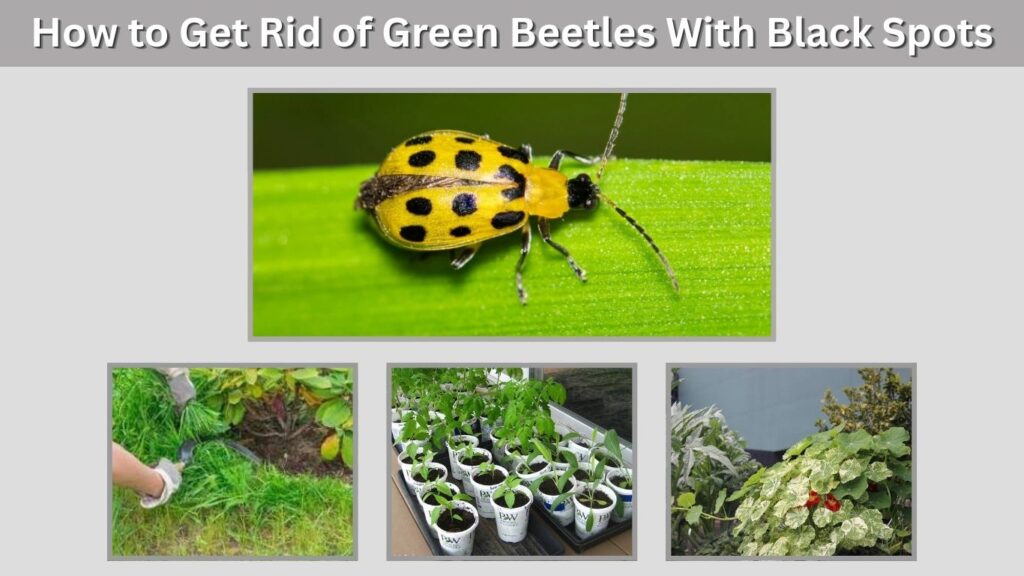
If the beetle is a spotted cucumber beetle and it is damaging your plants, start with simple garden controls before using sprays.
The best method depends on the crop, the number of beetles, and whether the plants are flowering.
Natural Control Tips
Try these steps:
- Hand-pick beetles into soapy water
- Use floating row covers before flowering
- Remove weeds and old crop debris
- Rotate cucumber-family crops each year
- Check flowers and leaf undersides often
- Plant trap crops away from main plants
- Keep seedlings protected early
- Avoid broad insecticides during bloom
Kansas State Extension recommends floating row covers over cucurbits to help prevent cucumber beetle feeding and disease transmission, but covers must be removed when pollination is needed.
When to Use Treatment
Treatment may be needed if young plants are heavily attacked. However, do not spray without identifying the beetle first. A six-spotted tiger beetle or other predator should be left alone because it helps control smaller insects.
FAQs
What is a green beetle with black spots?
A green beetle with black spots is often a spotted cucumber beetle. It is usually yellow-green, about 1/4 inch long, and has 12 black spots on its back.
Is a green beetle with black spots harmful?
It can be harmful if it is a cucumber beetle. Spotted cucumber beetles feed on garden plants and may damage leaves, flowers, stems, fruit, and roots.
What is a large green beetle with black spots?
A large green beetle with spots may be a tiger beetle, scarab beetle, or another local species. Spotted cucumber beetles are small, so a very large beetle is probably something else.
What is a metallic green beetle with black spots?
A metallic green beetle with spots may be a six-spotted tiger beetle, although its spots are usually pale or white rather than black. It is a beneficial predator and does not eat plants.
How do I control green beetles with black spots on plants?
Hand-pick beetles, use row covers before flowering, remove old plant debris, rotate crops, and monitor seedlings closely. Avoid spraying flowers when bees and other pollinators are active.