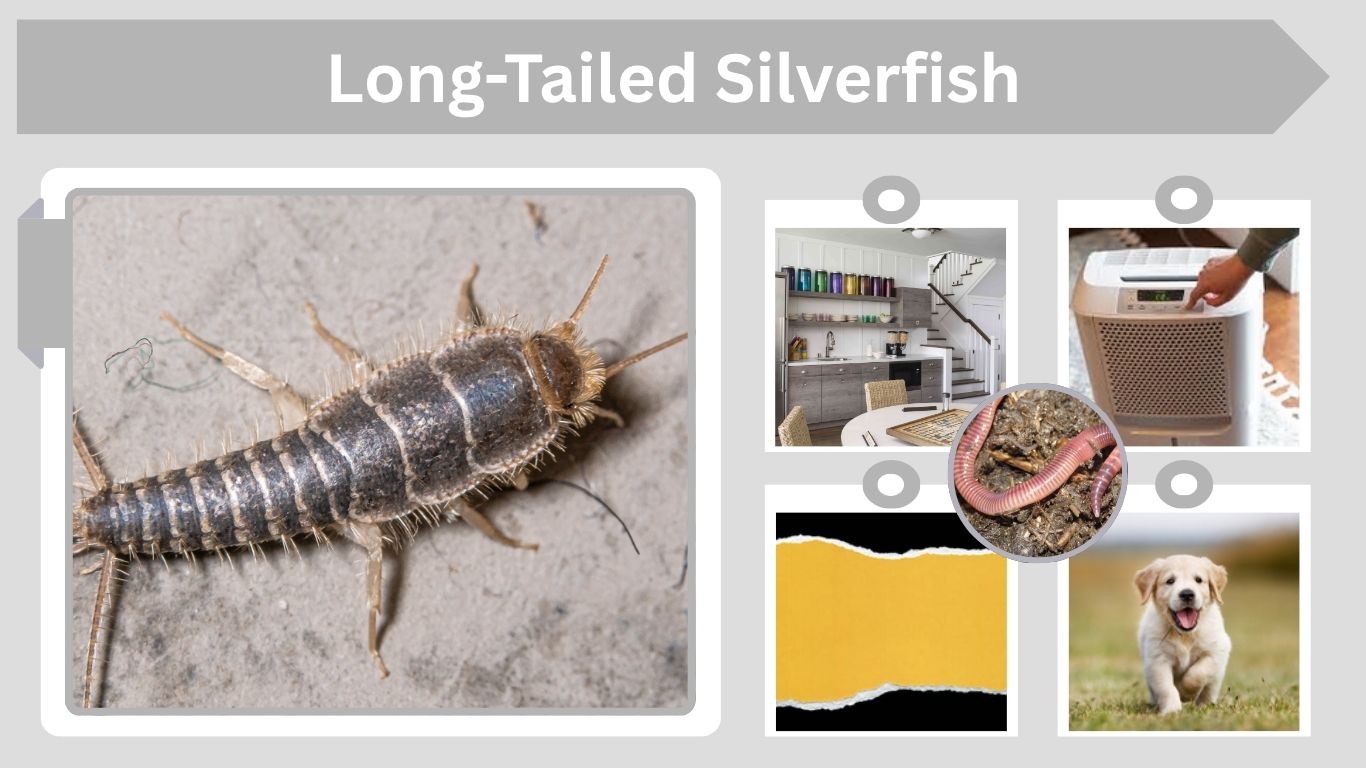
Long-tailed silverfish are fast-moving household pests that are becoming more common in homes and apartments. They look similar to common silverfish but usually have longer tail bristles, larger bodies, and the ability to survive in a wider range of indoor conditions. These insects often hide in dark cracks, storage spaces, and warm rooms.
Although long-tailed silverfish are not dangerous to humans, they can damage paper, books, fabrics, and stored items over time. This guide explains their appearance, habitat, reproduction, dangers, and the best methods for controlling infestations indoors.
What Is a Long-Tailed Silverfish?
Long-tailed silverfish are wingless insects related to common silverfish. They are known for their long rear bristles, quick movement, and ability to survive indoors for long periods. These pests often become active at night and hide during the daytime.
Scientific Classification
Long-tailed silverfish belong to the insect order Zygentoma. Like other silverfish species, they are considered ancient insects that have existed for millions of years.
What Makes Them Different
- Longer tail appendages
- Larger body size
- Faster movement
- Better survival in dry areas
Long-Tailed Silverfish vs Common Silverfish
Long-tailed silverfish are usually larger and more active than common silverfish. They may also tolerate drier indoor conditions better than regular silverfish.
Why They Thrive Indoors
Warm buildings, hidden spaces, moisture, and available food sources allow long-tailed silverfish to reproduce and survive successfully indoors.
Long-Tailed Silverfish Appearance
Correct identification is important because long-tailed silverfish are often confused with common silverfish or other small indoor pests. Their body structure and movement patterns help distinguish them.
Body Shape and Color
These insects have long flattened bodies covered with silvery-gray scales. Their bodies taper toward the rear and move with a fish-like motion.
Long Tail Bristles
- Three long tail appendages
- Long antennae at the front
- Tail bristles often longer than body width
- Flexible body movement
Size Differences
Long-tailed silverfish are generally larger than common silverfish and may appear more active when disturbed indoors.
How to Identify Them at Home
Homeowners often notice them running quickly across floors, walls, sinks, or storage areas during nighttime hours.
Long-Tailed Silverfish Habitat
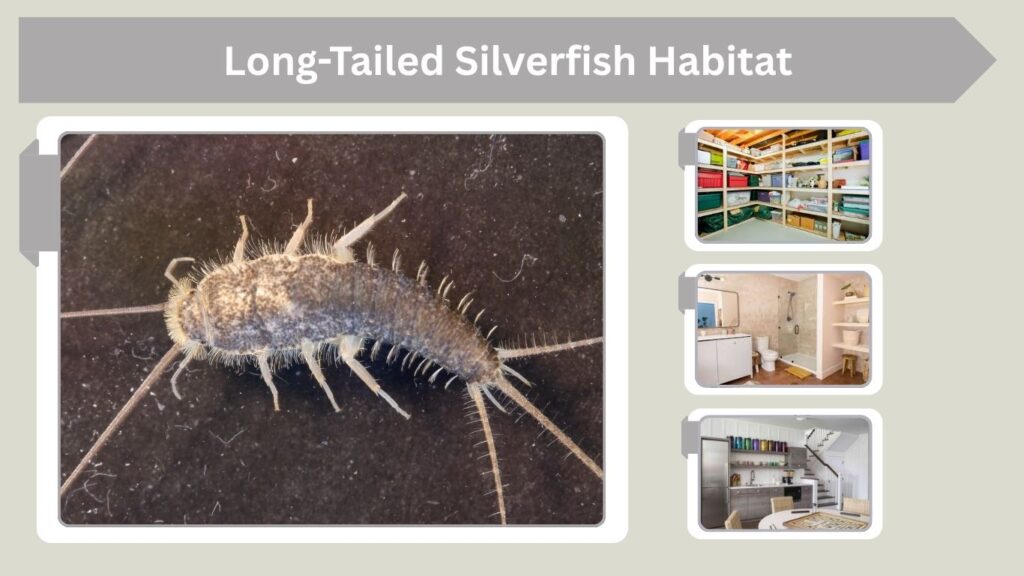
Long-tailed silverfish prefer indoor environments that provide shelter, warmth, and access to food. Unlike some common silverfish, they can survive in slightly drier conditions.
Where Long-Tailed Silverfish Live
- Bathrooms
- Bedrooms
- Kitchens
- Basements
- Storage rooms
Why They Enter Houses
These pests enter homes searching for food, hiding places, warmth, and protected breeding locations.
Moisture and Humidity Needs
Although they prefer humid conditions, long-tailed silverfish can often tolerate lower humidity levels better than standard silverfish species.
Common Hiding Places
They hide behind baseboards, under flooring, inside wall cracks, near pipes, and in cardboard boxes or paper storage areas.
Long-Tailed Silverfish Reproduction
Long-tailed silverfish reproduce steadily indoors and may create large infestations if populations remain unnoticed for long periods.
Reproduction Process
Like other silverfish, males leave sperm packets called spermatophores that females later collect for fertilization.
Egg-Laying Habits
- Eggs hidden in cracks and crevices
- Protected dark environments
- Warm indoor locations
- Hidden storage areas
Humidity and Reproduction
Warm temperatures and moderate humidity help improve egg survival and increase reproductive success indoors.
Population Growth Indoors
Because these insects hide effectively, populations may continue growing unnoticed behind walls, furniture, and storage materials.
Are Long-Tailed Silverfish Dangerous?
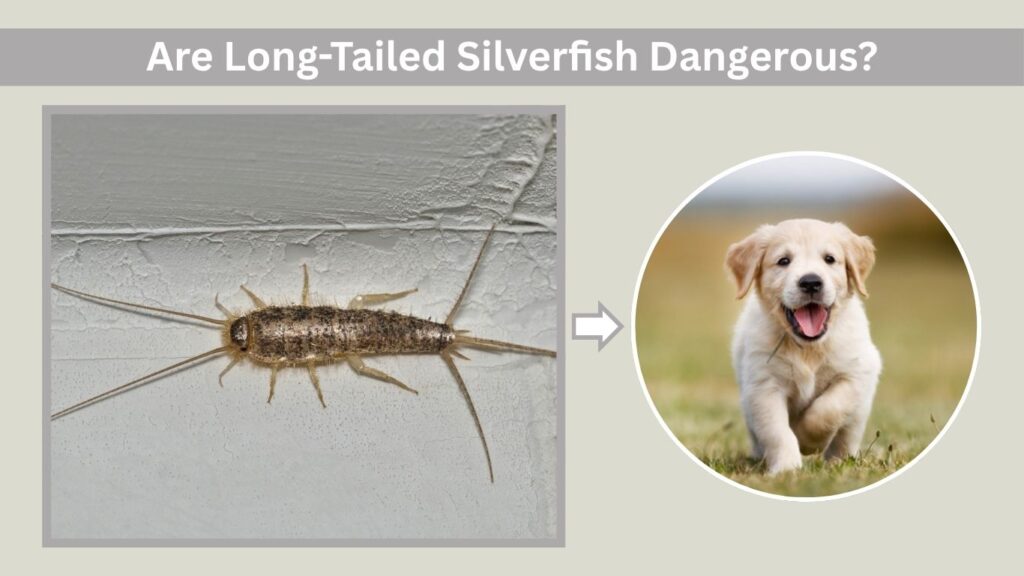
Many homeowners become worried after finding long-tailed silverfish indoors. Although these pests are unpleasant to see, they are not considered highly dangerous to humans.
Do Long-Tailed Silverfish Bite?
Long-tailed silverfish do not bite humans or pets. They lack venom and are not aggressive insects.
Are They Poisonous?
- No venom or poison
- Not toxic to humans
- Do not spread disease directly
- Mostly considered nuisance pests
Property Damage Risks
These insects may damage books, wallpaper, paper products, fabrics, and cardboard because they feed on starches and glue-based materials.
Health Concerns
Long-tailed silverfish mainly create stress and annoyance. Large infestations may also contribute to allergies caused by insect debris or shed skins.
Long-Tailed Silverfish vs Common Silverfish
Long-tailed silverfish and common silverfish look similar at first glance, but several important differences help identify them correctly. Long-tailed silverfish are often larger, faster, and more adaptable to indoor conditions.
Appearance Comparison
Long-tailed silverfish usually have noticeably longer tail bristles and antennae compared to common silverfish. Their bodies may also appear slightly darker and larger.
Movement and Speed
- Faster running behavior
- More active indoors
- Quick escape movements
- Strong climbing ability
Habitat Differences
Common silverfish depend more heavily on damp environments, while long-tailed silverfish can survive in drier indoor spaces such as bedrooms and living rooms.
Infestation Severity
Long-tailed silverfish may spread more easily throughout buildings because they tolerate a wider range of temperatures and humidity levels.
Signs of a Long-Tailed Silverfish Infestation
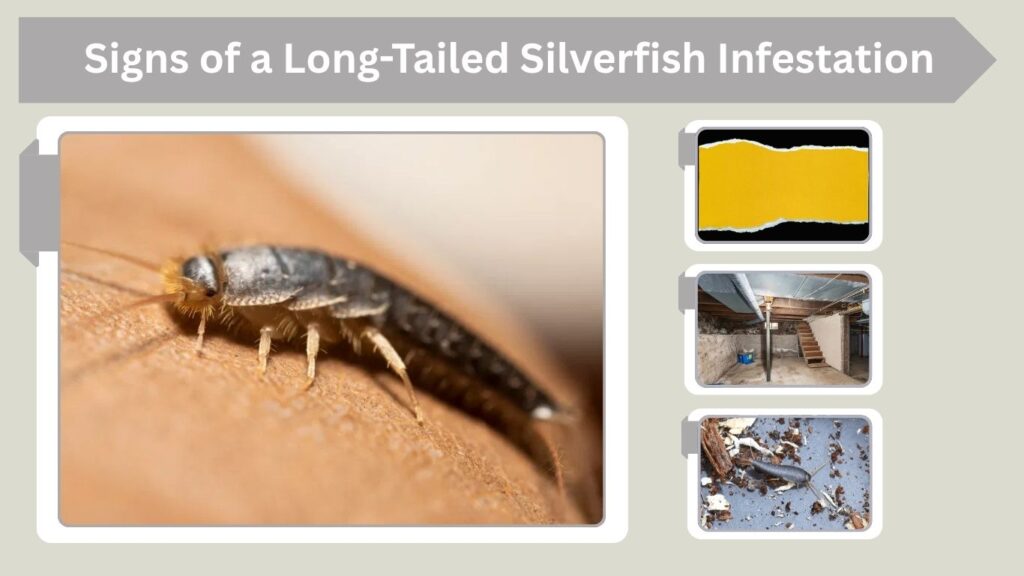
Recognizing infestation signs early helps prevent larger populations from developing indoors. Because these insects hide during the day, damage is often noticed before the pests themselves.
Damage to Paper and Books
Long-tailed silverfish feed on paper, glue, cardboard, and starch-based materials, leaving irregular holes and surface damage.
Shed Skins and Yellow Stains
- Small yellow marks on paper
- Shed exoskeletons near hiding areas
- Tiny silvery scales on surfaces
- Damage in storage spaces
Nighttime Activity
Most sightings happen at night when lights are suddenly turned on in kitchens, bathrooms, basements, or storage rooms.
Large Numbers in Hidden Areas
Infestations may grow behind walls, beneath flooring, or inside cluttered storage areas where silverfish remain protected.
How to Get Rid of Long-Tailed Silverfish
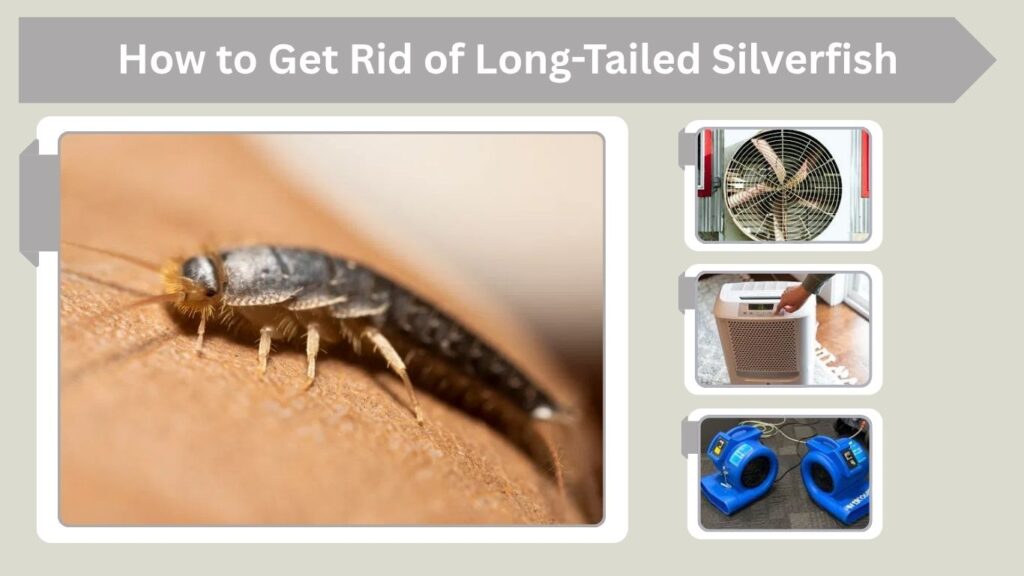
Controlling long-tailed silverfish requires reducing moisture, eliminating hiding places, and removing food sources that support infestations indoors.
Reduce Humidity
- Use dehumidifiers
- Improve room ventilation
- Repair water leaks
- Dry damp surfaces quickly
Seal Entry Points
Small cracks around pipes, walls, floors, and baseboards provide shelter and movement pathways for silverfish.
Cleaning and Decluttering
Regular cleaning removes food debris, paper clutter, and hidden breeding areas that allow populations to grow.
Professional Pest Control
Large infestations may require insecticides or professional pest control treatments to reduce hidden populations effectively.
Long-Tailed Silverfish Traps and Treatments
Traps are commonly used to monitor and reduce long-tailed silverfish activity indoors. Both natural and chemical treatment methods may help manage infestations.
Glue Traps for Long-Tailed Silverfish
Glue traps are often placed near walls, under sinks, behind furniture, and inside storage areas where silverfish travel most frequently.
Sticky Trap Methods
- Monitor infestation size
- Catch active insects
- Identify hiding locations
- Easy indoor placement
Natural Repellents
Cedar wood, lavender oil, and citrus oils may help discourage silverfish from entering closets and storage spaces.
Chemical Treatment Options
Dust insecticides, sprays, and crack treatments may help control severe infestations when used carefully according to instructions.
Prevention Tips for Homes
Preventing infestations is usually easier than removing established populations. Reducing moisture and limiting hiding places are especially important.
Keep Rooms Dry
Bathrooms, kitchens, basements, and laundry rooms should remain dry and well ventilated whenever possible.
Store Paper and Clothing Properly
- Use sealed plastic containers
- Avoid cardboard storage
- Keep books dry
- Reduce clutter
Reduce Clutter and Hiding Places
Cleaning storage areas and removing unnecessary boxes helps reduce safe hiding locations for silverfish.
Inspect Moisture Problems Regularly
Checking for leaks, condensation, and damp walls can help stop infestations before they become severe.
FAQs
Are long-tailed silverfish dangerous?
Long-tailed silverfish are not dangerous to humans, but they may damage paper products, fabrics, and stored materials indoors.
Do long-tailed silverfish bite?
No, long-tailed silverfish do not bite humans or pets and are not aggressive insects.
How do you get rid of long-tailed silverfish?
Reducing moisture, removing clutter, sealing cracks, and using traps or pest control treatments can help reduce infestations.
What is the difference between silverfish and long-tailed silverfish?
Long-tailed silverfish are usually larger, faster, and have longer tail bristles than common silverfish.
Why are long-tailed silverfish appearing in houses?
Warm indoor temperatures, moisture, hidden shelter, and food sources such as paper and glue attract long-tailed silverfish indoors.