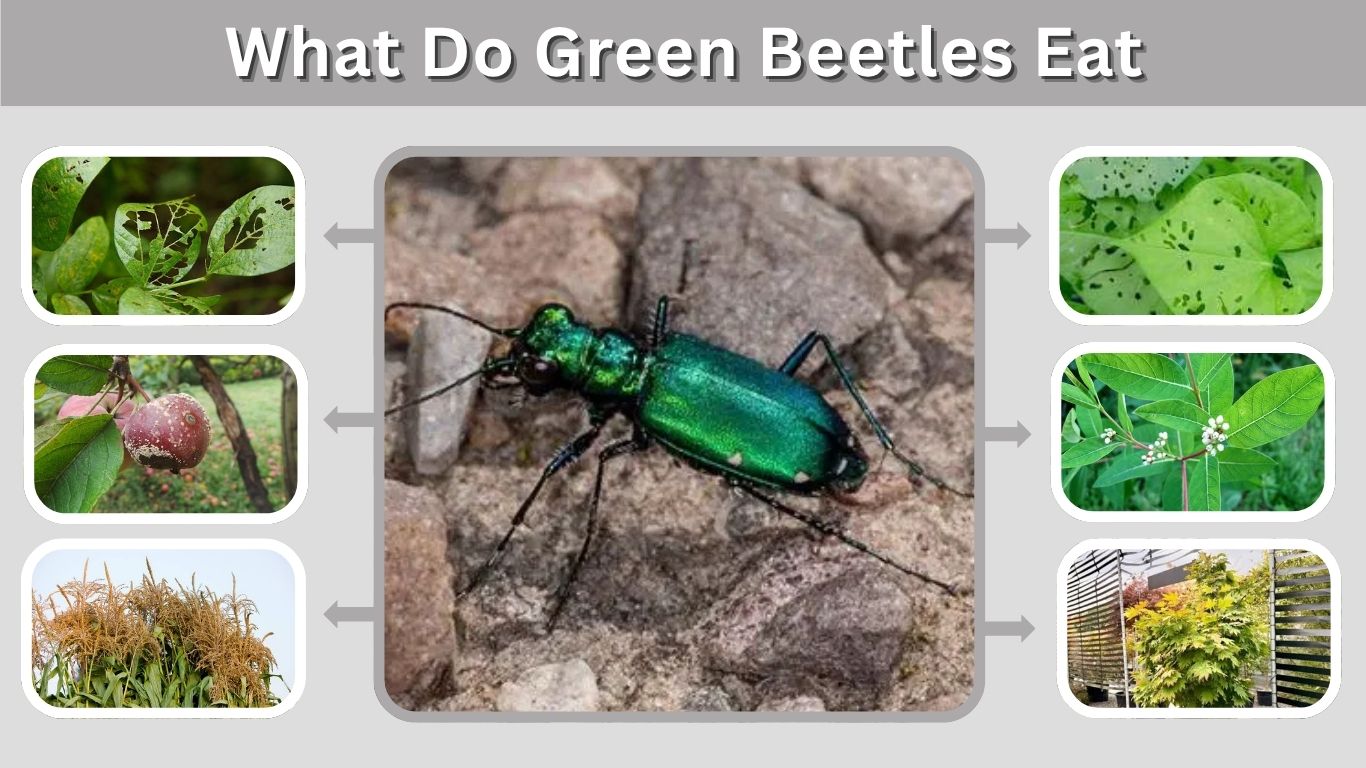
Green beetles eat different foods depending on the species. Some green beetles eat leaves, flowers, fruit, pollen, roots, or decaying organic matter. Others are predators that hunt ants, spiders, caterpillars, and small insects. That means a shiny green beetle in your garden is not always a pest. To understand what it eats, you need to look at its body shape, where you found it, and whether it was on plants, soil, fruit, flowers, or running after prey.
What Do Green Beetles Eat?
Green beetles do not all have the same diet. A green June beetle may feed on ripe fruit and tree foliage, a Japanese beetle may skeletonize leaves, a dogbane beetle feeds on dogbane and milkweed-type plants, while a green tiger beetle hunts small animals such as spiders, ants, and caterpillars.
| Green beetle type | Main food |
| Green June beetle | Fruit, tree leaves, corn tassels, organic matter as larvae |
| Japanese beetle | Leaves, flowers, fruits, grass roots as grubs |
| Green tiger beetle | Ants, spiders, caterpillars, small insects |
| Dogbane beetle | Dogbane and milkweed plants |
| Green leaf beetle | Leaves, flowers, host plants |
| Green ground beetle | Small insects, larvae, soft-bodied prey |
12 Foods Green Beetles Eat
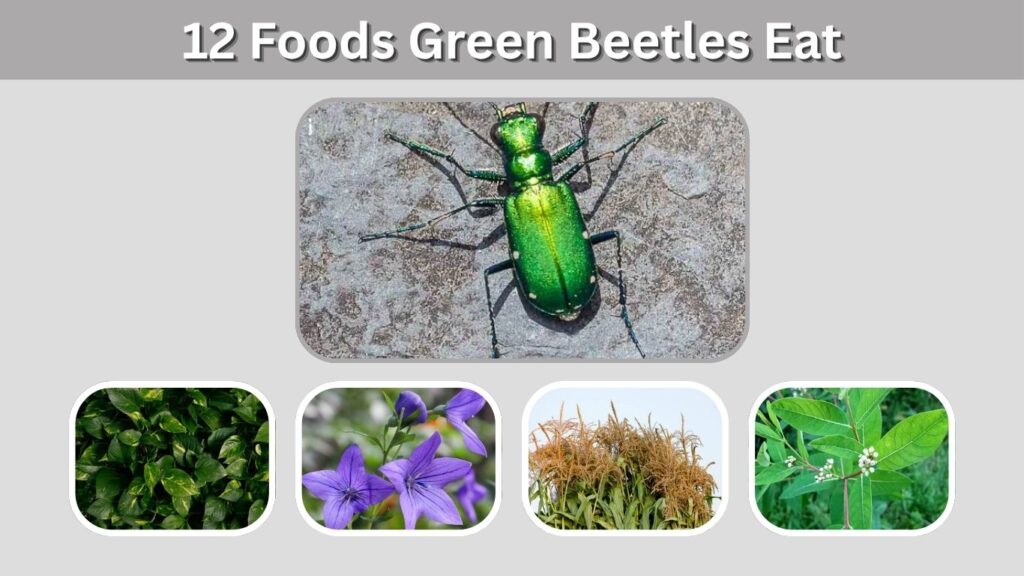
Green beetles may be herbivores, predators, or decomposers. The following 12 foods cover the most common diets seen in shiny green beetles.
1. Leaves
Many green beetles eat leaves. Japanese beetles are one of the best-known examples because they feed on the soft parts of foliage and leave behind a lace-like pattern of veins. This damage is often called skeletonizing.
Green June beetle adults may also feed on the leaves of trees such as oak and maple, although they are often more noticeable when they gather around fruit.
2. Flowers
Some green beetles feed on flowers, petals, and soft flower tissue. Japanese beetles commonly damage garden flowers, especially when many adults gather on the same plant. They often feed in sunny areas near the tops of plants.
Flower-feeding beetles may chew ragged holes in petals or damage buds before they open. If you see a metallic green beetle sitting on roses, hibiscus, grapes, or ornamental flowers, it may be feeding rather than just resting.
3. Ripe Fruit
Green June beetles are strongly attracted to ripe and overripe fruit. They can feed on peaches, plums, grapes, figs, apples, and other soft fruits. Kansas State Research and Extension notes that adult green June beetles feed on ripening fruit, corn tassels, and leaves of oak and maple trees.
Fruit-feeding green beetles often appear in summer. They may chew into soft fruit or gather where fruit is damaged, fermenting, or already split.
4. Corn Tassels
Adult green June beetles may feed on corn tassels. This is not the main food people notice in home gardens, but it is important in field and crop settings.
If you see large metallic green beetles flying over lawns, gardens, or crop edges in summer, they may be green June beetles searching for food or mates.
5. Dogbane Plants
The dogbane beetle is a shiny blue-green, coppery, and metallic leaf beetle. As its name suggests, it feeds on dogbane plants. The Missouri Department of Conservation also notes that dogbane beetles feed on dogbanes, including milkweeds.
This beetle is often found in sunny fields, roadsides, prairies, and wild plant areas where dogbane grows. If your “green beetle” is small, shiny, rounded, and sitting on dogbane, this is a strong ID clue.
6. Milkweed
Some green or blue-green leaf beetles are associated with milkweed or milkweed relatives. Dogbane beetles may feed on dogbane and milkweeds, which places them among plant-feeding green beetles rather than predatory beetles.
Milkweed-feeding beetles should not be confused with tiger beetles. Tiger beetles are long-legged runners that hunt insects, while dogbane beetles are more rounded and usually stay on host plants.
7. Grass Roots
Green beetle larvae may eat underground plant parts. Japanese beetle grubs feed on roots of grasses and other plants, and this can cause lawn damage. Missouri Extension notes that grubs feed on roots of corn, beet, beans, asparagus, tomato, onion, and many grasses.
This is why a beetle can damage plants in two different ways: adults may eat leaves or flowers above ground, while larvae may feed on roots below ground.
8. Decaying Organic Matter
Green June beetle larvae feed on rotting organic material. North Carolina State Extension says green June beetle larvae feed on rotting organic material and other insects, while Penn State Extension describes the grubs as nocturnal feeders that consume decaying organic matter.
This means green June beetle grubs are not always eating living roots like some other lawn grubs. They may be found in soil rich in organic matter, compost-like areas, manure, mulch, or places with decomposing plant material.
9. Dead Insects
Some green beetle larvae eat dead insects or other animal matter mixed with decaying material. LSU AgCenter describes green June beetle larvae as omnivorous and says they feed on plant roots and decaying organic matter, including dead insects.
This type of feeding makes them different from purely plant-eating beetles. Their diet can include both plant material and animal remains.
10. Ants
Green tiger beetles are predators, and ants are a common prey item. The Wildlife Trusts describes the green tiger beetle as a predator that hunts spiders, ants, and caterpillars on heaths, grasslands, and sand dunes.
Tiger beetles use speed, large eyes, and strong jaws to chase prey on open ground. If a green beetle is running fast on a path, it is more likely hunting ants than eating leaves.
11. Spiders
Green tiger beetles may also eat spiders. They are active ground predators, not garden leaf pests. Their sharp-looking jaws help them grab and hold small prey.
This is one reason tiger beetles can be considered beneficial insects. They help reduce small insect and invertebrate populations naturally.
12. Caterpillars and Small Insects
Green tiger beetles also hunt caterpillars and other small ground-dwelling insects. Purdue Extension describes green tiger beetles as active hunters that consume small invertebrates, including ants, spiders, caterpillars, and other ground-dwelling prey.
Their larvae are also predatory. Tiger beetle larvae live in burrows and wait near the opening to ambush passing prey.
Green Beetle Diet by Species
Different green beetles eat very different foods. This table can help you match the beetle with its likely diet.
| Beetle | Adult diet | Larval diet |
| Green June beetle | Ripe fruit, foliage, corn tassels | Decaying organic matter, some roots, dead insects |
| Japanese beetle | Leaves, flowers, fruits | Grass roots and other plant roots |
| Green tiger beetle | Ants, spiders, caterpillars, small insects | Small insects caught from burrows |
| Dogbane beetle | Dogbane and milkweed plants | Host plant roots or plant tissues |
| Leaf beetles | Leaves and flowers | Leaves, roots, or host plant tissues |
| Ground beetles | Insects, larvae, slugs, soft prey | Often predatory |
Do Green Beetles Eat Plants?
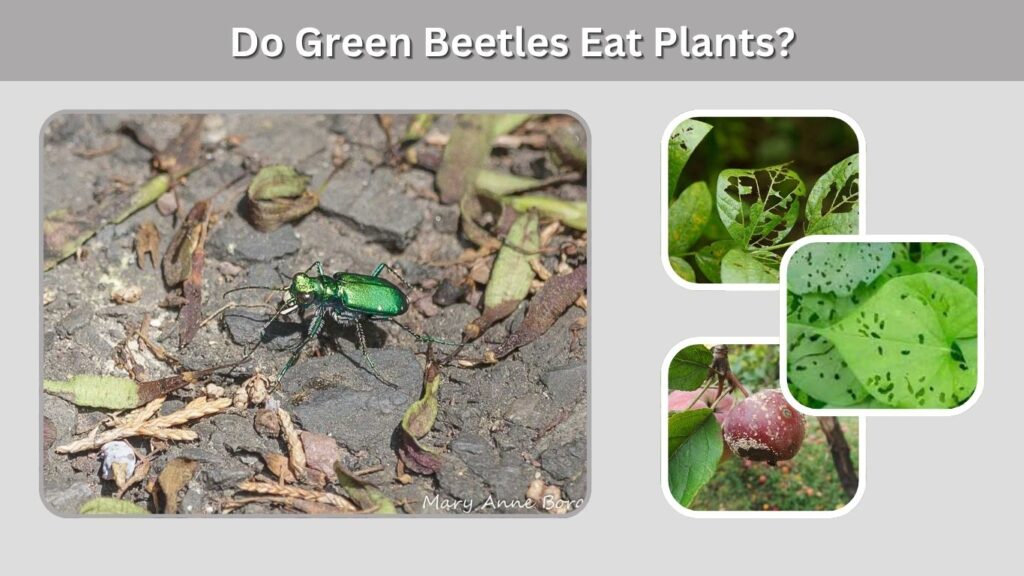
Many green beetles do eat plants, especially leaf beetles, Japanese beetles, and green June beetles. They may chew leaves, flowers, fruits, or roots. Japanese beetles are especially known for feeding in groups and skeletonizing leaves by eating the soft tissue between leaf veins.
Signs of Plant Feeding
- Lace-like leaf damage
- Ragged holes in flowers
- Chewed fruit skin
- Beetles gathering in groups
- Damaged leaves near sunny plant tops
- Brown lawn patches from root-feeding grubs
A few beetles on a plant may not cause serious damage. Heavy feeding by groups of beetles can weaken plants, reduce fruit quality, or make flowers look damaged.
Do Green Beetles Eat Other Insects?
Some green beetles are predators. Green tiger beetles are a clear example. They hunt spiders, ants, caterpillars, and other small animals.
Predator Clues
- Long legs
- Large eyes
- Big jaws
- Fast running
- Found on bare soil or sandy paths
- Chasing prey instead of sitting on leaves
Predatory green beetles are usually helpful in gardens and natural habitats. They do not need treatment unless they are indoors by accident.
Do Green Beetles Eat Wood?
Most green beetles do not eat solid, healthy wood. However, some beetles found under bark or near dead wood may feed on decaying wood, fungi, or insects living in wood. Green June beetle larvae prefer organic-rich soil and decaying material rather than dry lumber or house wood.
If you find a blue-green or green beetle on dead wood, check the body shape. Long-bodied beetles may be wood-boring beetles, while fast-running beetles may simply be hunting on the wood surface.
Are Green Beetles Good or Bad for Gardens?
Green beetles can be good or bad depending on the species. Tiger beetles and many ground beetles are beneficial predators. They eat other insects and usually do not harm plants. Green June beetles and Japanese beetles can become pests when adults feed on fruit, flowers, and leaves or when grubs damage lawns and roots.
Helpful Green Beetles
- Green tiger beetles
- Many ground beetles
- Some predatory beetles
- Beetles that help break down organic matter
Problem Green Beetles
- Japanese beetles on leaves and flowers
- Green June beetles on ripe fruit
- Root-feeding grubs in lawns
- Leaf beetles on garden plants
What Attracts Green Beetles to Your Yard?
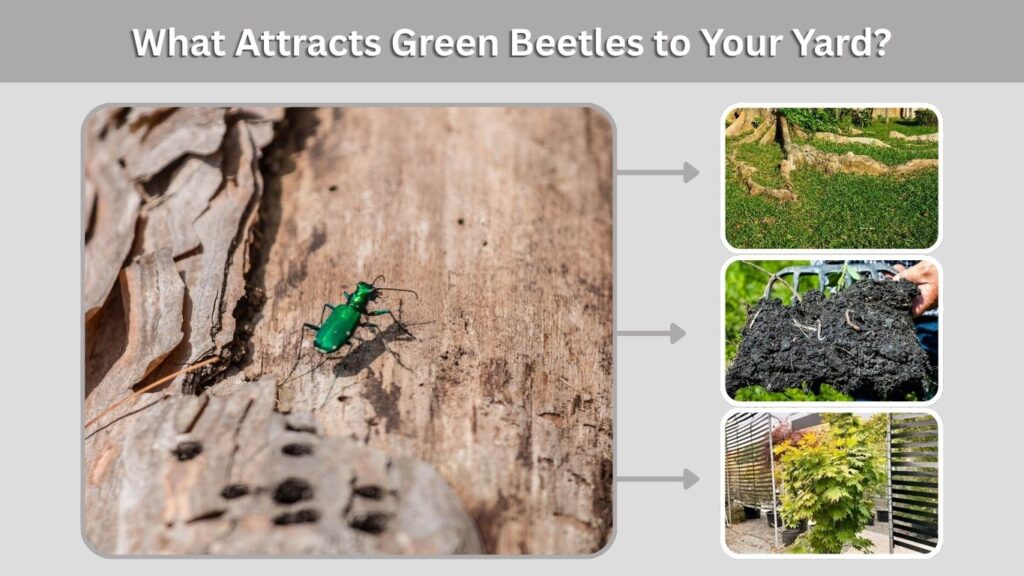
Green beetles may come to your yard for food, shelter, mating, or egg-laying. Japanese beetles are attracted to suitable host plants, especially when other beetles are already feeding. Green June beetles may be drawn to ripe fruit, organic-rich soil, and turf areas.
Common attractants include:
- Ripe or damaged fruit
- Flowering plants
- Soft new leaves
- Moist soil
- Organic matter
- Compost or manure-rich soil
- Turfgrass roots
- Sunny garden areas
- Host plants such as dogbane or milkweed
FAQs
What do green beetles eat most often?
Green beetles most often eat leaves, flowers, fruit, roots, decaying organic matter, or small insects. The exact food depends on the species.
Do green beetles eat leaves?
Yes, many green beetles eat leaves. Japanese beetles are known for skeletonizing leaves, while green June beetles may feed on tree foliage.
Do green beetles eat grass?
Adult green beetles usually do not eat grass blades, but some beetle larvae eat grass roots. Japanese beetle grubs and other white grubs can damage lawns by feeding below ground.
Do green beetles eat bugs?
Yes, some green beetles eat other bugs. Green tiger beetles hunt ants, spiders, caterpillars, and other small insects.
What do green June beetles eat?
Adult green June beetles eat ripening fruit, corn tassels, and some tree leaves. Their larvae feed on decaying organic matter, plant roots, and sometimes dead insects.