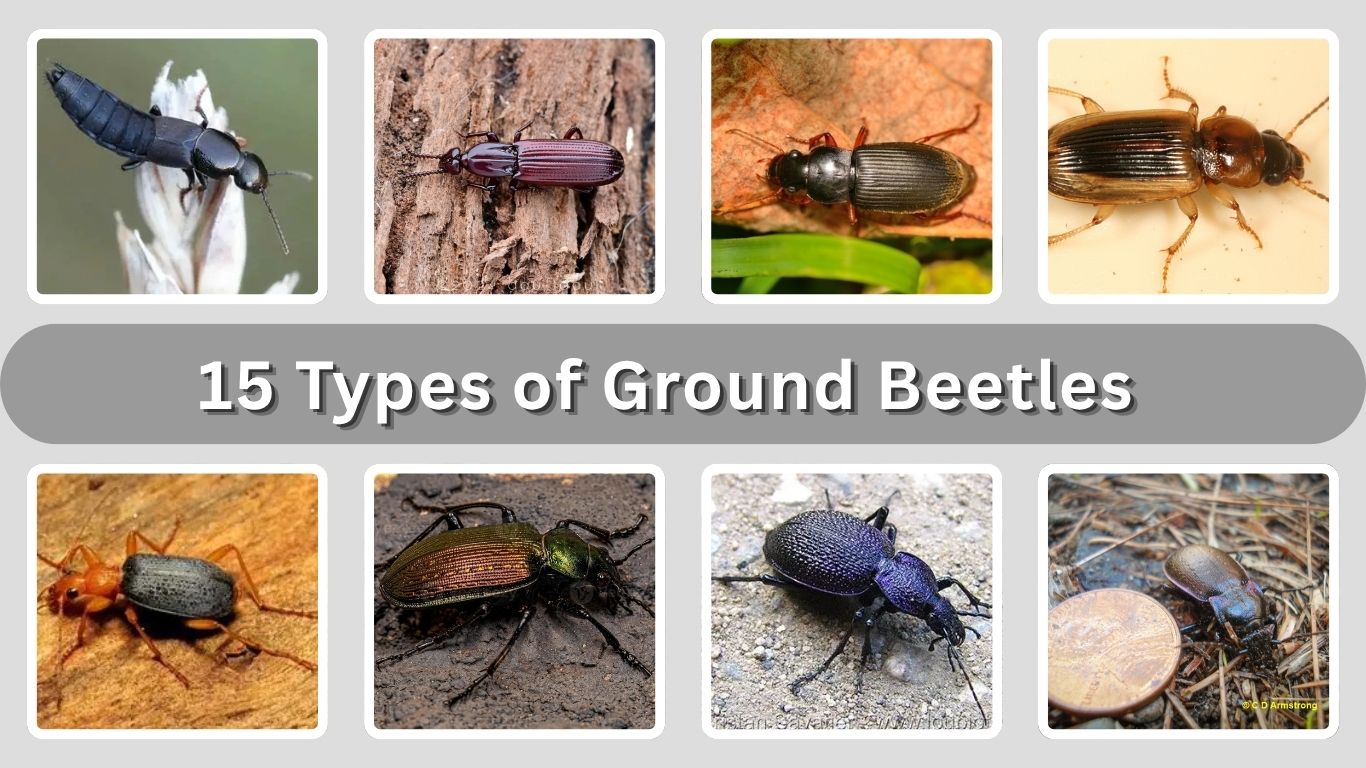
Ground beetles are fast-moving insects commonly found in gardens, fields, forests, and farmland. Most species live close to the soil, hiding under stones, logs, leaves, or plant debris during the day. Many ground beetles are helpful predators that feed on caterpillars, slugs, larvae, and other pests, while some also eat seeds. Their activity supports natural pest control and healthy soil-level biodiversity.
1. Common Black Ground Beetle
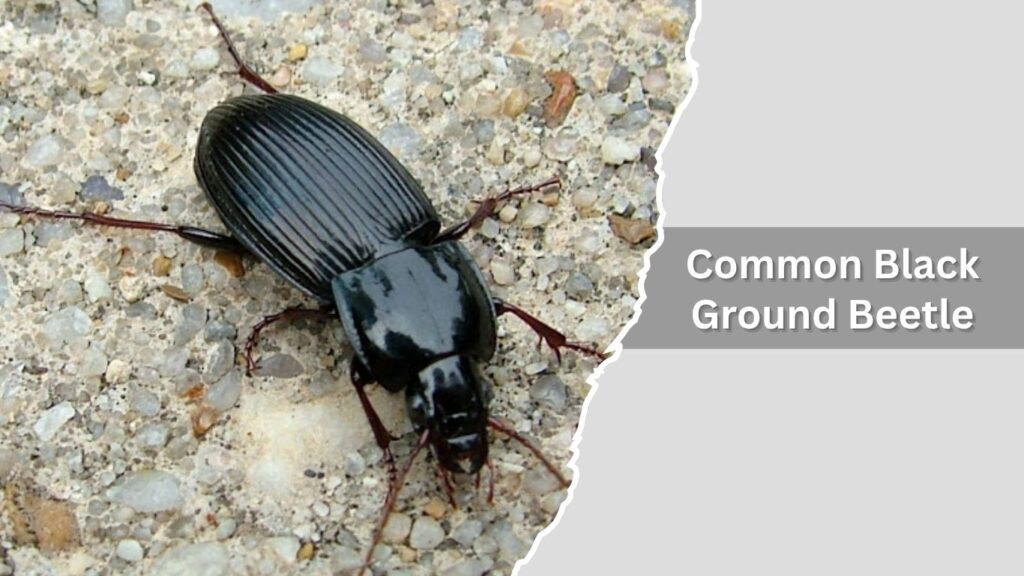
The Common Black Ground Beetle is a dark, fast-moving beetle often found under stones, logs, and garden debris. It is mostly active at night and is useful in gardens because it feeds on many small insects and other invertebrates.
Identification
- Shiny black or very dark brown body
- Long legs built for quick running
- Hard wing covers with fine grooves
- Usually seen on the ground, not on plants
- Often hides during the day under cover
Habitat
This beetle lives in gardens, fields, lawns, forests, and farmland. It prefers damp, sheltered places where it can hide during the day. Stones, leaf litter, logs, and soil cracks provide protection from heat, dryness, and predators.
Feeding Behavior
The Common Black Ground Beetle is mainly predatory. It hunts small insects, larvae, worms, slugs, and other soft-bodied prey. Because it feeds on many garden pests, it is often considered a helpful natural pest controller.
Importance in Nature
This beetle helps balance insect populations in soil-level habitats. It also becomes food for birds, frogs, and small mammals. By hunting pests and recycling nutrients through the food chain, it supports a healthier garden ecosystem.
2. Fiery Searcher
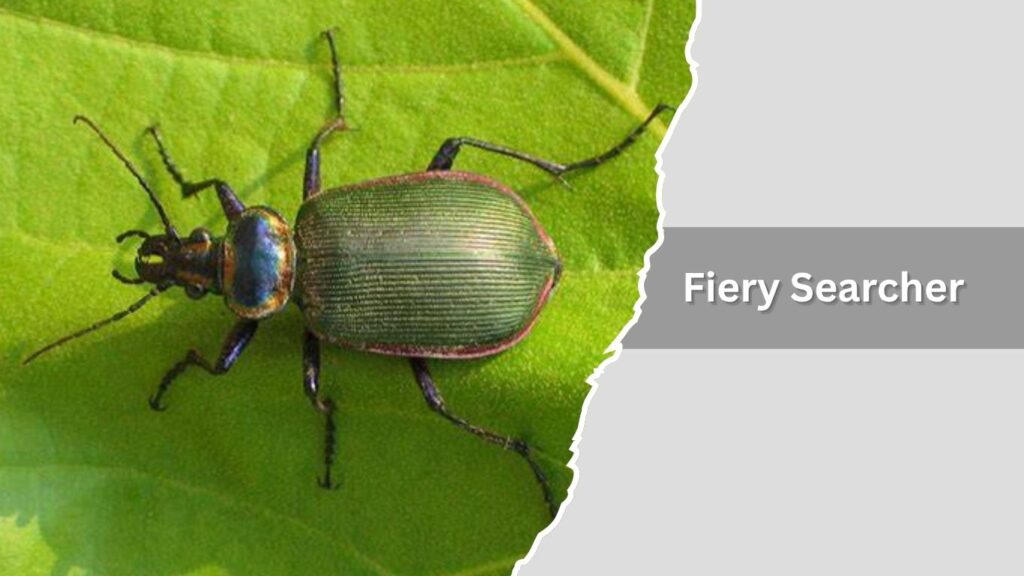
The Fiery Searcher is one of the most colorful ground beetles. Its metallic green body and golden-red edges make it easy to notice. It is a strong predator and is especially known for hunting caterpillars.
Identification
- Large metallic green body
- Golden or reddish edges on the wing covers
- Dark head and legs
- Strong jaws for catching prey
- May release a bad-smelling fluid when handled
Habitat
Fiery Searchers are found in forests, gardens, orchards, and open areas with trees or shrubs. They often climb plants while searching for caterpillars. They may hide under bark, logs, or leaf litter when resting.
Feeding Behavior
This beetle feeds mostly on caterpillars and other soft-bodied insects. Both adults and larvae are predators. It can be especially useful where leaf-eating caterpillars are common because it helps reduce damage to plants.
Importance in Nature
The Fiery Searcher supports natural pest control by feeding on caterpillars, including some harmful species. Its presence in gardens, woods, and orchards can help protect leaves and maintain a balanced insect community.
3. Caterpillar Hunter
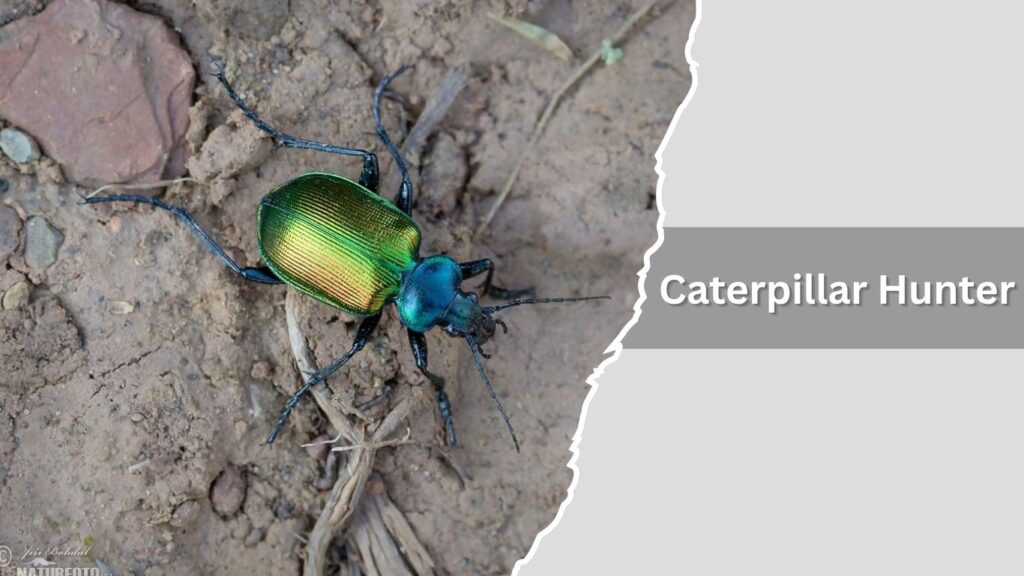
The Caterpillar Hunter is a large ground beetle known for attacking caterpillars and other soft-bodied insects. It has a strong body, powerful jaws, and an active hunting style that makes it important in forest and garden habitats.
Identification
- Large ground beetle with strong legs
- Metallic body, often greenish or bluish
- Broad wing covers
- Powerful jaws for holding prey
- Often found near trees or caterpillar outbreaks
Habitat
Caterpillar Hunters are often found in forests, orchards, parks, and wooded gardens. They may climb trunks and branches while searching for prey. They also use soil, bark, and leaf litter as shelter during inactive periods.
Feeding Behavior
This beetle is a predator of caterpillars, larvae, and other small insects. It is active as both an adult and larva. Because it feeds on leaf-eating insects, it can help reduce damage to trees and crops.
Importance in Nature
The Caterpillar Hunter is valuable in natural pest control. It helps limit caterpillar populations and supports healthier trees and plants. It also forms part of the food web, serving as prey for larger animals.
4. Big-Headed Ground Beetle
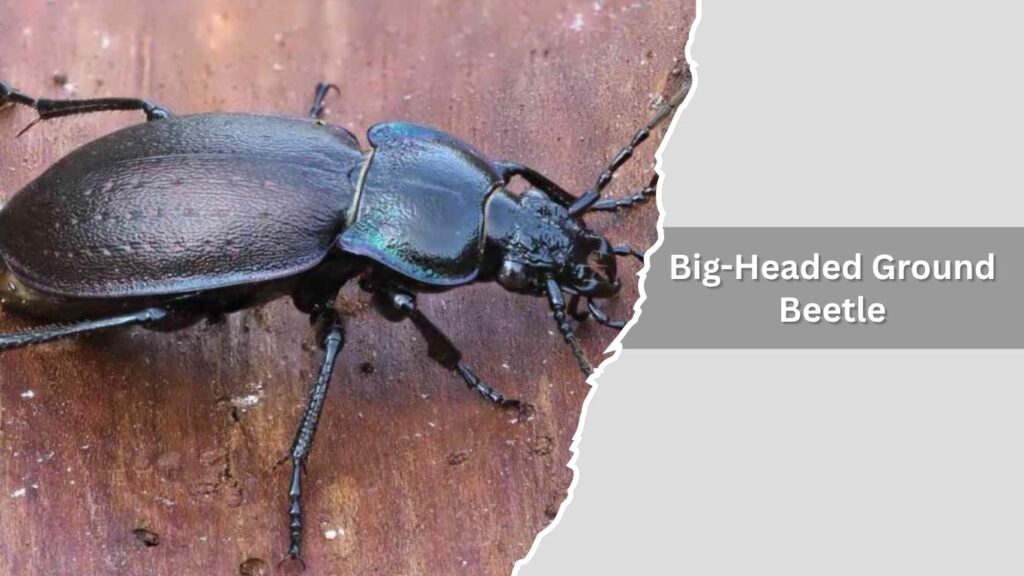
The Big-Headed Ground Beetle is a dark, burrowing ground beetle with a noticeably large head and strong jaws. It is commonly found hiding under logs, rocks, and soil debris during the day.
Identification
- Large head with powerful jaws
- Black or dark brown body
- Narrow waist-like body shape
- Strong front legs for digging
- Often plays dead when disturbed
Habitat
This beetle lives in forests, meadows, gardens, lawns, and sandy or loose soil areas. It spends much of its time under cover or partly underground. Logs, stones, soil, and leaf litter provide ideal hiding places.
Feeding Behavior
The Big-Headed Ground Beetle is carnivorous. It hunts small insects, larvae, worms, and other invertebrates. Its large jaws help it grip and crush prey. It usually comes out at night to search for food.
Importance in Nature
This beetle helps control small soil-dwelling pests and supports the balance of ground-level ecosystems. It also improves biodiversity in gardens and natural areas by acting as both predator and prey within the food chain.
5. Pennsylvania Ground Beetle
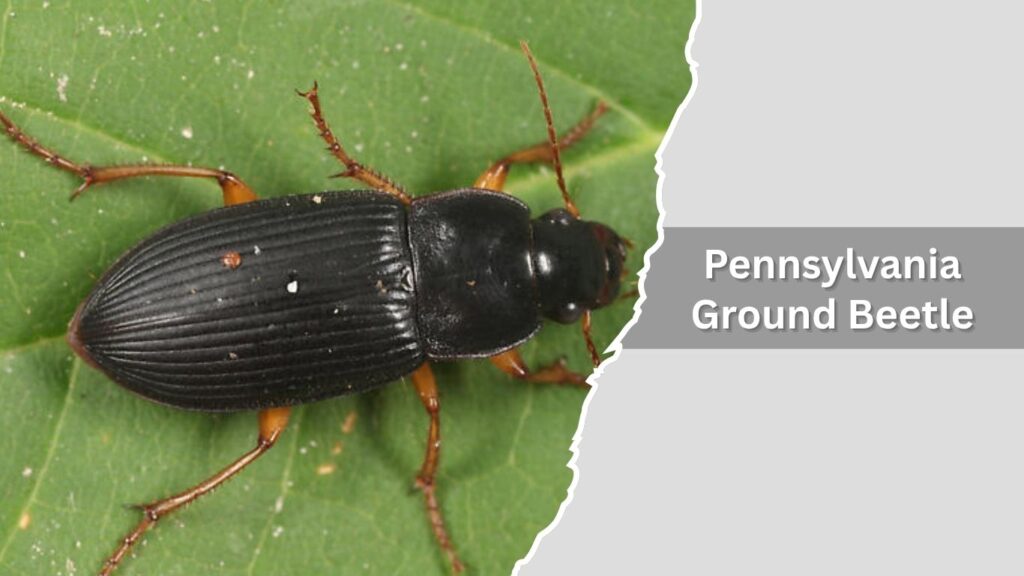
The Pennsylvania Ground Beetle is a shiny black ground beetle found across much of North America. Unlike many ground beetles that mainly hunt insects, this species is well known for eating weed seeds.
Identification
- Shiny black upper body
- Reddish-brown underside
- Grooved wing covers
- Medium-sized, flattened body
- Often attracted to lights at night
Habitat
This beetle is common in fields, hayfields, gardens, crop edges, and open grassy areas. It often lives close to the soil surface and hides under plant debris or soil cover during the day.
Feeding Behavior
The Pennsylvania Ground Beetle eats many small seeds, especially weed seeds such as ragweed, lamb’s quarter, and grasses. It may also feed on some insects. Its seed-eating habit makes it useful in agricultural areas.
Importance in Nature
This beetle helps reduce weed growth by consuming seeds before they sprout. It supports natural weed control in fields and gardens. Its activity also adds to soil-level biodiversity and helps maintain ecological balance.
6. Six-Spotted Ground Beetle
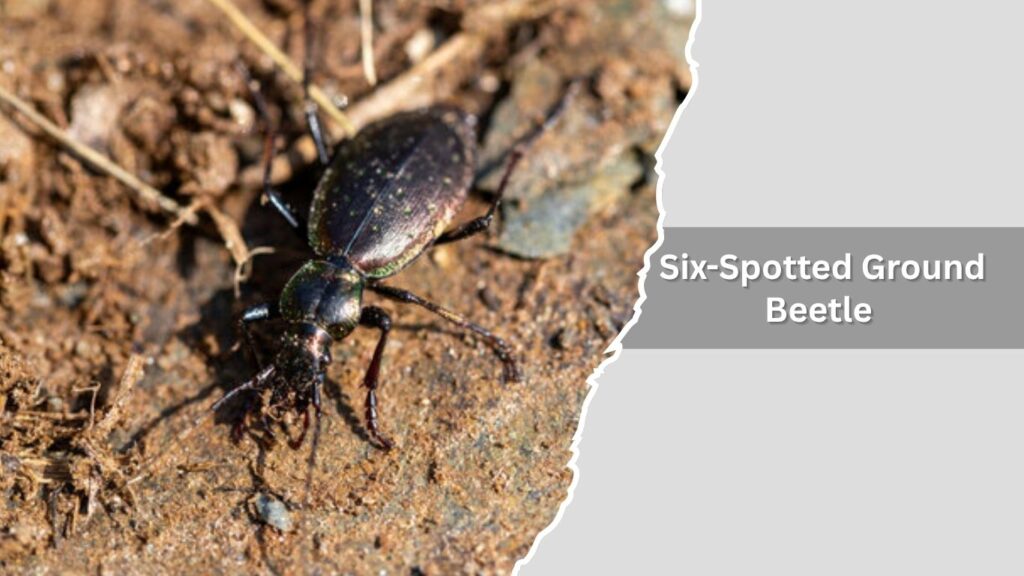
The Six-Spotted Ground Beetle is a small, active beetle known for its dark body and pale spots. It moves quickly across soil, leaf litter, and low vegetation while searching for food and shelter.
Identification
- Small to medium-sized ground beetle
- Dark body with six pale spots
- Long legs for fast running
- Smooth, narrow body shape
- Often seen moving quickly on the ground
Habitat
This beetle is usually found in open fields, gardens, woodland edges, and grassy areas. It prefers places with enough ground cover, such as leaf litter, weeds, stones, or loose soil. These hiding places protect it during the day.
Feeding Behavior
The Six-Spotted Ground Beetle feeds on small insects, larvae, and other tiny invertebrates. It hunts mostly near the soil surface. Its fast movement helps it catch prey and escape from predators.
Importance in Nature
This beetle helps control small insect populations in gardens and natural habitats. It also supports the food web by becoming prey for birds, reptiles, amphibians, and small mammals. Its presence adds to healthy soil-level biodiversity.
7. Bronze Carabid
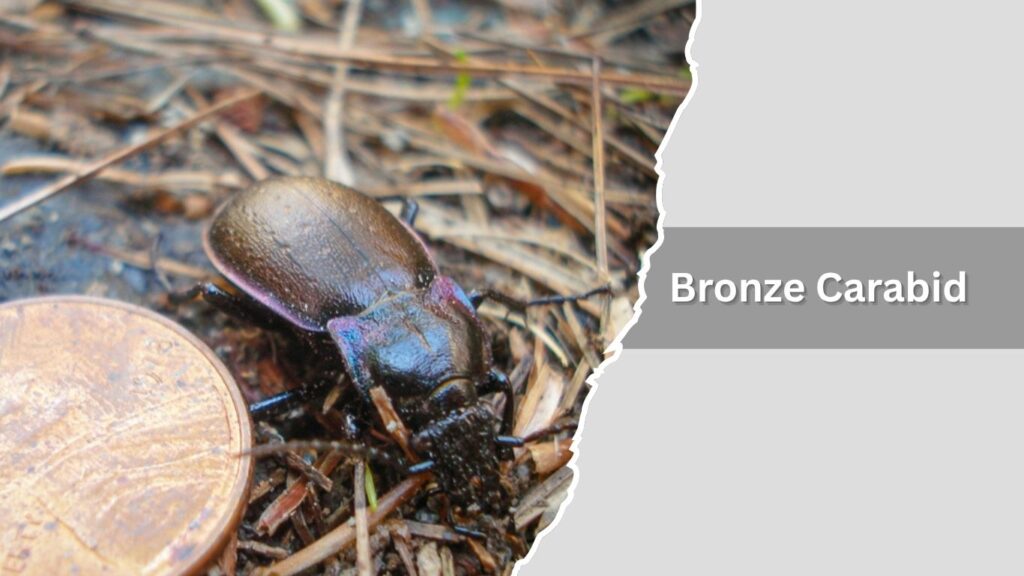
The Bronze Carabid is a shiny ground beetle with a metallic bronze or coppery appearance. It is often found in damp, open habitats and is active at night when it searches for prey.
Identification
- Metallic bronze or copper-colored body
- Dark legs and antennae
- Oval, flattened body shape
- Fine grooves on the wing covers
- Fast runner when disturbed
Habitat
Bronze Carabids live in fields, gardens, meadows, wetlands, riverbanks, and woodland edges. They often prefer moist soil and shaded ground cover. Stones, moss, fallen leaves, and low plants provide shelter during the day.
Feeding Behavior
This beetle is mainly predatory. It eats small insects, larvae, worms, and other soft-bodied invertebrates. Some individuals may also feed on plant material or seeds, depending on food availability in their habitat.
Importance in Nature
The Bronze Carabid helps reduce pest numbers by feeding on insects and larvae. It also plays a role in nutrient cycling because it lives close to the soil surface. Its activity supports balance in gardens, fields, and wet habitats.
8. Violet Ground Beetle
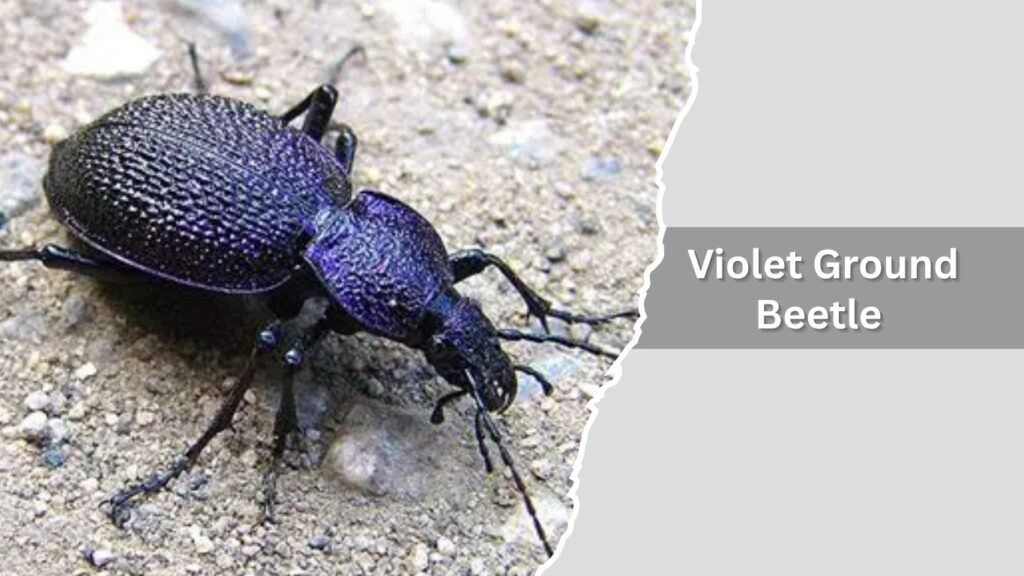
The Violet Ground Beetle is a large, dark ground beetle with a beautiful violet or purple edge around its body. It is usually active at night and often hides under stones, logs, or bark during the day.
Identification
- Large black beetle with violet edges
- Long legs and strong jaws
- Ridged or grooved wing covers
- Cannot usually fly because wing covers are fused
- Gives off a defensive smell if handled
Habitat
This beetle is found in gardens, woodlands, hedgerows, grasslands, and farmland. It prefers damp, sheltered places with plenty of cover. Logs, stones, leaf litter, and compost areas are common daytime hiding spots.
Feeding Behavior
The Violet Ground Beetle is a predator of slugs, worms, caterpillars, and other small invertebrates. It hunts mostly at night. Its strong jaws allow it to handle soft-bodied prey, making it useful in garden habitats.
Importance in Nature
This beetle is helpful for natural pest control, especially where slugs and caterpillars are common. It also supports biodiversity by serving as both predator and prey. Its presence often indicates a healthy ground-level ecosystem.
9. Golden Ground Beetle
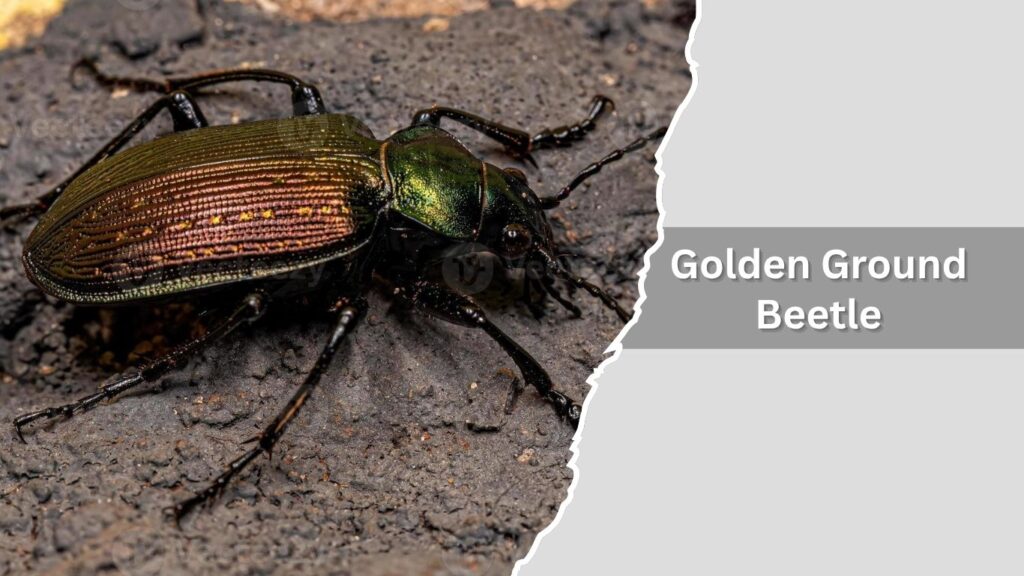
The Golden Ground Beetle is one of the most attractive ground beetles, with a bright metallic green body and golden shine. It is a strong hunter and is often active during the day, unlike many nocturnal ground beetles.
Identification
- Bright metallic green body
- Golden or coppery shine
- Reddish legs and antennae
- Grooved wing covers
- Fast-moving hunter on the ground
Habitat
Golden Ground Beetles are found in gardens, meadows, farmland, hedgerows, and open woodland edges. They prefer sunny places with vegetation and loose soil. They may hide under plants, stones, or debris when resting.
Feeding Behavior
This beetle feeds on slugs, snails, worms, caterpillars, and other small invertebrates. It is an active predator and often searches for prey during daylight. Its hunting behavior makes it valuable in gardens and crop areas.
Importance in Nature
The Golden Ground Beetle helps reduce pest populations naturally. By feeding on slugs and caterpillars, it can protect leaves, seedlings, and crops. It also contributes to soil biodiversity and supports a balanced food web.
10. Green Tiger Beetle
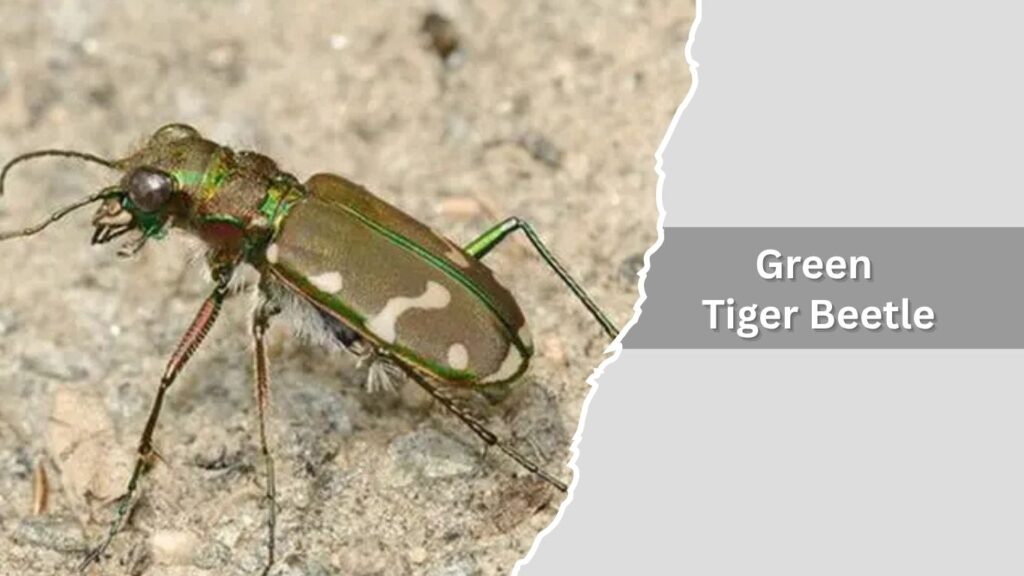
The Green Tiger Beetle is a fast-running predatory beetle with a bright metallic green body. Although often grouped with ground beetles, it is especially known for speed, sharp jaws, and active daytime hunting.
Identification
- Bright metallic green body
- Large eyes on the sides of the head
- Long legs for very fast running
- Pale spots may appear on wing covers
- Strong curved jaws for catching prey
Habitat
Green Tiger Beetles live in sunny open areas such as sandy paths, heathlands, grasslands, dry banks, and bare soil patches. They prefer warm ground with little vegetation, where they can run quickly and spot prey.
Feeding Behavior
Adults chase small insects and other tiny animals on open ground. The larvae also hunt, but they do so from burrows in the soil. They wait near the burrow opening and grab passing prey with their jaws.
Importance in Nature
The Green Tiger Beetle helps control small insect populations in open habitats. It is also a sign of warm, bare-ground environments that support many specialized insects. Its hunting role makes it an important part of sandy and grassy ecosystems.
11. Bombardier Beetle
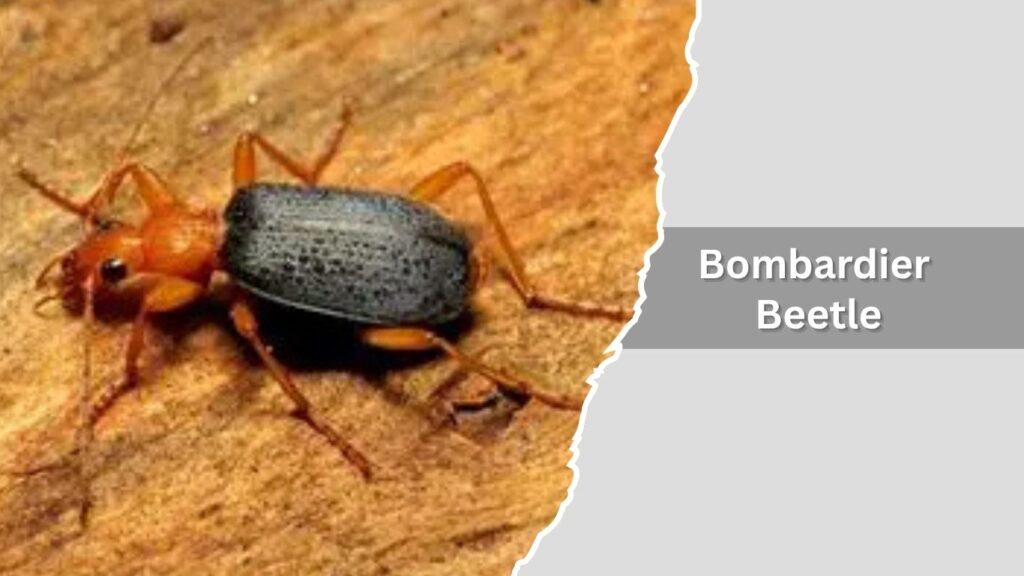
The Bombardier Beetle is a small ground beetle famous for its powerful chemical defense. When threatened, it can spray a hot, irritating liquid from the tip of its abdomen, helping it escape from predators.
Identification
- Small to medium-sized ground beetle
- Dark wing covers with reddish head or legs
- Narrow body with quick movement
- Can spray a defensive chemical when disturbed
- Often hides under stones, logs, or leaf litter
Habitat
Bombardier Beetles live in gardens, fields, forests, riverbanks, and damp sheltered places. They prefer ground-level cover where they can hide during the day. Stones, bark, soil cracks, and plant debris provide protection from predators and dry conditions.
Feeding Behavior
This beetle is mainly predatory. It hunts small insects, larvae, and other tiny invertebrates near the soil surface. Its quick movement helps it search through leaf litter and loose soil while avoiding larger animals.
Importance in Nature
The Bombardier Beetle helps control small insect populations and supports the natural food web. Its chemical defense also makes it one of the most interesting ground beetles, showing how insects can use special adaptations for survival.
12. Seedcorn Beetle
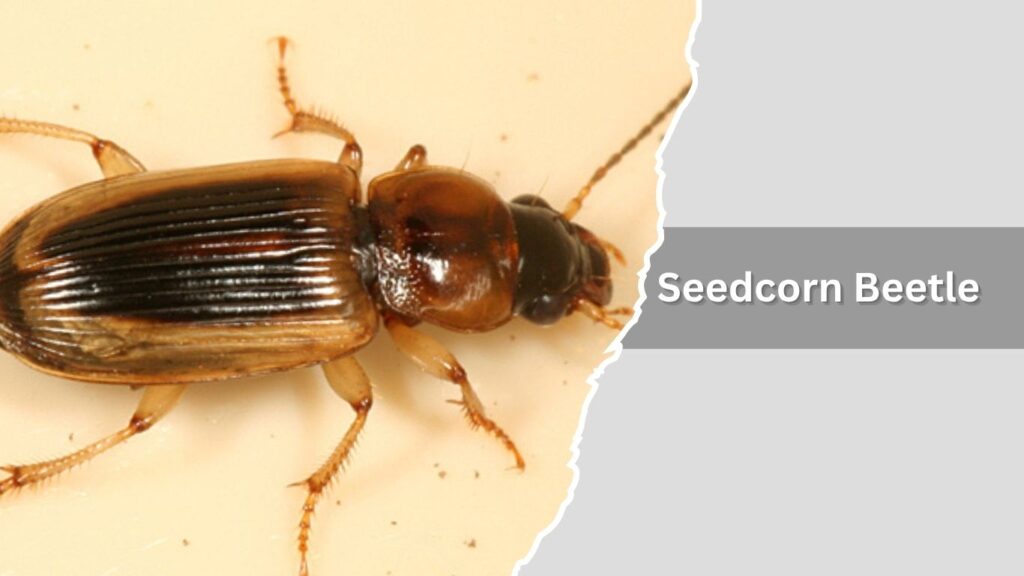
The Seedcorn Beetle is a ground beetle often found in crop fields and open soil. It is known for feeding on seeds, including corn and other grains, but it may also eat weed seeds and small insects.
Identification
- Small to medium-sized dark beetle
- Brown to black body color
- Slender legs for fast movement
- Grooved wing covers
- Often found around cultivated soil
Habitat
Seedcorn Beetles are common in farmland, gardens, fields, and disturbed soil areas. They are often found where seeds are planted close to the soil surface. Crop fields with loose soil and plant debris can provide shelter and food.
Feeding Behavior
This beetle feeds on seeds, including newly planted crop seeds, weed seeds, and sometimes small insects. In some situations, it may damage young corn or other seedlings. However, its seed-feeding habit can also reduce weeds.
Importance in Nature
The Seedcorn Beetle plays a mixed role. It may be a minor crop pest when it attacks planted seeds, but it also helps remove weed seeds from the soil. This makes it part of the natural balance in agricultural habitats.
13. Strawberry Seed Beetle
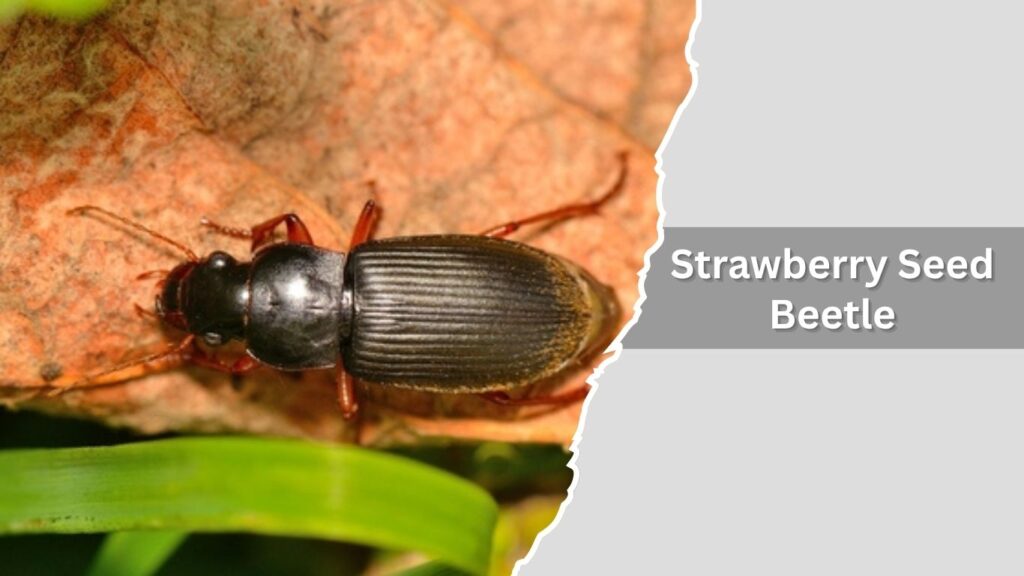
The Strawberry Seed Beetle is a small ground beetle often associated with gardens, fields, and fruit-growing areas. It may feed on seeds and plant material, but it also belongs to the wider ground beetle group that helps maintain soil biodiversity.
Identification
- Small dark ground beetle
- Black or brownish body
- Oval and slightly flattened shape
- Grooved wing covers
- Often found near low plants or crop fields
Habitat
This beetle occurs in gardens, strawberry fields, farmland, grassy areas, and weedy patches. It stays close to the soil surface and uses plant debris, soil cracks, and low vegetation for shelter during the day.
Feeding Behavior
The Strawberry Seed Beetle may feed on seeds, soft plant material, and small invertebrates. In cultivated areas, it can sometimes be noticed near strawberry plants or other low-growing crops. Its diet may vary depending on local food sources.
Importance in Nature
This beetle contributes to the activity of soil-level ecosystems. It may help break down organic matter, consume seeds, and support the food web. Birds, amphibians, and other predators may also feed on it.
14. Rove-Like Ground Beetle
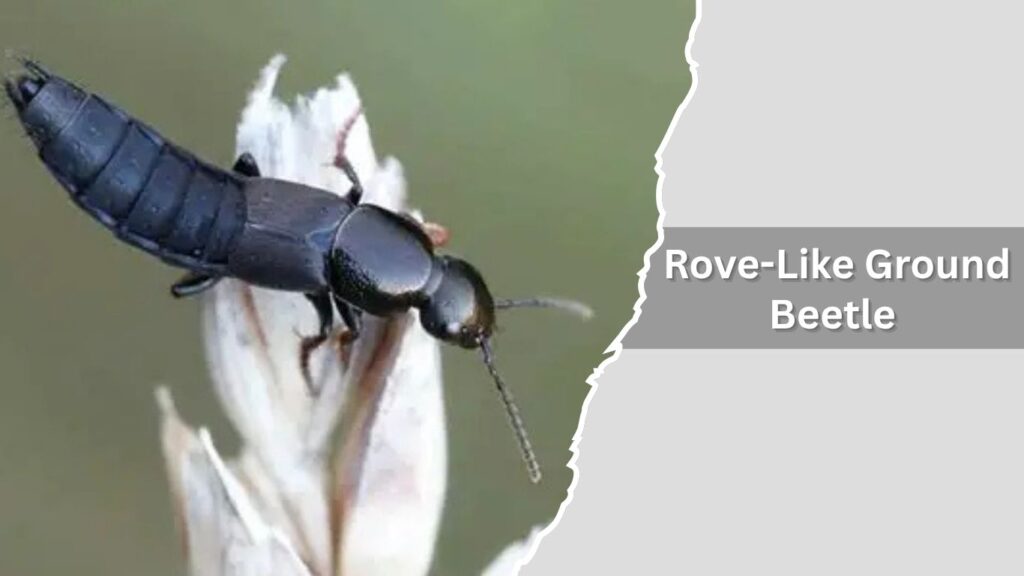
The Rove-Like Ground Beetle has a long, narrow body that can make it look similar to a rove beetle. However, it belongs to the ground beetle family and is usually found running across soil or hiding under cover.
Identification
- Long, narrow body shape
- Dark brown or black coloration
- Short-looking wing covers compared with many beetles
- Fast runner on the ground
- Often mistaken for a rove beetle
Habitat
This beetle is found in fields, gardens, forest edges, wetlands, and areas with damp soil. It prefers places with leaf litter, stones, moss, or plant debris. These sheltered spots help it stay hidden during the day.
Feeding Behavior
The Rove-Like Ground Beetle is a predator of small insects and other tiny invertebrates. It searches close to the soil surface and moves quickly through leaf litter. Its narrow body helps it enter tight spaces while hunting.
Importance in Nature
This beetle helps control small soil-dwelling insects and adds to ground-level biodiversity. It is part of the natural food chain and can be useful in gardens or wild habitats where many small invertebrates live.
15. Wrinkled Bark Beetle
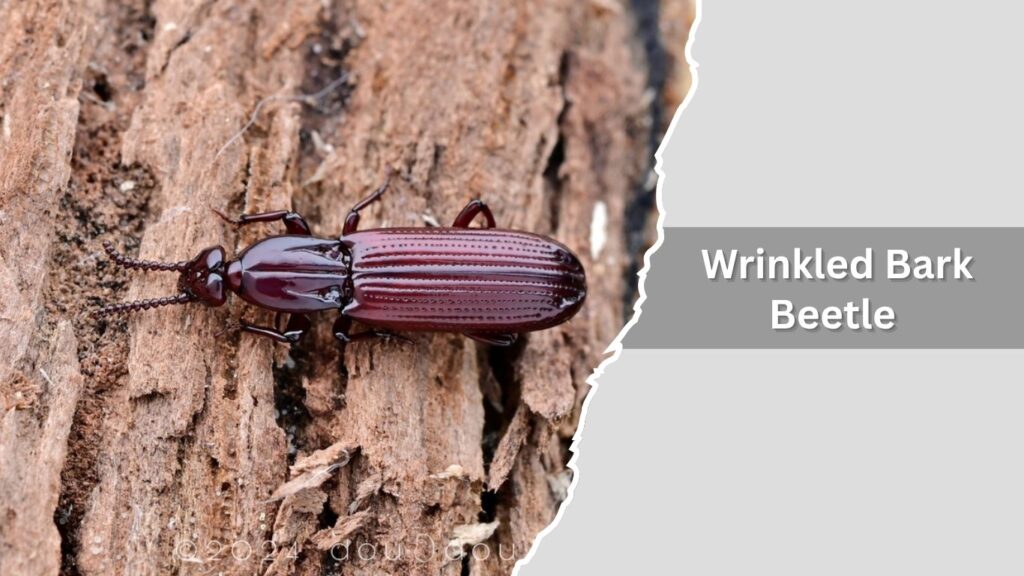
The Wrinkled Bark Beetle is a ground beetle often found under bark, logs, and woody debris. Its rough or wrinkled-looking wing covers help separate it from smoother beetles. It is usually active in sheltered, wooded habitats.
Identification
- Dark body with rough, wrinkled wing covers
- Flattened shape for moving under bark
- Strong legs for crawling through wood debris
- Usually found under bark or logs
- Slow to moderate movement compared with some ground beetles
Habitat
This beetle prefers forests, woodlands, old logs, bark piles, and shaded garden areas with woody debris. It often stays in narrow spaces under loose bark, where moisture and shelter are available throughout the day.
Feeding Behavior
The Wrinkled Bark Beetle likely feeds on small insects, larvae, and other invertebrates living under bark or in decaying wood. It may also scavenge when food is available. Its habitat allows it to hunt in hidden microhabitats.
Importance in Nature
This beetle supports woodland ecosystems by living in decaying wood and helping regulate small invertebrate populations. It also contributes to biodiversity in bark and log habitats, where many insects, fungi, and other organisms depend on dead wood.