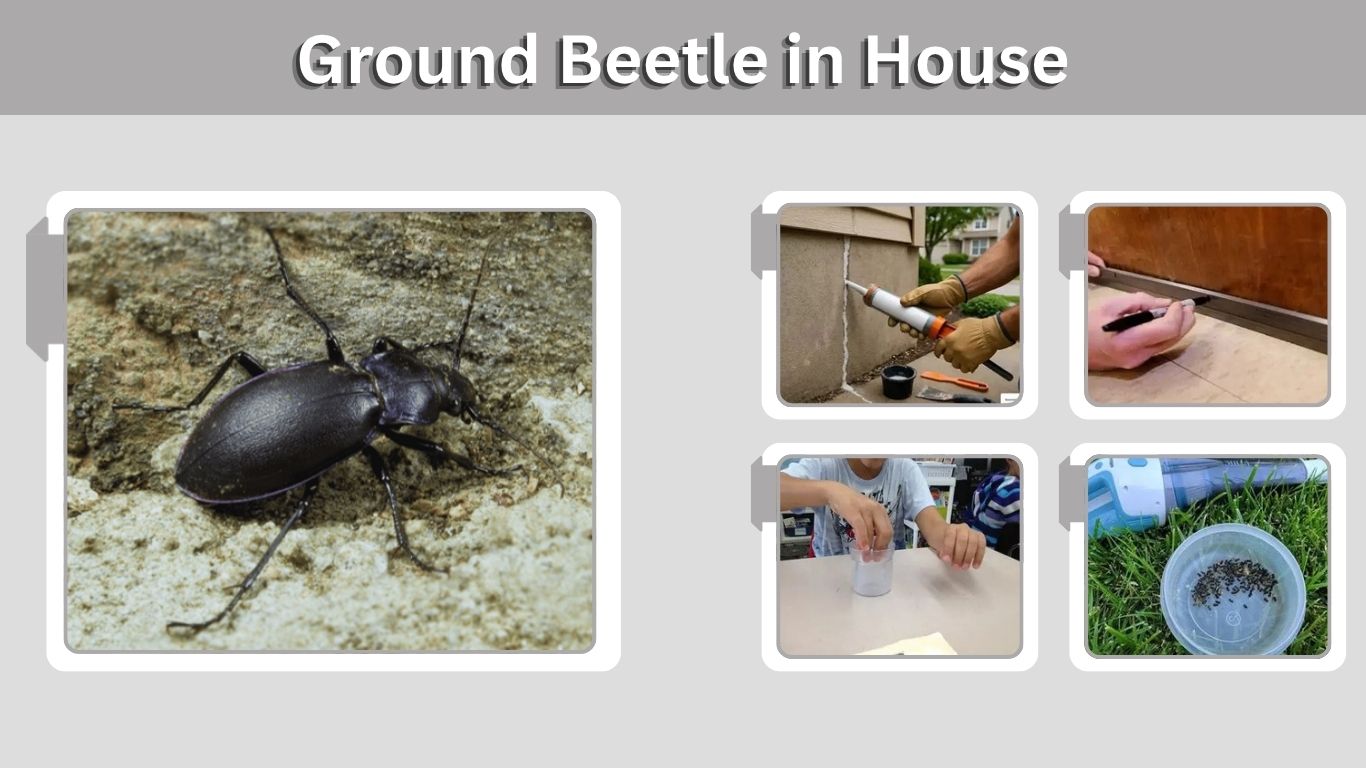
Finding a ground beetle in the house can be unsettling, especially when it is black, brown, fast-moving, or has large-looking jaws. The good news is that ground beetles are usually accidental indoor visitors, not destructive household pests. They normally live outdoors, where they hunt small insects and other pests. When they come inside, they are often looking for shelter, moisture, or a dark hiding place.
What Is a Ground Beetle?
A ground beetle is a beetle from the family Carabidae. This group includes many species, so their size, color, and shape can vary. Some are shiny black, some are brown, and others may have metallic colors such as green, blue, or violet. Many have long legs, hard wing covers, and a flattened body that helps them move quickly along soil, floors, stones, and walls.
Ground beetles are usually nocturnal. During the day, they hide under leaves, mulch, stones, logs, loose bark, and other protected outdoor spaces. At night, they come out to hunt insects, larvae, slugs, and other small prey. This hunting behavior makes them useful outdoors, even if they are unwanted inside your home.
Why Are Ground Beetles in My House?
Ground beetles do not usually enter homes because they want to live indoors permanently. Most come inside by accident. They may crawl through small gaps around doors, windows, foundations, basement openings, vents, or garage doors.
Common Reasons They Come Indoors
Several conditions can make ground beetles more likely to enter a house:
- Outdoor lights attract them near doors and windows
- Gaps under exterior doors give them easy access
- Cracks in the foundation allow them inside
- Mulch, leaves, firewood, or debris sit close to the house
- Basement areas are damp, dark, and cool
- Weather changes push them to search for shelter
- Open garage doors let them wander in at night
If you see one ground beetle in the house, it does not always mean you have an infestation. A single beetle may have simply crawled inside through an open door or gap.
Are Ground Beetles Dangerous in the House?
Ground beetles are not considered dangerous household pests. They do not attack people, damage furniture, chew wood, destroy clothing, or contaminate stored food in the way some other pests can.
However, their appearance can make people nervous. Some species have noticeable jaws, and larger beetles may look intimidating. Even so, they are more interested in hiding or escaping than bothering humans.
Do Ground Beetles Bite?
Ground beetles do not normally bite people. If handled roughly, trapped, or squeezed, a beetle may pinch defensively with its jaws. This is usually minor and not a serious medical concern for most people.
Are Ground Beetles Poisonous?
Ground beetles are not poisonous. Some species may release a bad smell or irritating defensive fluid when threatened. This is one reason it is better to remove them gently instead of crushing them.
Are They Harmful to Pets?
Most pets are not seriously harmed by one ground beetle. A cat or dog may try to paw at or eat one, but the beetle’s taste or smell may make the pet spit it out. If your pet eats many insects or shows unusual symptoms, contact a veterinarian.
How to Identify a Ground Beetle in the House
Ground beetles are often confused with cockroaches, carpet beetles, wood-boring beetles, and other household pests. Correct identification matters because the treatment approach is different.
| Feature | Ground Beetle | Possible Look-Alike |
|---|---|---|
| Movement | Runs quickly across floors | Cockroaches also run fast but usually hide near food, warmth, and moisture |
| Body shape | Flattened, oval, or elongated | Carpet beetles are smaller and rounder |
| Color | Often black or brown, sometimes metallic | Wood-boring beetles may be dull brown and found near damaged wood |
| Indoor damage | Usually no indoor damage | Carpet beetles damage fabrics; wood borers damage wood |
| Main location | Basement, garage, entryway, floor edges | Pantry pests appear near stored food |
A black ground beetle in the house is one of the most common sightings. Brown ground beetles, big-headed ground beetles, scarites ground beetles, and violet ground beetles may also be found indoors depending on the region.
Signs of Ground Beetles in the House
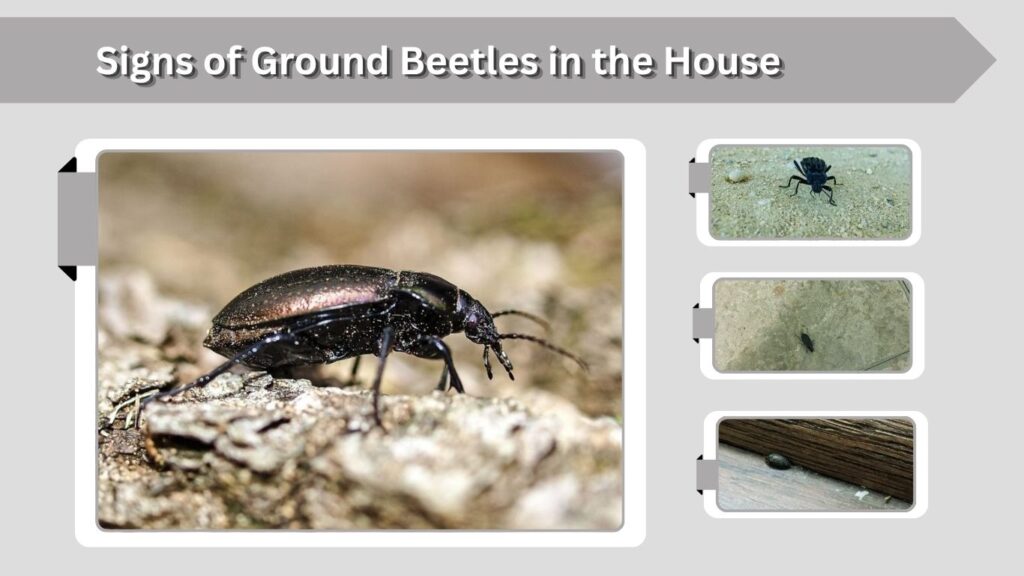
Ground beetles do not usually leave obvious damage behind. Unlike termites, powderpost beetles, or carpet beetles, they are not known for destroying household materials.
Possible Signs
You may notice:
- Live beetles running across floors
- Beetles near basement walls or garage corners
- Beetles around door thresholds
- Dead beetles near windows or lights
- Occasional sightings after rain or weather changes
- More activity near ground-level rooms
A true ground beetle infestation in the house is uncommon. If your house feels “overrun” with ground beetles, the real issue is usually outdoor conditions plus easy entry points.
Ground Beetle Larvae in House
Ground beetle larvae are less commonly noticed indoors than adult beetles. They are usually found in soil, leaf litter, mulch, or other outdoor habitats. Larvae may look long, segmented, and somewhat armored.
If you think you are seeing larvae inside the house, check whether they are truly ground beetle larvae. Carpet beetle larvae, pantry pest larvae, fly larvae, and other insects are more likely to become indoor problems. If larvae appear around food, fabrics, drains, or wood, you may be dealing with a different pest.
How Do Ground Beetles Get in the House?
Ground beetles are ground-level insects, so they usually enter through low access points. Houses with basements, crawl spaces, attached garages, old doors, or foundation cracks may see more beetles.
Common Entry Points
Check these areas first:
- Gaps under exterior doors
- Loose door sweeps
- Cracks in foundation walls
- Spaces around pipes and utility lines
- Basement window frames
- Garage door edges
- Torn window screens
- Vents or crawl space openings
At night, porch lights and garage lights can draw beetles close to these entry points. Once they are near the house, it only takes a small opening for them to wander inside.
How to Get Rid of Ground Beetles in the House
The best way to get rid of ground beetles indoors is to remove the ones you see and stop more from entering. Since they are beneficial outdoors, heavy chemical treatment is often unnecessary for occasional sightings.
Remove Beetles Indoors
Try these simple steps:
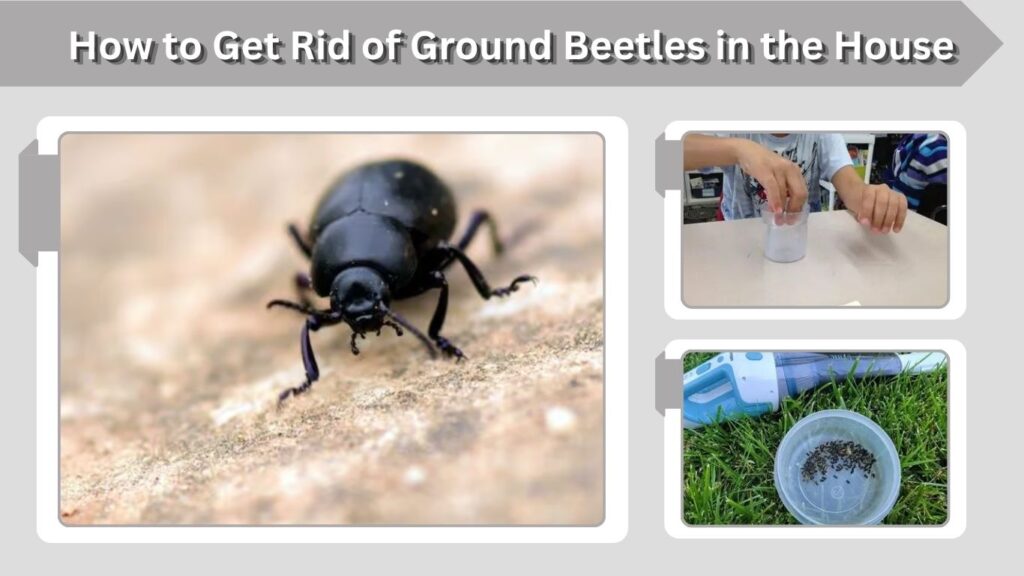
- Use a cup and paper to capture and release them outside
- Vacuum beetles from corners, baseboards, and basement floors
- Sweep dead beetles from window areas and doorways
- Empty the vacuum outdoors if beetles are still alive
- Avoid crushing them if they release a bad smell
If you use sticky traps, place them near basement walls, garage corners, or entry points. Traps can help you see where beetles are most active, but they should not be the only solution.
Clean Hiding Areas
Ground beetles like dark and protected spaces. Reduce indoor hiding spots by cleaning cluttered areas, especially in basements, garages, mudrooms, and storage rooms.
Pay attention to:
- Cardboard boxes on basement floors
- Damp corners
- Piles of old newspapers
- Storage near exterior doors
- Firewood kept indoors
- Garage clutter near walls
Good sanitation makes your home less attractive to beetles and also helps reveal entry points.
How to Keep Ground Beetles Out of Your House
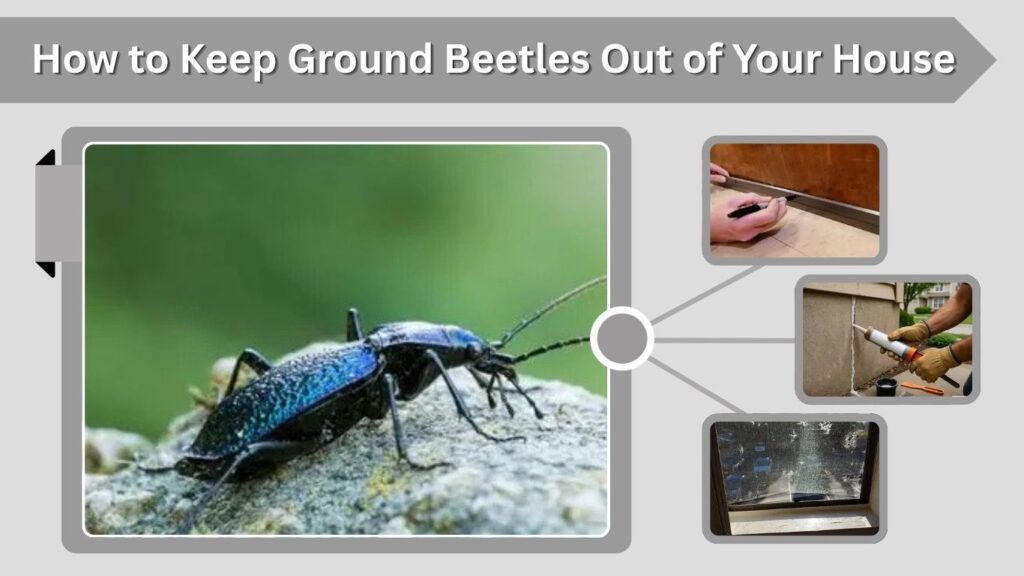
Prevention is the most important step. If you only remove beetles indoors but leave gaps open, more may appear.
Seal Entry Points
Use caulk, weatherstripping, door sweeps, and repair materials to close gaps. Focus on low areas first because ground beetles crawl in from the outside.
Important fixes include:
- Install tight door sweeps
- Seal foundation cracks
- Repair basement window gaps
- Close spaces around pipes and cables
- Fix torn screens
- Check garage door seals
- Cover crawl space openings properly
Even small gaps can matter because many beetles can squeeze through narrow openings.
Adjust Outdoor Conditions
The area around your home can attract ground beetles. You do not need to remove every natural habitat, but you should reduce beetle-friendly shelter directly against the foundation.
Helpful steps include:
- Move mulch a few inches away from exterior walls
- Keep leaves and plant debris away from the foundation
- Store firewood off the ground and away from the house
- Trim grass and weeds near walls
- Reduce moisture near basement areas
- Keep gutters working properly
- Avoid overwatering foundation plantings
These changes encourage beetles to stay in the yard or garden instead of gathering near your doors.
Reduce Outdoor Lighting
Ground beetles are sometimes attracted to lights at night. If beetles often appear near doors, windows, or porches, lighting may be part of the problem.
You can:
- Turn off unnecessary outdoor lights
- Use motion-sensor lights
- Switch to yellow bug bulbs
- Move lights farther from doorways
- Close curtains at night to reduce indoor light spill
This will not eliminate every beetle, but it can reduce the number gathering near entry points.
Ground Beetles in the House UK
Ground beetles in UK homes are usually similar in behavior to those found elsewhere. They commonly come indoors by accident, especially through doors, windows, basements, and damp ground-level spaces. Some UK species, such as violet ground beetles or common black ground beetles, may look alarming because of their size or color.
In most cases, the solution is the same: identify the insect correctly, remove indoor beetles, seal gaps, reduce outdoor shelter near walls, and avoid unnecessary insecticide use.
When to Call Pest Control
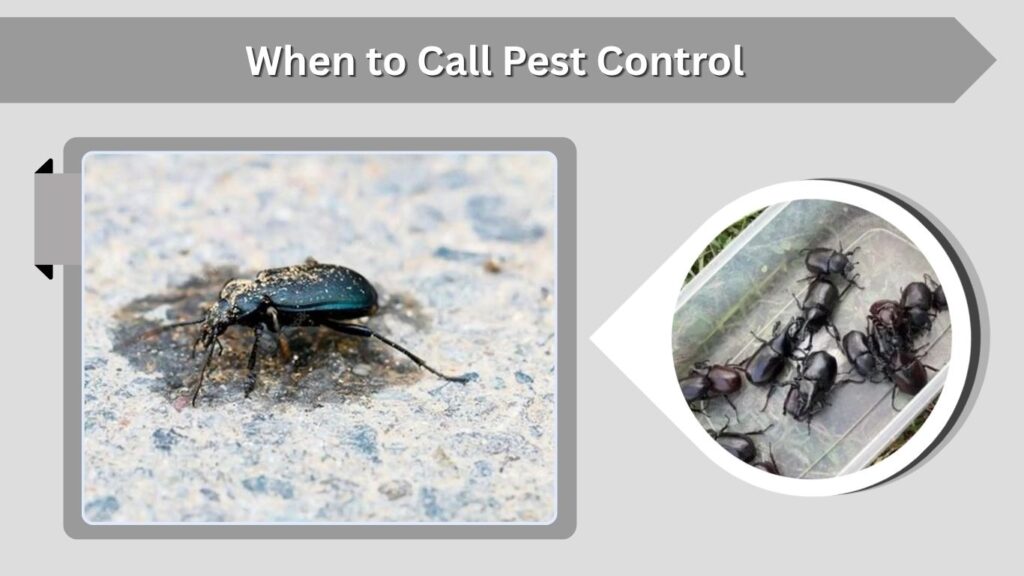
Most ground beetle problems can be handled with cleaning and exclusion. However, professional help may be useful if sightings continue or you are not sure the insect is actually a ground beetle.
Call a pest control professional if:
- Beetles appear in large numbers every day
- You cannot find where they are entering
- You see larvae indoors and cannot identify them
- You notice damage to wood, fabric, or stored food
- You suspect cockroaches, carpet beetles, or wood-boring beetles
- DIY prevention does not reduce the problem
A professional can confirm the species and recommend targeted treatment instead of unnecessary spraying.
FAQs
Why do I have ground beetles in my house?
Ground beetles usually enter by accident through gaps under doors, foundation cracks, basement windows, vents, or garage openings. Outdoor lights, nearby mulch, leaf litter, firewood, and damp conditions can bring them close to your home. Once they are near an entry point, they may wander indoors while searching for shelter.
Is a ground beetle in the house dangerous?
A ground beetle in the house is usually not dangerous. These beetles do not normally damage furniture, clothing, wood, or stored food. They are not poisonous and do not seek out people. At most, they may pinch if handled roughly or release an unpleasant smell when threatened.
How do I get rid of ground beetles in my house?
Remove visible beetles with a vacuum, broom, or cup-and-paper method. Then focus on prevention by sealing cracks, installing door sweeps, repairing screens, reducing basement moisture, and moving mulch or debris away from the foundation. Occasional beetles do not usually require strong chemical treatment indoors.
Do ground beetles mean my house is dirty?
Ground beetles do not necessarily mean your house is dirty. They are outdoor insects that often enter by accident. However, clutter, damp basement areas, firewood, cardboard piles, and open gaps can make it easier for them to hide indoors. Cleaning and sealing entry points usually helps reduce sightings.
Can ground beetles infest a house?
Ground beetles rarely create a true indoor infestation. They usually do not reproduce successfully inside homes like some household pests. If you see many beetles, it often means they are entering repeatedly from outdoors. Finding and sealing entry points is usually more effective than treating the inside only.