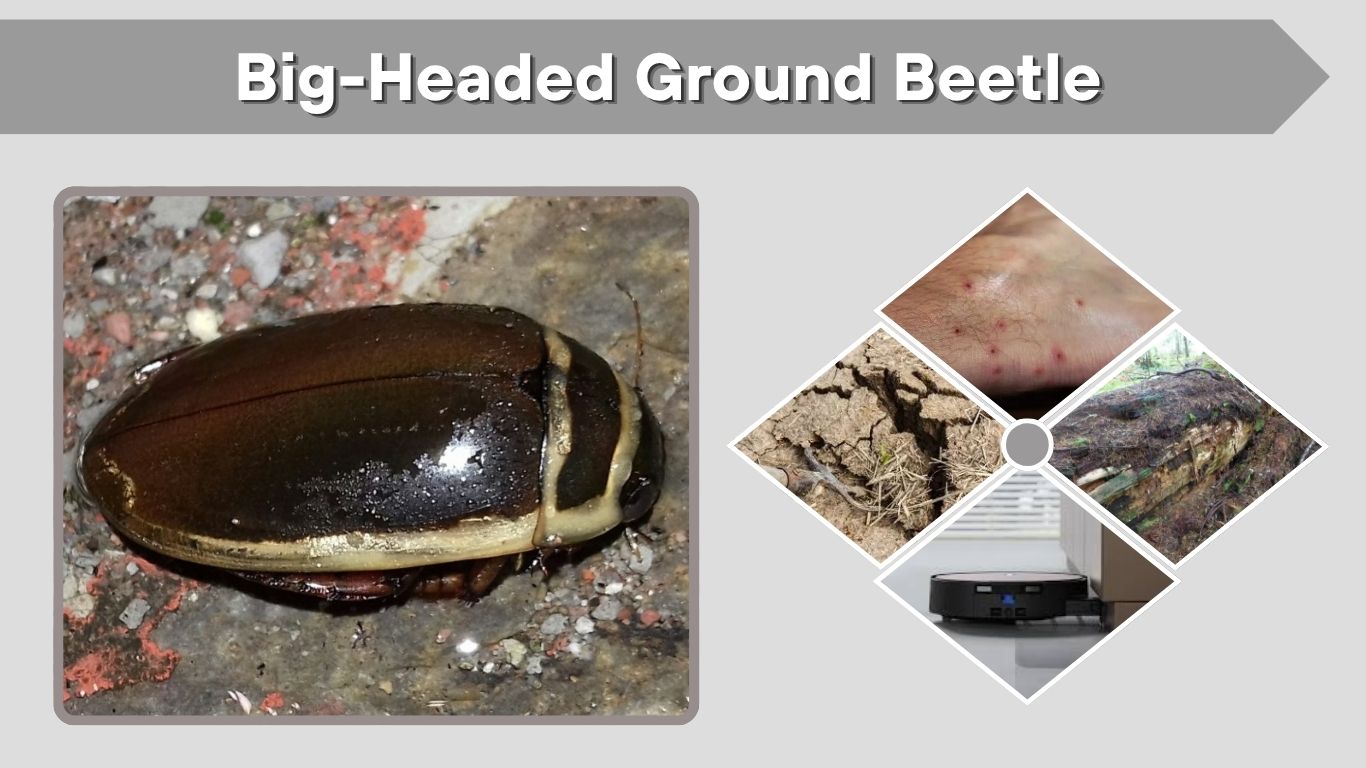
A big-headed ground beetle can look alarming because of its glossy dark body, oversized head, and strong curved jaws. Many people notice one in a basement, garage, garden bed, or near outdoor lights and wonder if it is dangerous. In most cases, this beetle is not a household pest. It is a beneficial outdoor predator that may wander indoors by accident while searching for shelter, prey, or a dark hiding place.
What Is a Big-Headed Ground Beetle?
The big-headed ground beetle commonly refers to Scarites subterraneus, a species of ground beetle in the family Carabidae. It is also sometimes called a tunneling ground beetle or pedunculate ground beetle. The name comes from its large head and powerful mandibles, which make the beetle look more intimidating than many other ground beetles.
This insect is built for life close to the soil. It spends much of its time under logs, rocks, leaves, mulch, and loose soil. It is mostly active at night and uses its strong jaws to catch small prey. Even though it may look like a pest, it often helps control other insects outdoors.
Big-Headed Ground Beetle Identification
The big-headed ground beetle has a distinctive shape compared with many common beetles. Its head looks large and broad, and the body often appears narrow at the “neck” area between the front and back sections.
Key Features
You can identify it by looking for:
- Glossy black or very dark brown body
- Large head compared with the body
- Strong curved mandibles or “pincers”
- Long, narrow, ridged wing covers
- Flattened body shape
- Front legs adapted for digging
- Fast movement when disturbed
- Body length often around 15 to 30 mm
The beetle may look like a small stag beetle because of its jaws, but it is not the same insect. Stag beetles usually have a different body shape and belong to a different beetle family.
Big-Headed Ground Beetle Classification
The big-headed ground beetle belongs to a large group of predatory beetles. Understanding its classification helps separate it from cockroaches, wood borers, carpet beetles, and other insects people may find indoors.
| Category | Big-Headed Ground Beetle |
|---|---|
| Common name | Big-headed ground beetle |
| Scientific name | Scarites subterraneus |
| Family | Carabidae |
| Order | Coleoptera |
| Main habitat | Soil, leaf litter, mulch, logs, rocks |
| Diet | Mostly small insects and other invertebrates |
| Indoor status | Accidental visitor or nuisance insect |
| Risk to people | Low |
The family Carabidae includes many ground beetles. These beetles are often important predators in gardens, farms, lawns, and natural habitats.
Are Big-Headed Ground Beetles Dangerous?
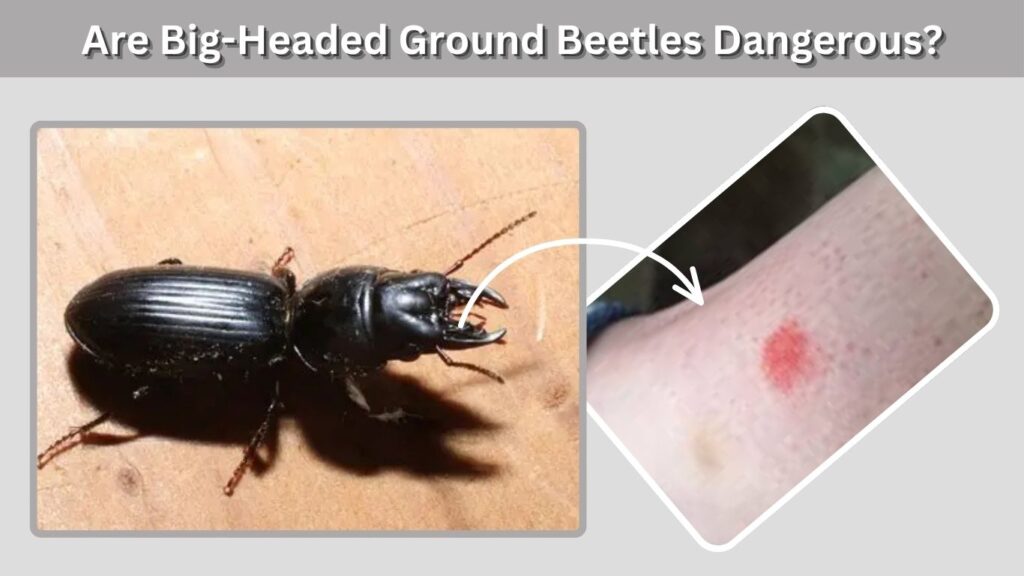
Big-headed ground beetles are not considered dangerous to people. They do not attack humans, spread disease, damage house structures, eat clothing, or infest stored food. Their large jaws are mainly for catching prey, not for harming people.
However, they can look frightening because the mandibles are easy to see. If one is running across a floor at night, it may seem more threatening than it really is.
Are They Poisonous?
Big-headed ground beetles are not poisonous. They are not venomous, and they do not sting. Some ground beetles may release an unpleasant odor or defensive fluid when handled or threatened, but this is not the same as being poisonous.
Do They Hurt People?
They usually do not hurt people. The main risk comes from handling them carelessly. If you pick one up, squeeze it, or trap it against your skin, it may pinch defensively. The pinch can surprise you, but it is usually minor.
Big-Headed Ground Beetle Bite
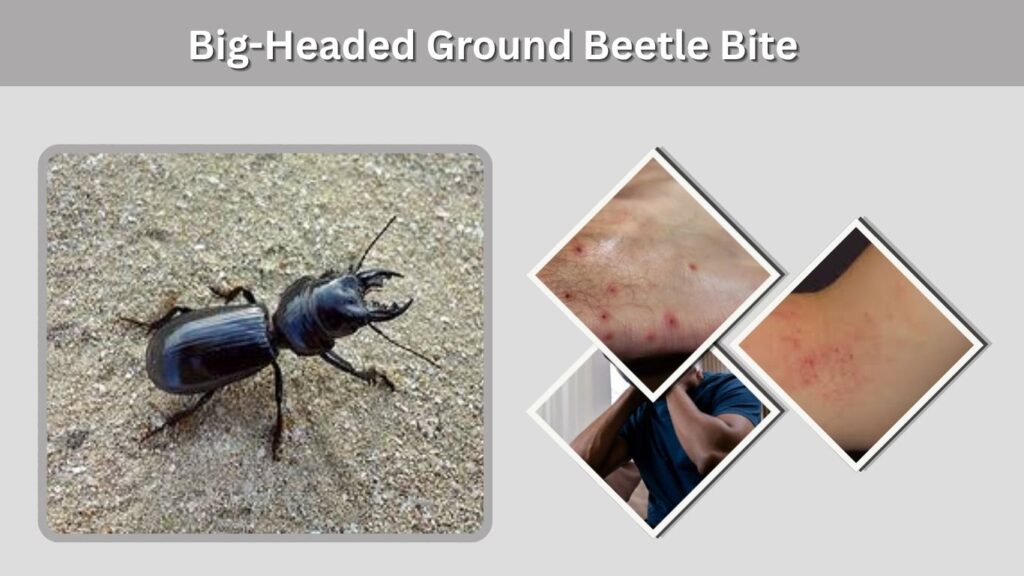
Searches about a big-headed ground beetle bite are common because the beetle has such visible jaws. Technically, it can pinch or bite if handled, but it does not seek out people to bite.
What a Bite May Feel Like
A defensive pinch may feel like:
- A quick sharp pinch
- Mild skin irritation
- A small red mark
- Brief discomfort
For most people, it is not serious. Wash the area with soap and water if the skin is broken. If unusual swelling, allergic symptoms, or infection signs appear, seek medical advice.
How to Avoid a Bite
The easiest way to avoid being pinched is not to handle the beetle directly. Use a cup and paper, a dustpan, or gloves if you need to move it. You can also vacuum it and empty the vacuum outside.
Big-Headed Ground Beetle Diet
The big-headed ground beetle is mainly carnivorous. It hunts other small creatures near the soil surface or in loose ground cover. Its large jaws help it grab and crush prey.
What Do Big-Headed Ground Beetles Eat?
Their diet may include:
- Small insects
- Insect larvae
- Caterpillars
- Ants
- Soft-bodied invertebrates
- Slugs or small soil-dwelling pests
- Worms or similar prey when available
This diet makes the beetle useful outdoors. It may help reduce pest insects naturally in gardens, lawns, fields, and landscaped areas.
Big-Headed Ground Beetle Larvae
Big-headed ground beetle larvae are also predators. They usually live in soil, leaf litter, or protected outdoor spaces where they hunt small prey. Like other beetles, they go through complete metamorphosis: egg, larva, pupa, and adult.
What Larvae Look Like
The larvae are usually elongated, segmented, and somewhat tough-looking. They may appear more like narrow, active grubs than soft white lawn grubs. Because many insect larvae look similar, indoor larvae should be identified carefully before assuming they belong to a ground beetle.
If you see larvae in stored food, carpet, drains, pet food, or wood, they may belong to a different pest species. Big-headed ground beetles are not usually indoor breeding pests.
Big-Headed Ground Beetle in House
Finding a big-headed ground beetle in the house usually means it wandered in from outdoors. It may enter through a gap under a door, a crack in the foundation, a basement window, or an open garage.
Why They Come Indoors
Common reasons include:
- Outdoor lights attracting beetles near doors
- Mulch or leaf litter close to the foundation
- Gaps under exterior doors
- Cracks around basement walls
- Damp, dark ground-level rooms
- Weather changes
- Open garage doors at night
One beetle inside is rarely a sign of a serious infestation. Several beetles may appear if outdoor conditions are favorable and the house has easy entry points.
Big-Headed Ground Beetle Location and Range
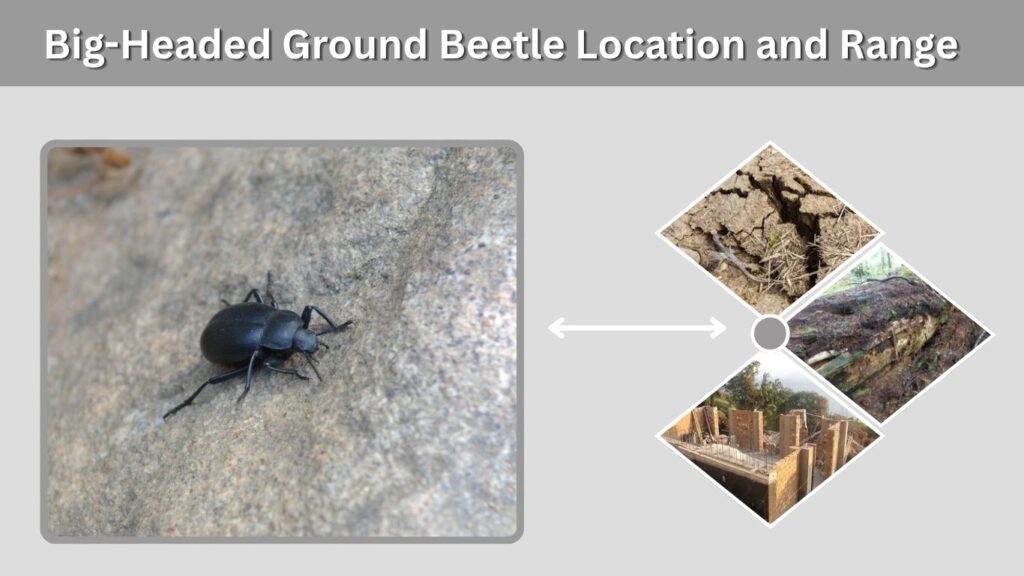
The big-headed ground beetle is commonly associated with North America, Central America, and the Caribbean. Searches for locations such as Pennsylvania, Ohio, Michigan, and Wisconsin usually come from people trying to confirm whether the beetle lives in their area. Because ground beetles are widespread, similar species may also be found in many regions.
Outdoors, look for them in:
- Soil cracks
- Under stones
- Under logs
- Beneath mulch
- Leaf litter
- Garden borders
- Lawns and meadows
- Near porch lights at night
They are especially likely to be noticed during warmer months when adult beetles are active.
Big-Headed Ground Beetle Life Cycle and Lifespan
Like all beetles, the big-headed ground beetle develops through four stages. The female lays eggs in protected outdoor areas. The larvae hatch and hunt small prey in soil or ground cover. After the larval stage, they pupate and later emerge as adult beetles.
Basic Life Cycle
The stages are:
- Egg
- Larva
- Pupa
- Adult
Exact lifespan can vary depending on climate, food, moisture, and species conditions. Many ground beetles are active seasonally and spend much of their lives hidden in soil-level habitats.
How to Get Rid of Big-Headed Ground Beetles
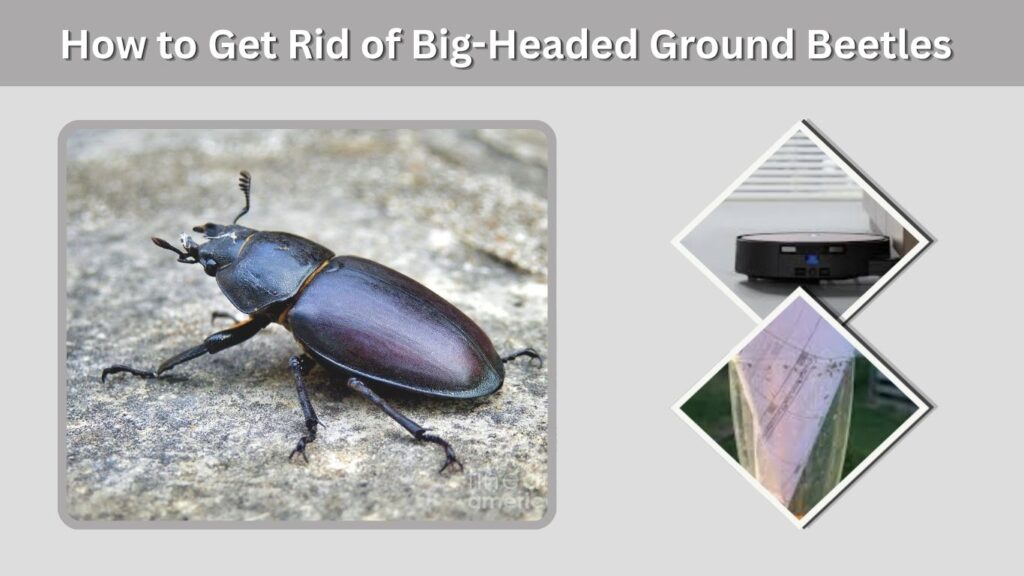
If you find one indoors, simple removal is usually enough. Since these beetles are beneficial outdoors, it is often better to move them outside instead of killing them.
Indoor Removal
Try these methods:
- Trap it with a cup and paper
- Sweep it into a dustpan
- Vacuum it from corners or floors
- Release it away from doors and windows
- Avoid crushing it if you want to prevent odor
If you keep seeing beetles, focus on prevention rather than repeated indoor spraying.
How to Repel Big-Headed Ground Beetles Naturally
Natural control starts with reducing entry points and making the area around your home less attractive.
Prevention Steps
Use these practical methods:
- Seal cracks around the foundation
- Install or replace door sweeps
- Repair basement window gaps
- Fix torn screens
- Move mulch away from exterior walls
- Keep leaf piles away from the house
- Store firewood off the ground and away from doors
- Reduce outdoor lights at night
- Use yellow bug bulbs near entrances
- Keep garage doors closed after dark
These steps help keep beetles outdoors where they belong.
Should You Kill Big-Headed Ground Beetles?
Killing them is usually unnecessary unless they are appearing in large numbers indoors. Outdoors, they are beneficial predators. Removing shelter right next to the foundation and sealing entry points is a better long-term solution than trying to eliminate them from the yard.
If you use insecticides, apply them carefully and only when needed. Broad spraying can harm beneficial insects and may not solve the entry-point problem.
Big-Headed Ground Beetle vs Similar Beetles
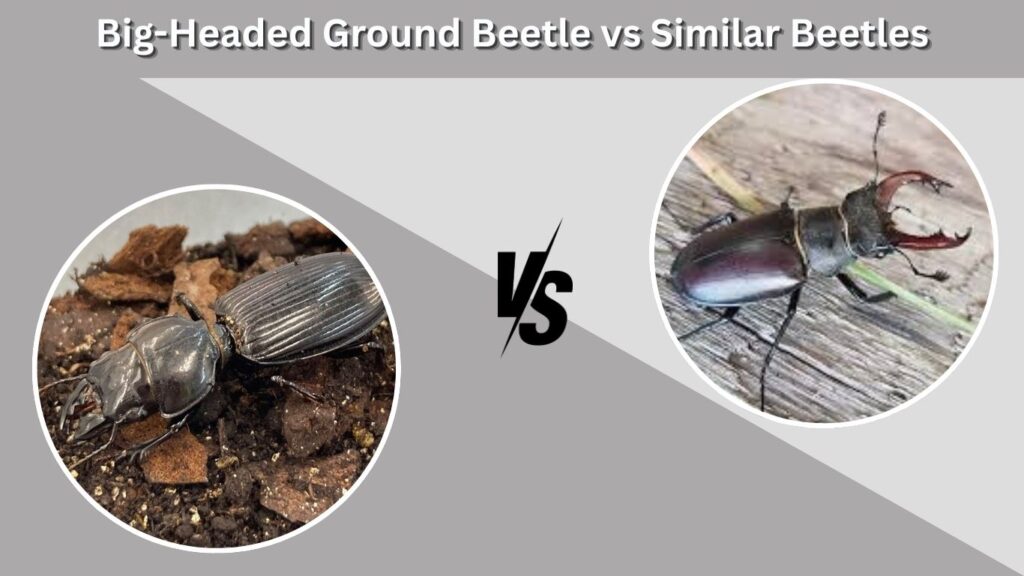
The big-headed ground beetle may be confused with other dark beetles. A few quick differences can help.
Similar Insects
- Stag beetles: Often have larger antler-like jaws, especially males
- Cockroaches: Usually flatter, faster indoors, and linked to food or moisture areas
- Carpet beetles: Much smaller and often connected with fabric damage
- Wood-boring beetles: Associated with wood holes, sawdust, or damaged timber
- Other ground beetles: May look similar but have smaller heads or different body shapes
If you are unsure, take a clear photo from above and compare the head, jaws, antennae, and wing covers.
FAQs
Are big-headed ground beetles dangerous?
Big-headed ground beetles are not dangerous in normal situations. They do not attack people, damage homes, or infest stored food. Their large jaws are used for hunting small prey. If handled roughly, they may pinch defensively, but they are generally considered a low-risk nuisance when found indoors.
Do big-headed ground beetles bite?
Big-headed ground beetles can pinch or bite if picked up, squeezed, or trapped against skin. They do not actively seek out humans to bite. The best way to avoid a bite is to move them with a cup, paper, broom, gloves, or vacuum rather than bare hands.
What do big-headed ground beetles eat?
Big-headed ground beetles mostly eat small insects and other invertebrates. Their diet can include insect larvae, caterpillars, ants, soft-bodied pests, and other soil-level prey. Because they hunt pests, they are considered useful predators in gardens, lawns, and natural outdoor habitats.
Why is there a big-headed ground beetle in my house?
A big-headed ground beetle usually enters a house by accident. It may crawl through gaps under doors, foundation cracks, basement openings, or garage doors. Outdoor lights, mulch, leaves, and damp areas near the foundation can attract beetles close enough to wander inside.
How do I get rid of big-headed ground beetles naturally?
Remove indoor beetles with a cup, broom, or vacuum, then seal entry points. Install door sweeps, repair screens, close foundation cracks, reduce outdoor lighting, and move mulch or leaf litter away from exterior walls. These natural steps help prevent repeat sightings without harming beneficial beetles outdoors.