
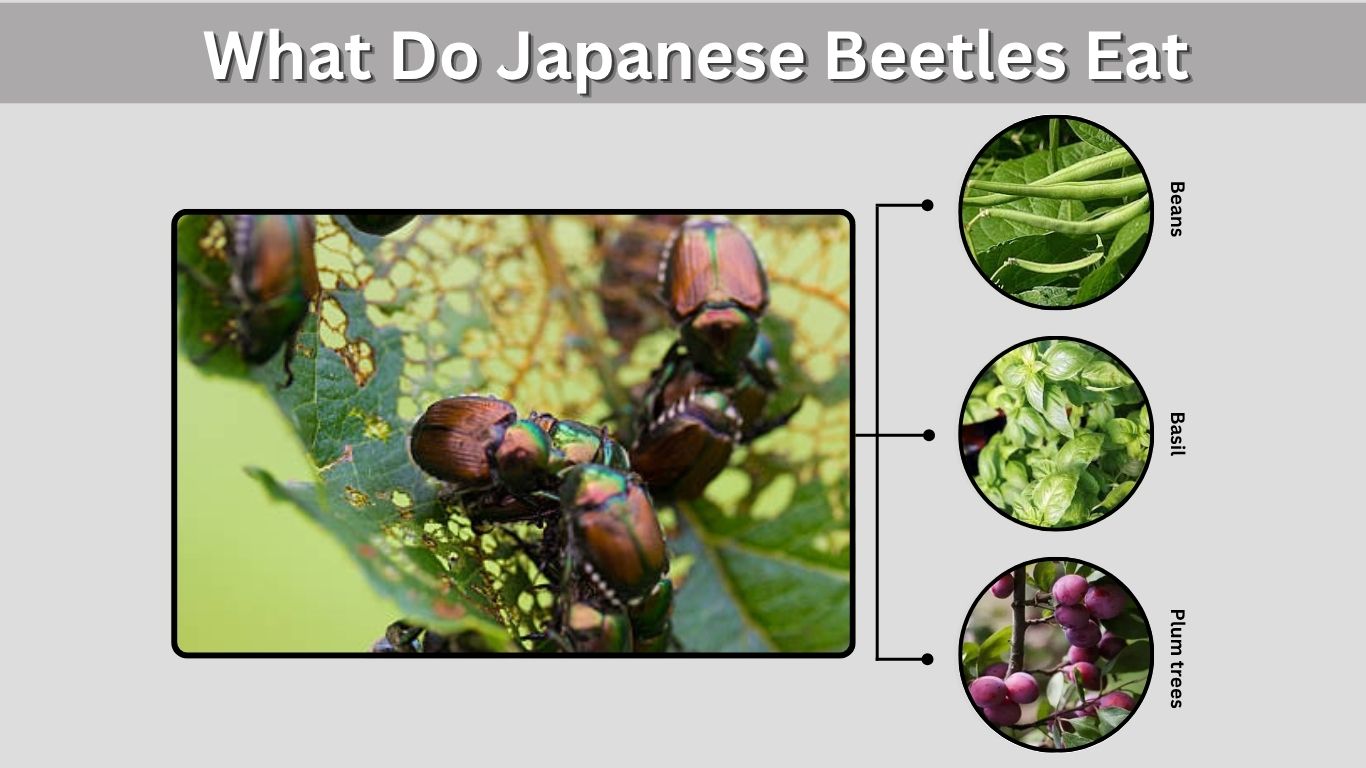
Japanese beetles are small, shiny insects that can cause big problems in gardens, lawns, orchards, and landscapes. Adult beetles feed above ground on leaves, flowers, and fruit, while their larvae live in the soil and feed on roots. They are known for damaging roses, grapes, fruit trees, basil, beans, and many ornamental plants. Understanding what Japanese beetles eat also helps you know what eats them and how to protect your plants naturally.
What Japanese Beetles Eat
Japanese beetles are plant-feeding insects. Adult beetles chew leaves, flowers, and fruits from many different plants. They are not picky feeders, which is one reason they can become such a frustrating garden pest.
Adult Japanese beetles commonly eat:
- Leaves from trees, shrubs, vines, and vegetables
- Rose petals and rose leaves
- Grape leaves
- Basil and other herbs
- Fruit tree leaves
- Soft or ripening fruit
- Bean leaves
- Flower petals
- Ornamental plant foliage
They usually feed in groups. When one beetle starts feeding on a plant, more beetles may gather there. Their feeding damage often appears as skeletonized leaves, where the soft green tissue is eaten but the veins remain. This makes leaves look thin, brown, and lace-like.
What Do Japanese Beetle Grubs Eat?
Japanese beetle grubs eat roots underground. They are white, C-shaped larvae that live in soil before becoming adult beetles. Their main food source is grass roots, which is why Japanese beetle infestations are often connected to lawn damage.
Grub feeding can cause turf to turn brown, wilt, and pull up easily like loose carpet. This happens because the roots are chewed off beneath the soil. In heavy infestations, animals such as skunks, raccoons, birds, or crows may dig up the lawn while searching for grubs.
Japanese beetle grubs may feed on roots of other plants too, but they are best known for damaging lawns and turfgrass areas. Adult beetles cause the visible leaf and flower damage above ground, while grubs create root problems below ground.
What Plants Do Japanese Beetles Eat?
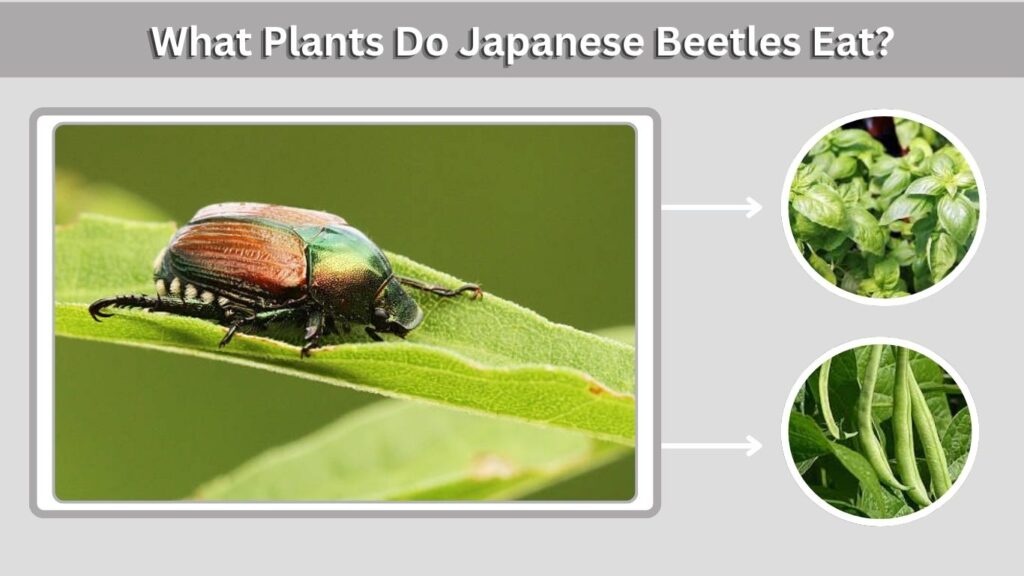
Japanese beetles feed on a wide range of plants, but they strongly prefer certain ones. Some gardens attract beetles every year because they contain several favorite host plants.
Plants Japanese beetles often eat include:
- Roses
- Grapes
- Basil
- Beans
- Apple trees
- Cherry trees
- Peach trees
- Plum trees
- Birch trees
- Linden trees
- Japanese maple
- Crabapple
- Rose of Sharon
- Raspberry and blackberry plants
- Corn silk
- Soybeans
- Zinnias and other flowers
They are especially attracted to sunny plants and tender new growth. Damage is often worse at the top of trees or on exposed leaves. Beetles may also feed more heavily on plants that are already stressed by heat, drought, poor soil, or previous insect damage.
Do Japanese Beetles Eat Roses?
Yes, Japanese beetles commonly eat roses. Roses are one of their favorite plants. They chew rose petals, buds, and leaves, often leaving flowers ragged and leaves skeletonized. If you see shiny green-and-copper beetles clustered inside rose blooms, they are likely feeding.
To stop Japanese beetles from eating roses, check plants early in the morning. Beetles are slower when temperatures are cooler, so they can be knocked into a bucket of soapy water. Removing them early helps reduce damage and may prevent more beetles from gathering.
Avoid placing Japanese beetle traps next to roses. Traps can attract beetles into the area and may increase feeding damage on nearby plants.
Do Japanese Beetles Eat Basil?
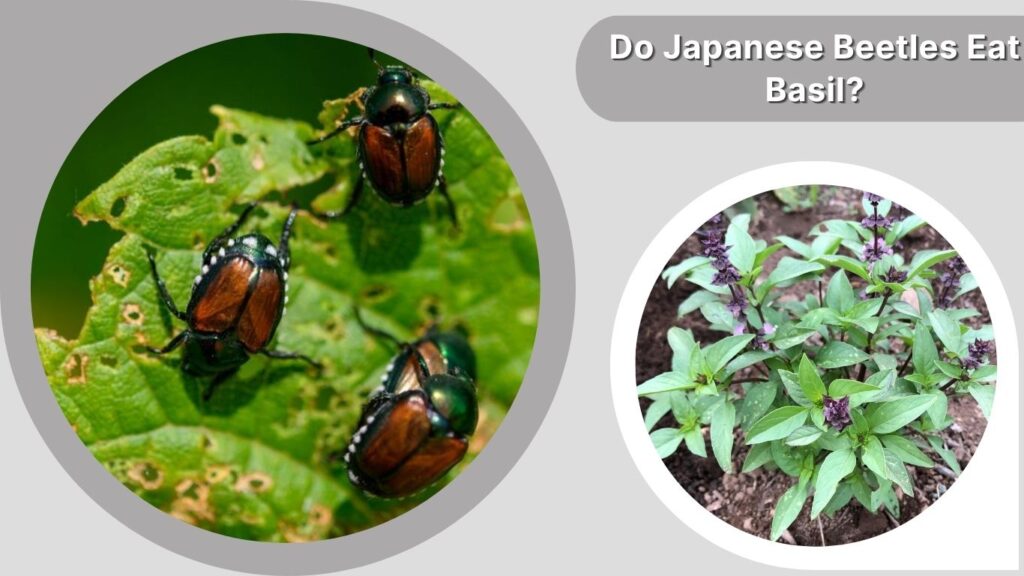
Yes, Japanese beetles eat basil. Basil leaves are tender, fragrant, and easy for beetles to chew. Damage usually appears as holes, ragged edges, or skeletonized patches. A few beetles may not ruin a basil plant, but a large group can strip leaves quickly.
For basil, handpicking is often better than spraying, especially if you plan to eat the leaves. You can also protect basil with fine insect netting during peak beetle season. If you use any pest control product on herbs, make sure the label says it is safe for edible plants and follow the waiting period before harvest.
Do Japanese Beetles Eat Tomato Plants?
Japanese beetles may eat tomato leaves, but tomatoes are not usually their top favorite compared with roses, grapes, basil, beans, and fruit trees. If beetles are feeding on tomato plants, they may chew leaves or occasionally damage fruit, especially if populations are high.
Tomato plants can often tolerate some leaf damage. The bigger concern is heavy feeding that reduces the plant’s ability to make energy. Handpicking and row cover can help protect young tomato plants, but remove covers when flowers need pollination.
Do Japanese Beetles Eat Hydrangeas, Marigolds, and Other Flowers?
Japanese beetles can feed on many flowering plants, but preference varies. They may chew hydrangea leaves in some gardens, especially if other preferred plants are nearby. Marigolds may also be damaged, although they are not always the first choice.
Other flowers and ornamentals may be attacked when beetle numbers are high. Japanese beetles tend to prefer plants in full sun, plants with soft leaves, and flowers with strong visual or scent attraction. If one type of flower is repeatedly damaged every year, consider replacing it with a less attractive plant.
What Eats Japanese Beetles?
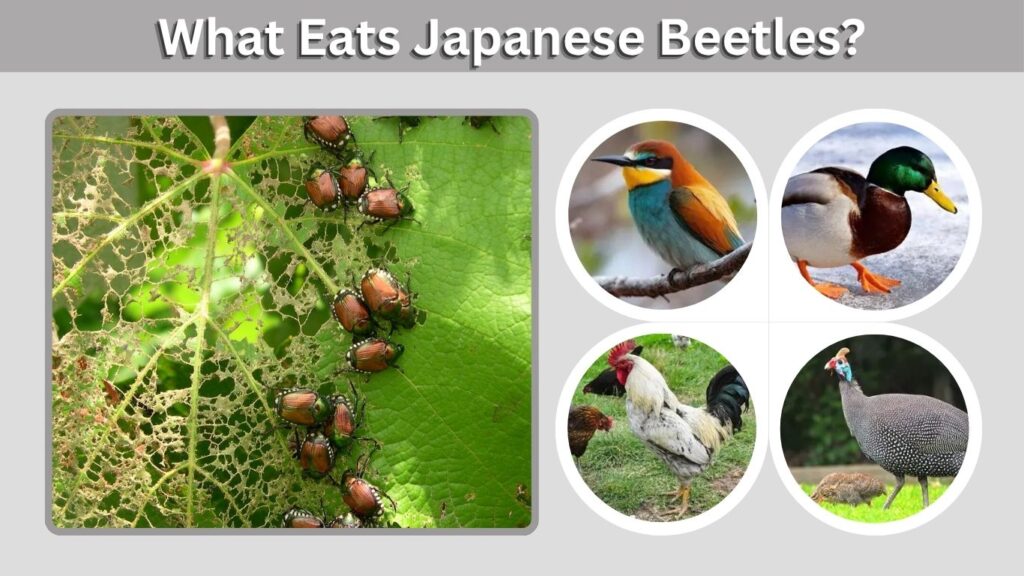
Japanese beetles have natural enemies, but predators usually do not eliminate them completely. Still, birds, poultry, insects, spiders, frogs, and some other animals can help reduce beetle numbers.
Animals and insects that may eat Japanese beetles include:
- Birds
- Chickens
- Ducks
- Guinea fowl
- Frogs and toads
- Spiders
- Praying mantises
- Assassin bugs
- Ground beetles
- Ants
- Parasitic wasps
- Some flies
- Fish, if beetles fall into ponds
Predators often eat adult beetles, grubs, or both. Birds and poultry may eat visible adult beetles. Soil predators and parasites are more likely to attack eggs or grubs underground.
Do Birds Eat Japanese Beetles?
Yes, some birds eat Japanese beetles. Birds that may eat them include robins, starlings, crows, grackles, blue jays, cardinals, sparrows, and blackbirds. However, bird feeding habits vary by location, season, and available food.
Birds may also feed on Japanese beetle grubs in lawns. If you see birds pecking repeatedly at turf, they may be searching for grubs or other soil insects. This can be helpful, although heavy digging may disturb the lawn.
To attract birds that eat Japanese beetles, provide a bird-friendly yard with shrubs, trees, water, and limited pesticide use. Avoid spraying broad insecticides that reduce the insect food birds rely on.
Do Chickens Eat Japanese Beetles?
Yes, chickens can eat Japanese beetles. Many chickens will happily eat adult beetles and may scratch for grubs in soil. Chickens can be useful in orchards, gardens, and around infested areas if they are managed carefully.
However, there are a few cautions. Chickens can damage garden beds by scratching, dust bathing, or eating plants. They should not be allowed to eat beetles collected from traps if those traps contain chemicals or attractant residues that are not safe for animals. Chickens should also not be fed insects that were recently sprayed with pesticides.
Ducks and guinea fowl may also eat Japanese beetles. Guinea fowl are especially known for eating many insects, although they can be noisy and may not fit every backyard.
Do Praying Mantises, Dragonflies, and Ladybugs Eat Japanese Beetles?
Praying mantises may eat Japanese beetles if they catch them. Mantises are general predators and will eat many insects, including pests and beneficial insects. They can help in the garden, but they are not a complete Japanese beetle control method.
Dragonflies are less likely to be major Japanese beetle predators. They mostly catch flying insects such as mosquitoes, flies, and gnats. A dragonfly might catch a beetle in flight, but Japanese beetles are not their main food.
Ladybugs usually do not eat adult Japanese beetles. Ladybugs mainly feed on aphids, scale insects, mites, and other soft-bodied pests. They may eat eggs or very small larvae in some situations, but they should not be relied on for Japanese beetle control.
Can Pets or Reptiles Eat Japanese Beetles?
Some animals may eat Japanese beetles, but that does not mean they should be fed to pets. Dogs and cats may catch or chew beetles out of curiosity. A small number may not cause serious harm, but beetles can upset the stomach or cause drooling, vomiting, or discomfort in sensitive pets.
Bearded dragons, leopard geckos, and other reptiles should not be fed wild Japanese beetles unless a qualified reptile veterinarian or expert confirms it is safe. Wild insects may carry pesticide residue, parasites, or other contaminants. Store-bought feeder insects are usually safer for reptiles.
Humans should also avoid eating Japanese beetles unless they are absolutely sure the insects are pesticide-free and properly prepared. For most people, Japanese beetles are better treated as garden pests than as food.
How to Stop Japanese Beetles from Eating Plants
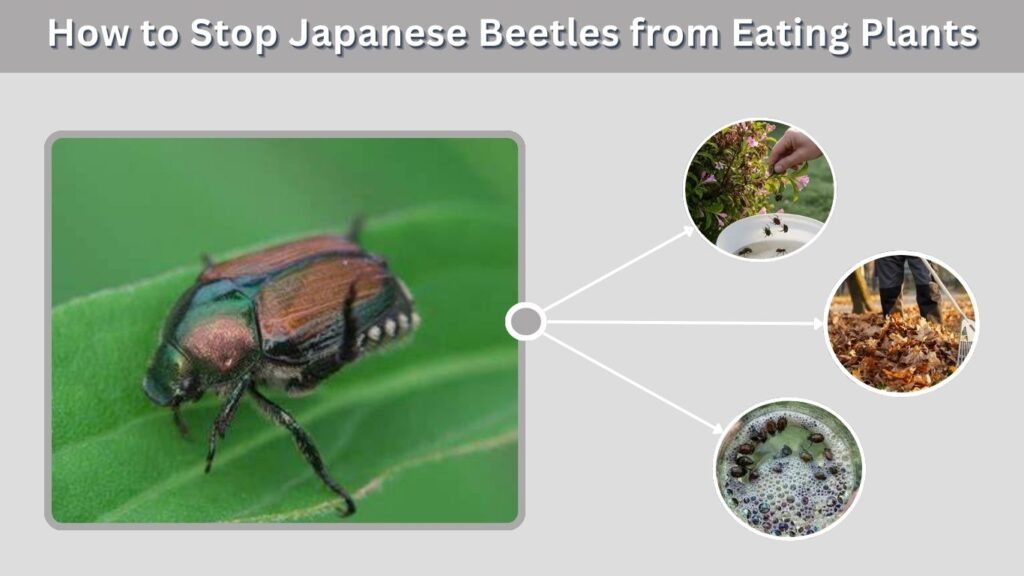
The best way to stop Japanese beetles from eating plants is to combine several methods. A single method rarely works perfectly, especially during peak beetle season.
Useful control steps include:
- Handpick beetles in the morning
- Drop beetles into soapy water
- Protect small plants with fine netting
- Remove heavily damaged leaves when practical
- Avoid beetle traps near valuable plants
- Keep plants watered during dry weather
- Choose less attractive plants in beetle-heavy areas
- Treat lawn grubs only when grub damage is confirmed
- Encourage birds and beneficial insects
- Use labeled sprays carefully and only when needed
Handpicking works best when beetle numbers are still low. For roses, basil, beans, and young fruit trees, daily removal during peak season can make a big difference. Netting is useful for small shrubs, herbs, and young trees, but it should not block pollinators when plants are blooming.
Should You Use Spray for Japanese Beetles?
Sprays can reduce Japanese beetle feeding, but they should be used with caution. Many sprays can harm bees, butterflies, and beneficial insects. This is especially important because Japanese beetles often feed on flowers where pollinators may also visit.
For edible plants such as basil, tomatoes, apples, peaches, and cherries, always check whether the spray is labeled for food crops. Follow the pre-harvest interval, which tells you how long to wait before eating the crop after spraying.
Organic products may help when applied early and repeatedly, but they may not stop severe infestations on their own. Stronger insecticides may work faster, but they carry more risk. In many home gardens, handpicking, netting, plant selection, and healthy plant care are safer first steps.
FAQs
What do Japanese beetles eat most?
Japanese beetles eat leaves, flowers, and fruit from many plants. They commonly feed on roses, grapes, basil, beans, fruit trees, birch, linden, crabapple, Japanese maple, and rose of Sharon. Their larvae, called grubs, feed underground on roots, especially grass roots in lawns.
What animals eat Japanese beetles?
Birds, chickens, ducks, guinea fowl, frogs, toads, spiders, praying mantises, assassin bugs, ants, and some parasitic wasps may eat Japanese beetles. Some predators eat the adult beetles, while others attack eggs or grubs in the soil.
Do birds eat Japanese beetles?
Yes, some birds eat Japanese beetles. Robins, starlings, crows, grackles, blue jays, cardinals, sparrows, and blackbirds may feed on them. Birds may also dig for grubs in lawns. A bird-friendly yard can support natural pest control.
Can chickens eat Japanese beetles?
Yes, chickens can eat Japanese beetles and may also scratch for grubs. Do not feed chickens beetles from chemical traps or insects that may have been sprayed with pesticides. Chickens can also damage garden beds, so they should be supervised around plants.
How do I stop Japanese beetles from eating my plants?
Handpick beetles early in the morning, drop them into soapy water, use netting on small plants, avoid traps near valuable plants, and keep plants healthy. For edible crops, use sprays only if they are labeled for that plant and safe before harvest.
