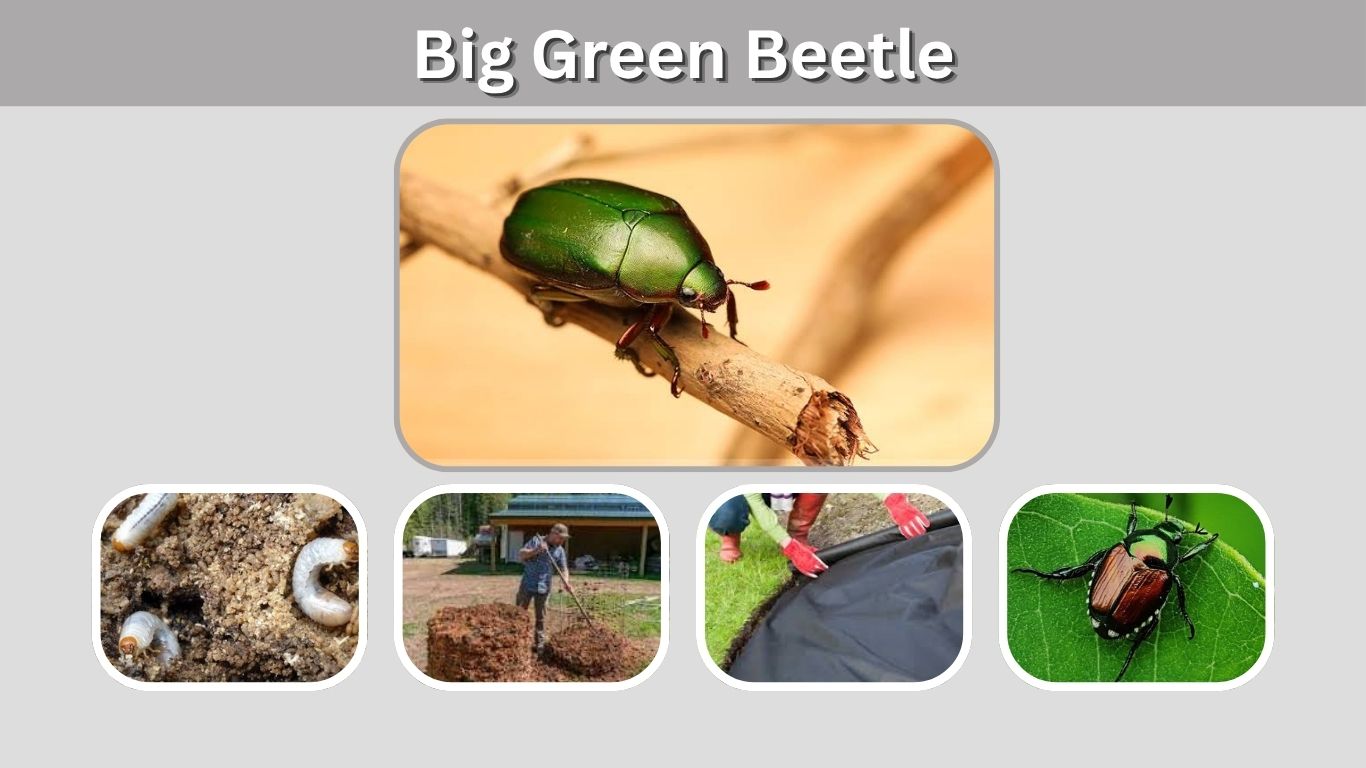
A big green beetle is usually a scarab beetle, especially a green June beetle or a figeater beetle. These beetles are large, shiny, and often fly loudly around yards, gardens, fruit trees, lights, or compost piles. Some are harmless visitors, while others can damage fruit, lawns, or ornamental plants. To identify one correctly, look at size, shine, flight style, location, and whether it has spots, stripes, horns, or copper-colored wings.
What Is a Big Green Beetle?
A “big green beetle” is not one single species. It is a common description people use for several large beetles that look green, metallic, emerald, blue-green, or greenish-brown.
The most common match in much of the eastern and central United States is the green June beetle. In California and the Southwest, a big green flying beetle is often the figeater beetle, also called the green fruit beetle.
| Beetle | Best ID Clue | Common Region |
| Green June beetle | Metallic green, nearly 1 inch, yellow-bronze edges | Eastern and central U.S. |
| Figeater beetle | Large metallic green fruit beetle | California, Southwest, Mexico |
| Japanese beetle | Smaller metallic green with copper wings | Many U.S. states |
| Six-spotted tiger beetle | Bright green, fast runner, white side spots | Woods, trails, open ground |
| Green flower scarabs | Shiny green, often on flowers or fruit | Varies by region |
Why Big Green Beetles Fly Around People
Large green beetles often look clumsy in flight. Green June beetles are known for flying around grassy areas and sometimes bumping into people or objects. K-State Extension describes adult green June beetles as “dive bombers” when they fly around during summer.
They are usually not chasing people. They are navigating poorly, searching for mates, feeding areas, or suitable places to lay eggs.
Green June Beetle
The green June beetle is one of the most common answers to “what are the big green beetles called?” It is a large scarab beetle with a metallic green body and yellowish-bronze edges.
North Carolina Extension describes adult green June beetles as metallic green and nearly 1 inch long, with bronze to yellow body margins. Penn State Extension also lists adults as 3/4 to 1 inch long, with a velvety green to dull brown upper body and green lengthwise stripes with yellow-orange margins.
Identification
Green June beetles usually have:
- Large oval body
- Metallic green underside
- Velvety green or dull brown upper shell
- Yellow, bronze, or orange margins
- Loud daytime flight
- Clubbed antennae
- Strong legs
They are often seen in summer, especially around lawns, compost, ripe fruit, and lights.
Are Green June Beetles Harmful?
Adult green June beetles may feed on ripe or damaged fruit, while the larvae live in soil and organic matter. The grubs can sometimes disturb turf because they move through soil and feed near roots.
A few adults in the yard are usually not a serious problem. Large numbers may indicate a lawn or fruit issue.
Big Green Beetle in California
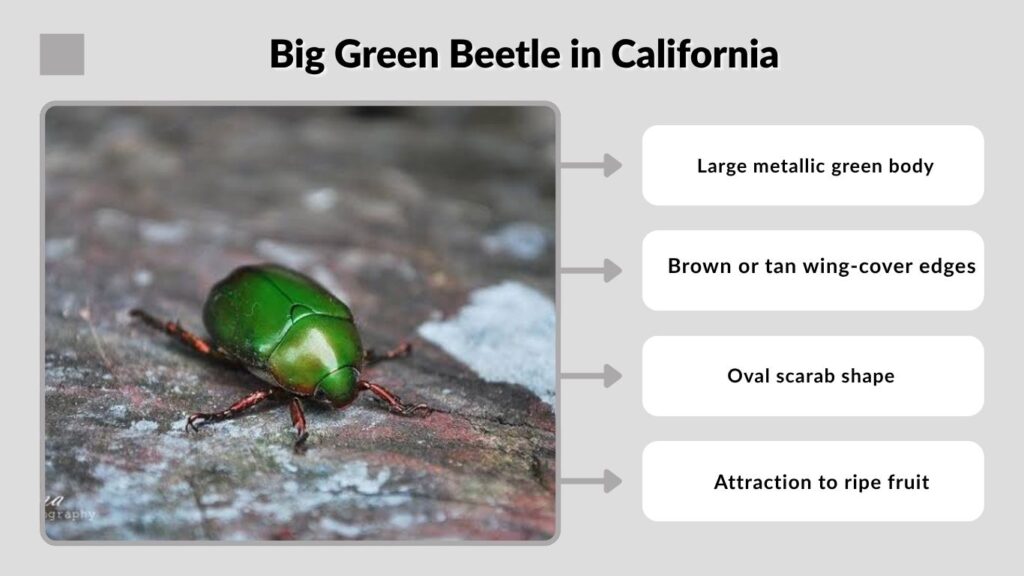
In California, the most likely big green beetle is the figeater beetle, also called the green fruit beetle. It looks similar to the green June beetle but is common in the Southwest.
UC IPM describes the green fruit beetle as a large beetle, 3/4 to 1 1/3 inches long, mostly metallic green with brown or tan along the wing-cover margins. It also notes that the beetle has a short hornlike projection on the face.
Figeater Beetle Identification
Look for:
- Large metallic green body
- Brown or tan wing-cover edges
- Oval scarab shape
- Loud, clumsy flight
- Attraction to ripe fruit
- Activity in warm weather
- Short hornlike projection on the face
The figeater beetle is often seen in California yards, orchards, gardens, and fruit trees.
Does It Damage Fruit?
Figeater beetles feed on soft or ripe fruit. Lucid Central notes that Cotinis mutabilis is an occasional pest of soft fruits such as figs, plums, peaches, and apricots, and may also damage grapes and tomatoes.
They often prefer already damaged, split, or overripe fruit, so removing fallen fruit can reduce attraction.
Big Shiny Green Beetle vs Japanese Beetle
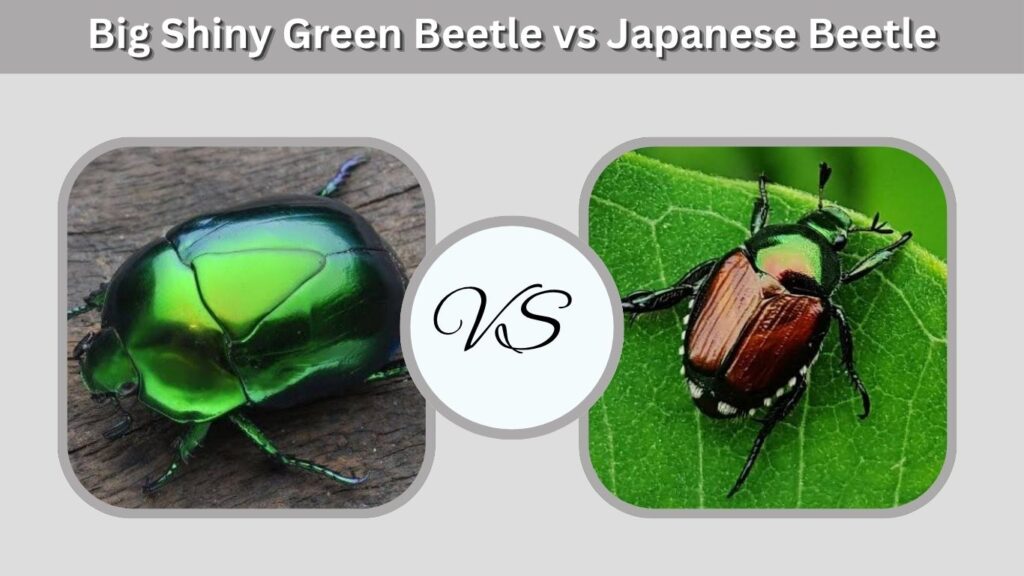
A big shiny green beetle may be confused with a Japanese beetle, but Japanese beetles are usually smaller.
Wisconsin Horticulture describes Japanese beetle adults as shiny metallic green and slightly less than 1/2 inch long, with coppery-brown wing covers and small white hair patches along the sides.
| Feature | Green June Beetle | Japanese Beetle |
| Size | 3/4–1 inch | About 1/3–1/2 inch |
| Color | Green, bronze, yellow margins | Green head, copper wings |
| Flight | Loud and clumsy | Smaller, often in groups |
| Damage | Fruit, turf grubs | Leaves, flowers, fruit |
| White side tufts | No obvious tufts | Yes |
Why Japanese Beetles Matter
Japanese beetles can be serious garden pests. University of Minnesota Extension says adults have a metallic green head and thorax, copper-brown wing covers, and white hair patches along the abdomen.
They often feed in groups and skeletonize leaves, especially on roses, grapes, fruit trees, and ornamentals.
Big Green Beetle With Black Spots
A big green beetle with black spots may not be a green June beetle. It could be a spotted cucumber beetle if it is small, or another local scarab if it is larger.
If the beetle is bright metallic green with pale white or cream spots on the wing-cover edges, it may be a six-spotted tiger beetle. University of Minnesota Extension describes this beetle as 1/2 inch long, bright metallic green, and marked with 0–8 white spots on the edges of the wing covers.
Six-spotted tiger beetles are beneficial predators, not plant pests.
Big Green Beetles in the Yard
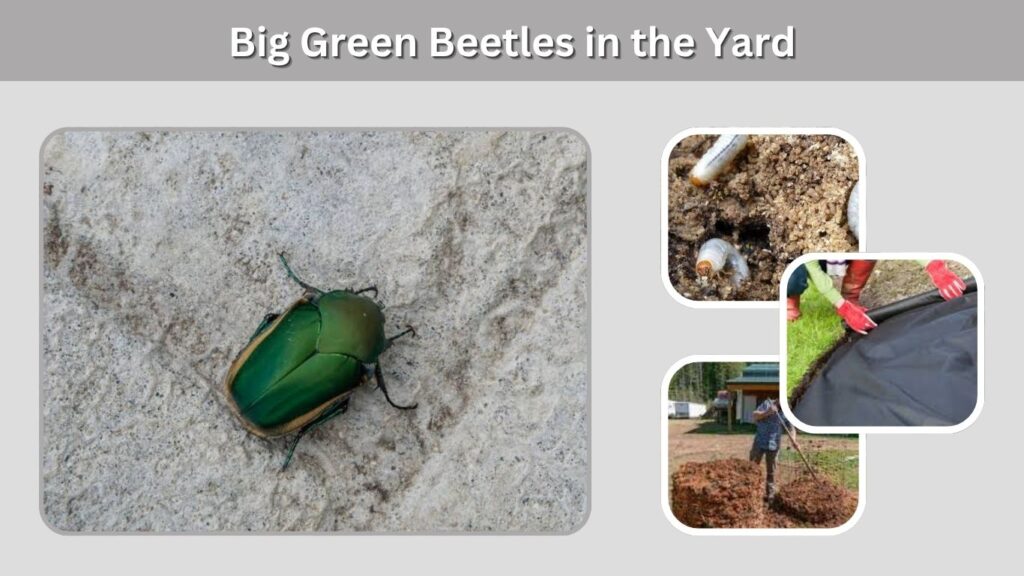
Big green beetles in your yard are often attracted by grass, compost, ripe fruit, garden moisture, or outdoor lights.
Green June beetle grubs are commonly associated with lawns and organic matter. North Carolina Extension notes that green June beetle grubs are cream-colored and can grow up to 2 inches long.
Signs You May Have a Problem
Watch for:
- Many adults flying low over grass
- Beetles feeding on ripe fruit
- Fallen fruit covered with beetles
- Loose or disturbed turf
- White grubs in soil
- Beetles bumping into windows or people
- Large beetles near compost piles
A few beetles are normal in many places. Large numbers may need management.
How to Get Rid of Big Green Beetles
Start with simple, low-risk control:
- Pick up fallen fruit daily
- Harvest ripe fruit quickly
- Turn or manage compost piles
- Reduce outdoor lights at night
- Keep lawns healthy but not overwatered
- Check turf for grubs
- Hand-remove beetles from small trees
- Contact local extension for severe grub problems
Avoid spraying without identifying the beetle first. Some green beetles are harmless or beneficial.
Do Big Green Beetles Bite or Sting?
Most big green beetles do not sting. They may scratch with their legs or pinch slightly if handled, but they are not aggressive toward people.
Green June beetles and figeater beetles may bump into people while flying, which makes them seem scary. In most cases, they are just clumsy fliers.
FAQs
What are the big green beetles called?
The most common big green beetles are green June beetles and figeater beetles. In some areas, people may also confuse Japanese beetles, flower scarabs, or tiger beetles with big green beetles.
What is the big green flying beetle in California?
The big green flying beetle in California is often the figeater beetle, also called the green fruit beetle. It is large, metallic green, and commonly attracted to ripe or damaged fruit.
Are big green beetles harmful?
Some are harmful to fruit, lawns, or garden plants, but many are only a nuisance. Green June beetles and figeater beetles may feed on ripe fruit, while Japanese beetles can damage leaves and flowers.
Do big green beetles bite?
Big green beetles usually do not bite people. They do not sting and are not aggressive. If handled, they may scratch or pinch with their legs.
How do I get rid of big green beetles?
Remove fallen fruit, manage compost, reduce outdoor lighting, hand-pick adults when practical, and check lawns for grubs. For severe infestations, identify the beetle first and ask a local extension office for treatment advice.