
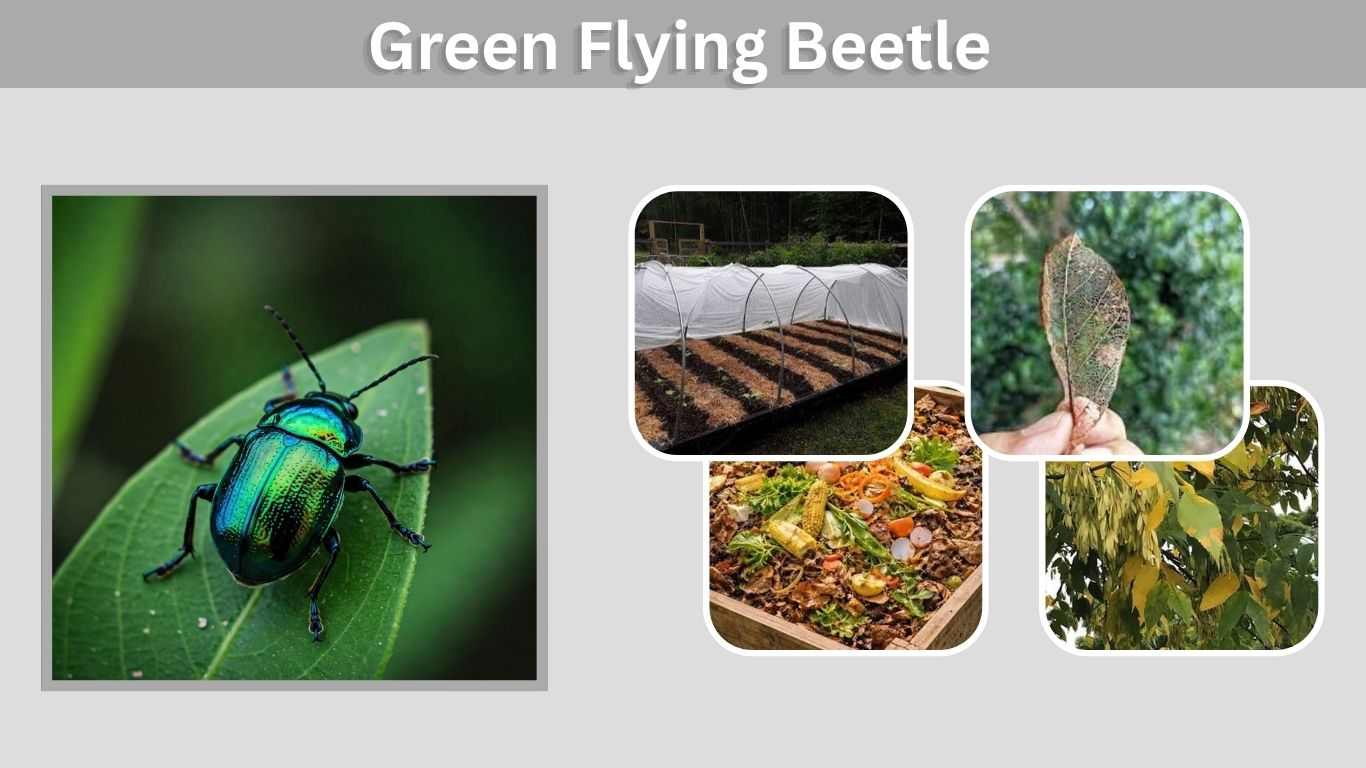
A green flying beetle is usually a scarab beetle, such as a green June beetle, figeater beetle, or Japanese beetle. These beetles may look shiny, metallic, emerald, blue-green, or yellow-green in sunlight. Some are harmless visitors, while others can damage fruit, flowers, lawns, or trees. To identify the right beetle, check its size, color pattern, location, flight style, and what plants it is feeding on.
What Is a Green Flying Beetle?
A “green flying beetle” is a general description, not one exact species. Many beetles can fly, and several common species have green or metallic green bodies.
If the beetle is large, loud, and clumsy in flight, it is often a green June beetle or figeater beetle. If it is smaller with copper-colored wing covers, it may be a Japanese beetle. If it is narrow, metallic green, and found near ash trees, it may be an emerald ash borer.
| Green Flying Beetle | Best Identification Clue | Common Concern |
| Green June beetle | Large, velvety green, yellow-bronze edges | Lawn grubs, ripe fruit |
| Figeater beetle | Big metallic green beetle in California/Southwest | Ripe fruit damage |
| Japanese beetle | Metallic green body, copper wings, white side tufts | Leaf and flower damage |
| Emerald ash borer | Small metallic green, narrow body | Kills ash trees |
| Tiger beetle | Fast, metallic green ground hunter | Usually beneficial |
Can Green Beetles Fly?
Yes, many green beetles can fly. Beetles have hard front wings called elytra that protect the softer flight wings underneath. When they fly, the hard wing covers open and the thin wings unfold.
Some large green beetles look awkward in the air. They may bump into people, walls, windows, or outdoor furniture, but this usually happens because they are clumsy fliers, not because they are attacking.
Big Green Flying Beetle
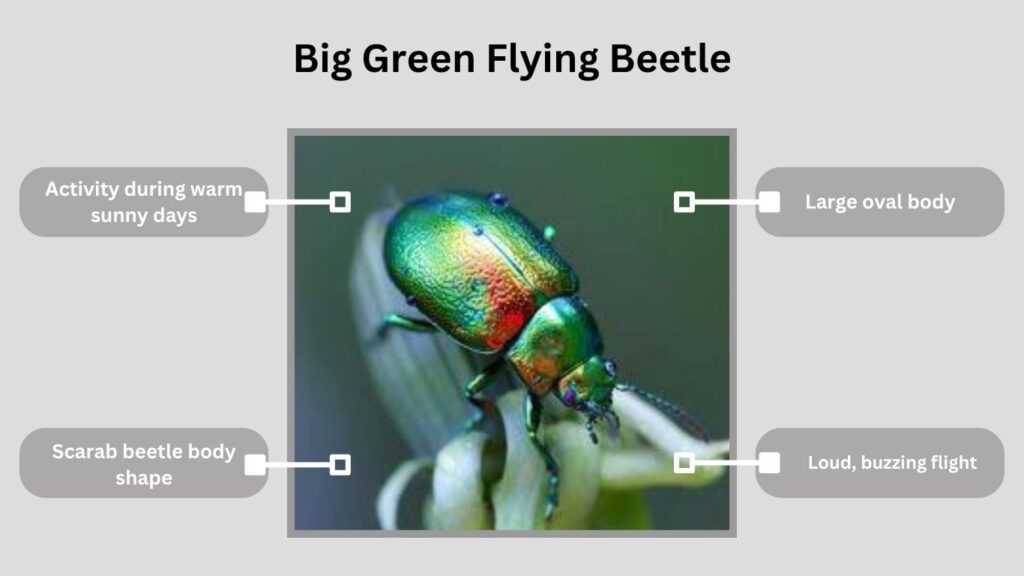
A big green flying beetle in the eastern or central United States is often the green June beetle. Adults are usually active in warm months and may fly over lawns, gardens, compost piles, and fruit trees.
Kansas State Extension describes adult green June beetles as 3/4 to 1 inch long, velvety green, yellow-brown tinged, and often seen flying in large numbers near grassy areas while bumping into people or objects.
Green June Beetle Identification
Green June beetles usually have:
- Large oval body
- Velvety or metallic green color
- Yellow-orange or bronze edges
- Loud, buzzing flight
- Activity during warm sunny days
- Attraction to ripe fruit and lawns
- Scarab beetle body shape
They are sometimes called June bugs, but they are not the same as the smaller brown May/June beetles.
Green June Beetle Flying Around Yard
Green June beetles often fly low over lawns because adults are searching for mates and egg-laying areas. Their larvae live in soil and organic matter.
If you see many green flying beetles in your yard, check for ripe fruit, compost, manure, thatch, or lawn areas with grub activity.
Green Flying Beetle in California
A green flying beetle in California is often the figeater beetle, also called the green fruit beetle, green fig beetle, or western green June beetle.
UC IPM says the green fruit beetle is a large beetle, about 3/4 to 1 1/3 inches long, and adults are occasional pests of ripe fruit. It also notes that adults can fly long distances and are attracted to ripe fruit, manure odors, and fermenting fruit.
Figeater Beetle Identification
A figeater beetle usually has:
- Large metallic green body
- Brown or tan edges on the wing covers
- Loud buzzing flight
- Strong attraction to figs and soft fruit
- Activity in warm weather
- Heavy, clumsy flying style
These beetles are common in places like Southern California, Los Angeles, San Diego, Arizona, and other warm southwestern areas.
Are Figeater Beetles Harmful?
Figeater beetles mostly feed on ripe, damaged, or fermenting fruit. They can be annoying in orchards and backyard gardens, especially around figs, peaches, grapes, plums, apricots, and tomatoes.
They are not dangerous to people, but they can be a nuisance when many adults gather around fruit trees.
Small Green Flying Beetle
A small green flying beetle may be a Japanese beetle, emerald ash borer, cucumber beetle, or another small leaf beetle.
Size is important. A beetle under 1/2 inch is probably not a green June beetle or figeater beetle.
Japanese Beetle
Japanese beetles are shiny and metallic, but they are smaller than green June beetles. Wisconsin Horticulture describes adult Japanese beetles as shiny metallic green, slightly less than 1/2 inch long, with coppery-brown wing covers and small white hair patches along the sides.
Japanese beetles often feed in groups and damage roses, grapes, fruit trees, and many ornamental plants. Their feeding can leave leaves looking skeletonized.
Emerald Ash Borer
A narrow, metallic green flying beetle near ash trees may be the emerald ash borer. USDA APHIS says emerald ash borer adults are metallic green with a coppery-red abdomen and about one-half inch long. It also warns that this insect can attack and kill healthy ash trees.
If you suspect emerald ash borer, check ash trees for D-shaped exit holes, bark splitting, canopy thinning, and woodpecker activity.
Green Flying Beetle Identification Chart
Use this chart to narrow down the most likely green flying beetle.
| Feature You Notice | Possible Beetle |
| Big, loud, green, flies over grass | Green June beetle |
| Big green beetle in California on fruit | Figeater beetle |
| Small metallic green with copper wings | Japanese beetle |
| Narrow metallic green beetle near ash trees | Emerald ash borer |
| Bright green, fast runner on ground | Tiger beetle |
| Yellow-green with stripes or spots on vegetables | Cucumber beetle |
Do Green Flying Beetles Bite?
Most green flying beetles do not bite people. Green June beetles and figeater beetles may bump into you while flying, but they are not trying to sting or attack.
They do not sting. If you grab one, it may scratch with its legs or pinch slightly with its mouthparts, but this is not usually dangerous.
Are Green Flying Beetles Harmful?
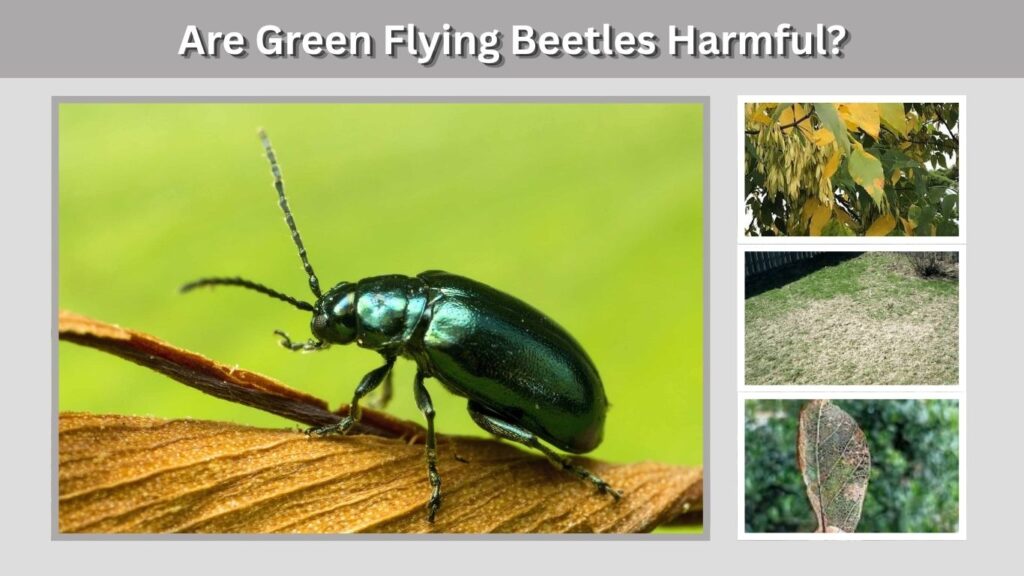
Some green flying beetles are harmful to plants, while others are harmless or beneficial.
Green June beetles and figeater beetles may damage ripe fruit. Japanese beetles can damage leaves, flowers, and fruit. Emerald ash borers are serious tree pests because their larvae damage ash trees. Tiger beetles, however, are predators and should usually be left alone.
Damage Signs to Watch For
Look for:
- Beetles feeding on ripe fruit
- Skeletonized leaves
- Chewed flower petals
- Lawn grub damage
- Beetles flying low over grass
- D-shaped holes in ash trees
- Yellowing or thinning ash tree canopies
- Beetles gathering near compost or fallen fruit
How to Get Rid of Green Flying Beetles
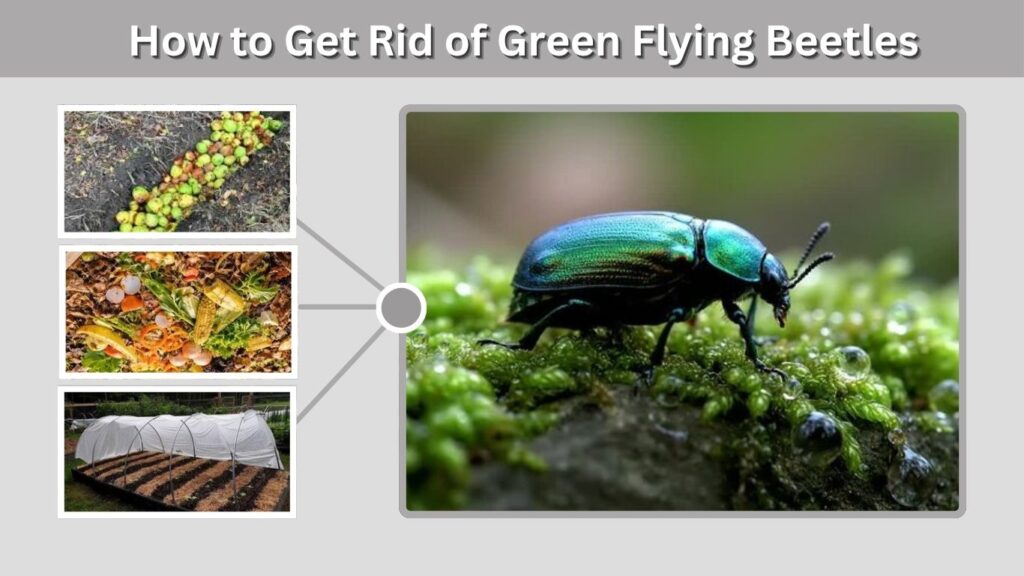
The best control method depends on the species. Do not spray first and identify later, because some green beetles are helpful.
For fruit-feeding beetles, remove fallen fruit daily and harvest ripe fruit quickly. For Japanese beetles, hand-pick adults into soapy water early in the morning. For suspected emerald ash borer, contact your local extension office or state agriculture department because tree treatment and reporting rules vary.
Simple control steps include:
- Remove fallen or rotting fruit
- Keep compost covered or managed
- Turn off unnecessary outdoor lights
- Hand-pick beetles from small plants
- Check lawns for white grubs
- Use row covers where suitable
- Avoid broad spraying during bloom
- Report suspected emerald ash borer
FAQs
What are the green flying beetles called?
They may be green June beetles, figeater beetles, Japanese beetles, emerald ash borers, tiger beetles, or cucumber beetles. The exact name depends on size, color pattern, location, and host plant.
What is the big green flying beetle?
A big green flying beetle is often a green June beetle or figeater beetle. Green June beetles are common in eastern and central areas, while figeater beetles are common in California and the Southwest.
Do green flying beetles bite?
Most green flying beetles do not bite or sting people. They may bump into people while flying or scratch if handled, but they are not aggressive.
What is the green flying beetle in California?
The green flying beetle in California is often the figeater beetle, also called the green fruit beetle. It is large, metallic green, and attracted to ripe or fermenting fruit.
How do I get rid of green flying beetles?
Remove fallen fruit, manage compost, reduce outdoor lights, hand-pick adults from plants, and check lawns for grubs. If the beetle may be emerald ash borer, contact a local extension office or tree-care professional.
