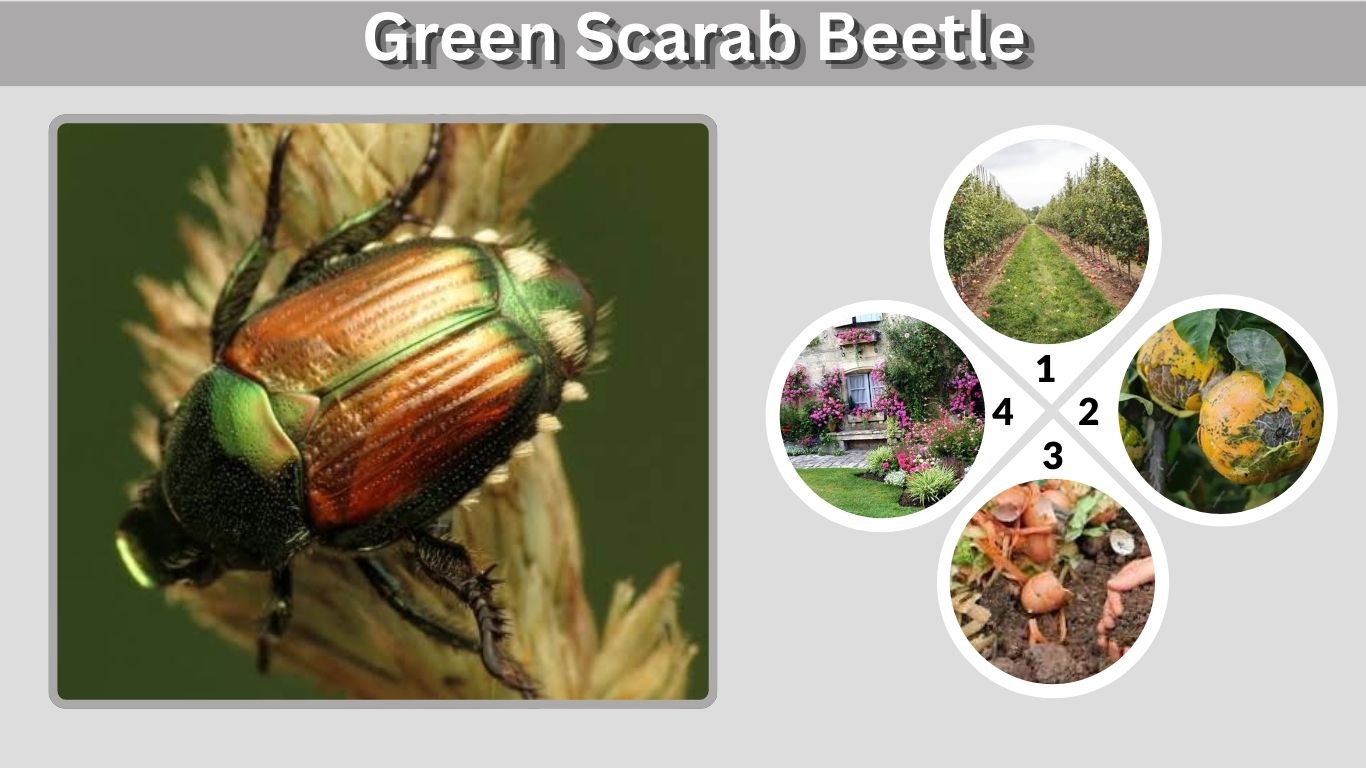
A green scarab beetle is not just one species. It can refer to several scarab beetles with green, shiny, metallic, or jewel-like bodies. Common examples include green June beetles, figeater beetles, Japanese beetles, and jewel scarabs. Some are garden visitors, some feed on ripe fruit, and others are admired for their beautiful emerald color. This guide explains green scarab beetle identification, meaning, diet, life cycle, bite risk, and where they are found.
What Is a Green Scarab Beetle?
A scarab beetle is a beetle in the family Scarabaeidae. Scarabs are often stout-bodied beetles with fan-like or plate-like antenna tips, and the group includes dung beetles, June beetles, chafers, and many metallic species.
| Common Name | Scientific Name / Group | Main ID Feature |
| Green June beetle | Cotinis nitida | Large, buzzing, green scarab |
| Figeater beetle / green fruit beetle | Cotinis mutabilis | Metallic green with tan wing edges |
| Japanese beetle | Popillia japonica | Green head, copper wings, white hair tufts |
| Jewel scarab | Chrysina species | Bright metallic green, gold, or silver body |
| Glorious scarab | Chrysina gloriosa | Green body with silver stripes |
The name “green scarab beetle” is usually a description, not an exact scientific name. To identify one correctly, look at its size, body color, wing covers, location, season, and what it is eating.
Green Scarab Beetle Identification
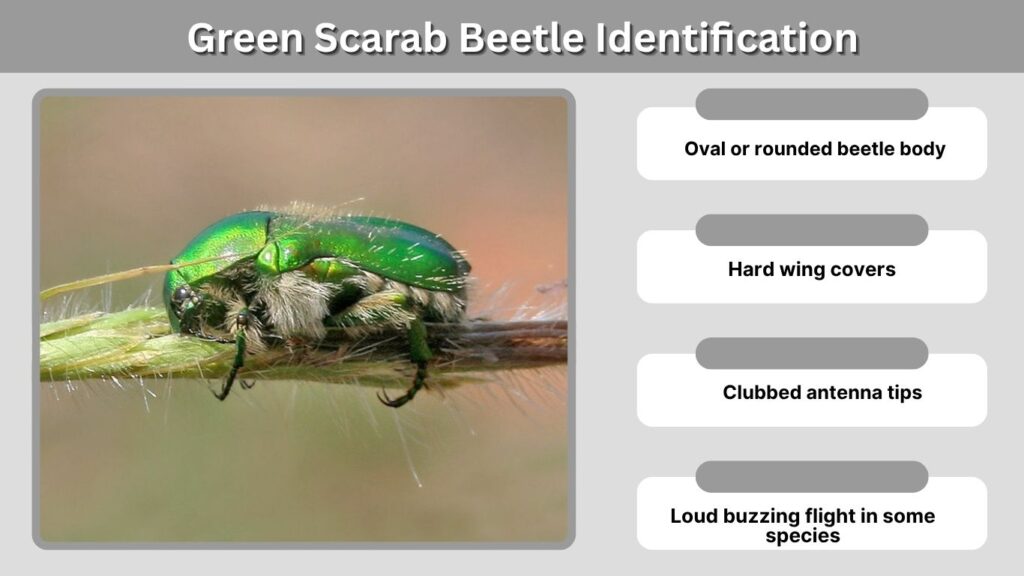
Green scarabs are usually oval, hard-bodied beetles with strong legs and clubbed antennae. Many have a shiny green or metallic body, although some have bronze, tan, copper, silver, or gold markings.
Common ID Signs
Look for these features:
- Oval or rounded beetle body
- Hard wing covers
- Metallic green, emerald, bronze, or gold color
- Clubbed antenna tips
- Strong legs for digging or climbing
- Loud buzzing flight in some species
- Adults active in warm months
Green fruit beetles, also called figeater beetles or western green June beetles, are scarabs in the family Scarabaeidae. They are often metallic green and may be seen around ripe fruit, compost, and fermenting odors.
Types of Green Scarab Beetles
Several beetles can match the phrase “green scarab beetle.” Some are harmless visitors, while others may be minor garden or fruit pests.
Green June Beetle
The green June beetle is a large green scarab often seen flying low over lawns in summer. NC State Extension notes that green June beetles are commonly seen flying near the ground from mid to late summer, and the larvae feed on rotting organic matter.
Adults may feed on ripe or damaged fruit. In some areas, they can be occasional pests of figs, grapes, peaches, and other soft fruits.
Figeater Beetle
The figeater beetle, or green fruit beetle, is common in parts of the western United States, especially California. UC Agriculture and Natural Resources describes it as a large green scarab with matte metallic green coloration above, tan edging on the wing covers, and a bright metallic green underside.
Jewel Scarab Beetle
Jewel scarabs belong to the genus Chrysina. The University of Nebraska’s scarab guide says Chrysina species are called jewel scarabs because of their brilliant iridescent and metallic colors.
Some jewel scarabs are emerald green, while others are silver, gold, or striped. They are especially famous among insect lovers and collectors because they look like polished metal.
Japanese Beetle
Japanese beetles are smaller than many green June beetles. They have an iridescent green head and body, copper-colored wing covers, and white hair tufts along the sides of the abdomen.
They are important garden pests in many areas because adults feed on leaves, flowers, and fruit, often leaving skeletonized leaf damage.
Green Scarab Beetle Habitat
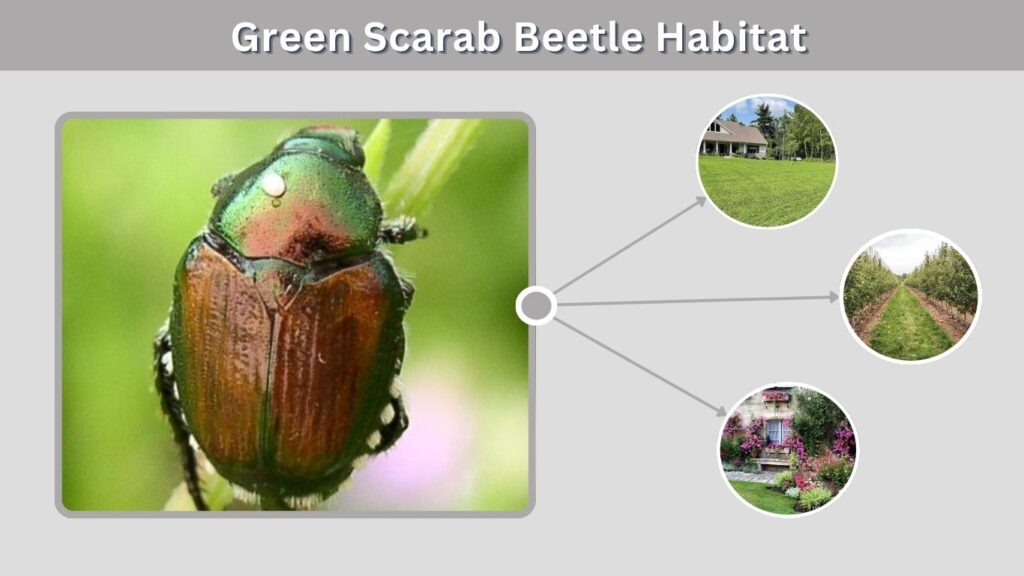
Green scarab beetles live in many habitats, depending on the species. Some are found in lawns, gardens, orchards, compost piles, forests, deserts, and mountain woodlands.
Green fruit beetle grubs are commonly found in compost piles or near ripe and rotting fruit, while the adults are large metallic green beetles often noticed during summer.
Green scarab beetles may be found in:
- Gardens
- Lawns
- Orchards
- Compost piles
- Wooded areas
- Desert regions
- Tropical forests
- Around lights at night
What Do Green Scarab Beetles Eat?
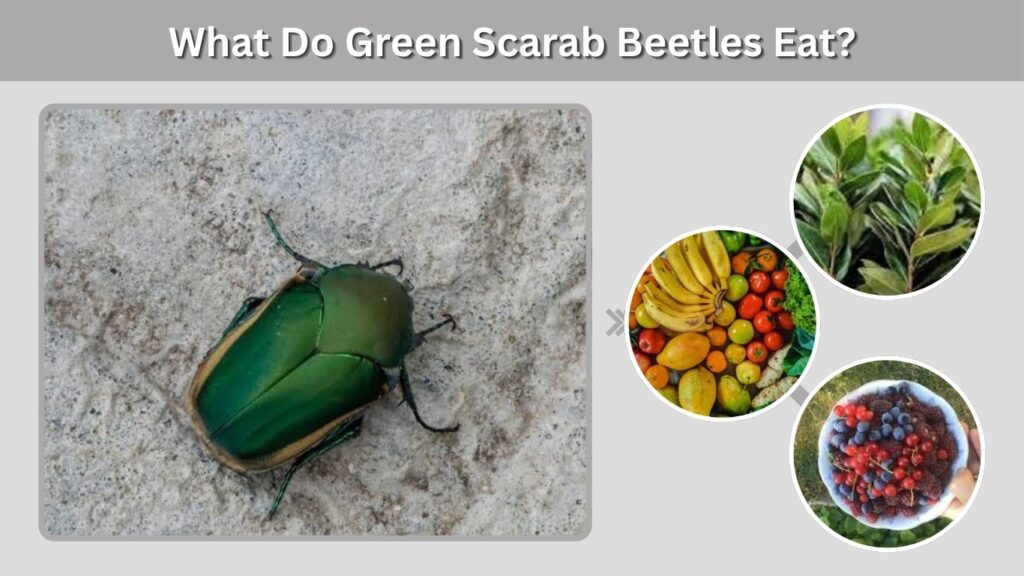
Green scarab beetles eat different foods depending on the species and life stage. Adults and larvae often have different diets.
| Life Stage | Common Foods |
| Adult green June beetle | Ripe fruit, soft fruit, plant material |
| Green fruit beetle adult | Ripe fruit, fermenting fruit odors |
| Scarab grub | Decaying organic matter, compost, roots in some species |
| Jewel scarab adult | Foliage |
| Jewel scarab larva | Rotting wood in known species |
The larvae of green fruit beetles can grow large and are often found in compost or decomposing matter. UC ANR notes that these grubs usually feed on compost, ripe fruit, or rotting fruit and usually do not damage garden plants.
Do Green Scarab Beetles Bite?
Green scarab beetles are not dangerous to humans. They do not sting, and most do not bite people in any meaningful way. A large beetle may scratch its legs if handled, but it is not venomous.
If you pick one up, handle it gently and wash your hands afterward. Avoid crushing or spraying beetles unless they are causing real plant damage.
Green Scarab Beetle Life Cycle
Green scarab beetles go through complete metamorphosis: egg, larva, pupa, and adult. The larval stage is usually a white, C-shaped grub living in soil, compost, rotting wood, or organic material.
NC State Extension notes that green June beetles have one generation per year in North Carolina, with larvae overwintering before becoming adults.
Basic Life Cycle
- Female lays eggs in soil or organic matter
- Eggs hatch into grubs
- Grubs feed and grow underground
- Mature larvae pupate
- Adults emerge during warm weather
- Adults fly, feed, mate, and lay eggs
Green Scarab Beetle Meaning and Symbolism
The scarab beetle is strongly linked with ancient Egyptian symbolism. The Metropolitan Museum of Art explains that a scarab amulet could represent Khepri, the dawn form of the sun god, and was connected with protection and rebirth.
Today, some people see a green scarab beetle as a symbol of renewal, growth, luck, transformation, and protection. These modern “spiritual meanings” are personal interpretations, not scientific facts.
Green Scarab Beetle by Location
Location helps identify the beetle. A green scarab in California may be a figeater beetle, while one in the southeastern United States may be a green June beetle.
California
In California, many large green scarabs are green fruit beetles or figeater beetles. They are sometimes mistaken for Japanese beetles, but UC ANR notes that green fruit beetles are much larger than Japanese beetles and have mostly green wing covers with brown only along the outside margins.
Texas and Arizona
In Texas and Arizona, some green scarabs may be jewel scarabs, including Chrysina species. BugGuide records glorious green scarabs in Arizona and notes they are often seen around dusk or attracted to lights after dark.
Florida and the Southeast
In the southeastern United States, green June beetles are common summer scarabs. They may fly low over turf and visit ripe fruit, especially in warm months.
Are Green Scarab Beetles Good or Bad?
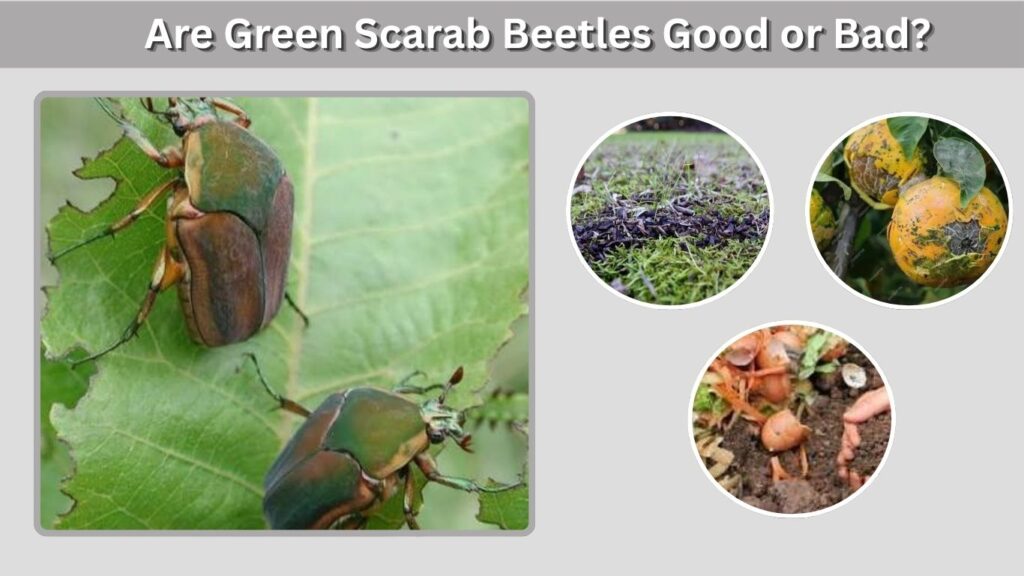
Green scarab beetles can be both helpful and troublesome. Their grubs may help break down decaying organic matter, but some species can damage lawns, fruit, flowers, or leaves when populations are high.
They may be beneficial when they:
- Recycle organic matter
- Feed birds and wildlife
- Add biodiversity to gardens
- Help break down compost material
They may be pests when they:
- Damage ripe fruit
- Feed on flowers
- Skeletonize leaves
- Tunnel in lawns
- Appear in large numbers
FAQs
Is a green June beetle a scarab beetle?
Yes, a green June beetle is a scarab beetle. It belongs to the scarab family and is known for its green body, buzzing flight, and summer activity. Adults may feed on ripe fruit, while larvae often feed on organic matter.
What is the scientific name of a green scarab beetle?
There is no single scientific name for “green scarab beetle.” It may refer to Cotinis nitida, Cotinis mutabilis, Popillia japonica, or Chrysina species. The exact name depends on the beetle’s size, pattern, location, and body shape.
Are green scarab beetles harmful?
Most green scarab beetles are not harmful to people. They do not sting and are not venomous. Some species can damage fruit, flowers, turf, or leaves, but many are simply part of the natural insect community.
What does a green scarab beetle symbolize?
In ancient Egypt, scarabs were linked with Khepri, the rising sun, protection, and rebirth. Modern spiritual meanings often connect green scarabs with growth, renewal, luck, and transformation, but those meanings are symbolic rather than scientific.
What attracts green scarab beetles?
Green scarab beetles may be attracted to ripe fruit, fermenting fruit, compost, manure odors, lights at night, flowers, or suitable soil for laying eggs. The exact attraction depends on the species and season.