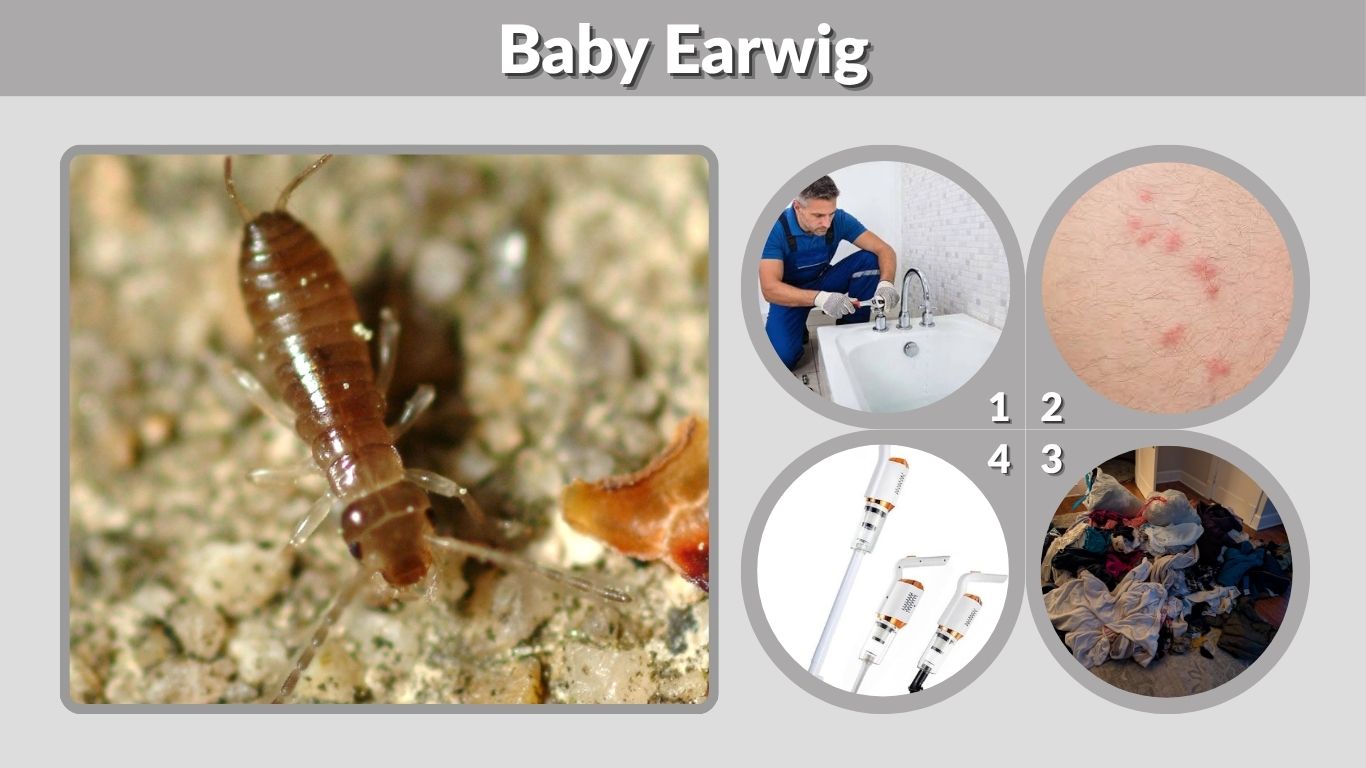
Seeing a tiny pincer-tailed bug indoors can be unsettling, especially if it looks like a baby earwig. The good news is that baby earwigs are usually nuisance insects, not a serious household threat. Still, finding them in bathrooms, bedrooms, basements, or garden beds can signal excess moisture or outdoor hiding spots near your home. This guide explains what baby earwigs look like, where they live, and how to manage them safely.
What Is a Baby Earwig?
A baby earwig is not a larva or worm-like stage. It is called a nymph, which means it looks like a smaller, softer version of an adult earwig. Earwigs go through gradual metamorphosis, so they develop from egg to nymph to adult instead of passing through a caterpillar-like larval stage.
Baby earwigs often stay hidden in damp, dark areas. Outdoors, they live under mulch, stones, logs, leaf piles, flowerpots, and garden debris. Indoors, they are more likely to appear in bathrooms, kitchens, laundry rooms, basements, garages, and around doors or windows where moisture is present.
What Are Baby Earwigs Called?
Baby earwigs are called earwig nymphs. The word “nymph” is used for young insects that resemble adults but are not fully mature. Nymphs are usually smaller, paler, wingless, and softer-bodied than adults.
They grow by molting, which means they shed their outer skin several times before becoming mature adult earwigs. As they grow, their color darkens, their body becomes firmer, and their pincers become more noticeable.
Are Baby Earwigs the Same as Larvae?
No. “Baby earwig larvae” is a common search phrase, but it is not technically correct. Earwigs do not have a true larval stage like beetles, flies, or moths. Their young are nymphs.
This matters because identification becomes easier. If the insect looks like a tiny adult earwig with pincers at the back, it is more likely an earwig nymph. If it looks like a soft, worm-like grub with no pincer-like tail, it is probably something else.
What Do Baby Earwigs Look Like?
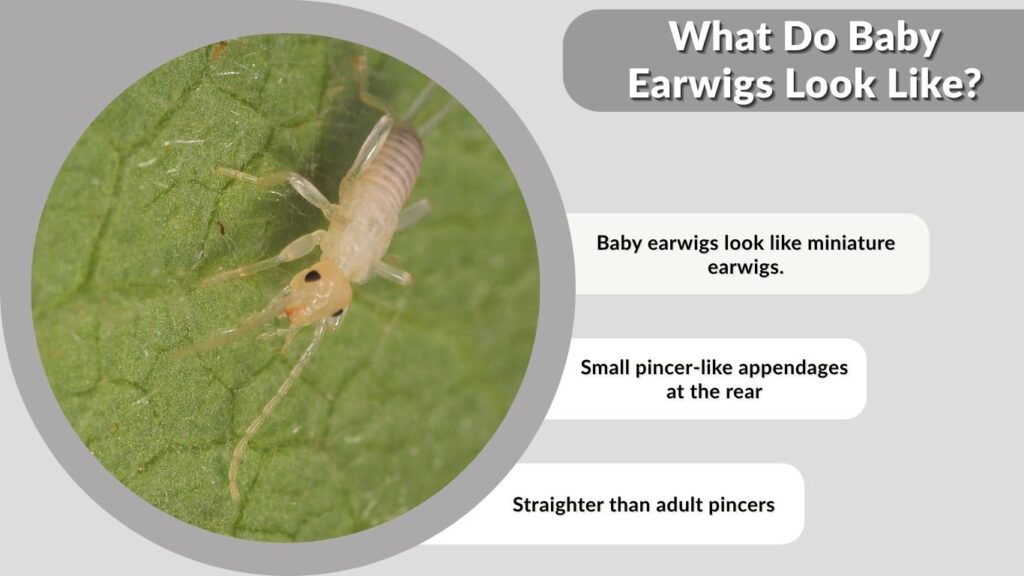
Baby earwigs look like miniature earwigs. They have long, narrow bodies, six legs, antennae, and small pincer-like appendages at the rear. Newly hatched nymphs may appear pale, white, cream, yellowish, or translucent. As they mature, they become tan, brown, reddish-brown, or dark brown.
The most important feature is the pair of rear pincers, also called cerci. Even young earwigs usually show some form of these tail-end pincers, although they may be smaller and straighter than adult pincers.
Baby Earwig Identification Table
| Feature | Baby Earwig Appearance | What It Means |
| Body shape | Long, narrow, and flattened | Helps them hide in cracks and damp spaces |
| Color | White, cream, tan, or light brown when young | They darken as they mature |
| Legs | Six visible legs | Confirms it is an insect, not a worm |
| Antennae | Long and thin | Used to explore dark spaces |
| Pincers | Small rear pincers | Main clue for earwig identification |
| Wings | Usually absent or undeveloped | Nymphs are not mature adults yet |
| Size | Very small at first, then larger after molts | Size changes as they grow |
Are Baby Earwigs White?
Yes, baby earwigs can look white or pale when they first hatch or after molting. This is one reason people often mistake them for termites, silverfish, or other tiny household insects.
However, baby earwigs usually have a longer, flatter body and small rear pincers. Termites do not have earwig-style pincers. Silverfish are tapered and have long tail filaments instead of pincers. A pale color alone is not enough for identification, so always check body shape and tail features.
Baby Earwig vs Other Household Bugs
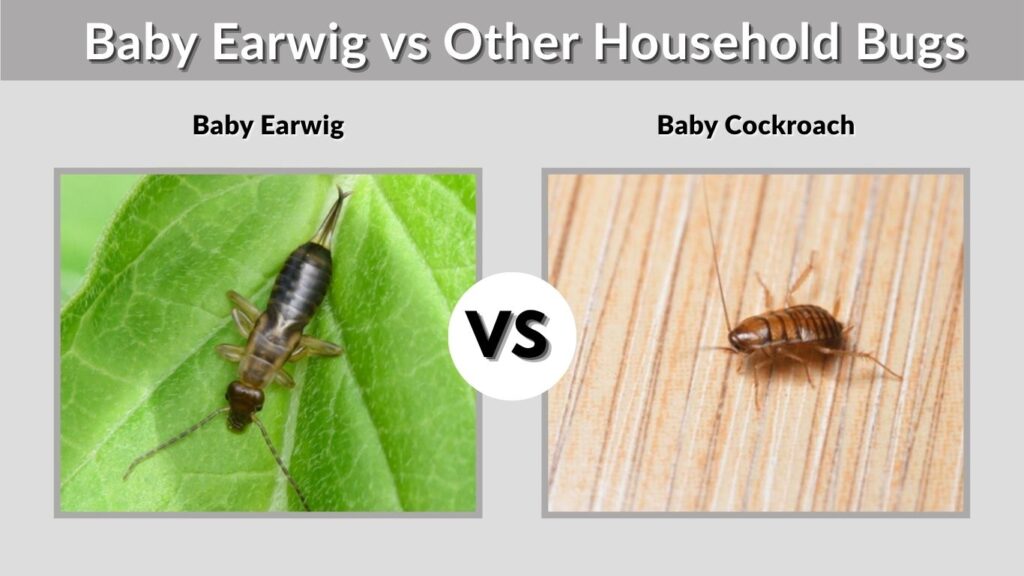
Many people search for “baby earwig or termite,” “baby earwig vs cockroach,” or “bed bug nymph baby earwig” because several small insects can look similar at first glance. The easiest way to identify a baby earwig is to look for the rear pincers.
Baby Earwig or Termite
A baby earwig has pincers at the back of its body. A termite does not. Termite workers are usually pale, soft-bodied, and more uniform in shape. They may be found near damaged wood, mud tubes, or moisture-damaged structures.
Key differences include:
- Baby earwigs have rear pincers; termites do not.
- Baby earwigs are usually more flattened and active at night.
- Termites are more associated with wood damage and colonies.
- Earwigs may enter homes accidentally from damp outdoor areas.
If you see pale insects near damaged wood, hollow-sounding boards, or mud tubes, treat it as a possible termite issue and get a professional inspection.
Baby Earwig vs Baby Cockroach
A baby cockroach, or cockroach nymph, can be brown, flat, and fast-moving, which makes confusion possible. However, cockroach nymphs do not have pincer-like cerci at the rear. They usually have an oval body shape, while earwigs are longer and narrower.
Baby cockroaches are also more likely to appear near food, grease, trash, cabinets, appliances, and warm indoor hiding places. Baby earwigs are more closely linked to damp areas, mulch, bathrooms, basements, and outdoor entry points.
Baby Earwig vs Silverfish
Silverfish and baby earwigs both like moisture, so they may appear in bathrooms, basements, and laundry areas. Silverfish have a teardrop-shaped body and three long tail-like filaments. Baby earwigs have pincers instead.
Silverfish also move in a wiggling, fish-like motion. Earwigs move more directly and may raise or curve their pincers when disturbed.
Baby Earwig vs Bed Bug Nymph
Bed bug nymphs are small, flat, oval, and usually found near sleeping areas, mattress seams, bed frames, or furniture cracks. They do not have pincers. A baby earwig in bed may be alarming, but one earwig on bedding does not mean you have bed bugs.
Look for bed bug signs such as dark fecal spots, shed skins, bites in clusters, or insects hiding near mattress seams. If the insect has rear pincers, it is not a bed bug.
Why Are Baby Earwigs in the House?
Baby earwigs enter homes mainly because they are looking for moisture, shelter, or darkness. They may also wander indoors by accident when outdoor populations are high. Finding one or two baby earwigs in a house is usually not a major concern, but repeated sightings can point to damp conditions or entry gaps.
Common reasons include:
- Wet mulch touching the foundation
- Leaky pipes or damp bathroom corners
- Gaps under doors or around windows
- Cracks in the foundation or siding
- Piles of leaves, wood, or debris near the house
- Outdoor lights attracting insects close to entry points
- Overwatered garden beds or potted plants
Baby earwigs in bathrooms are common because bathrooms provide moisture and hiding spots. Baby earwigs in bedrooms are less common, but they may wander in from nearby baseboards, windows, laundry piles, or damp walls.
Does One Baby Earwig Mean Infestation?
Not always. A single baby earwig may simply have wandered indoors. However, several baby earwigs in the house can suggest a nearby nesting area, excess moisture, or a larger outdoor population.
Signs of a possible earwig problem include repeated sightings, clusters of tiny earwigs, earwigs around damp baseboards, and many adult earwigs outside near mulch or foundation areas. Indoors, earwigs usually do not establish long-term colonies the way termites, ants, or cockroaches might. They survive best where there is moisture.
Are Baby Earwigs Dangerous?
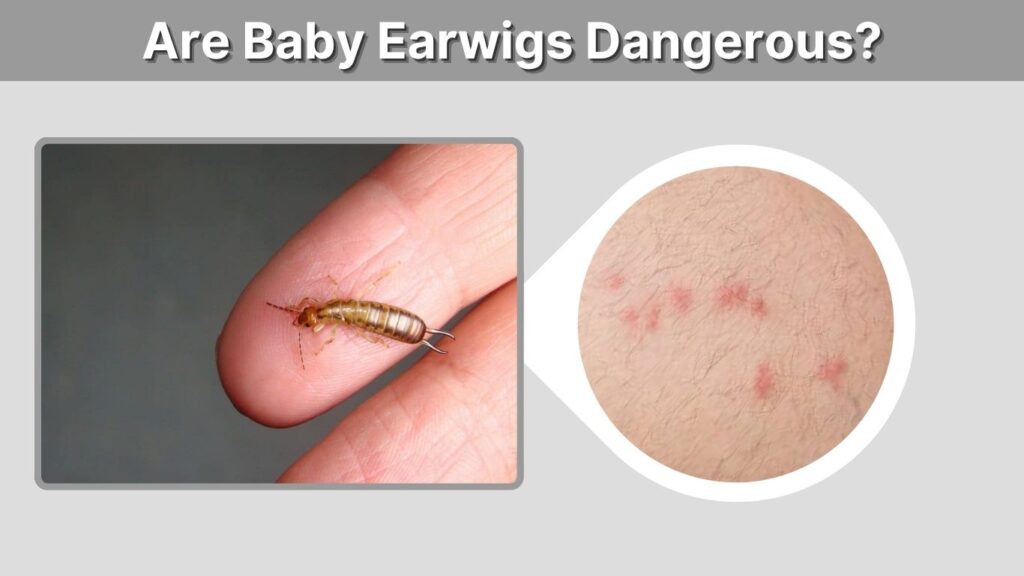
Baby earwigs are not poisonous, and they are not known for spreading serious disease inside homes. Their pincers can look scary, but young earwigs are small and not aggressive. They may pinch if trapped, crushed, or handled, but this is usually mild.
The bigger issue is nuisance and moisture. If you keep seeing baby earwigs indoors, focus on why they are there. Moisture problems can attract other pests and may also point to leaks, poor ventilation, or drainage issues.
Do Baby Earwigs Bite?
Baby earwigs generally do not bite people. They may pinch with their rear pincers if they feel threatened. A baby earwig pinch is usually minor because the insect is small.
If skin becomes red or irritated after contact with any insect, wash the area with soap and water. Avoid scratching. Seek medical advice if swelling, pain, or signs of infection develop.
Are Earwigs Harmful to Babies?
Earwigs are not considered dangerous to human babies in the way stinging insects, disease-carrying pests, or venomous spiders can be. However, you should still keep insects out of cribs, bedding, and play areas.
If you find a baby earwig in a nursery, remove it, check for moisture, seal entry gaps, and clean nearby clutter. Avoid spraying strong pesticides around babies, toys, bedding, or feeding areas unless a licensed professional recommends a safe treatment plan.
What Do Baby Earwigs Eat?
Baby earwigs eat many of the same things adult earwigs eat. Outdoors, they may feed on decaying organic matter, soft plant tissue, seedlings, flowers, fruit, and small insects. They can be pests in gardens, but they can also help by eating aphids and other small pests.
Their diet may include:
- Decaying leaves and plant material
- Soft fruits and flower petals
- Seedlings and tender garden plants
- Aphids, mites, and small insect eggs
- Organic debris in damp outdoor areas
Indoors, earwigs do not usually find ideal food sources. That is why indoor control often works best when you reduce moisture and block entry points rather than only killing the insects you see.
How to Get Rid of Baby Earwigs
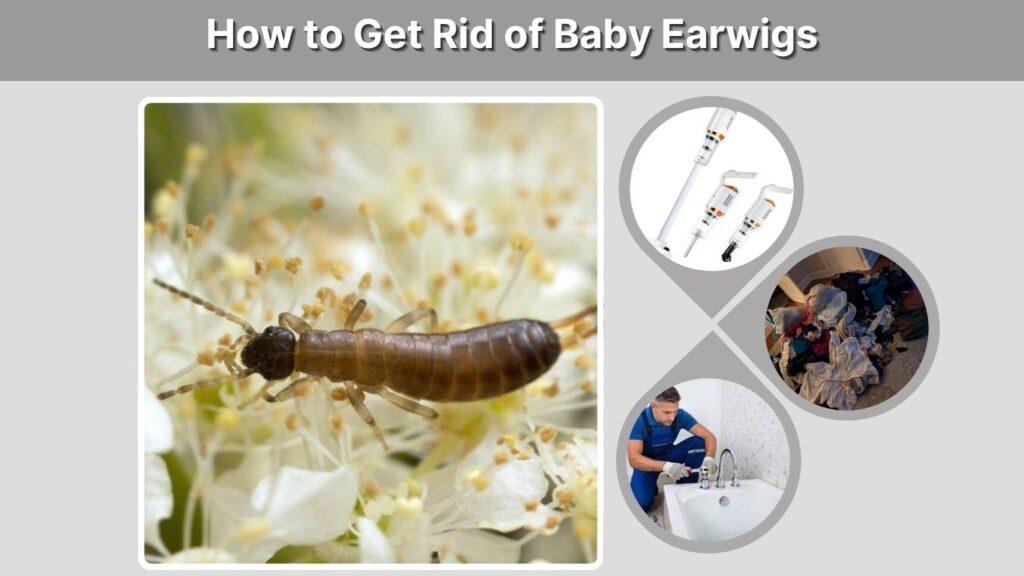
The best way to get rid of baby earwigs is to make your home and yard less attractive to them. Because earwigs like damp, protected spaces, moisture control is the first step.
Start with simple non-chemical methods before using pesticides. This is especially important in homes with children, pets, or sensitive indoor areas.
Indoor Control Steps
Use these steps if you see baby earwigs in your house:
- Vacuum visible earwigs and empty the vacuum outdoors.
- Fix leaking pipes, faucets, and damp bathroom areas.
- Use a dehumidifier in basements or humid rooms.
- Seal gaps under doors, around windows, and near utility lines.
- Install door sweeps where light shows under exterior doors.
- Remove damp cardboard, laundry piles, and clutter from floors.
- Keep sinks, tubs, and shower areas dry overnight when possible.
Avoid leaving wet towels, bathmats, or clothing on the floor. These create hiding places that can attract moisture-loving insects.
Outdoor Prevention Tips
Most baby earwig problems begin outside. Reducing outdoor hiding places can lower the number that wander indoors.
Helpful steps include:
- Pull mulch several inches away from the foundation.
- Remove leaf piles, boards, logs, and stones near the house.
- Improve drainage around the foundation.
- Avoid overwatering garden beds close to doors and windows.
- Trim dense groundcover near exterior walls.
- Store firewood off the ground and away from the home.
- Check potted plants before bringing them indoors.
You can also use simple traps outdoors. Rolled damp newspaper, cardboard tubes, or shallow oil traps may collect earwigs overnight. Dispose of trapped earwigs in the morning.
When to Call a Pest Control Professional
Most baby earwig sightings can be handled with moisture control, cleaning, sealing, and outdoor habitat reduction. However, professional help may be useful if you see large numbers indoors, cannot find the source, or are unsure whether the insects are earwigs.
Call a professional if:
- You repeatedly find baby earwigs in multiple rooms.
- You suspect termites or cockroach nymphs instead of earwigs.
- There is moisture damage, mold, or wood damage.
- Earwigs keep returning after prevention steps.
- You need child-safe or pet-safe treatment guidance.
- Outdoor populations are damaging garden plants.
A pest professional can confirm the insect, locate entry points, and recommend targeted treatment. Correct identification matters because termite, cockroach, silverfish, bed bug, and earwig control strategies are very different.
FAQs
What does a baby earwig look like?
A baby earwig looks like a tiny version of an adult earwig. It has a long, narrow body, six legs, antennae, and small rear pincers. Young nymphs may be white, cream, or pale brown at first, then darken as they grow and molt.
What are baby earwigs called?
Baby earwigs are called nymphs. They are not larvae because earwigs do not go through a worm-like larval stage. Instead, they hatch looking somewhat like small adults and gradually mature through several molts before becoming full-grown earwigs.
Why do I have baby earwigs in my house?
Baby earwigs usually enter homes because of moisture, shelter, or nearby outdoor hiding places. Bathrooms, basements, kitchens, laundry rooms, and garages are common spots. Wet mulch, leaf piles, foundation gaps, and leaky pipes can make your home more attractive to them.
Do baby earwigs bite or pinch?
Baby earwigs are not aggressive and usually do not bite. They may use their small rear pincers to pinch if handled or trapped, but the pinch is typically mild. Wash the area with soap and water if irritation occurs after contact.
How do I get rid of baby earwigs naturally?
Reduce moisture, vacuum visible insects, seal entry gaps, and remove damp clutter. Outdoors, move mulch away from the foundation, clear leaf piles, improve drainage, and avoid overwatering. Simple traps, such as rolled damp newspaper or shallow oil traps, can also help reduce numbers.