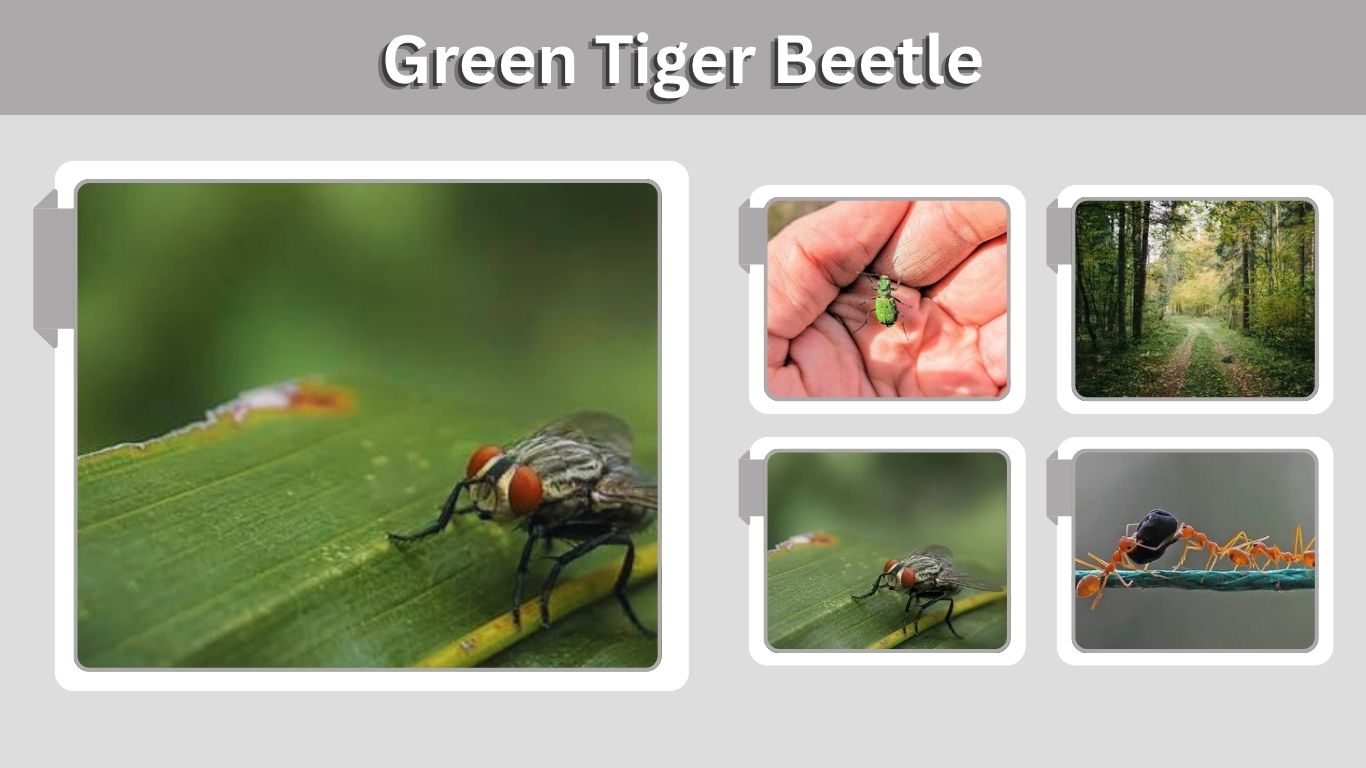
The green tiger beetle is a shiny, fast-running predatory beetle known for its metallic green body, long legs, large eyes, and powerful jaws. In the UK and Europe, the name often refers to Cicindela campestris. In North America, many people searching for a green tiger beetle are looking at the six-spotted tiger beetle, Cicindela sexguttata. Both are active hunters and are usually seen on sunny paths, sandy ground, grassland, woodland edges, and open trails.
What Is a Green Tiger Beetle?
A green tiger beetle is not a plant-eating garden pest. It is a predatory ground beetle that hunts small insects and other invertebrates. The UK green tiger beetle is commonly found in heathland, moorland, sandy grassland, and sand dunes, where it runs quickly across bare ground to catch prey such as ants, spiders, and caterpillars.
In the United States and Canada, the phrase “green tiger beetle” often points to the six-spotted tiger beetle, a bright metallic green beetle that may have six white spots on its wing covers. However, the number of spots can vary, and some individuals may have fewer spots or almost none.
| Common search name | Likely species | Main region | Key look |
| Green tiger beetle | Cicindela campestris | UK, Ireland, Europe | Green body with pale spots |
| Six-spotted green tiger beetle | Cicindela sexguttata | Eastern North America | Metallic green, often six white spots |
| Emerald green tiger beetle | Usually C. sexguttata or similar species | North America | Bright emerald body |
| Metallic green tiger beetle | General description | Worldwide | Shiny green tiger beetle appearance |
Green Tiger Beetle Identification
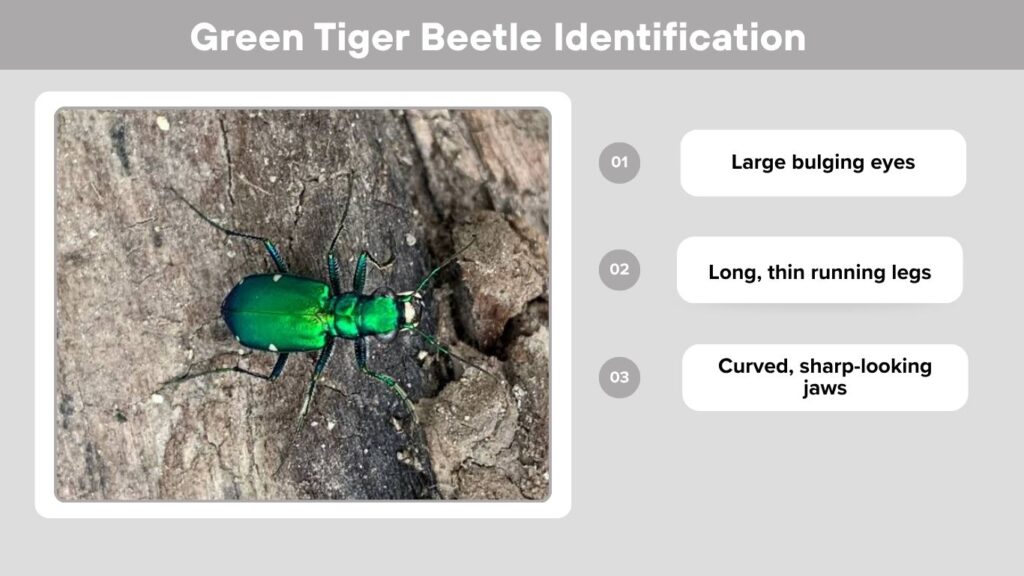
Green tiger beetles are easy to notice because they look like tiny metallic predators. They often run ahead of you on sunny paths, stop suddenly, then fly a short distance when disturbed.
Key Features
- Bright metallic green, blue-green, or emerald body
- Large bulging eyes
- Long, thin running legs
- Curved, sharp-looking jaws
- Pale or white spots on the wing covers in many species
- Fast, stop-start movement on the ground
- Short flight when approached too closely
The six-spotted tiger beetle is usually 10–14 mm long, or about half an inch. It is bright green, sometimes bluish, with white spots near the edges of the wing covers, though spot number can vary.
Green Tiger Beetle vs Emerald Ash Borer
Some people confuse a green tiger beetle with the emerald ash borer because both can be shiny green. The easiest difference is body shape and behavior. A green tiger beetle has long legs, big eyes, and obvious jaws. It runs quickly on open ground. Emerald ash borers are slimmer, more bullet-shaped beetles and are usually associated with ash trees, not hunting on bare paths.
Where Do Green Tiger Beetles Live?
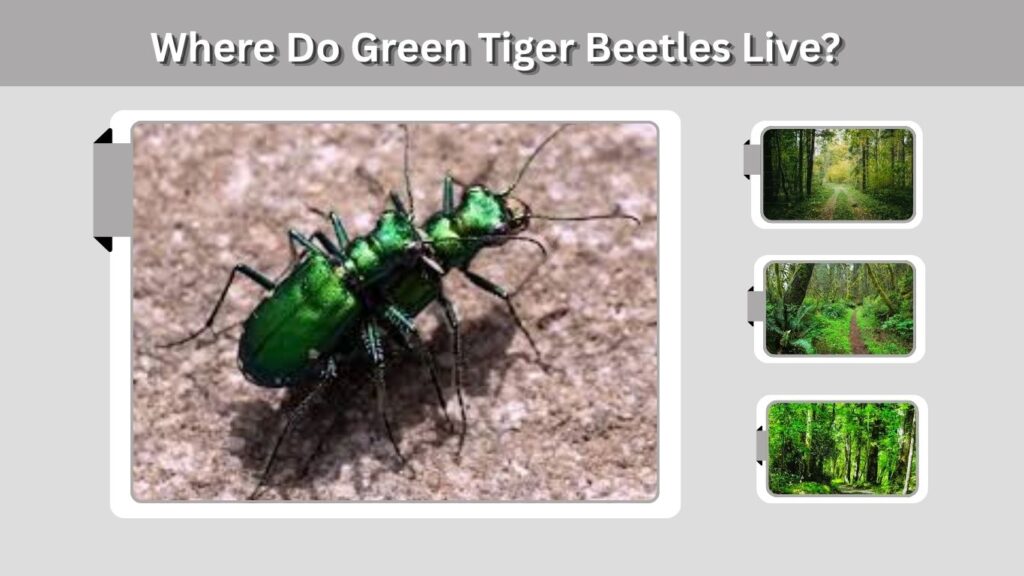
Green tiger beetles prefer open, sunny places where they can run, warm up, and spot prey. They are often found on bare or sandy soil because open ground helps them move quickly and hunt.
In Britain, the green tiger beetle is associated with heathland, moorland, sandy grassland, sand dunes, hillsides, and brownfield sites. Bare ground is important because warmth helps the beetle stay active, and warm soil can help larvae develop more quickly.
In North America, the six-spotted tiger beetle is mostly an eastern species. BugGuide lists its range as eastern North America, from areas including Texas, Georgia, Maine, Nebraska, and nearby Canada, while noting it is absent from the Gulf Coast area.
Common Places to Find Them
- Sunny woodland paths
- Forest edges
- Sandy trails
- Heathlands and moorlands
- Sand dunes
- Open grassland
- Bare patches of soil
- Garden paths near wooded areas
- Logs, trails, and sunny forest floors
NatureServe describes the six-spotted tiger beetle as a species of loamy to sandy soil in eastern hardwood forests and sometimes open pine forests, often seen along trails, forest edges, and sunlit patches on the forest floor.
What Do Green Tiger Beetles Eat?
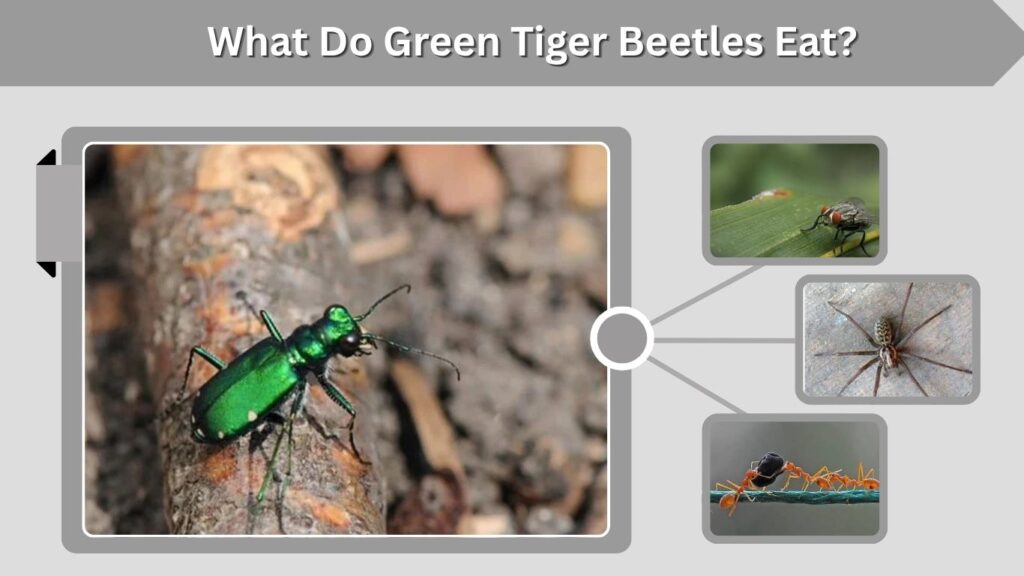
Green tiger beetles are carnivores. They do not normally eat leaves, clothes, stored food, or wooden structures. Adults hunt small moving prey on the ground.
Their diet may include:
- Ants
- Small flies
- Spiders
- Caterpillars
- Small beetles
- Other soft-bodied insects
- Tiny ground-dwelling invertebrates
The UK green tiger beetle is known to run across the ground after invertebrate prey, including spiders, caterpillars, and ants. Six-spotted tiger beetles also hunt on paths, trails, sidewalks, roadsides, and logs, where small insects are available.
Are Green Tiger Beetles Dangerous?
Green tiger beetles are not dangerous to humans. They are predators, but their prey is much smaller than people. They do have strong jaws, so they may pinch or bite if picked up and handled roughly. A green tiger beetle bite may feel like a small pinch, but it is not considered medically dangerous.
They are not known for spreading disease, damaging homes, or attacking people. The best response is simple: do not grab them. Watch them on the ground, take a photo, and let them continue hunting.
Are Green Tiger Beetles Poisonous?
Green tiger beetles are not poisonous in the way wasps, spiders, or venomous animals are often discussed. Their main defense is speed. When disturbed, they usually run or fly away.
Green Tiger Beetle Larvae
Green tiger beetle larvae look very different from adults. They are grub-like predators that live in vertical burrows in soil. Instead of running after prey like adults, larvae wait near the burrow entrance and ambush small insects that pass by.
Tiger beetle larvae have hooks on the back of the abdomen that help anchor them inside the burrow while they pull prey downward. Some species may stay in the larval stage for a long time, depending on species and conditions.
Green Tiger Beetle Life Cycle
The life cycle has four main stages:
- Egg — laid in suitable soil
- Larva — lives in a burrow and ambushes prey
- Pupa — transforms underground
- Adult — emerges as a fast-running hunting beetle
Adults are usually the stage people notice because they are bright, shiny, active in sunshine, and quick to fly when approached.
Green Tiger Beetle Speed and Running Behavior
Green tiger beetles are famous for their speed. They often sprint a short distance, stop, look around, then sprint again. This stop-and-go movement helps them chase prey while keeping track of their surroundings.
Tiger beetles have excellent eyesight, but when they run extremely fast, they may need to pause briefly to reorient themselves. This is one reason people often see them move in quick bursts instead of one long continuous run.
Some tiger beetles are among the fastest insects relative to body size. The Australian tiger beetle Cicindela hudsoni, for example, has been reported at about 9 km/h, which is extremely fast for such a small insect. That record does not mean every green tiger beetle runs at the same speed, but it shows why tiger beetles as a group are famous for fast movement.
Green Tiger Beetle UK, Ireland, and Scotland
In the UK, the green tiger beetle usually means Cicindela campestris. It is one of the more noticeable tiger beetles because of its bright green body and active behavior in sunny weather. Wildlife groups describe it as a common ground beetle of open habitats such as heathland, moorland, sandy grassland, and dunes.
Searches such as green tiger beetle UK, green tiger beetle Scotland, green tiger beetle Ireland, and green tiger beetle UK distribution usually come from people trying to identify a beetle seen on a path or in open countryside. In these regions, check sunny, sandy, open ground first.
Green Tiger Beetle USA, Ontario, Texas, Michigan, Indiana and Illinois
In North America, many searchers are seeing the six-spotted green tiger beetle. It is common in many eastern areas and is especially noticeable on woodland trails in spring and early summer. Searches like green tiger beetle Ontario, green tiger beetle Michigan, green tiger beetle Indiana, green tiger beetle Illinois, and green tiger beetle Texas often relate to this species or similar tiger beetles.
The six-spotted tiger beetle is usually found near woods, trails, dirt paths, forest edges, and sunny openings. It may also appear around sidewalks, roads, and logs, especially where prey is available.
Six-Spotted Green Tiger Beetle Facts
The six-spotted tiger beetle is one of the most searched green tiger beetles in North America. Despite its name, it does not always have exactly six spots.
| Feature | Six-spotted green tiger beetle |
| Scientific name | Cicindela sexguttata |
| Size | About 10–14 mm |
| Color | Metallic green, sometimes blue-green |
| Spots | Often six white spots, but number varies |
| Diet | Small insects and other invertebrates |
| Habitat | Woodland trails, forest edges, sandy or loamy soil |
| Danger to humans | Not dangerous; may pinch if handled |
The University of Minnesota notes that six-spotted tiger beetles have long legs, large eyes, and sickle-shaped mandibles, and that the number of white spots can vary from none to several.
Can You Keep or Buy a Green Tiger Beetle?
Some people search for green tiger beetle for sale, but these beetles are not ideal pets. They are fast, active predators that need specific soil, warmth, space, prey, and moisture conditions. Wild individuals are better left in their habitat, where they help control small insects naturally.
A better option is to buy a field guide, macro photo print, insect poster, or beetle identification chart. For live insects, choose captive-bred species from responsible breeders and always check local wildlife rules before collecting or buying any native beetle.
Green Tiger Beetle Facts for Kids
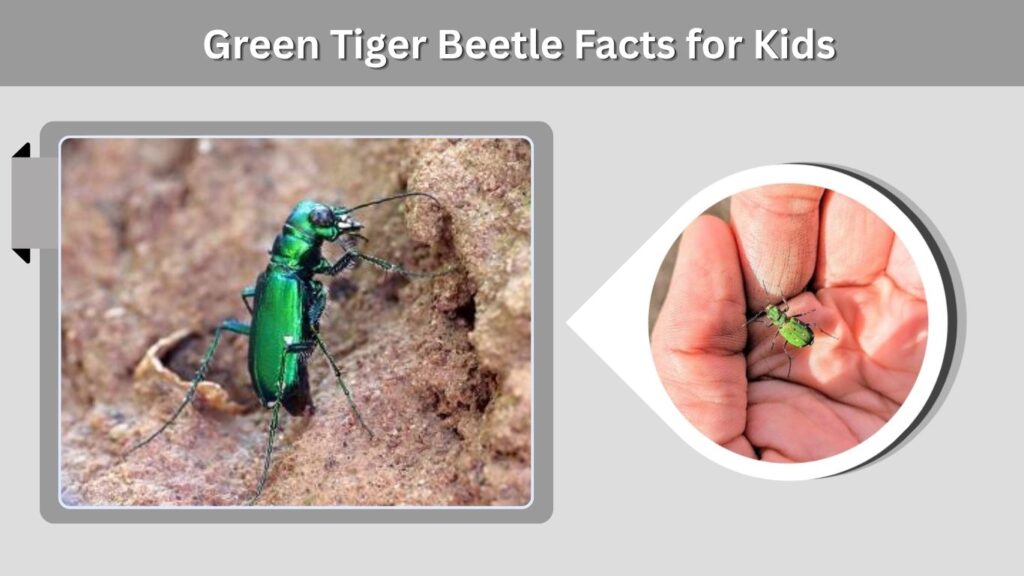
Green tiger beetles are exciting insects for kids to observe because they are colorful and fast.
- They are beetles, not true bugs.
- They are hunters, not plant pests.
- They use big eyes to spot prey.
- They run quickly on sunny ground.
- Their jaws help them catch small insects.
- Their larvae live in tiny soil burrows.
- They usually fly away when scared.
- They are helpful predators in nature.
FAQs
What does a green tiger beetle eat?
A green tiger beetle eats small insects and other invertebrates. Common prey includes ants, spiders, caterpillars, small flies, and other tiny ground-dwelling animals.
Are green tiger beetles dangerous?
No, green tiger beetles are not dangerous to humans. They may pinch with their jaws if handled, but they are not aggressive toward people and usually run or fly away.
Where do green tiger beetles live?
They live in sunny open habitats such as sandy paths, heathland, moorland, grassland, dunes, woodland trails, forest edges, and bare patches of soil.
Is the six-spotted green tiger beetle always six-spotted?
No. The six-spotted tiger beetle often has six white spots, but some individuals may have two, four, eight, or even no visible spots.
Is a green tiger beetle the same as an emerald ash borer?
No. A green tiger beetle is a fast-running predator with long legs, large eyes, and strong jaws. An emerald ash borer is a slimmer wood-boring beetle associated with ash trees.