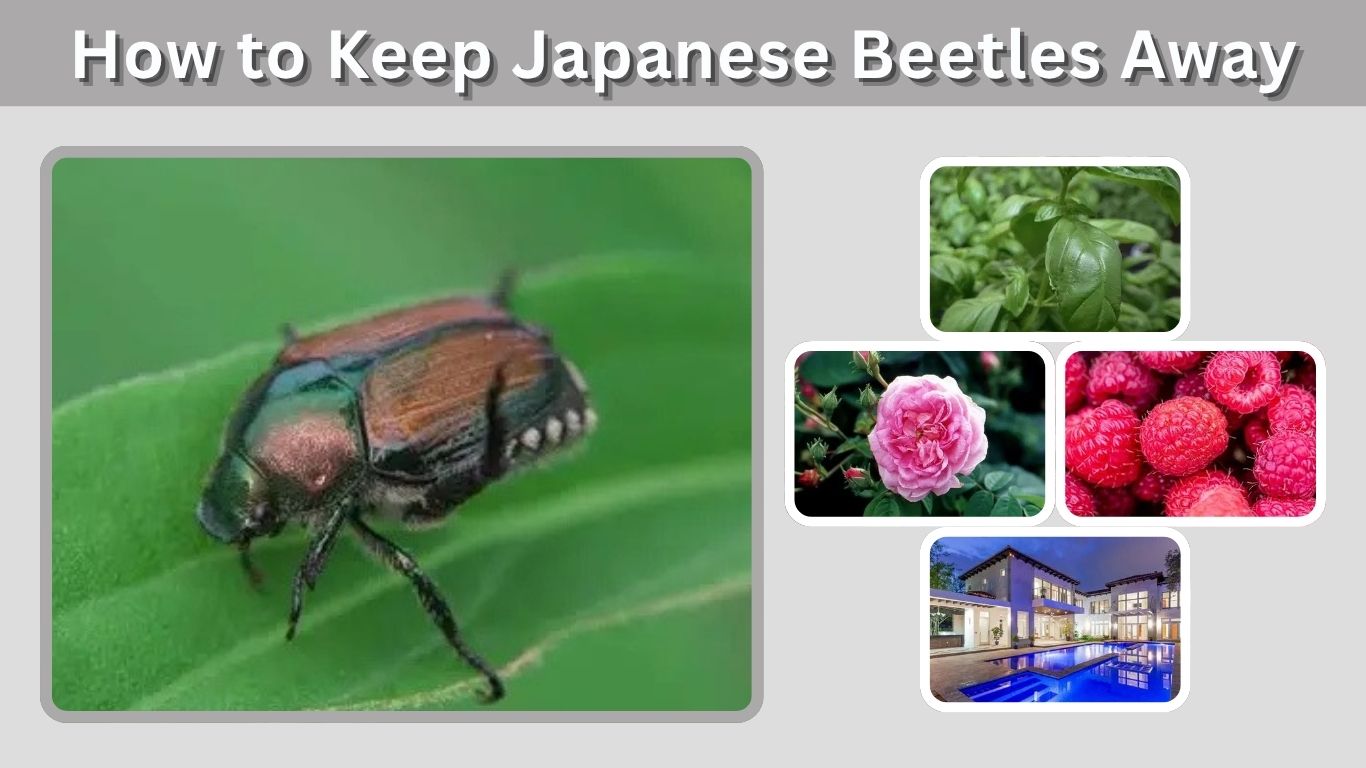
Japanese beetles can quickly damage roses, basil, grapevines, fruit trees, raspberries, and many other garden plants. Their feeding creates ragged flowers and leaves with a lace-like or skeletonized appearance. The best defense is not a single repellent but a combination of early monitoring, daily removal, physical barriers, and careful treatment of valuable plants. Starting as soon as the first beetles appear is especially important because damaged foliage and feeding beetles can attract additional beetles to the area.
How to Identify Japanese Beetles and Their Damage
Adult Japanese beetles are approximately ⅓ to ½ inch long. They have metallic-green heads, copper-brown wing covers, and small white hair patches along the sides and tip of the abdomen. They are most active during summer and frequently gather in groups on preferred plants.
Common Signs of an Infestation
- Metallic-green and copper beetles clustered on plants
- Leaves eaten between the major veins
- Lace-like or skeletonized foliage
- Ragged holes in flowers and buds
- Beetles feeding on soft or ripening fruit
- Brown leaves following heavy feeding
Roses, grapes, apples, crabapples, cherries, plums, raspberries, basil, beans, lindens, and Virginia creeper are among the plants commonly attacked. Healthy mature plants often survive moderate feeding, but young, newly planted, or unhealthy plants can suffer more serious damage.
The Best Ways to Keep Japanese Beetles Away
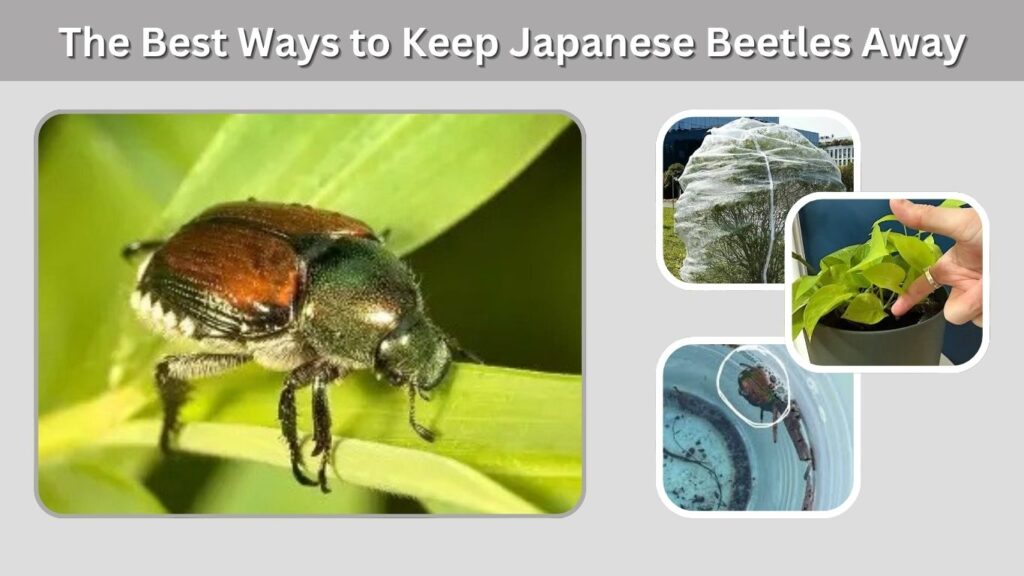
Japanese beetles are strong fliers, so completely preventing them from entering a garden may be impossible. However, consistent action can reduce the number that remain and limit the damage they cause.
1. Begin Checking Plants Early
Inspect vulnerable plants daily once beetles normally begin appearing in your area. Pay particular attention to flowers, new foliage, and the upper surfaces of leaves.
Remove the first beetles before large groups form. Feeding damage releases plant odors that attract additional beetles, making an early response more effective than waiting until the infestation becomes severe.
2. Handpick Beetles Into Soapy Water
Handpicking is one of the most practical nonchemical controls for home gardens. Hold a container of water mixed with a small amount of dish soap beneath the affected plant, then knock or pick the beetles into it.
Morning and evening are usually the easiest times because cooler beetles are less active and more likely to fall instead of flying away. Repeat the process daily during peak activity.
Use soapy water as a collection bucket, not automatically as a plant spray. Homemade soap mixtures can burn leaves and harm beneficial insects because household detergents are not formulated or tested for garden use.
3. Protect Plants With Fine Netting
Fine insect netting can prevent adult beetles from reaching small shrubs, herbs, vegetables, and young fruit plants. Secure the edges so beetles cannot crawl underneath.
Do not cover flowering plants that require bees or other insects for pollination. Wait until pollination is complete and fruit begins developing, or remove the cover temporarily when pollinators need access.
4. Grow Less-Preferred Plants
Japanese beetles feed on hundreds of plant species, but some plants are damaged less frequently. When replacing severely affected landscape plants, consider alternatives such as boxwood, chrysanthemum, conifers, forsythia, lilac, magnolia, oak, redbud, rhododendron, or yew.
This method will not remove beetles already present, but it can make a landscape less attractive and reduce the amount of annual treatment needed.
Protecting Specific Plants
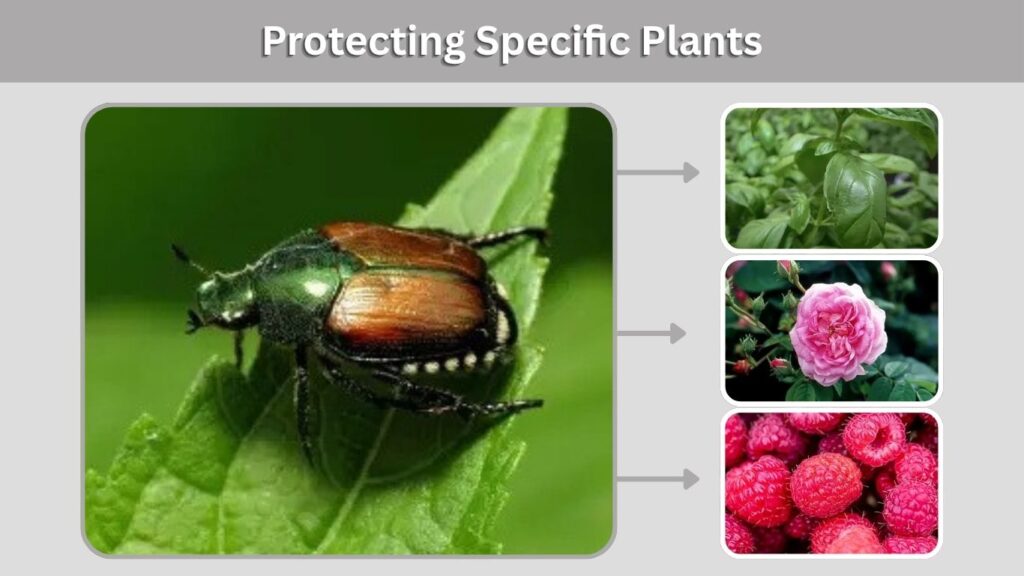
Different plants require slightly different strategies depending on their size, flowering stage, and whether they produce edible crops.
How to Keep Japanese Beetles Away From Roses
Roses are among the beetles’ preferred foods. Inspect blossoms and upper leaves every morning and remove beetles immediately. Cut off badly damaged flowers because their scent and feeding injuries may continue attracting beetles.
Fine mesh can protect a small rose bush when it is not dependent on insect pollination. Insecticides should be used cautiously because flowering roses attract bees and other beneficial insects.
How to Keep Japanese Beetles Away From Basil
Check basil daily and knock beetles into soapy water. Harvest usable leaves regularly and remove severely damaged foliage. Fine netting is often practical because basil is relatively small.
When applying any pesticide to basil or another edible herb, confirm that the product label specifically permits use on that plant. Follow the required waiting period between application and harvest.
Fruit Trees, Grapevines and Raspberries
Young trees and vines deserve priority because heavy defoliation can interfere with establishment and growth. Handpick beetles from reachable branches, protect smaller plants with netting after pollination, and harvest ripe fruit promptly.
Established plants may tolerate some leaf loss, but young grapevines and fruit plants can become stressed by severe defoliation. Regularly removing beetles from raspberry foliage is recommended during their summer activity period.
Large trees are difficult to treat safely and thoroughly. Consider consulting a licensed tree-care or pest-control professional rather than attempting to spray an entire canopy yourself.
Should You Use Japanese Beetle Traps?
Japanese beetle traps are generally a poor choice for protecting a home garden. Their floral scents and pheromone lures can attract more beetles than the trap captures, increasing feeding damage to nearby plants.
Traps are mainly useful for monitoring whether beetles have arrived. Recent extension guidance recommends removing monitoring traps after the first beetles are detected and placing them well away from vulnerable crops.
Will Treating Lawn Grubs Keep Beetles Away?
Japanese beetle larvae live underground and feed mainly on grass roots. However, killing grubs in one lawn usually does not prevent adults from reaching nearby plants because beetles can fly in from surrounding untreated areas. Grub treatments should therefore be used to protect turf with confirmed grub damage—not as the primary defense for roses or garden plants.
Commercial milky-spore products are widely promoted as a natural solution, but modern university trials have not shown consistent benefits. Beneficial nematodes may reduce grubs under suitable conditions, although their performance can also be inconsistent.
Using Insecticides Safely
Consider insecticides only when handpicking and barriers cannot adequately protect a valuable plant. Select a product labeled for Japanese beetles and for the exact plant being treated.
Important precautions include:
- Follow every instruction on the label.
- Never exceed the recommended application rate.
- Avoid spraying open flowers or active pollinators.
- Observe harvest waiting periods on edible plants.
- Avoid spraying during windy or extremely hot conditions.
- Keep treatments away from pools, ponds, and other water sources.
Some contact products require direct coverage of the beetle and repeated applications. Even naturally derived products can harm bees or other beneficial insects, so “natural” does not automatically mean harmless.
Keeping Japanese Beetles Away From the House or Pool
Japanese beetles are outdoor plant feeders and do not normally establish household infestations. Remove attractive, heavily damaged vegetation near doors and repair window screens if beetles occasionally enter.
Around a swimming pool, use a cover when the pool is not in use, skim fallen beetles regularly, and keep flowering or highly attractive host plants farther from the water. Avoid placing Japanese beetle traps near the pool because their lures may attract more beetles to the area.
Seasonal Japanese Beetle Prevention Plan
| Time | Recommended action |
| Before beetles appear | Prepare netting and inspect preferred plants |
| First beetle sighting | Begin daily handpicking immediately |
| Peak summer activity | Continue removal and protect valuable plants |
| After pollination | Cover suitable fruiting plants with fine netting |
| Late summer | Remove damaged flowers and harvest ripe produce |
| Lawn-grub season | Treat only when damaging grubs are confirmed |
FAQs
What naturally keeps Japanese beetles away?
Daily handpicking and fine insect netting are among the most dependable nonchemical methods. Planting less-preferred species may also reduce future damage. Homemade repellent sprays are often unreliable and may injure plants or beneficial insects.
Does soapy water keep Japanese beetles off plants?
A bucket of soapy water effectively kills beetles that are picked or knocked into it. Spraying household dish soap directly on plants is less reliable and may burn foliage. Use a properly labeled insecticidal soap only when its directions include the intended plant and pest.
How do I keep Japanese beetles from eating my roses?
Inspect roses every morning, knock beetles into soapy water, remove ruined blossoms, and use fine netting when practical. Avoid placing pheromone traps near the roses because they may draw additional beetles into the garden.
What smell do Japanese beetles hate?
No single garden scent reliably prevents an infestation. Beetles respond strongly to odors from preferred plants, damaged foliage, flowers, and other beetles. Early removal and physical exclusion are more dependable than planting strongly scented herbs as repellents.
Will Japanese beetles kill my plants?
Most healthy, established plants survive moderate feeding, although flowers and foliage may look badly damaged. Severe or repeated defoliation can weaken young, newly planted, or unhealthy plants and may reduce fruit or vegetable production.