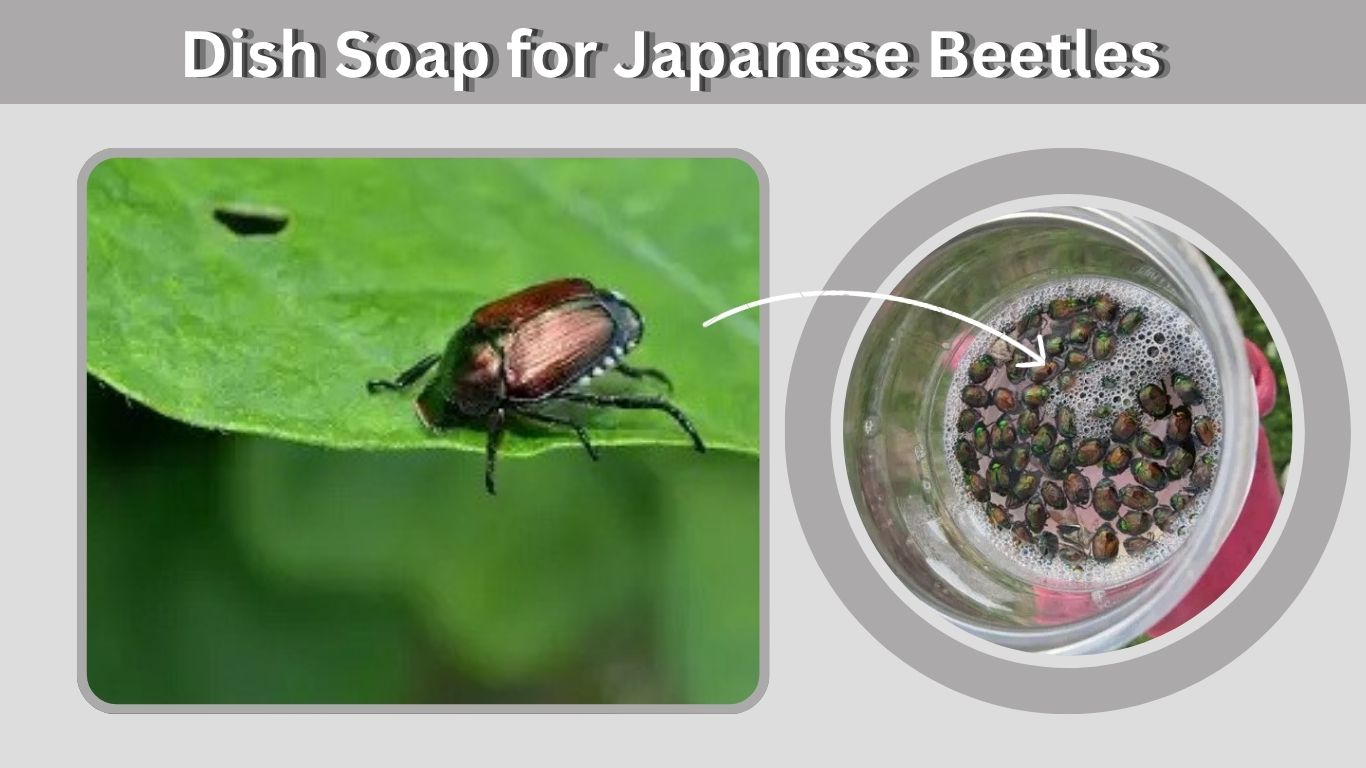
Dish soap can help control Japanese beetles, but the safest method is not spraying your whole plant. The best use is a bucket of water with a little dish soap, then handpick or knock beetles into it. The soap breaks the water surface tension, so beetles sink and drown. Dish soap sprays are riskier because detergents can burn leaves, especially on hot days or sensitive plants. For roses, grapes, and garden plants, use dish soap carefully and combine it with daily removal.
Does Dish Soap Kill Japanese Beetles?
Dish soap and water can kill Japanese beetles when the beetles are dropped into the mixture. University of Minnesota Extension recommends handpicking or knocking Japanese beetles into a bucket of soapy water and checking plants daily to reduce feeding damage. It also notes that beetle-damaged leaves release airborne chemicals that attract more beetles, so early removal helps reduce new beetle activity.
Why It Works
Dish soap does not work like a long-lasting pesticide. It works mainly by helping drown the beetles. When beetles fall into plain water, some may float or crawl out. Soap lowers the surface tension, making it harder for them to escape.
Dish Soap and Water for Japanese Beetles
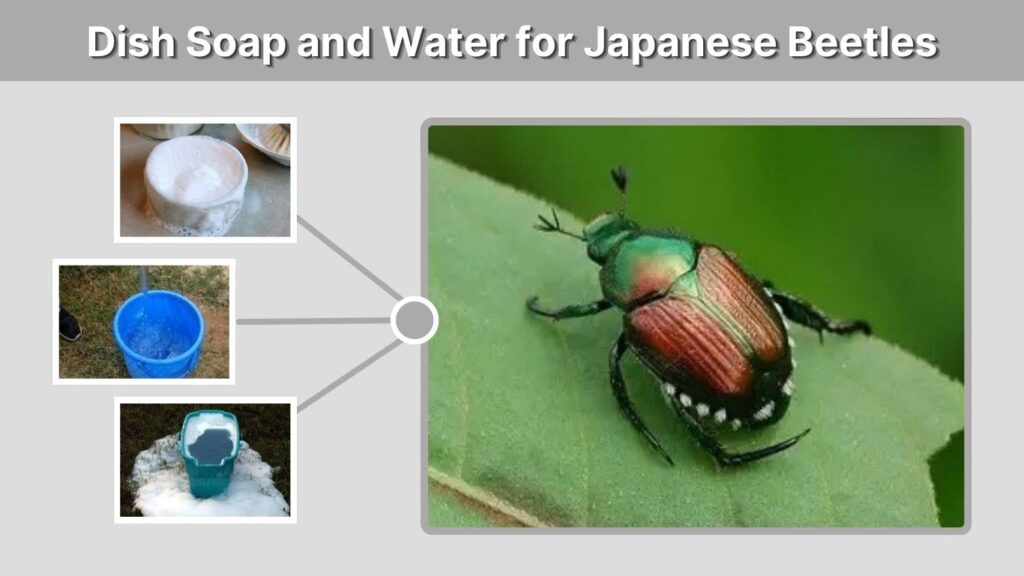
The simplest homemade method is the soapy water bucket. It is cheap, fast, and safer than spraying homemade soap mixtures on leaves.
Simple Soapy Water Bucket Recipe
- Fill a small bucket or container with water.
- Add a few drops or a small squirt of dish soap.
- Stir gently.
- Go outside in the early morning or evening.
- Hold the bucket under the beetles.
- Tap the branch, flower, or leaf.
- Let beetles fall into the soapy water.
- Dispose of dead beetles away from plants.
Japanese beetles are often slower when they are cool, so morning and evening are good times for removal. Ask Extension also recommends knocking beetles off plants and dropping them into soapy water as a practical control method.
Dawn Dish Soap for Japanese Beetles
Dawn dish soap is often mentioned because many people already have it at home. However, you do not need Dawn specifically. Any mild dish soap can help in a bucket of water.
Is Dawn Better Than Other Dish Soaps?
Not really. For the bucket method, the brand matters less than the process. The goal is to make water soapy enough that beetles cannot escape. Avoid using too much soap because strong mixtures are unnecessary and may be wasteful.
| Method | Safe for Plants? | Best Use |
| Dish soap in bucket | Yes, if not poured on plants | Killing handpicked beetles |
| Dawn in bucket | Yes, if not poured on plants | Same as regular dish soap |
| Dish soap spray | Risky | Only as a careful contact spray |
| Insecticidal soap | Safer than dish detergent | Labeled plant spray use |
Dish Soap Spray for Japanese Beetles
A dish soap spray for Japanese beetles is more risky than the bucket method. Dish soaps are made for cleaning dishes, not protecting plant leaves. University of Florida IFAS explains that many household soaps are made with sodium-based ingredients that can damage plant tissue, while insecticidal soaps are formulated for plant use.
Why Soap Sprays Can Damage Plants
Dish soap sprays may strip the waxy coating from leaves, causing leaf burn, brown spots, wilting, or stress. Clemson Extension warns that even insecticidal soaps should not be used in full sun or when temperatures are above 90°F because plant damage can occur.
If you still try a soap spray, test it on a few leaves first and wait 24–48 hours. Do not spray in hot sun, do not spray blooms heavily, and do not use strong mixtures.
Best Way to Use Dish Soap on Roses
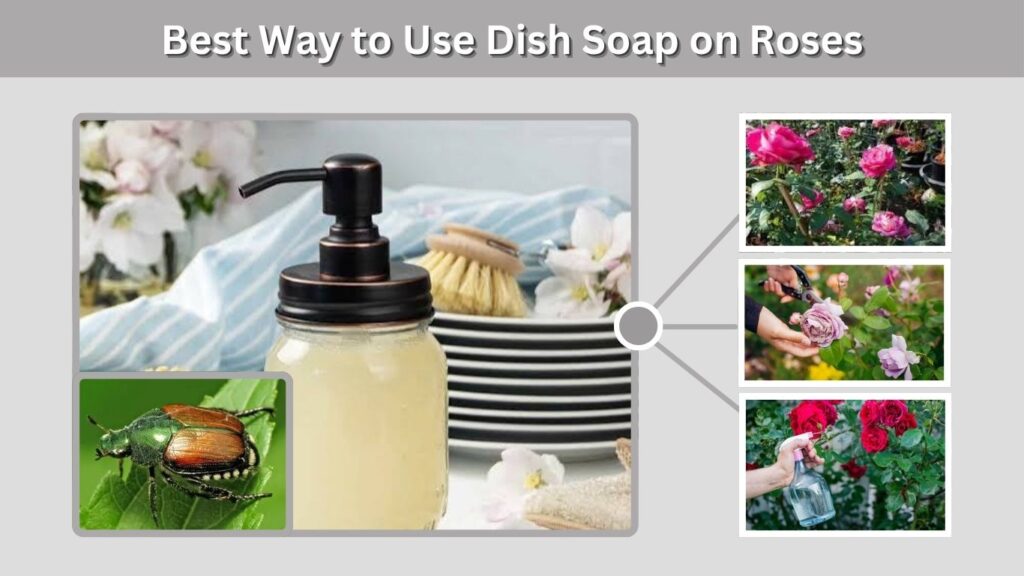
Roses are one of the plants Japanese beetles love most. They feed on petals, buds, and leaves, leaving ragged blooms and skeletonized foliage. For roses, the bucket method is better than spraying soapy water over the plant.
Rose Beetle Removal Steps
- Check roses every morning.
- Hold soapy water under the flower or leaf.
- Tap beetles into the bucket.
- Remove badly damaged blooms.
- Repeat daily during peak season.
- Avoid placing beetle traps near roses.
This daily approach matters because Japanese beetles often feed in groups. When you remove the first beetles, you reduce feeding damage and the plant odors that attract more beetles.
How Often Should You Use Soapy Water?
Use the soapy water bucket daily when beetles are active. Japanese beetle season can last several weeks, and new beetles may fly in from nearby yards. One treatment will not solve the problem for the whole season.
Best Timing
| Time | Why It Helps |
| Early morning | Beetles are cooler and slower |
| Evening | Beetles are easier to knock off |
| After rain | Check plants again for new beetles |
| During peak season | Daily removal works best |
What Not to Do With Dish Soap
Dish soap can help, but it can also cause problems if used incorrectly. Avoid turning a simple beetle-removal method into a harsh plant spray.
Common Mistakes
- Spraying strong dish soap mixtures on leaves
- Spraying in full sun
- Spraying during very hot weather
- Pouring soapy water into garden soil
- Using scented or antibacterial dish soaps
- Thinking dish soap prevents future beetles
- Using soap instead of checking plants daily
University of Connecticut IPM warns that dishwashing soaps and detergents are not registered pesticides and may damage plants by dissolving the waxy cuticle on leaf surfaces.
Dish Soap vs Japanese Beetle Traps
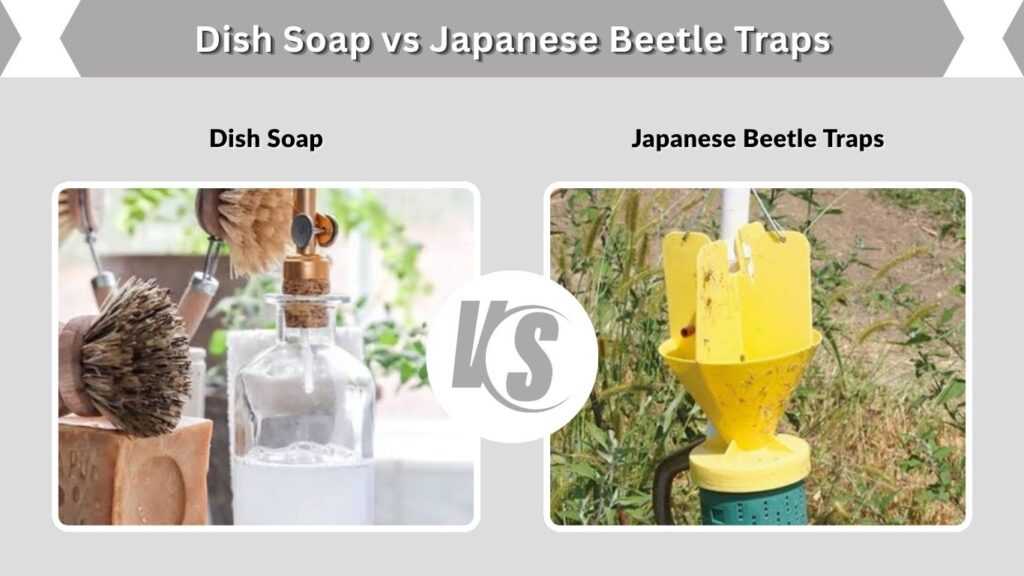
Dish soap and water is usually better than using Japanese beetle traps near your garden. Traps use scents and pheromones that attract beetles, but they can bring more beetles into the area than they catch. University of Minnesota Extension advises home gardeners not to use Japanese beetle traps because they may attract more beetles to the yard.
Safer Alternatives to Dish Soap Spray
If handpicking is not enough, use safer plant-protection methods before trying harsh homemade sprays.
Better Options
- Handpick beetles into soapy water.
- Use fine mesh netting after pollination.
- Remove beetles early in the season.
- Prune heavily damaged flowers when practical.
- Choose less-preferred plants.
- Use labeled insecticidal soap only as directed.
- Protect pollinators by avoiding sprays on open flowers.
FAQs
Does dish soap kill Japanese beetles?
Yes, dish soap can kill Japanese beetles when they are dropped into soapy water. The soap helps them sink and drown. It works best as a bucket method, not as a general plant spray.
Can I use Dawn dish soap for Japanese beetles?
Yes, Dawn can be used in a bucket of water to drown handpicked Japanese beetles. You do not need a lot. A few drops or a small squirt is enough for a small container of water.
Is dish soap spray safe for plants?
Dish soap spray is risky because dish detergents are not designed for plant leaves. They can cause leaf burn, especially in hot sun or on sensitive plants. A soapy water bucket is safer than spraying the plant.
How often should I remove Japanese beetles with soapy water?
Check plants daily during Japanese beetle season. Early morning or evening is best because beetles are cooler and slower. Daily removal helps reduce feeding damage and lowers the chance of more beetles gathering.
Should I spray roses with dish soap for Japanese beetles?
It is better to knock beetles from roses into a bucket of soapy water instead of spraying the rose bush. Soap sprays can damage petals and leaves, especially during hot weather.