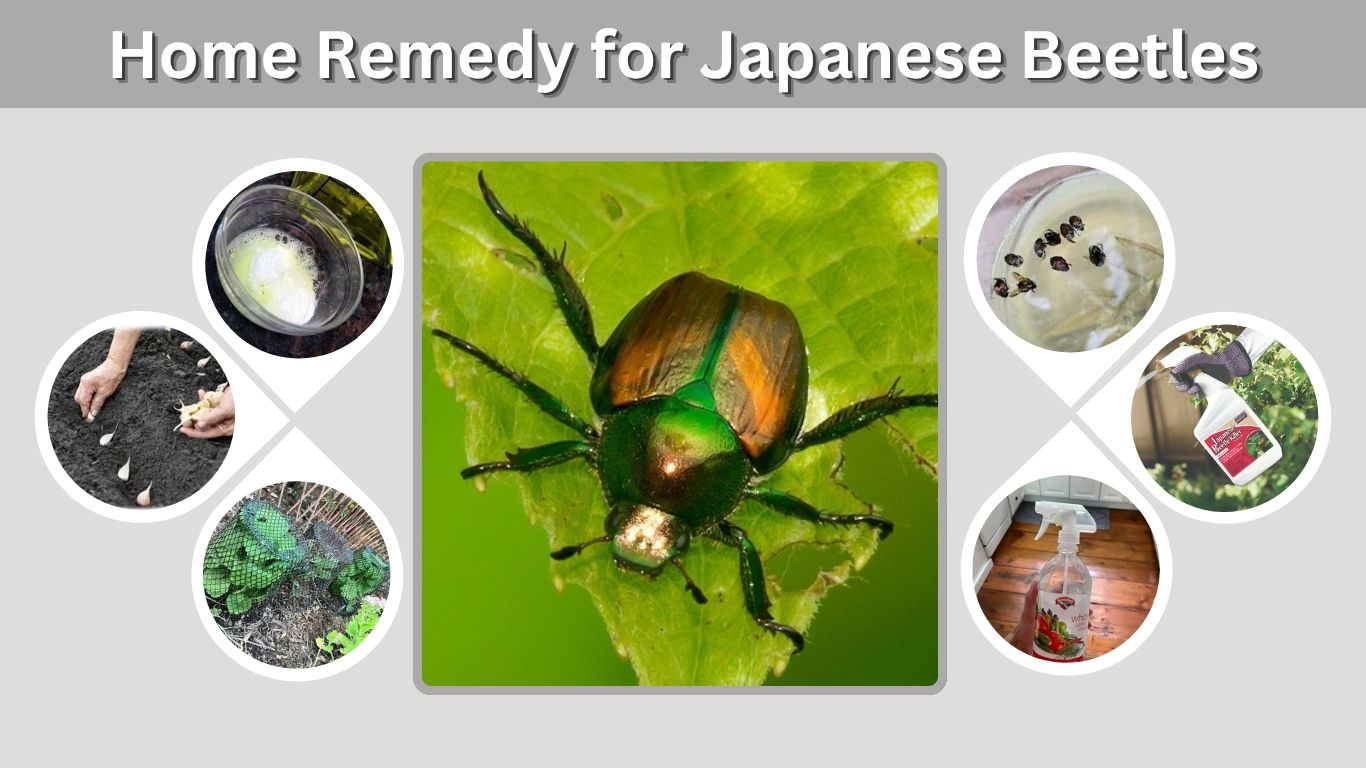
A good home remedy for Japanese beetles should reduce beetles without harming your plants, pollinators, or soil. The safest methods are handpicking beetles into soapy water, using fine netting, removing beetles early, and protecting high-value plants like roses. Many homemade sprays, including vinegar or strong dish soap sprays, are not reliable and may burn leaves. For best results, start control as soon as the first beetles appear.
What Are Japanese Beetles?
Japanese beetles are invasive garden pests that feed on leaves, flowers, and fruit. Adults can feed on more than 300 plant species, while their grubs live in soil and feed on grass roots. Adults often skeletonize leaves, leaving a lace-like pattern between the veins.
Common Plants They Attack
- Roses
- Grapes
- Linden trees
- Apple and crabapple
- Cherry and plum
- Birch
- Elm
- Raspberry
- Basil
- Virginia creeper
- Hollyhock
- Marigold
Japanese beetles often gather in groups because damaged leaves release odors that attract more beetles. Removing beetles early can reduce both feeding and attraction.
Best Home Remedy for Japanese Beetles
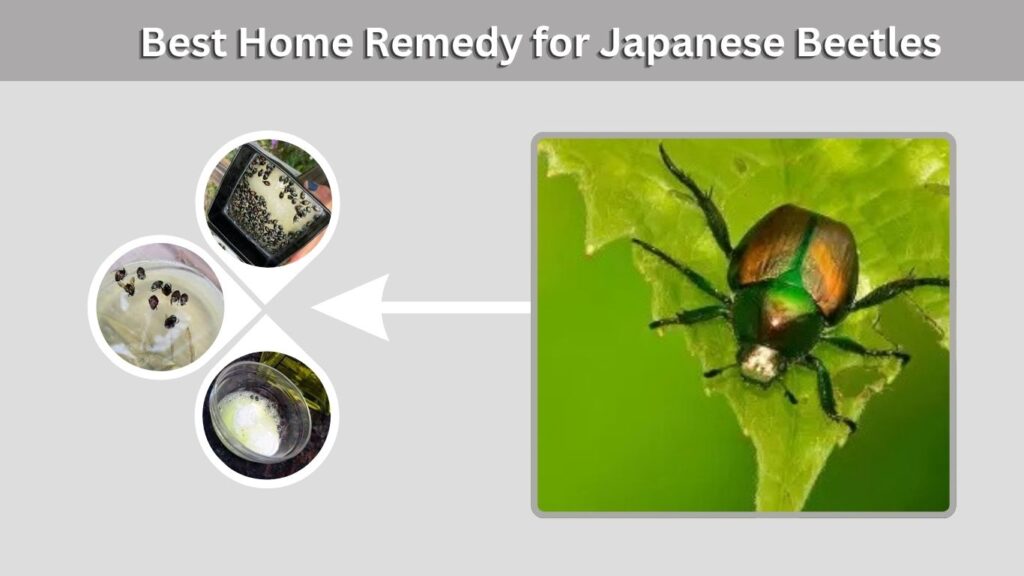
The best simple home remedy is to knock or handpick Japanese beetles into a bucket of soapy water. This works well for small gardens, roses, grapes, shrubs, and young trees where beetles are easy to reach.
Soapy Water Bucket Method
- Fill a small bucket with water.
- Add a few drops of dish soap.
- Go out early morning or evening.
- Hold the bucket under the beetles.
- Tap or shake the branch gently.
- Let the beetles fall into the water.
- Repeat daily during peak beetle season.
University of Minnesota Extension recommends handpicking or knocking beetles into soapy water as a practical non-chemical method, especially for smaller landscapes or a few plants. Beetles are slower in the morning and evening, making them easier to remove.
Home Remedies for Japanese Beetles on Roses
Roses are one of the most common Japanese beetle targets. Beetles chew rose petals, buds, and leaves, often ruining blooms even if the plant survives.
Rose Protection Tips
- Handpick beetles every morning.
- Drop them into soapy water.
- Remove badly damaged blooms.
- Use fine mesh netting after pollination is not needed.
- Avoid placing beetle traps near roses.
- Keep roses healthy with proper watering and pruning.
Healthy roses can often survive beetle feeding, but the flowers may be badly damaged. Early removal is important because beetle-damaged leaves attract more beetles.
Home Remedy Spray for Japanese Beetles
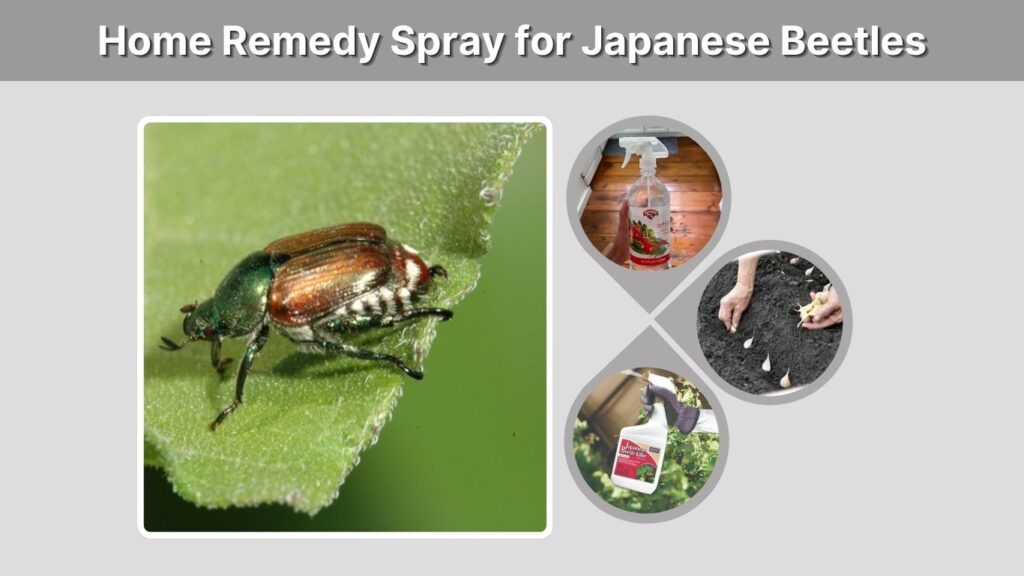
Many people search for a homemade Japanese beetle spray, but sprays must be used carefully. Spraying dish soap directly on plants is not the same as dropping beetles into soapy water. Strong soap sprays can injure leaves, especially during hot sun.
| Home Remedy | Works? | Notes |
| Soapy water bucket | Yes | Best for drowning handpicked beetles |
| Soap spray on leaves | Risky | Can damage plants |
| Vinegar spray | Not recommended | May burn leaves |
| Garlic planting | Unproven | No strong research support |
| Fine netting | Yes | Good for high-value plants |
| Japanese beetle traps | Usually no | Can attract more beetles |
Ask Extension notes that soapy water sprays may harm plants and recommends handpicking beetles into soapy water instead. Another Ask Extension response says there is no research-based evidence that garlic or vinegar controls Japanese beetles.
Does Vinegar Kill Japanese Beetles?
Vinegar may kill some insects on contact, but it is not a good Japanese beetle remedy for garden plants. Vinegar can burn foliage, damage flowers, and stress the plant you are trying to protect. It is also not a research-backed control method for Japanese beetles.
For roses, vegetables, grapes, and fruit plants, avoid vinegar sprays. The risk of plant injury is higher than the benefit.
Natural Barriers and Netting
Fine netting is one of the safest non-chemical ways to protect valuable plants. It works especially well for small fruit plants, young shrubs, and vegetables.
When to Use Netting
Use netting after flowering if the plant needs pollination. Do not cover blooming fruit plants too early, because bees and other pollinators must reach the flowers. University of Minnesota Extension recommends fine netting in some cases but warns not to cover blooming plants that require pollination.
Should You Use Japanese Beetle Traps?
Japanese beetle traps are not a good home remedy for most gardens. They use floral scents and sex pheromones to attract beetles. The problem is that they may bring more beetles into your yard than they catch.
University of Minnesota Extension says home gardeners should not use Japanese beetle traps because they are not effective for protecting plants and may attract more beetles to the yard.
Natural Control for Japanese Beetle Grubs
Adult beetles are only part of the problem. Japanese beetle grubs live in lawns and feed on grass roots. However, killing grubs in your lawn does not always stop adult beetles on garden plants, because adults can fly from nearby areas.
Grub Control Options
- Keep lawns healthy and avoid unnecessary treatment.
- Check for grubs before applying products.
- Use beneficial nematodes only when grubs are present.
- Water nematodes before and after application.
- Do not rely heavily on milky spores.
University of Minnesota Extension says parasitic nematodes are available for grub control, but results can be inconsistent. It also notes that commercial milky spore products have not shown benefit in modern university research trials.
How to Prevent Japanese Beetles Naturally
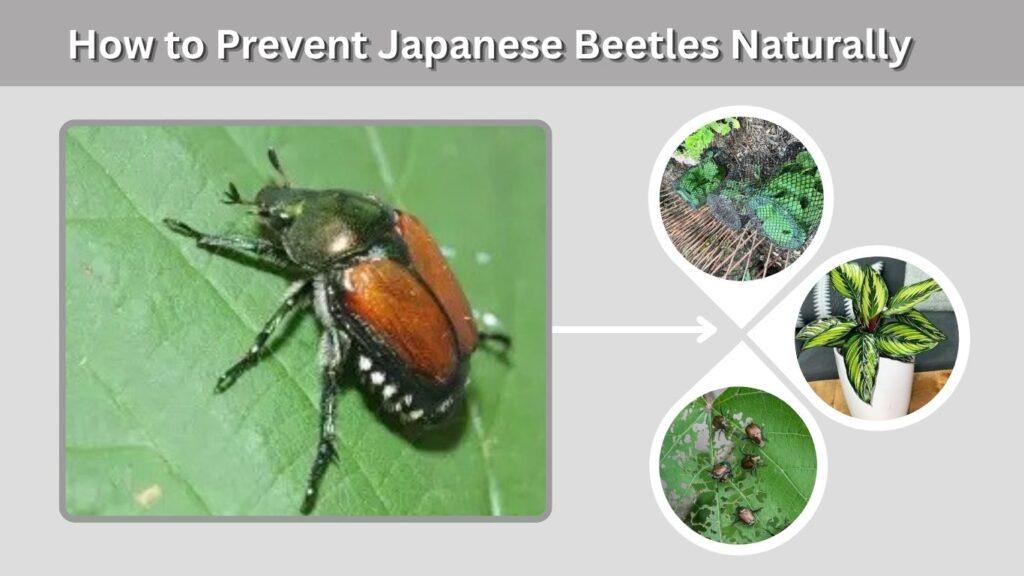
Prevention is easier than fighting a heavy infestation. Start checking plants in late June or early July, depending on your region. Japanese beetles usually feed for several weeks, so daily removal matters.
Prevention Checklist
- Remove beetles as soon as they appear.
- Pick beetles in the morning or evening.
- Avoid Japanese beetle traps near gardens.
- Cover valuable plants with netting when safe.
- Remove damaged leaves when practical.
- Choose less-preferred plants.
- Keep plants healthy but avoid over-fertilizing.
- Harvest ripe fruit quickly.
Less-preferred plants include boxwood, clematis, chrysanthemum, conifers, daylily, geranium, ginkgo, lilac, magnolia, maple, oak, redbud, rhododendron, and yew.
FAQs
What is the best home remedy for Japanese beetles?
The best home remedy is handpicking or knocking Japanese beetles into a bucket of soapy water. It is simple, cheap, and safer for plants than homemade sprays. Do it early in the morning or evening when beetles are slower.
What home remedy works for Japanese beetles on roses?
For roses, remove beetles daily by dropping them into soapy water. You can also use fine mesh netting when pollination is not needed. Avoid vinegar sprays and strong soap sprays because they may damage rose leaves and flowers.
Does dish soap spray kill Japanese beetles?
Dish soap in a bucket of water can kill beetles after you knock them in. However, spraying dish soap directly on plants is risky because it can burn or damage leaves. A soapy water bucket is safer than a soap spray.
Does vinegar get rid of Japanese beetles?
Vinegar is not a recommended Japanese beetle remedy. It may damage plant leaves and flowers, and there is no strong research-based evidence that vinegar is effective for Japanese beetle control. Use handpicking, netting, or approved products instead.
Do Japanese beetle traps help?
Usually, no. Japanese beetle traps can attract more beetles into your yard than they catch. If used, they should be placed far away from valuable plants, but most home gardeners are better off avoiding them.